
















Copyright: ©Author(s) 2026.
World J Clin Oncol. Mar 24, 2026; 17(3): 116093
Published online Mar 24, 2026. doi: 10.5306/wjco.v17.i3.116093
Published online Mar 24, 2026. doi: 10.5306/wjco.v17.i3.116093
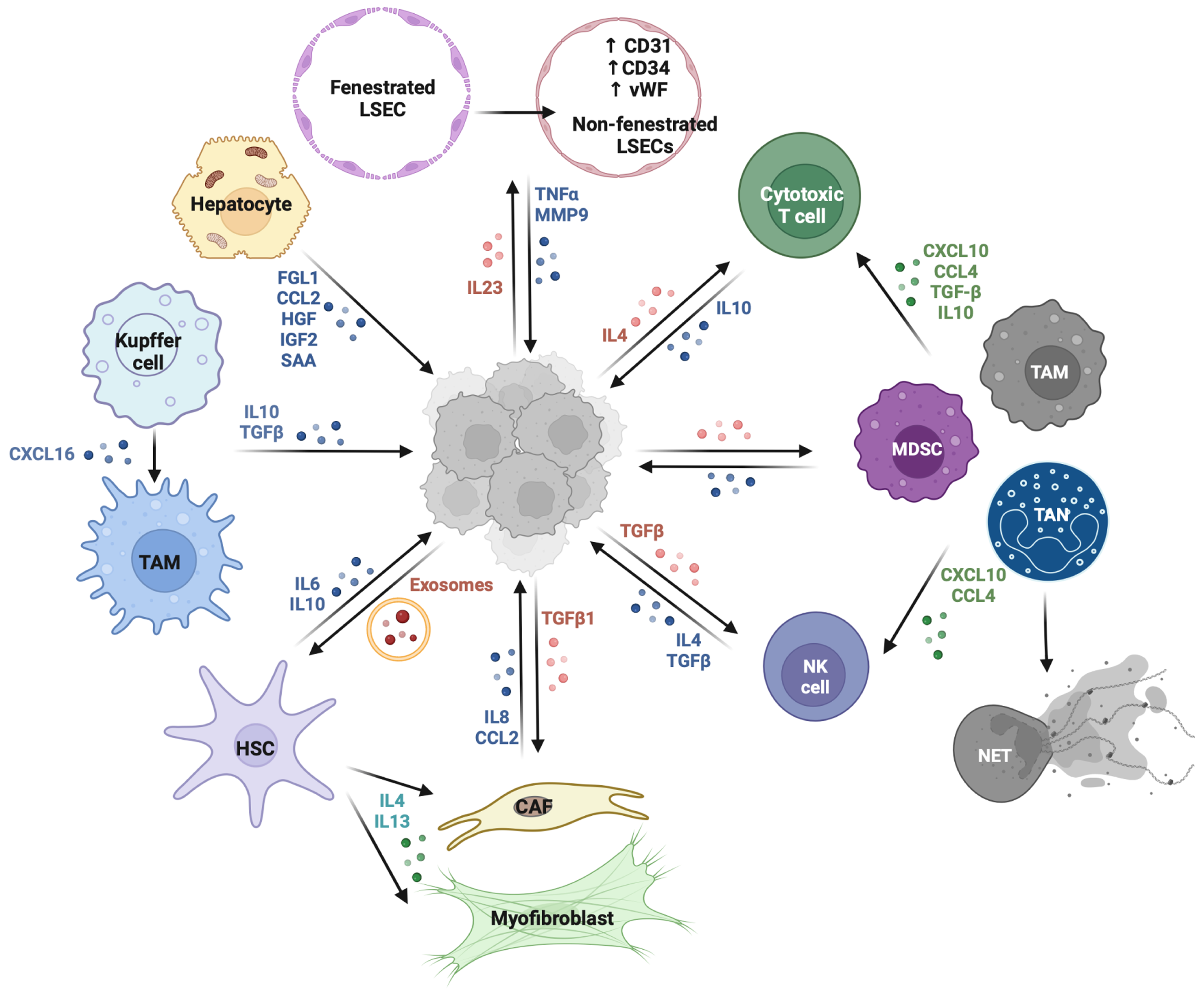
Figure 1 Tumor microenvironment of liver metastases.
Tumor cells interact with hepatocytes, Kupffer cells, hepatic stellate cells, liver sinusoidal endothelial cells, and infiltrating immune cells through cytokines, chemokines, and exosomes. These signals induce fibrotic remodeling, immunosuppression, and endothelial barrier formation. Kupffer cells, tumor associated macrophages, and myeloid-derived suppressor cells secrete interleukin-10 and transforming growth factor-beta, while hepatocytes and fibroblasts contribute growth and survival factors such as fibrinogen-like protein 1, insulin-like growth factor 2, and serum amyloid A1/A2. Collectively, these interactions create a fibrotic, immune-excluded niche that promotes tumor colonization and resistance to therapy. LSEC: Liver sinusoidal endothelial cell; TGF-β: Transforming growth factor-beta; IL: Interleukin; MDSC: Myeloid-derived suppressor cell; NK: Natural killer; NET: Neutrophil extracellular trap; CAF: Cancer-associated fibroblast; HSC: Hepatic stellate cell; IGF2: Insulin-like growth factor 2; HGF: Hepatocyte growth factor; FGL1: Fibrinogen-like protein 1.
- Citation: Pham HT, Dong ZY, De Alba M, Cottle C, Zhang MY, Parker JB, Morecroft-Phillipps R, Chaludiya K, Ingram D, Ahmad AN, Zeng Z, Mohseni MM, Zhang ZZ, Rueda Prada L, Ali M, Yang V. Immunotherapy in liver metastases: Challenges, emerging evidence, and future directions. World J Clin Oncol 2026; 17(3): 116093
- URL: https://www.wjgnet.com/2218-4333/full/v17/i3/116093.htm
- DOI: https://dx.doi.org/10.5306/wjco.v17.i3.116093