
















©The Author(s) 2025.
World J Clin Oncol. Dec 24, 2025; 16(12): 112140
Published online Dec 24, 2025. doi: 10.5306/wjco.v16.i12.112140
Published online Dec 24, 2025. doi: 10.5306/wjco.v16.i12.112140
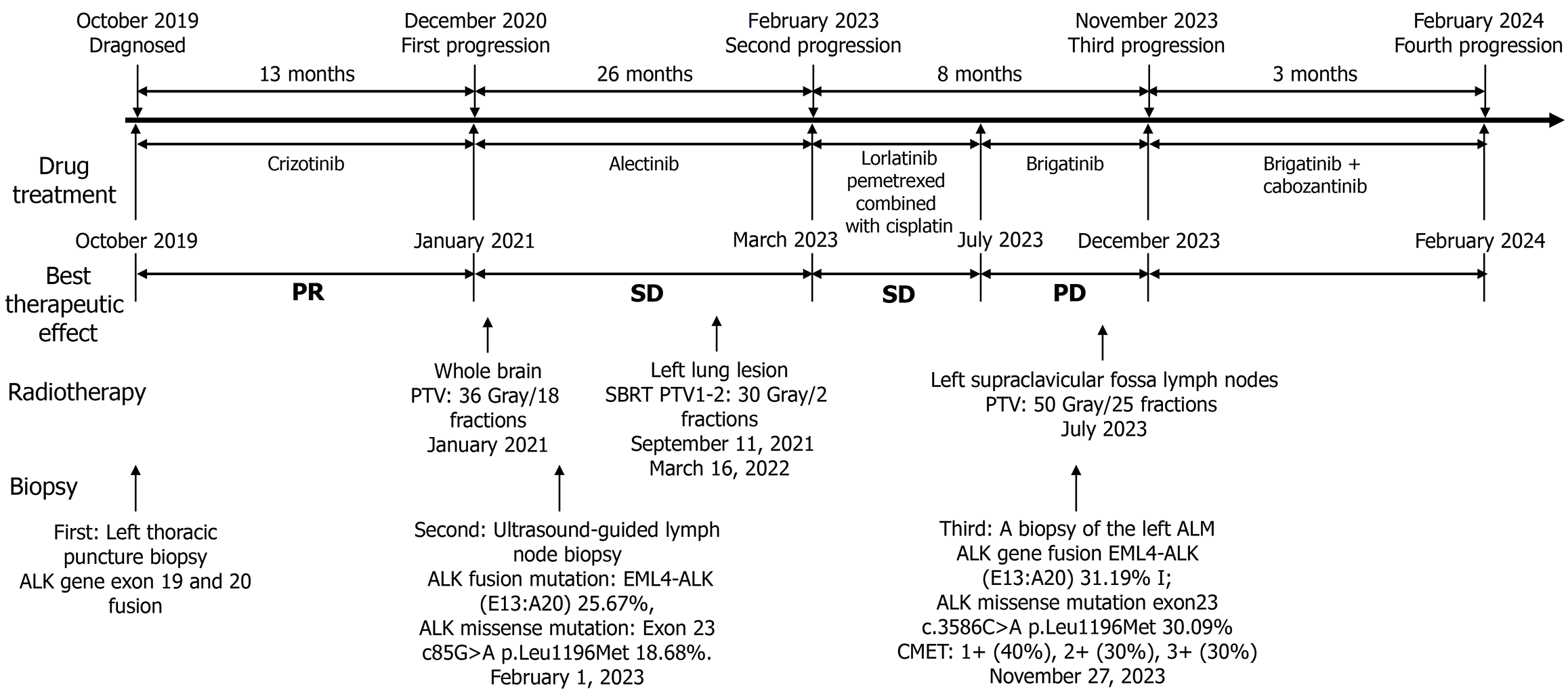
Figure 1 The patient’s entire course of treatment.
PR: Partial response; SD: Stable disease; PD: Progressive disease.
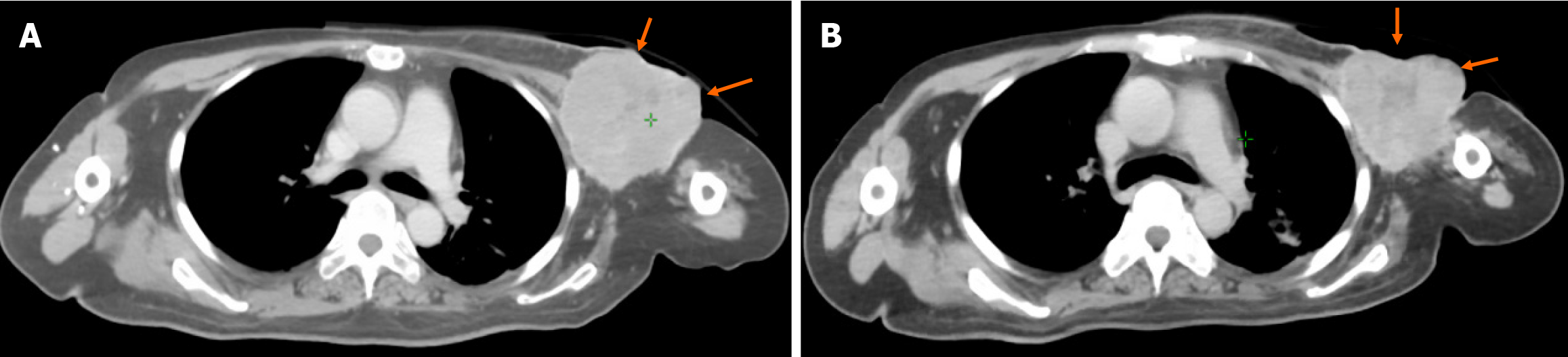
Figure 2 Enhanced computed tomography scan image of the patient.
A: Before treatment; B: After chemotherapy (April 3). Arrows indicate the axillary lymph node metastasis. The green cross serves as a mark for image export, which has no correlation with tumor lesions.
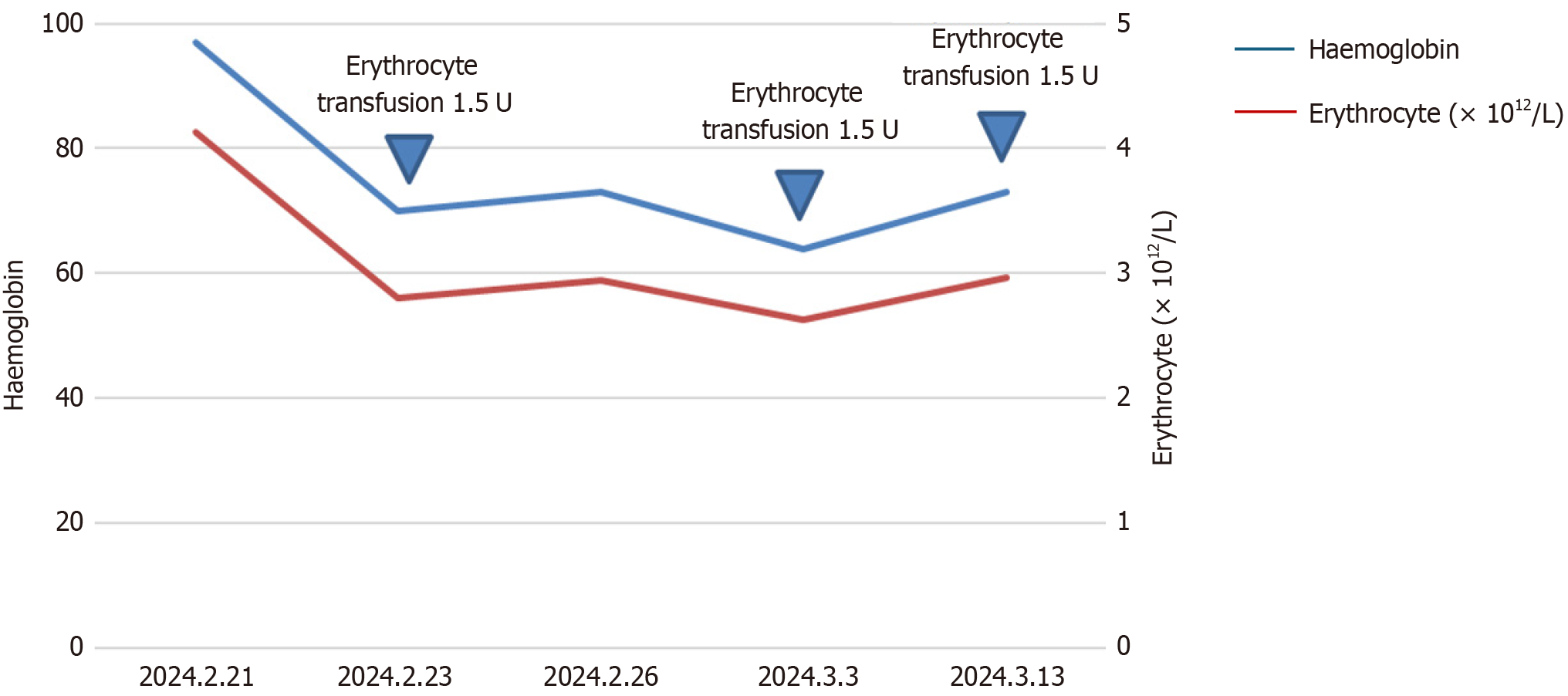
Figure 3
Patient hemoglobin and red blood cell levels, blood transfusions, and corresponding treatment time points.
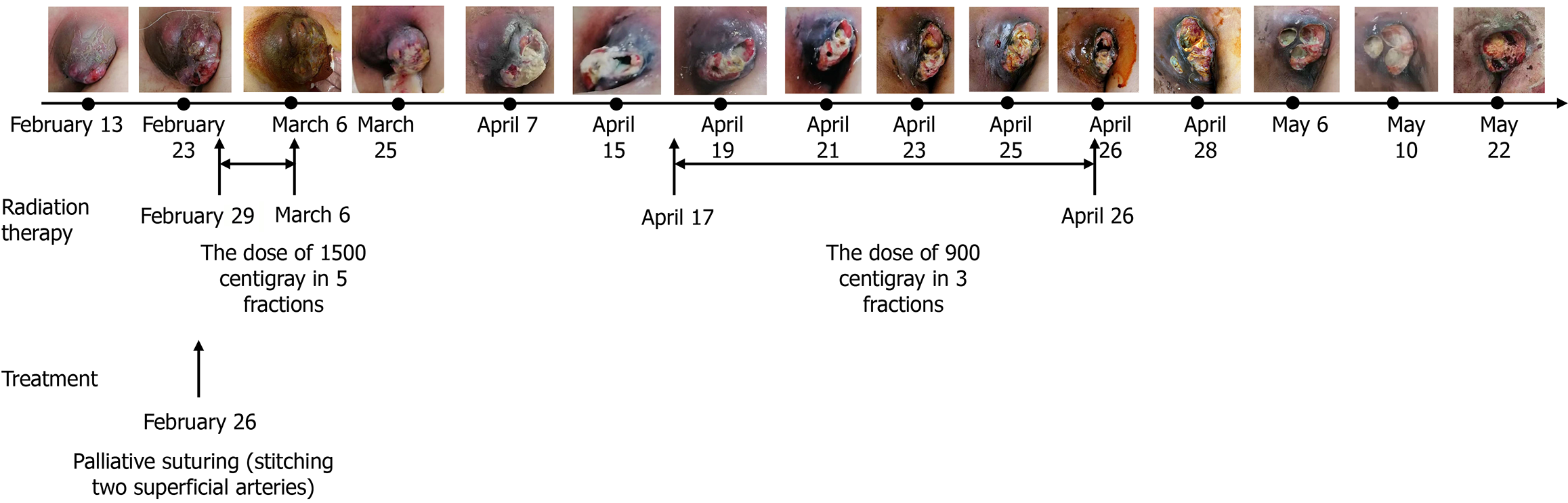
Figure 4
The course of treatment at each time point, and pictures of successive changes in the skin.
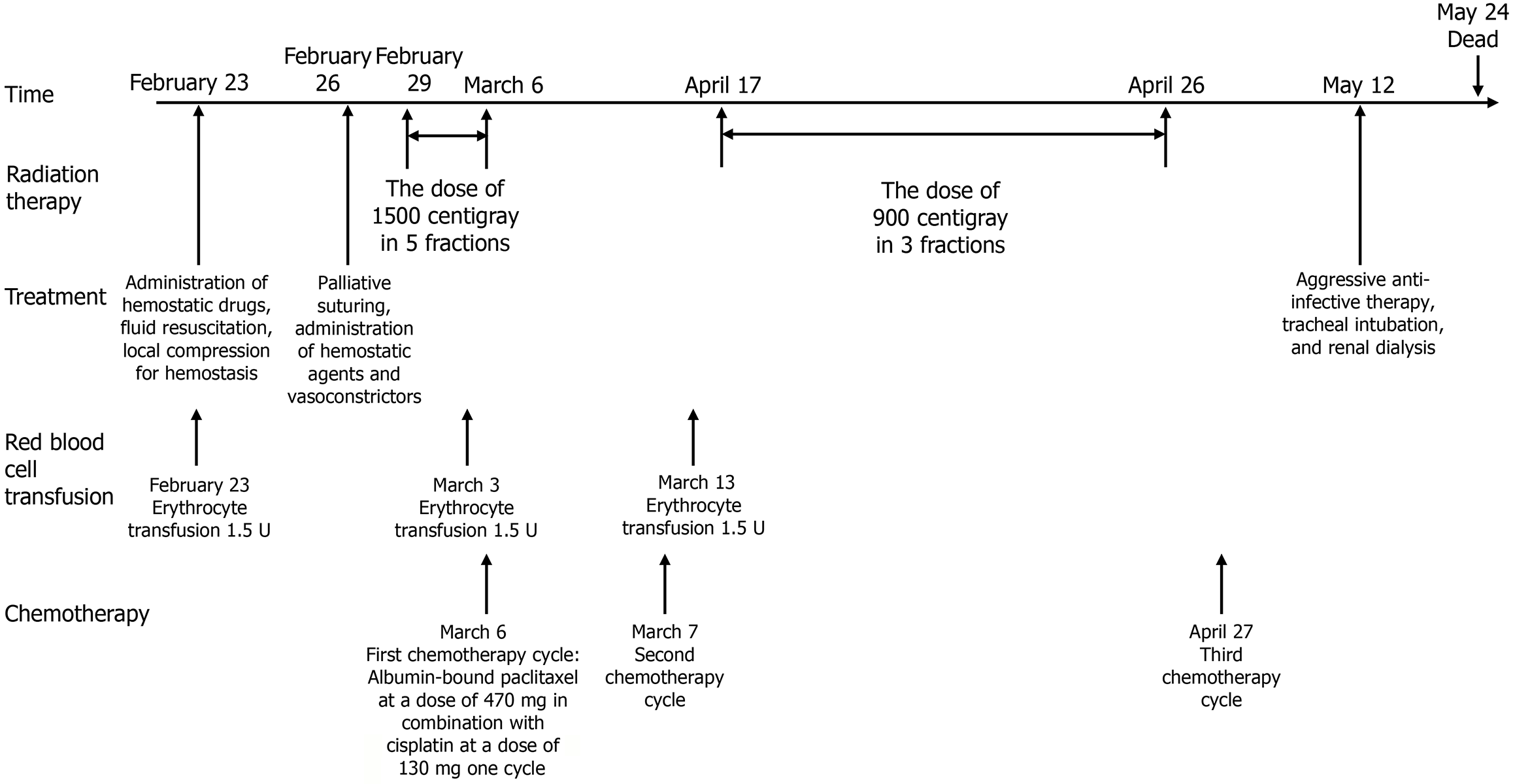
Figure 5
The course of radiotherapy and death of patients at various time points.
- Citation: Li ZM, Wang YC, Wang KY, Xie NJ, Zhou J, Chang XN, Chen Q, Wang G, Zhang S, Zhou R. Radiotherapy for large ruptured hemorrhagic axillary lymph node metastasis from anaplastic lymphoma kinase-positive lung adenocarcinoma: A case report and review of literature. World J Clin Oncol 2025; 16(12): 112140
- URL: https://www.wjgnet.com/2218-4333/full/v16/i12/112140.htm
- DOI: https://dx.doi.org/10.5306/wjco.v16.i12.112140