
















©The Author(s) 2025.
World J Gastrointest Oncol. Dec 15, 2025; 17(12): 113853
Published online Dec 15, 2025. doi: 10.4251/wjgo.v17.i12.113853
Published online Dec 15, 2025. doi: 10.4251/wjgo.v17.i12.113853
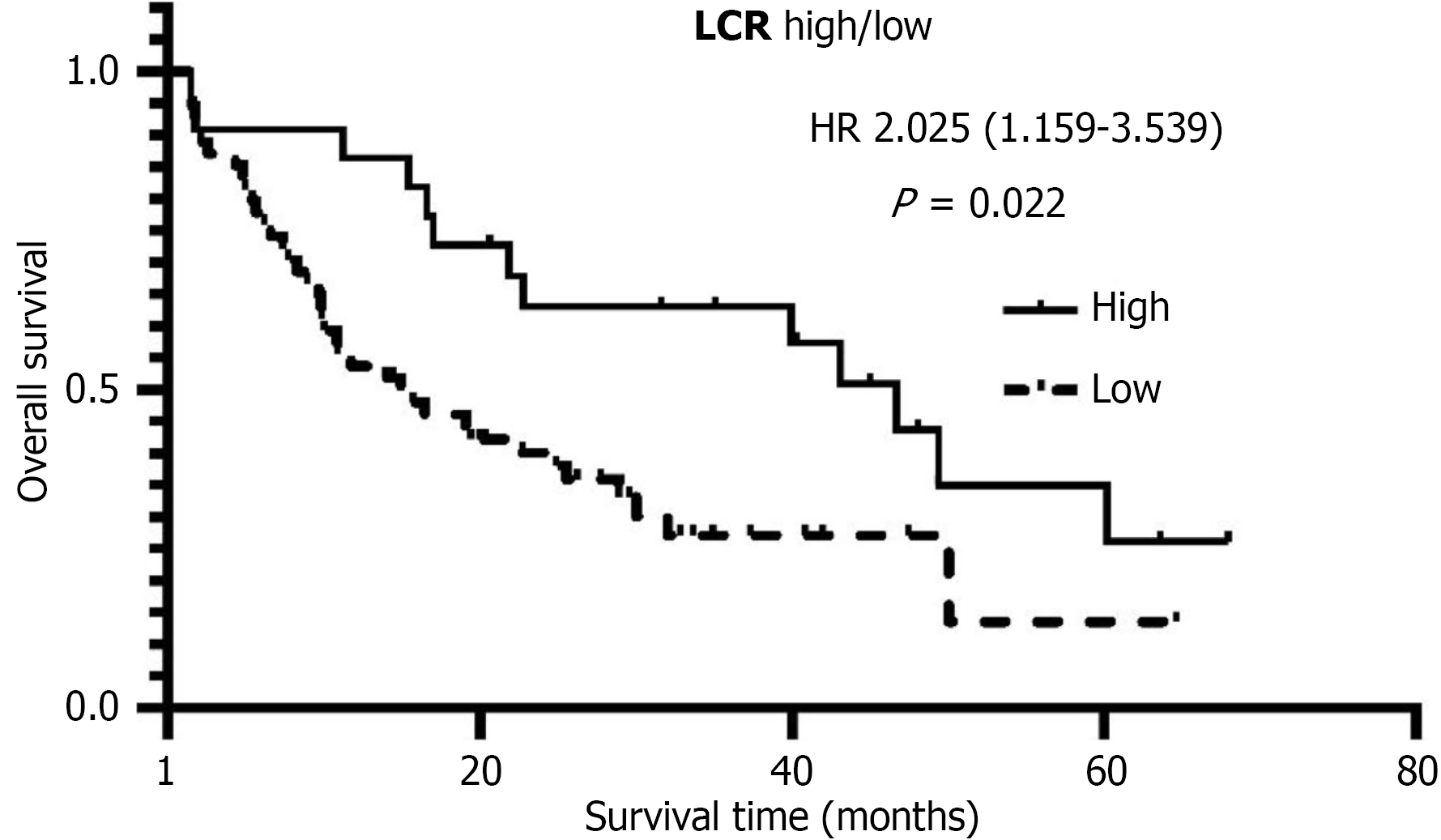
Figure 1 Overall survival rates differ significantly between patients with cholangiocarcinoma who underwent radical resection, stratified by the lymphocyte-to-C-reactive protein ratio.
LCR: Lymphocyte-to-C-reactive protein ratio; HR: Hazard ratio.
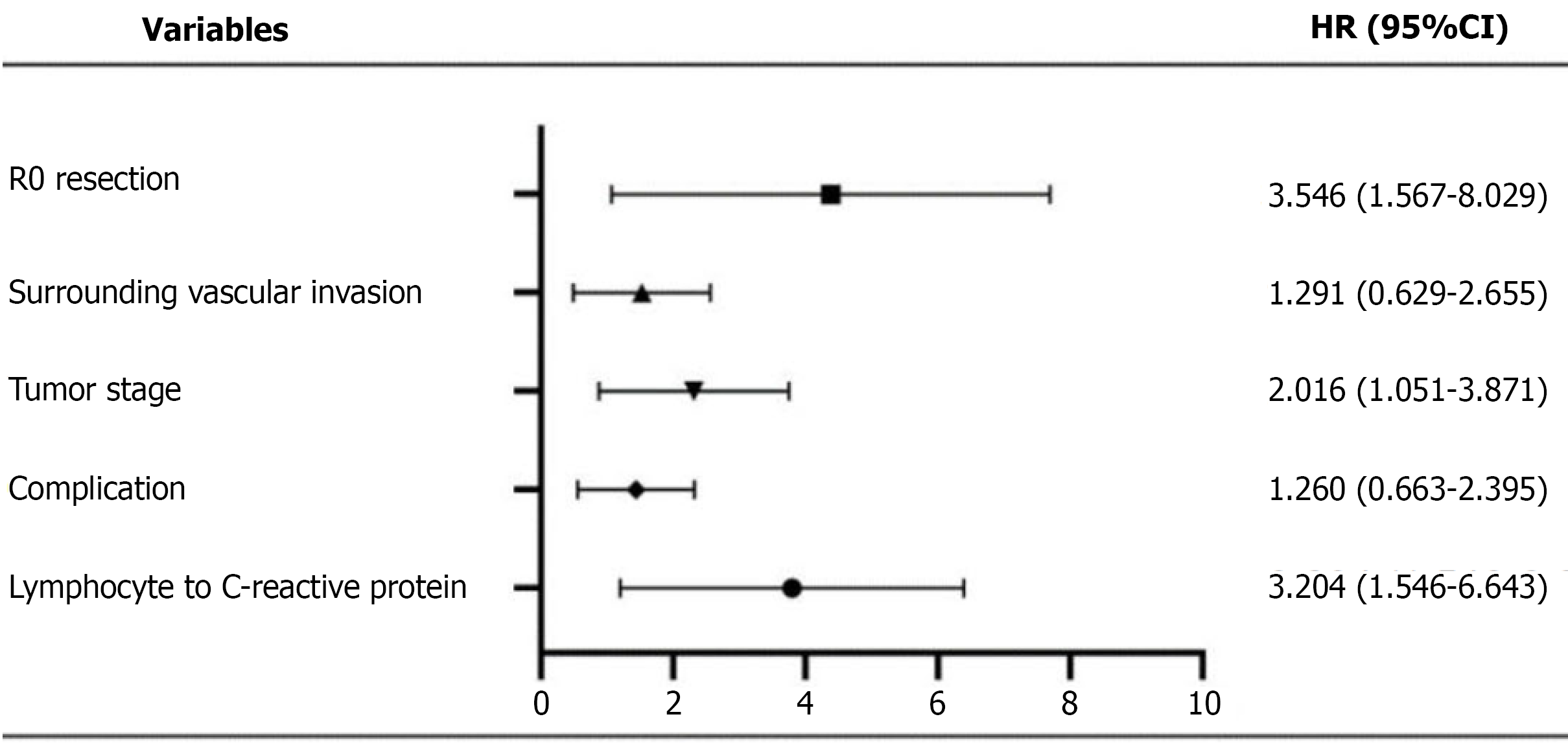
Figure 2 Multivariate Cox regression model for overall survival of cholangiocarcinoma patients.
The black dots indicate the hazard ratio, and the horizontal line represents 95% confidence intervals. HR: Hazard ratio; CI: Confidence interval.
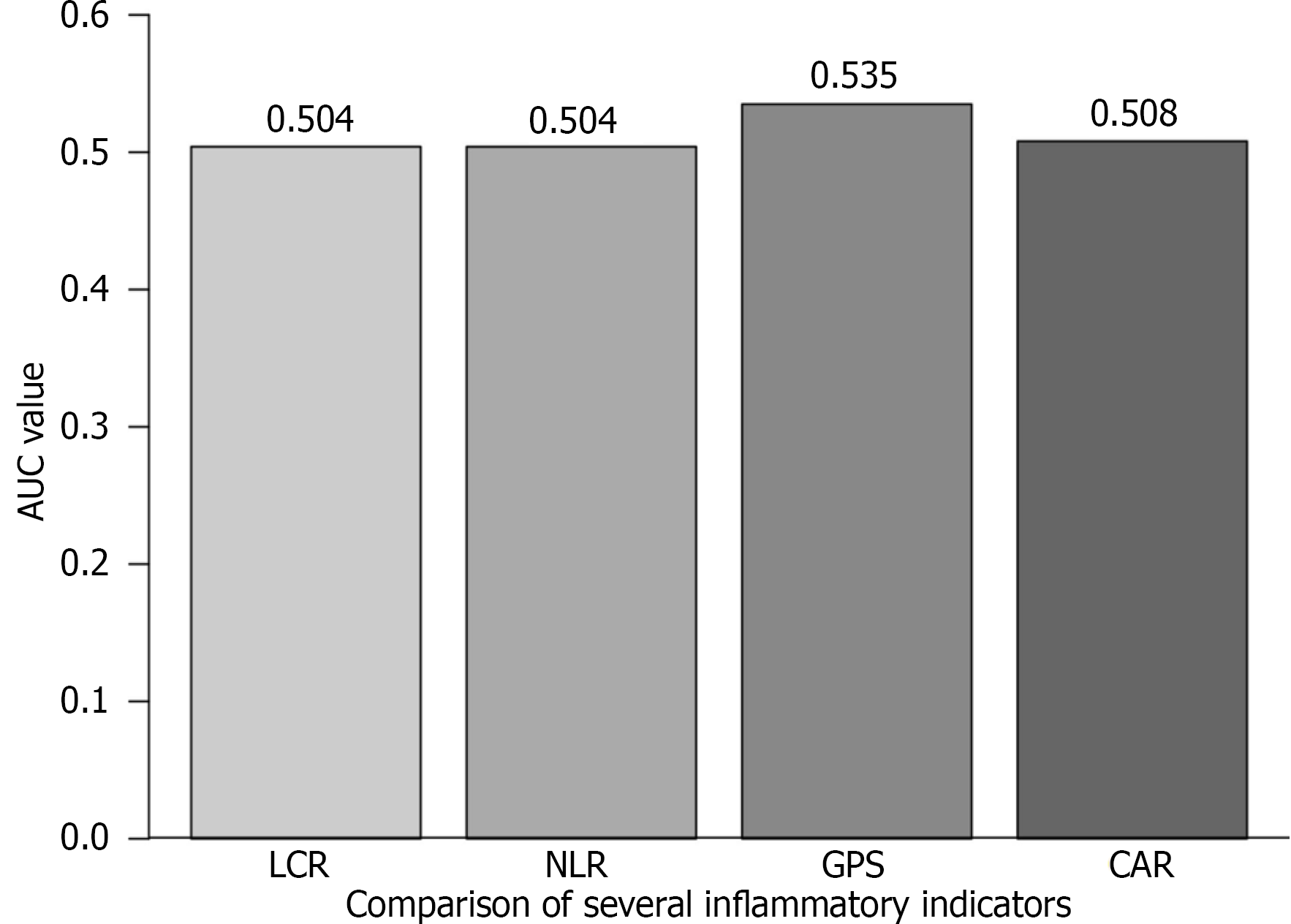
Figure 3 Comparison of receiver operating characteristic curves for the lymphocyte-to-C-reactive protein ratio, neutrophil-to-lymphocyte ratio, Glasgow Prognostic Score and C-reactive protein-albumin ratio in predicting overall survival.
AUC: Area under the curve; LCR: Lymphocyte-to-C-reactive protein ratio; NLR: Neutrophil-to-lymphocyte ratio; CAR: C-reactive protein-albumin ratio; GPS: Glasgow Prognostic Score.
- Citation: Xiao F, Zhou DH, Liu GW, Lin CW, Wu ZY, Yu H, Gong W, Tan WF. Lymphocyte to C-reactive protein ratio as a novel inflammatory biomarker: Validation and clinical relevance as an independent prognostic factor in cholangiocarcinoma. World J Gastrointest Oncol 2025; 17(12): 113853
- URL: https://www.wjgnet.com/1948-5204/full/v17/i12/113853.htm
- DOI: https://dx.doi.org/10.4251/wjgo.v17.i12.113853