
















Copyright: ©Author(s) 2026.
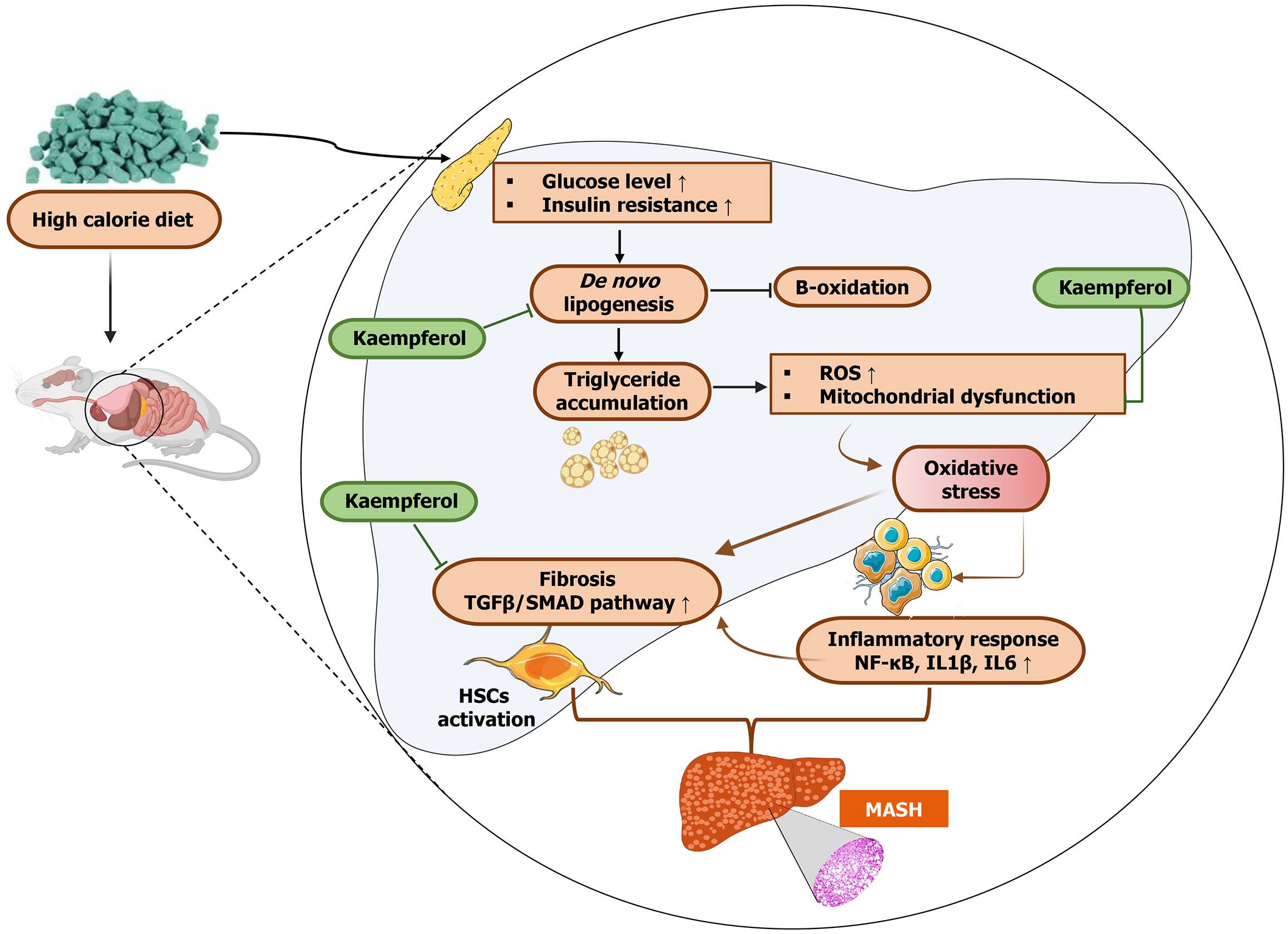
Figure 1 Protective role of kaempferol on the pathogenic mechanism of high-calorie diet-induced metabolic dysfunction-associated steatohepatitis.
Excess calorie intake increases blood glucose levels and promotes insulin resistance, which stimulates hepatic de novo lipogenesis. This leads to triglyceride accumulation in hepatocytes, contributing to hepatic steatosis. Simultaneously, impaired β-oxidation and mitochondrial dysfunction increase the production of reactive oxygen species, resulting in oxidative stress, which further upregulates inflammatory pathways, including nuclear factor kappa-light-chain-enhancer of activated B cells, leading to elevated pro-inflammatory cytokines such as interleukin-1β and interleukin-6. Chronic inflammation and oxidative damage promote hepatic stellate cell activation, which stimulates the transforming growth factor beta/suppressor of mother against decapentaplegic signaling pathway, ultimately resulting in liver fibrosis and progression toward metabolic dysfunction-associated steatohepatitis. Kaempferol may exert hepatoprotective effects by reducing de novo lipogenesis, improving mitochondrial function and β-oxidation, decreasing oxidative stress and inflammatory signaling, and inhibiting hepatic stellate cell activation and fibrogenesis. ROS: Reactive oxygen species; MASH: Metabolic dysfunction-associated steatohepatitis; NF-κB: Nuclear factor kappa-light-chain-enhancer of activated B cells; IL6: Interleukin 6; IL1β: Interleukin 1 beta; TGFβ: Transforming growth factor beta; SMAD: Suppressor of mother against decapentaplegic; HSC: Hepatic stellate cell.
- Citation: Sharma V, Patial V. Protective effects of kaempferol against diet-induced metabolic disorders. World J Hepatol 2026; 18(6): 120789
- URL: https://www.wjgnet.com/1948-5182/full/v18/i6/120789.htm
- DOI: https://dx.doi.org/10.4254/wjh.120789