
















Copyright: ©Author(s) 2026.
World J Hepatol. Apr 27, 2026; 18(4): 116153
Published online Apr 27, 2026. doi: 10.4254/wjh.v18.i4.116153
Published online Apr 27, 2026. doi: 10.4254/wjh.v18.i4.116153
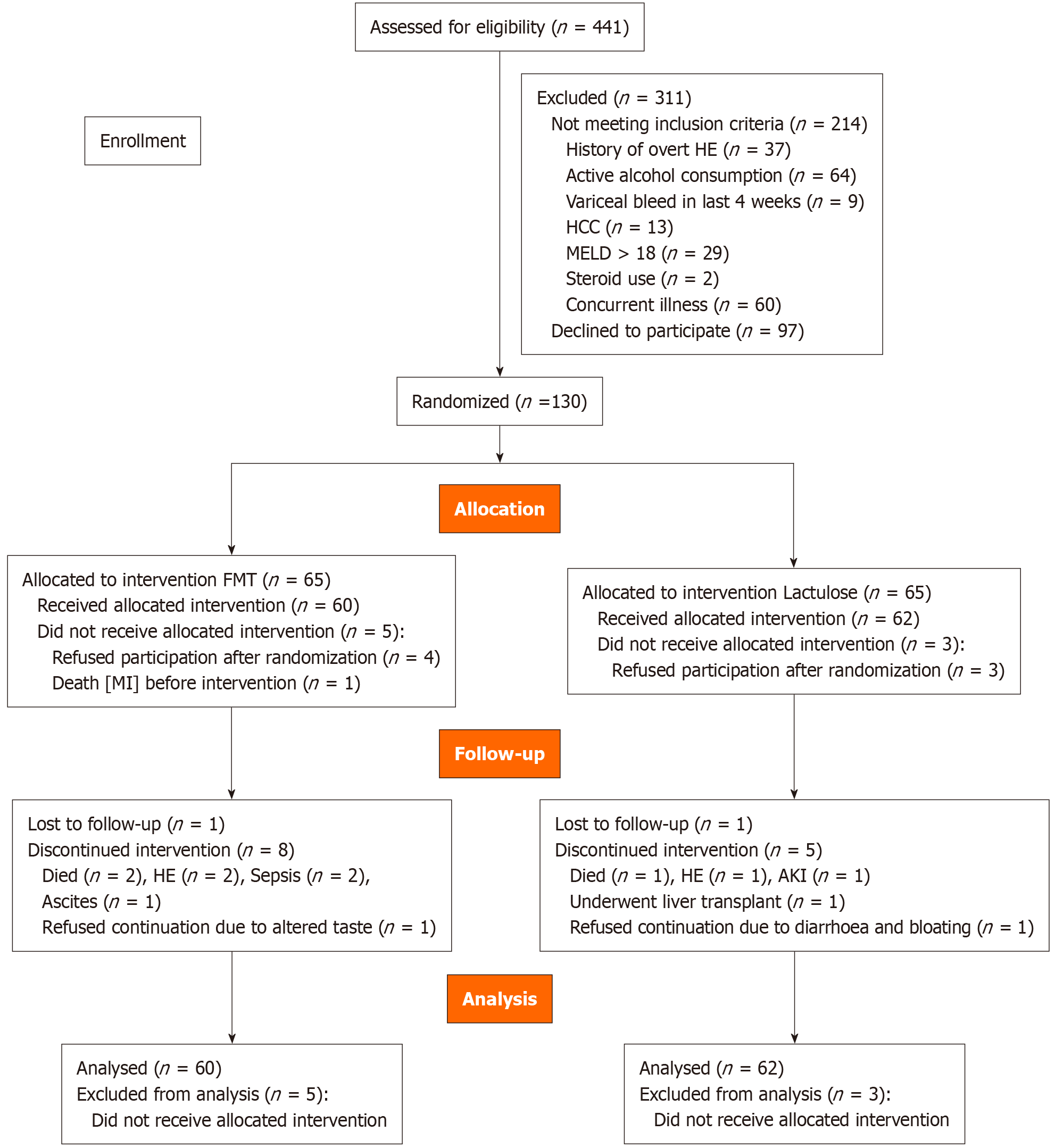
Figure 1 Consort chart.
HCC: Hepatocellular carcinoma; HE: Hepatic encephalopathy; MELD: Model for end stage liver disease; FMT: Fecal microbiota transplantation; MI: Myocardial infarction; AKI: Acute kidney injury.
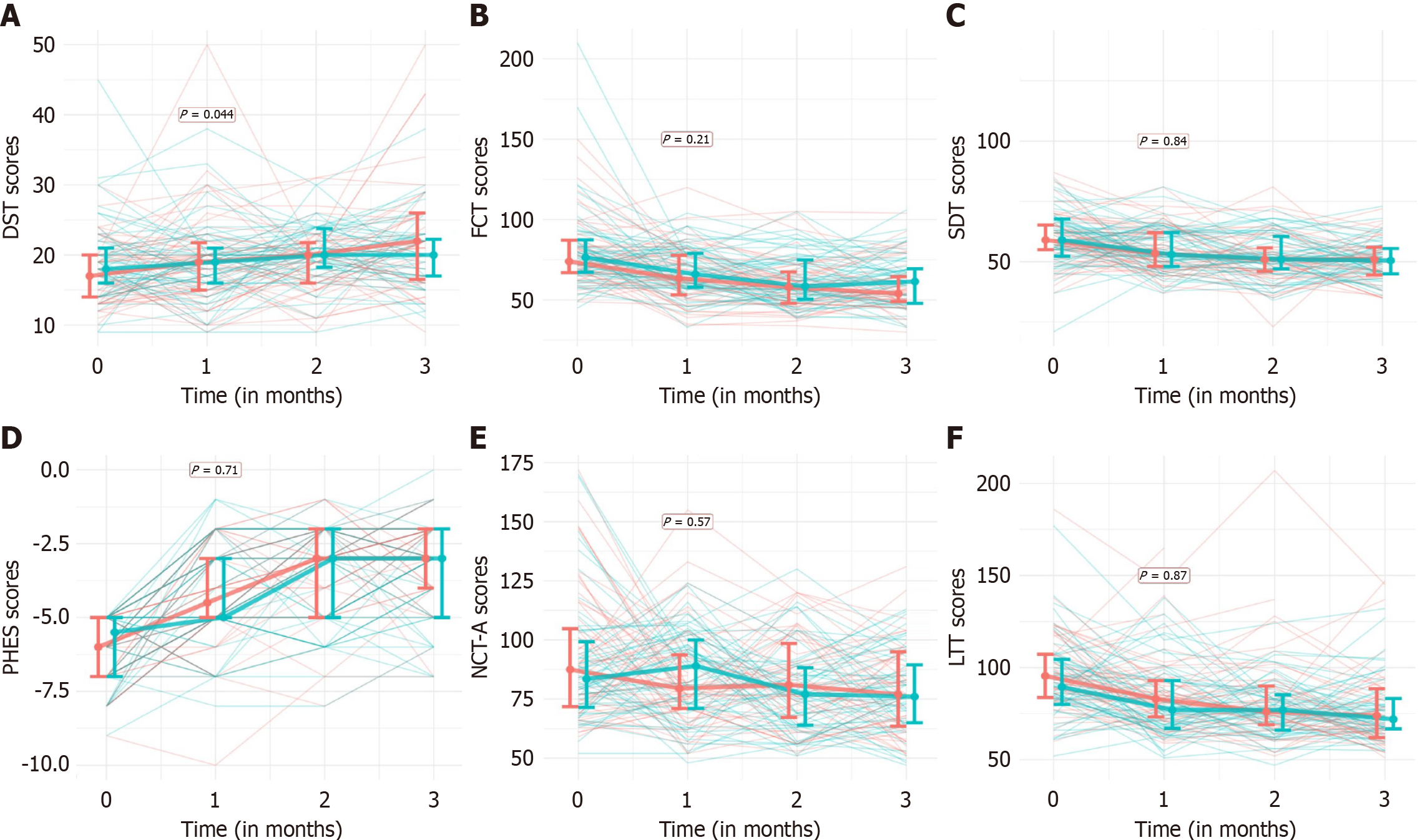
Figure 2 Changes in psychometric hepatic encephalopathy score and components of psychometric hepatic encephalopathy score over 3 months.
A-F: Components of psychometric hepatic encephalopathy score. DST: Digit symbol test; FCT: Figure connection test; SDT: Serial-dotting test; PHES: Psychometric hepatic encephalopathy score; NCT-A: Number connection test-A; LTT: Line-tracing test; FMT: Fecal microbiota transplantation.
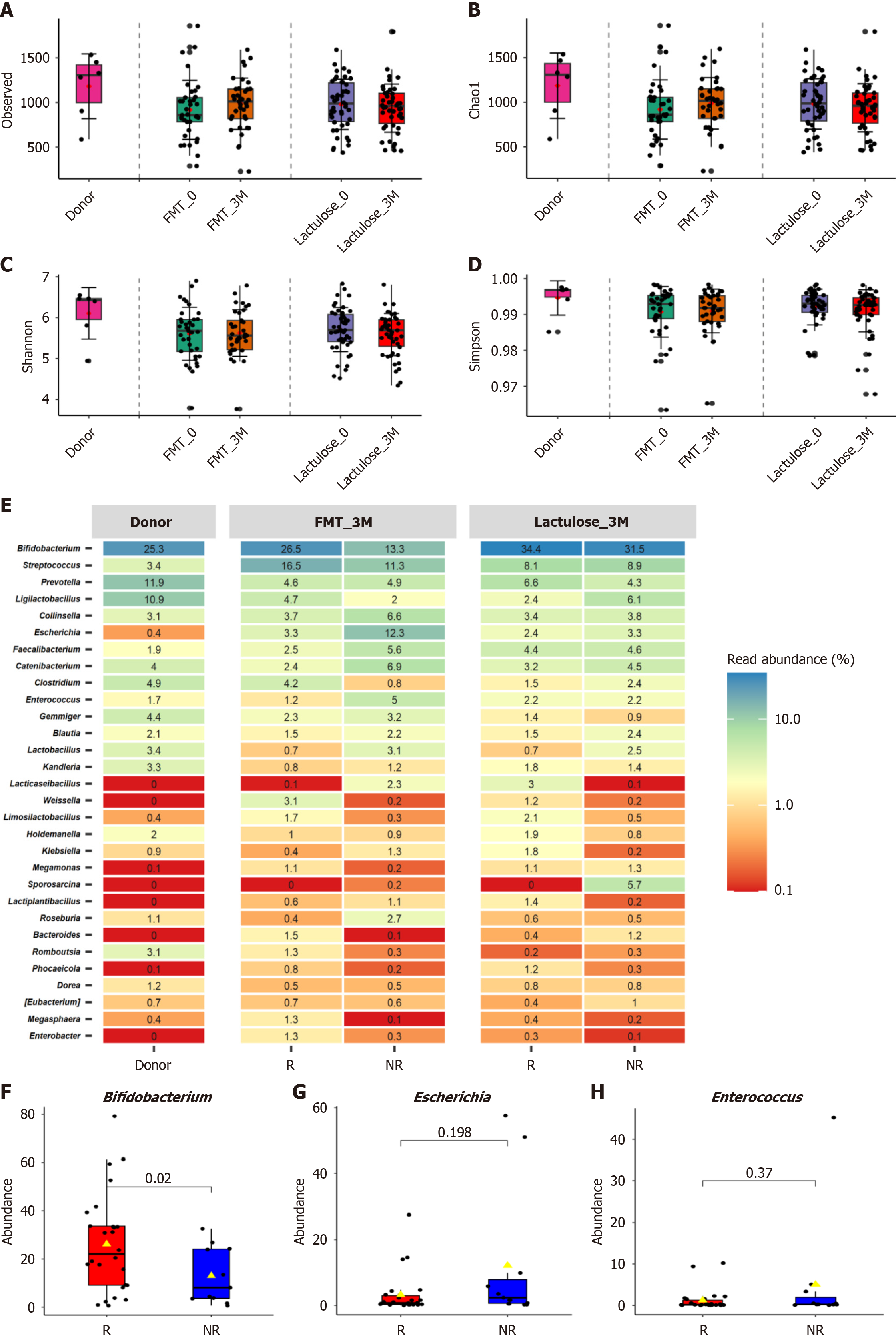
Figure 3 Alpha diversity and taxonomic abundance comparisons in donors, fecal microbiota transplantation, and lactulose groups.
A-D: Alpha diversity metrics (Observed, Chao1, Shannon, and Simpson indices) comparing microbiota diversity across different groups: Donor, fecal microbiota transplantation (FMT) baseline, after 3 months (n = 37), lactulose baseline, and after 3 months (n = 46). The Boxplots show the median, interquartile range, and individual data points (differences among groups, P > 0.05, Tukey-HSD test, non-parametric test); E: A heat map illustrating taxonomic abundance and comparisons among donors, minimal hepatic encephalopathy responders, and non-responders in the FMT and Lactulose groups after 3 months; F-H: Box plots showing the mean relative abundance of (%) of Bifidobacterium (P = 0.02, t-test), Escherichia (P = 0.20, t-test), and Enterococcus (P = 0.37, t-test) between responders and non-responders after 3 months in FMT group. FMT_0: Fecal microbiota transplantation baseline; FMT_3M: Fecal microbiota transplantation after 3 months; Lactulose_0: Lactulose baseline; Lactulose_3M: Lactulose after 3 months; R: Responders; NR: Non-responders.
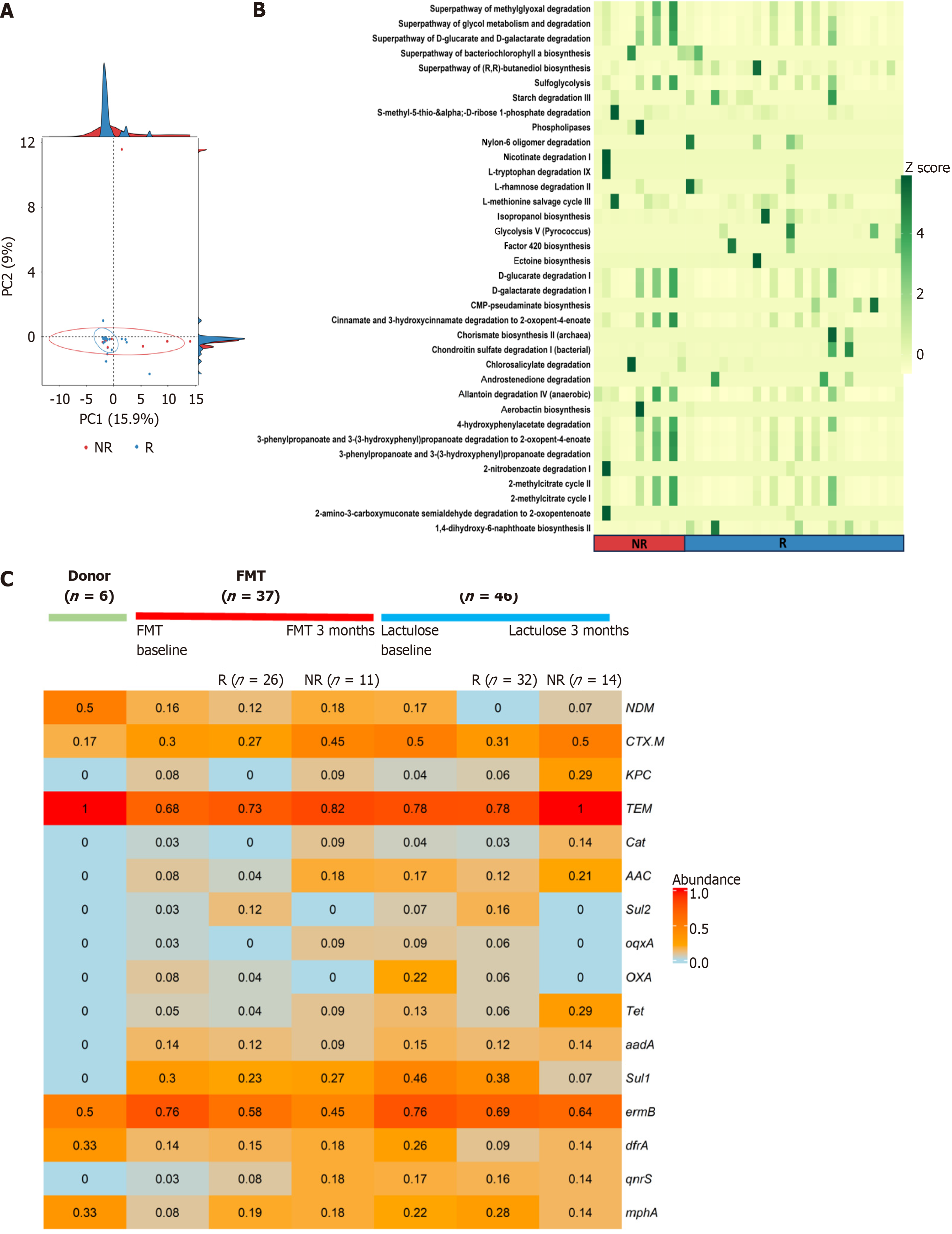
Figure 4 Functional analysis of minimal hepatic encephalopathy responders and non-responders in the fecal microbiota transplantation group.
A and B: Differential abundance analysis using edgeR (P-adjusted < 0.05). Principal component analysis plot comparing minimal hepatic encephalopathy responders (R) and non-responders (NR) (A). Heatmap displaying the 36 differentially enriched metabolic pathways between R and NR, represented by Z scores (B); C: Heatmap showing the proportion of individuals testing positive for antimicrobial resistance genes among donors, baseline (fecal microbiota transplantation and lactulose), after 3 months (R and NR) for both fecal microbiota transplantation and lactulose. The Y-axis represents the different antimicrobial resistance genes, and the X-axis represents the various groups. R: Responders; NR: Non-responders; PC: Principal component; FMT: Fecal microbiota transplantation; NDM: New Delhi metallo-β-lactamase; CTX.M: Cefotaxime-Munich; KPC: Klebsiella pneumoniae carbapenemase; TEM: Temoniera; Cat:; AAC: Aminoglycoside acetyltransferase; Sul2: Sulfonamide-resistant dihydropteroate synthase 2; oqxa: Olaquindox resistance efflux pump subunit A; OXA: Oxacillinase; Tet: Tetracycline resistance gene/protei; aadA: Aminoglycoside adenylyltransferase A; sul1: Sulfonamide-resistant dihydropteroate synthase 1; ermB: Erythromycin ribosome methylase B; dfrA: Dihydrofolate reductase A; qnrS: Quinolone resistance gene S; mphA: Macrolide phosphotransferase A.
- Citation: Agarwal A, Agrawal S, Talukdar D, Kaur M, Biswas S, Swaroop S, Golla R, Kandiyal B, Jana P, Tanwar S, Aggarwal A, Singh HC, Agarwal A, Mahajan M, Tiwari B, Nayak B, Goel A, Das B, Shalimar. Impact of two-session fecal microbiota transplantation on minimal hepatic encephalopathy in cirrhosis. World J Hepatol 2026; 18(4): 116153
- URL: https://www.wjgnet.com/1948-5182/full/v18/i4/116153.htm
- DOI: https://dx.doi.org/10.4254/wjh.v18.i4.116153