
















©The Author(s) 2025.
World J Hepatol. Dec 27, 2025; 17(12): 111198
Published online Dec 27, 2025. doi: 10.4254/wjh.v17.i12.111198
Published online Dec 27, 2025. doi: 10.4254/wjh.v17.i12.111198
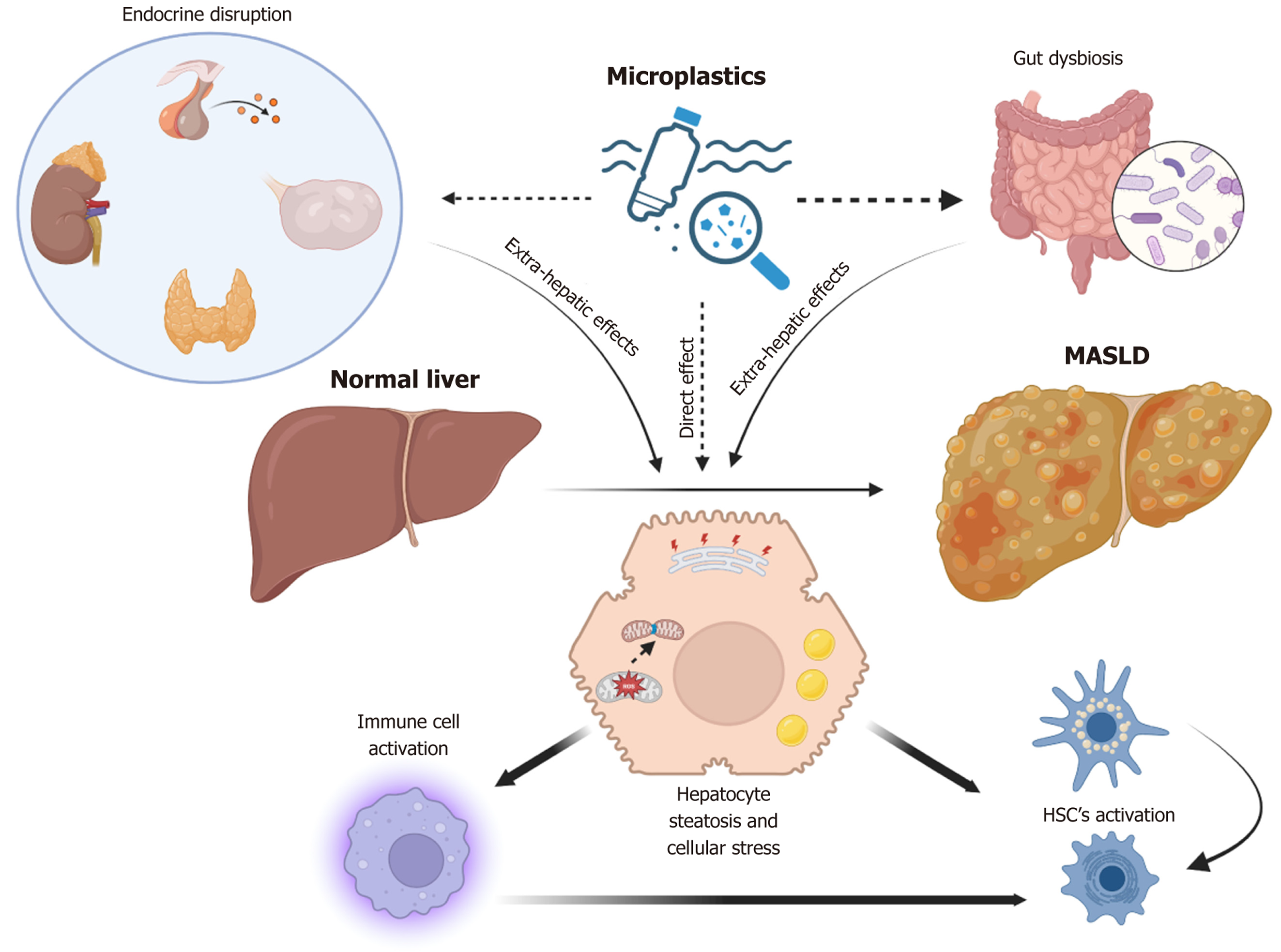
Figure 1 Schematic representation showing both the extra-hepatic and direct hepatic effects of microplastics in contributing to metabolic dysfunction-associated steatotic liver disease progression.
Microplastics, either directly or through extrahepatic signaling, lead to alterations in the cellular state of liver cells, including hepatocytes, immune cells, and hepatic stellate cells. Microplastics induce steatosis and cellular stress, including mitochondrial damage and fission in hepatocytes, which may result in the release of pro-inflammatory/pro-fibrotic cytokines. This release may subsequently activate immune cells and hepatic stellate cells, leading to increased inflammation and fibrosis in metabolic dysfunction-associated steatotic liver disease. MASLD: Metabolic dysfunction-associated steatotic liver disease; HSC: Hepatic stellate cells.
- Citation: Rajak S, Shahi A, Yadav A, Medhe P, Sinha RA. Microplastics in metabolic dysfunction-associated steatotic liver disease: An emerging threat to liver health. World J Hepatol 2025; 17(12): 111198
- URL: https://www.wjgnet.com/1948-5182/full/v17/i12/111198.htm
- DOI: https://dx.doi.org/10.4254/wjh.v17.i12.111198