















Copyright: ©Author(s) 2026.
World J Stem Cells. May 26, 2026; 18(5): 117584
Published online May 26, 2026. doi: 10.4252/wjsc.v18.i5.117584
Published online May 26, 2026. doi: 10.4252/wjsc.v18.i5.117584
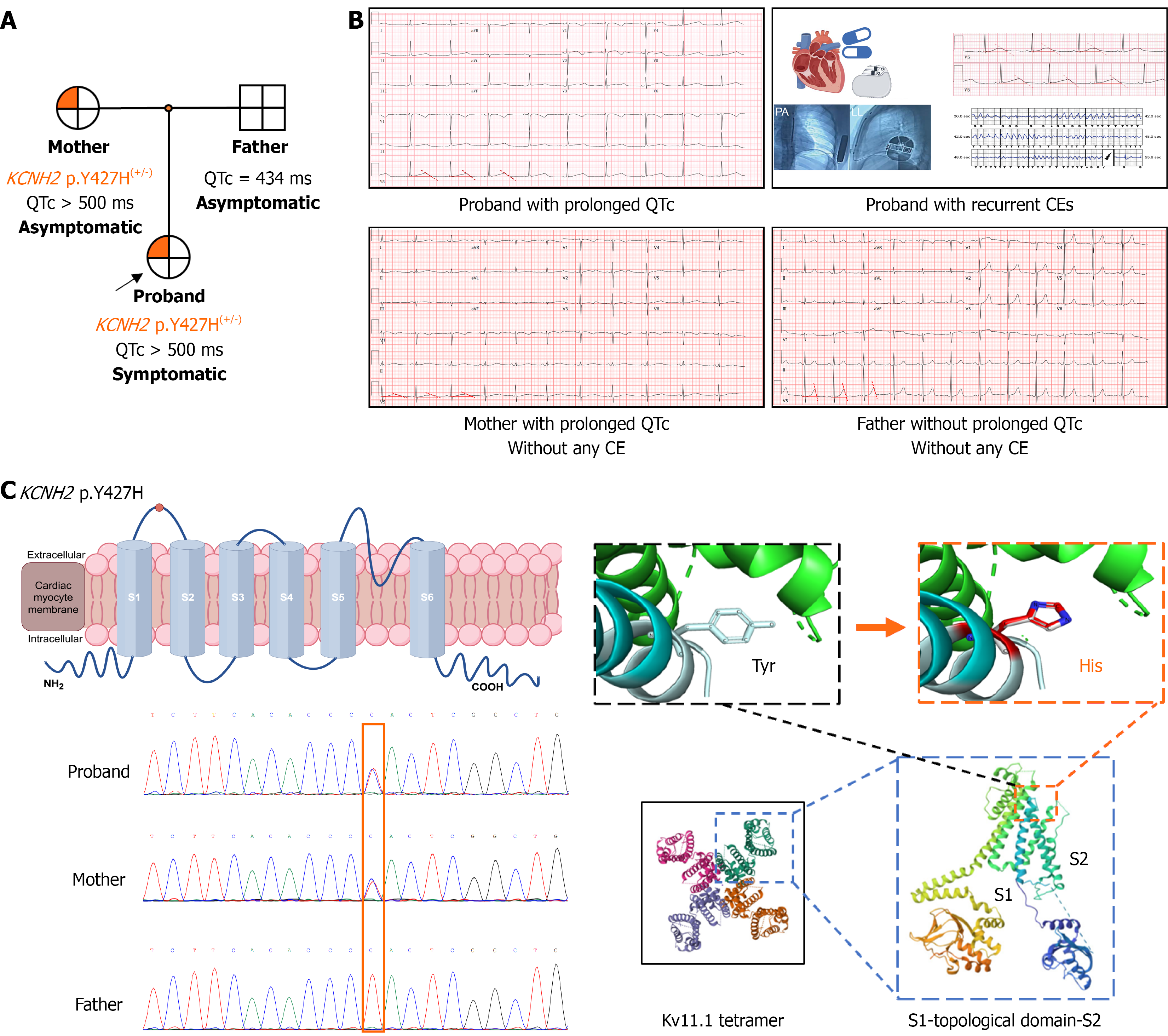
Figure 1 Clinical and genetic characterization of a family trio.
A: Pedigree of the family trio with congenital long QT syndrome type 2 (LQT2). The proband is indicated by an arrow. The genotypes and clinical phenotypes are annotated; B: 12-lead electrocardiogram of the family trio and treatment of the proband. QTc duration shortening following combination therapy with propranolol and mexiletine. The subcutaneous implantable cardioverter defibrillator tracings confirm appropriate shocks that terminate torsades de pointes and ventricular fibrillation; C: Sanger sequencing confirms heterozygosity for the KCNH2 p.Y427H variant in the proband and her mother, whereas the father does not carry this variant, consistent with findings from their induced pluripotent stem cells. The topology of the KCNH2-encoded Kv11.1 (hERG) channel shows the p.Y427H substitution, where tyrosine at position 427 is replaced by histidine in the S1-S2 topological domain. Tyr: Tyrosine; His: Histidine; CE: Cardiac event.
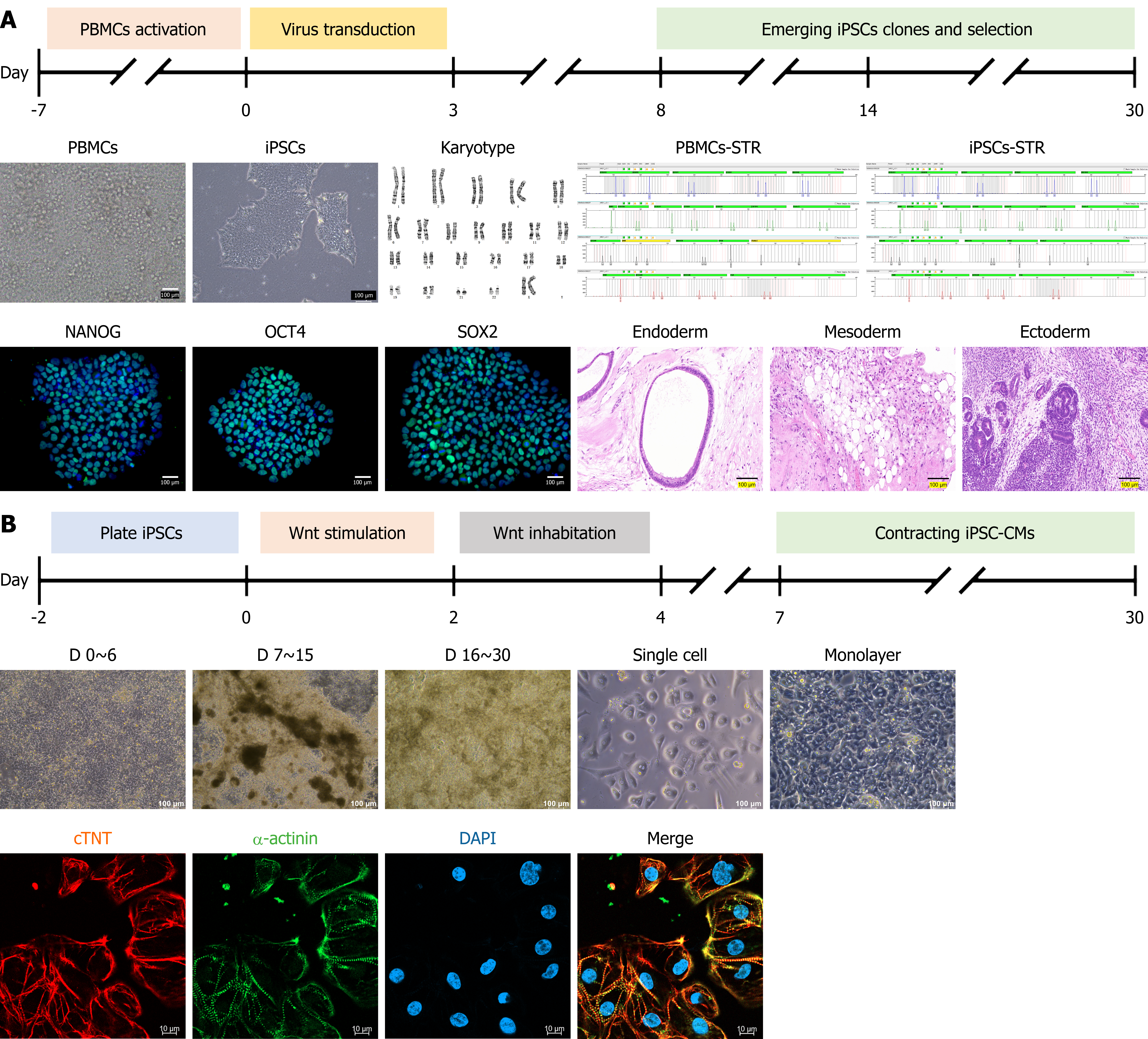
Figure 2 Generation and characterization of family trio induced pluripotent stem cell-derived cardiomyocytes.
A: Reprogramming process: Representative bright-field images of peripheral blood mononuclear cells and 10th-passage induced pluripotent stem cells (iPSCs). G-banding karyotyping and short tandem repeat profiling confirm genomic stability. Immunofluorescence staining shows robust expression of pluripotency markers (NANOG, OCT4, SOX2) in green, with a DAPI counterstain in blue. Teratoma formation experiments in immunodeficient mice demonstrate iPSCs differentiation into all three germ layers: Endoderm (respiratory epithelium), mesoderm (adipocytes), and ectoderm (neuronal cells), confirming pluripotency. Scale bars: 100 μm; B: Differentiation process: Mor
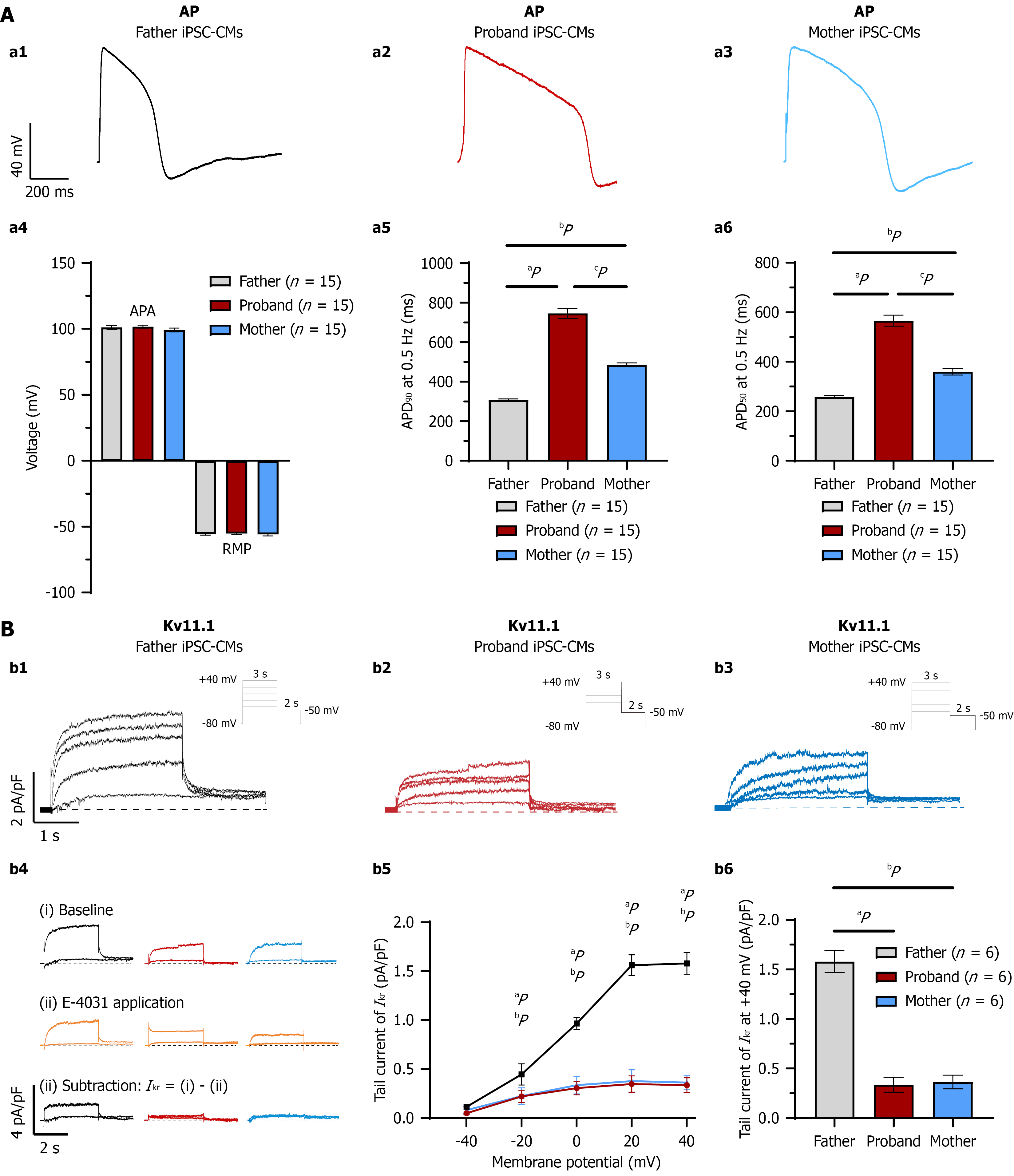
Figure 3 Action potentials and rapid delayed rectifier potassium current characteristics of family trio induced pluripotent stem cell-derived cardiomyocytes.
A: Representative action potentials under 0.5-Hz pacing from father induced pluripotent stem cell-derived cardiomyocytes (iPSC-CMs) (a1), proband iPSC-CMs (a2), and mother iPSC-CMs (a3). Panel shows resting membrane potential and action potential amplitude (a4), while panels present statistical analysis of APD90 and APD50 (a5 and a6). Data represent n = 15 from 3 independent differentiations; B: Representative total potassium currents from father iPSC-CMs (b1), proband iPSC-CMs (b2), and mother iPSC-CMs (b3). Panel shows the IKr current, obtained by subtracting the current before and after E4031 treatment (b4). Panel represents the difference in IKr tail current density (b5 and b6). Data represent n = 6 from 3 independent differentiations. iPSC-CMs: Induced pluripotent stem cell-derived cardiomyocytes; APA: Action potential amplitude; RMP: Resting membrane potential.
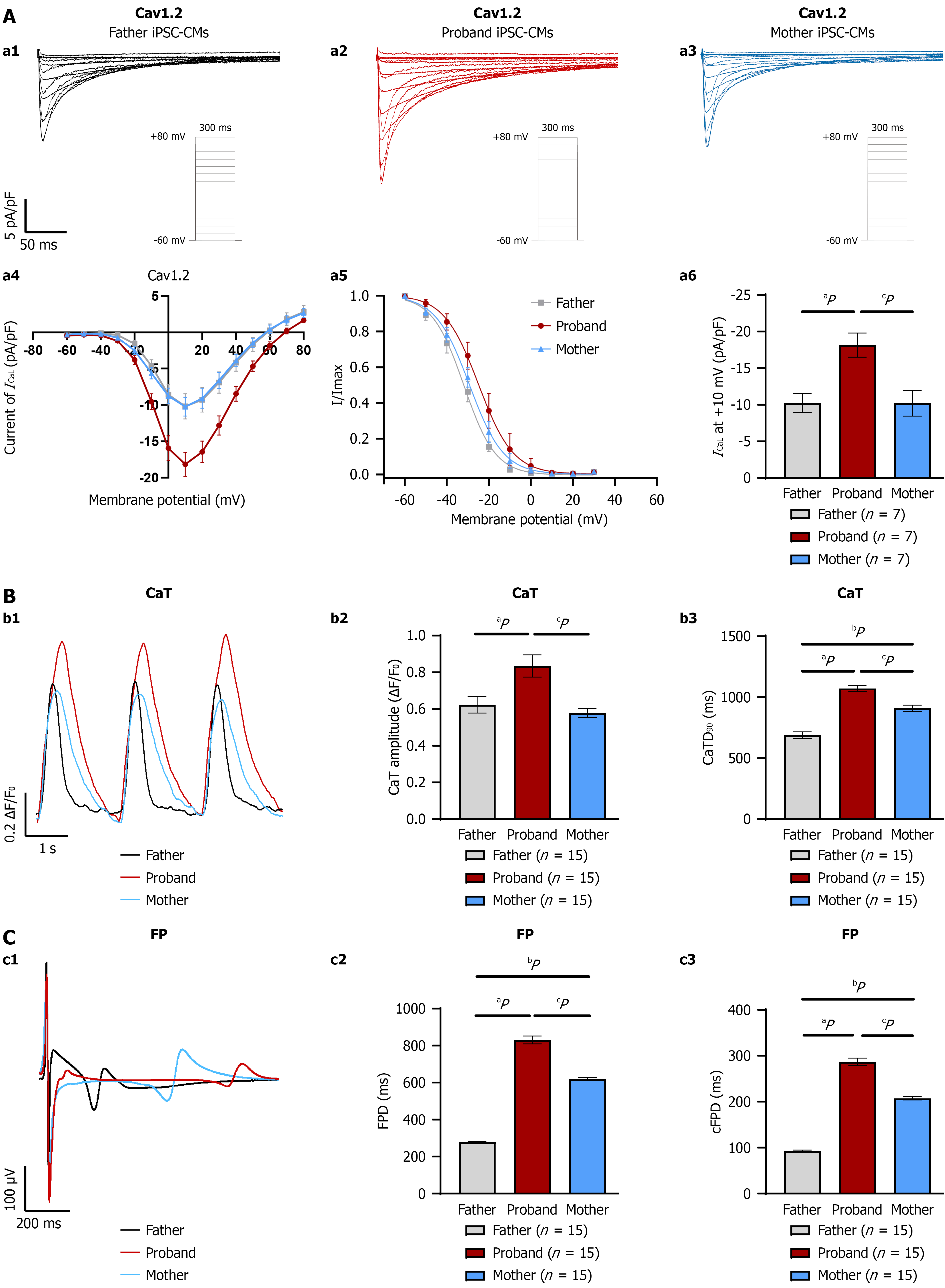
Figure 4 Calcium handling and field potential characteristics of family trio induced pluripotent stem cell-derived cardiomyocytes.
A: Representative ICaL from the father induced pluripotent stem cell-derived cardiomyocytes (iPSC-CMs) (a1), proband iPSC-CMs (a2), and mother iPSC-CMs (a3). Panel shows the I-V curve of ICaL (a4), panel presents the inactivation curve of ICaL (a5), and panel shows the statistical data of ICaL density at a membrane potential of +10 mV (a6). Data represent n = 7 from 3 independent differentiations; B: Representative calcium transient waveforms from the three groups (b1). Statistical analysis of the calcium transient peak amplitude (b2). Statistical analysis of the calcium transient at 90% decay (CaTD90) (b3). Data represent n = 15 regions of interest from 3 independent differentiations; C: Representative field potential waveforms from the three groups (c1). Statistical analysis of the field potential duration and corrected field potential duration (c2 and c3). Data represent n = 15 from 3 independent differentiations. iPSC-CMs: Induced pluripotent stem cell-derived cardiomyocytes; CaT: Calcium transient; CaTD: Calcium transient duration; FP: Field potential; FPD: Field potential duration; cFPD: Corrected field potential duration.
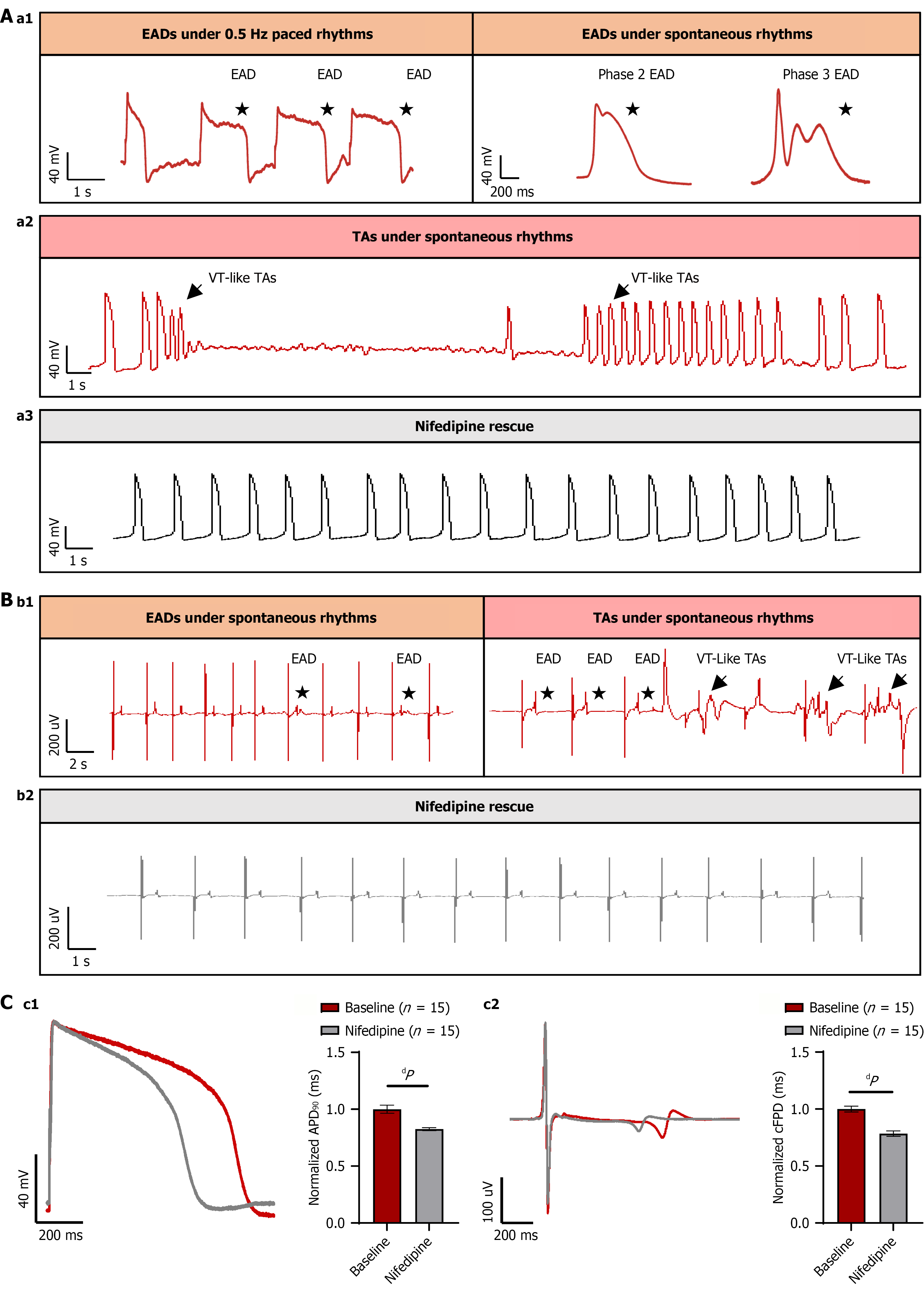
Figure 5 Arrhythmogenic behavior of family trio induced pluripotent stem cell-derived cardiomyocytes.
A: Representative early after
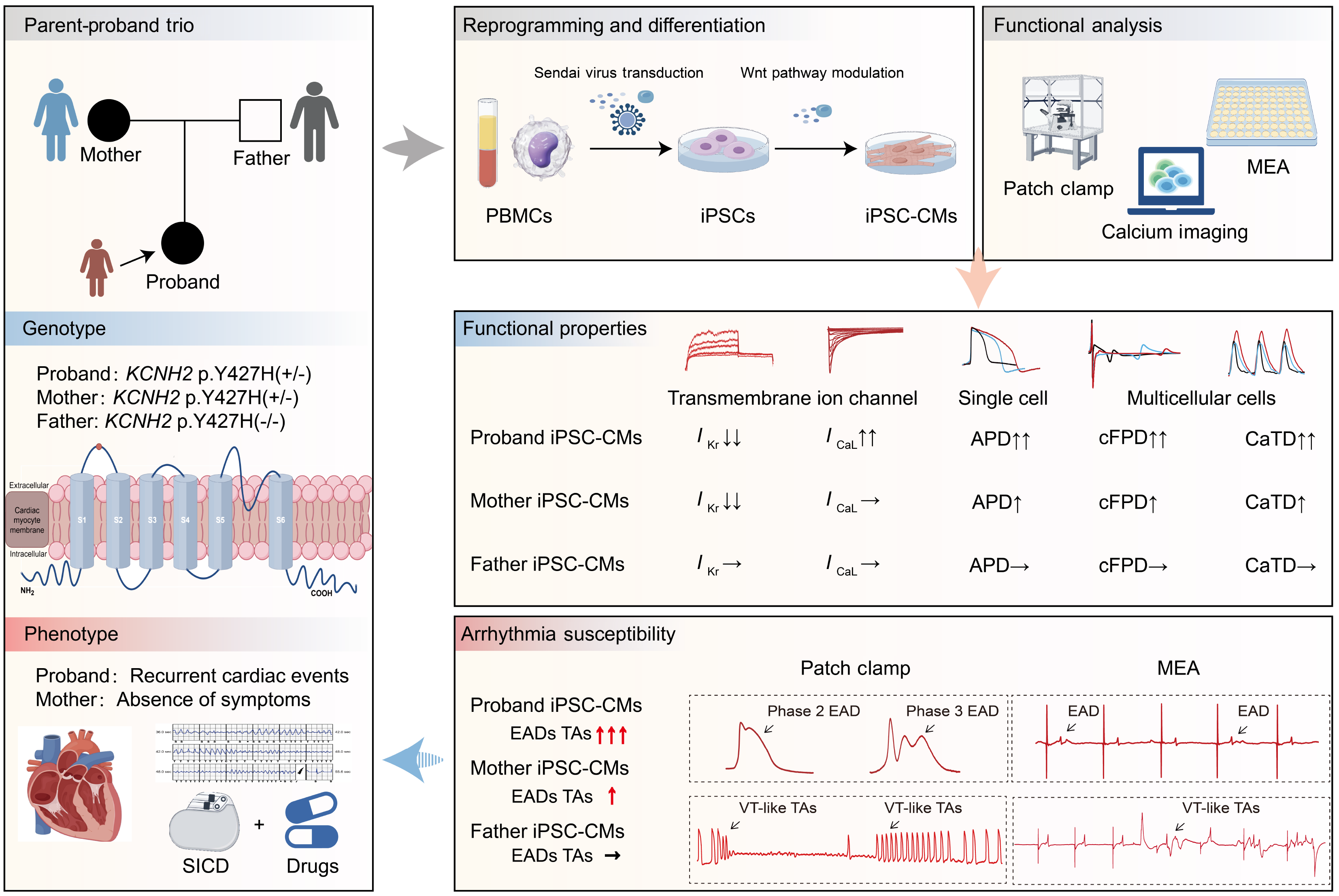
Figure 6 Graphical abstract.
PBMCs: Peripheral blood mononuclear cells; iPSCs: Induced pluripotent stem cells; iPSC-CMs: Induced pluripotent stem cell-derived cardiomyocytes; MEA: Multi-electrode array; APD: Action potential duration; cFPD: Corrected field potential duration; CaTD: Calcium transient duration; EADs: Early afterdepolarizations; VT: Ventricular tachycardia; TAs: Triggered arrhythmias; SICD: Subcutaneous implantable cardioverter defibrillator.
- Citation: Li Q, Guo CT, Ren JC, Wang YF, Zhao ZJ, Lv CH, Wang QY, Liu Q, Li K, Yang J, He R, Liu FL, Lv TT, Zhang P. Calcium dysregulation underlies phenotypic diversity in LQT2: Insights from induced pluripotent stem cell-derived cardiomyocytes of a KCNH2 p.Y427H family trio. World J Stem Cells 2026; 18(5): 117584
- URL: https://www.wjgnet.com/1948-0210/full/v18/i5/117584.htm
- DOI: https://dx.doi.org/10.4252/wjsc.v18.i5.117584