
















Copyright: ©Author(s) 2026.
World J Stem Cells. May 26, 2026; 18(5): 115486
Published online May 26, 2026. doi: 10.4252/wjsc.v18.i5.115486
Published online May 26, 2026. doi: 10.4252/wjsc.v18.i5.115486
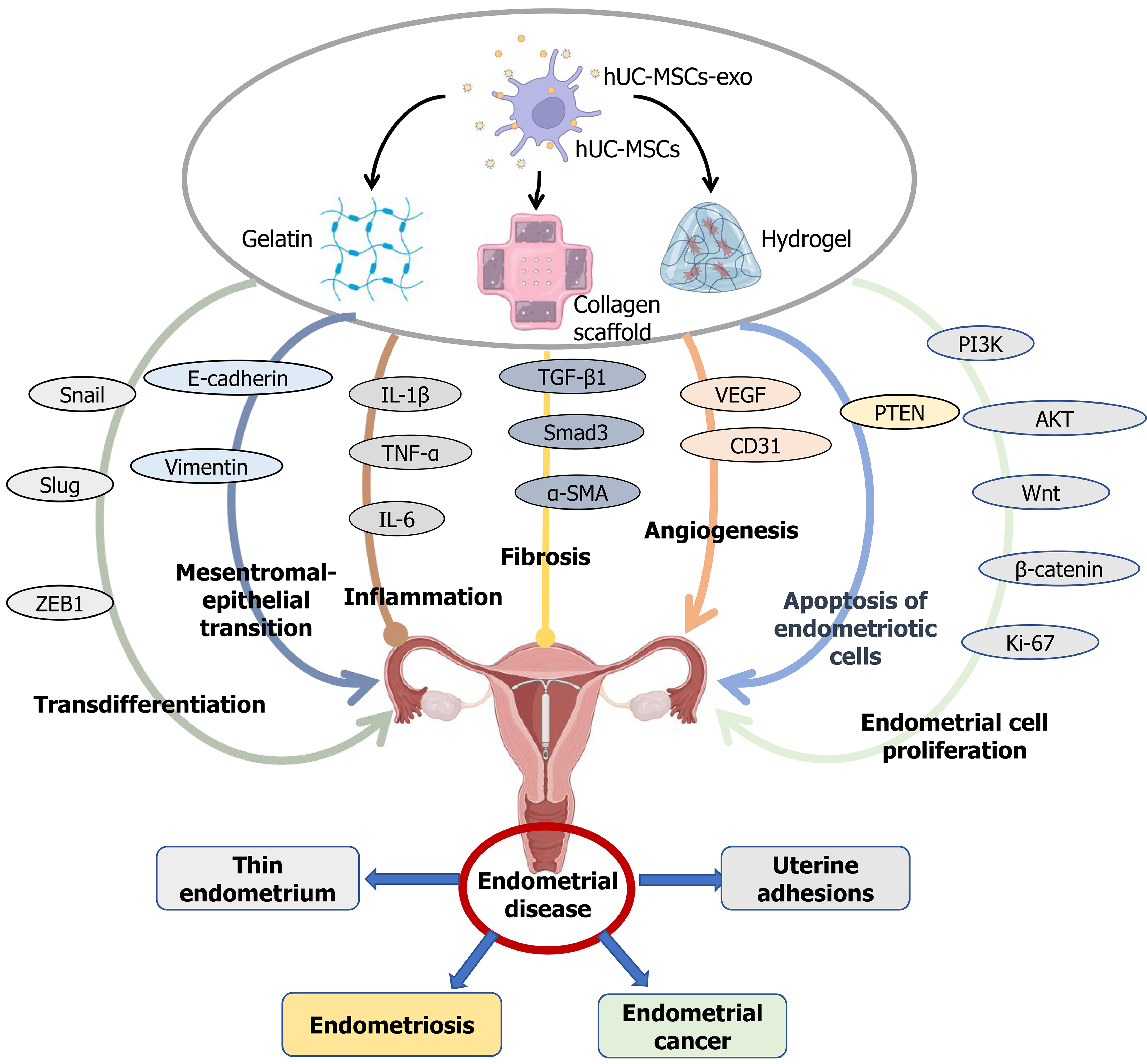
Figure 1 Schematic figure illustrating the mechanisms of human umbilical cord mesenchymal stem cells and their exosomes in the treatment of endometrial diseases.
HUC-MSCs: Human umbilical cord mesenchymal stem cells; HUC-MSCs-exo: Human umbilical cord mesenchymal stem cells-derived exosomes; ZEB1: Zinc finger E-box binding homeobox 1; IL-1β: Interleukin 1β; TNF-α: Tumor necrosis factor alpha; IL-6: Interleukin 6; TGF-β1: Transforming growth factor β1; Smad3: Mothers against decapentaplegic homolog 3; α-SMA: Alpha smooth muscle actin; VEGF: Vascular endothelial growth factor; PTEN: Phosphatase and tensin homolog; PI3K: Phosphoinositide 3-kinase; AKT: Protein kinase B.
- Citation: Wang HL, Zhang SD, Liu T, Liu LM, Pan XY. Innovations in the treatment of endometrial diseases: Role of human umbilical cord mesenchymal stem cells and their exosomes. World J Stem Cells 2026; 18(5): 115486
- URL: https://www.wjgnet.com/1948-0210/full/v18/i5/115486.htm
- DOI: https://dx.doi.org/10.4252/wjsc.v18.i5.115486