
















©Author(s) (or their employer(s)) 2026.
World J Stem Cells. Feb 26, 2026; 18(2): 114980
Published online Feb 26, 2026. doi: 10.4252/wjsc.v18.i2.114980
Published online Feb 26, 2026. doi: 10.4252/wjsc.v18.i2.114980
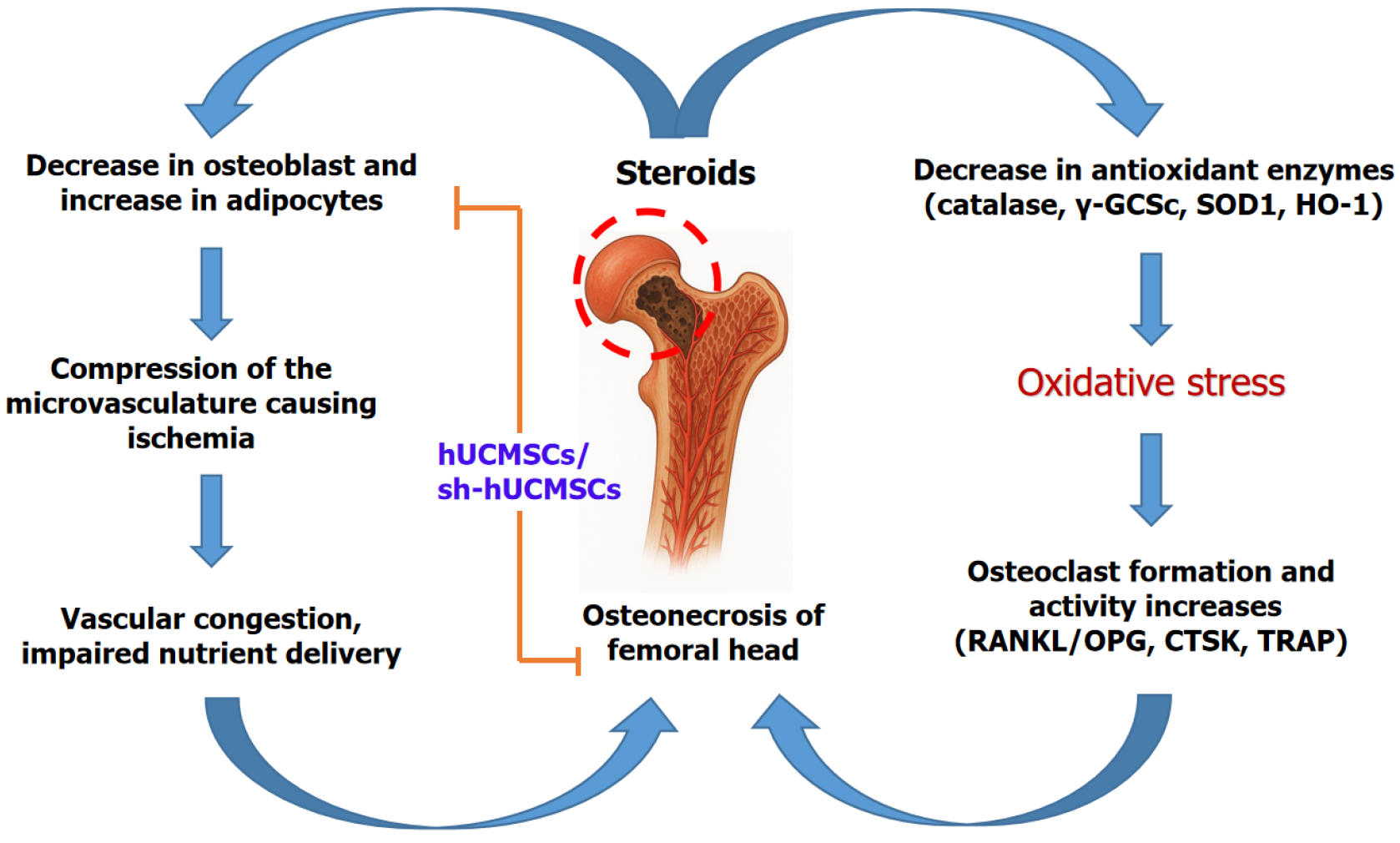
Figure 1 Mechanistic overview illustrating the pathogenesis of steroid-induced avascular necrosis of the femoral head and the potential therapeutic mechanism of sclerostin-silenced human umbilical cord mesenchymal stem cells.
The left panel depicts the pathogenesis caused by prolonged steroid exposure whereas the right panel illustrates that steroids decrease the activity of key antioxidant enzymes, leading to excessive oxidative stress and upregulation of osteoclast activity markers. These combined effects disrupt bone remodeling and weaken trabecular architecture, resulting in osteonecrosis of the femoral head. Administration of sclerostin-silenced human umbilical cord mesenchymal stem cells counteracts these effects. hUCMSCs: Human umbilical cord mesenchymal stem cells; γ-GCSc: Gamma-glutamylcysteine synthase; SOD1: Superoxide dismutase 1; HO-1: Heme oxygenase-1; RANKL: Receptor activator of nuclear factor kappa B ligand; OPG: Osteoprotegerin; CTSK: Cathepsin K; TRAP: Tartrate-resistant acid phosphatase.
- Citation: Sharma P, Maurya DK. Sclerostin silencing in human umbilical cord mesenchymal stem cells enhances bone regeneration via Wnt pathway activation. World J Stem Cells 2026; 18(2): 114980
- URL: https://www.wjgnet.com/1948-0210/full/v18/i2/114980.htm
- DOI: https://dx.doi.org/10.4252/wjsc.v18.i2.114980