
















©The Author(s) 2025.
World J Gastroenterol. Dec 28, 2025; 31(48): 111301
Published online Dec 28, 2025. doi: 10.3748/wjg.v31.i48.111301
Published online Dec 28, 2025. doi: 10.3748/wjg.v31.i48.111301
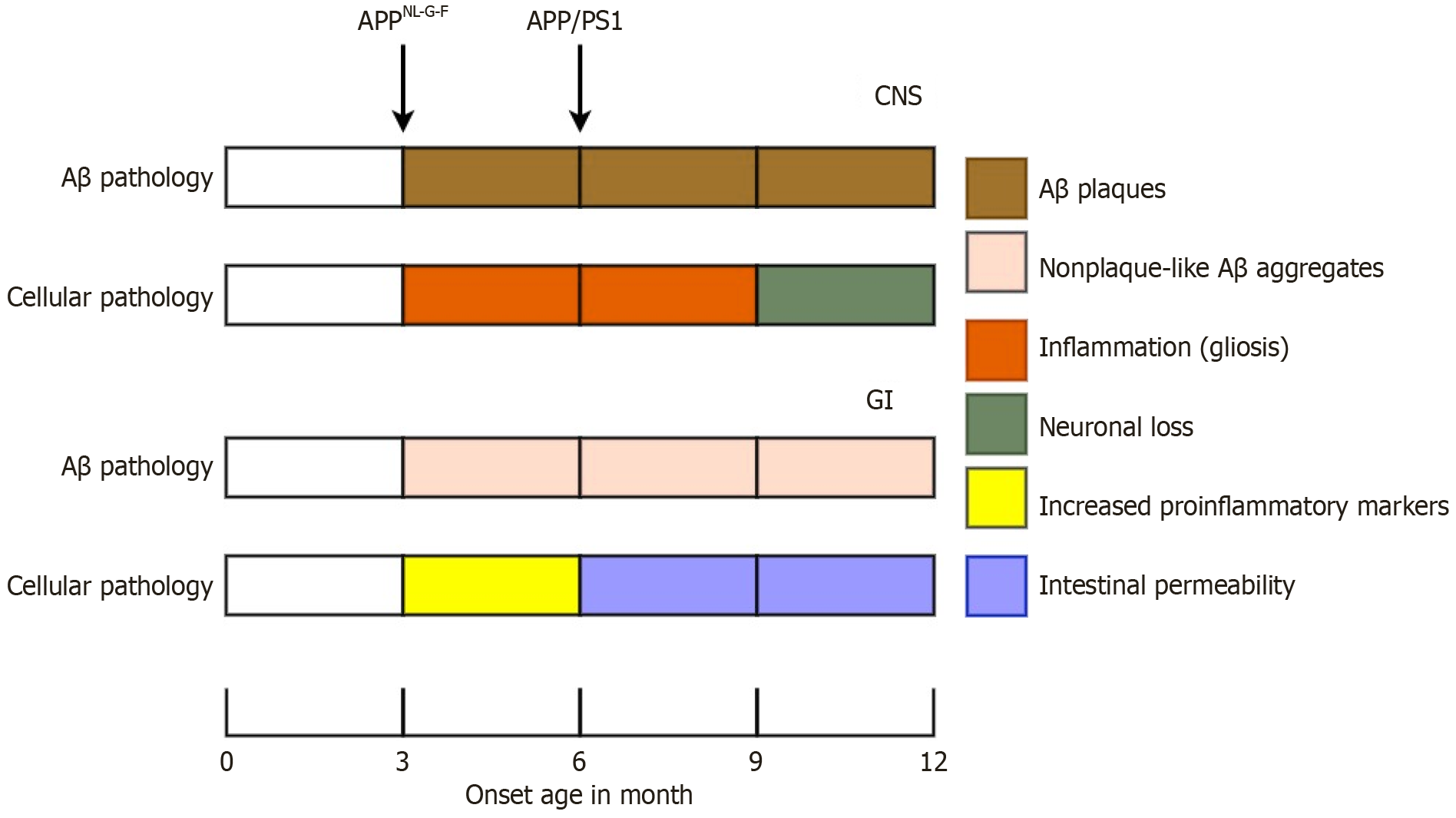
Figure 1 This schematic timeline illustrates the progression of Alzheimer’s disease-related pathologies in the central nervous system and gastrointestinal tracts of APPNL-G-F and amyloid precursor protein/PS1 transgenic mouse models.
APP: Amyloid precursor protein; CNS: Central nervous system; GI: Gastrointestinal; Aβ: Amyloid-β.
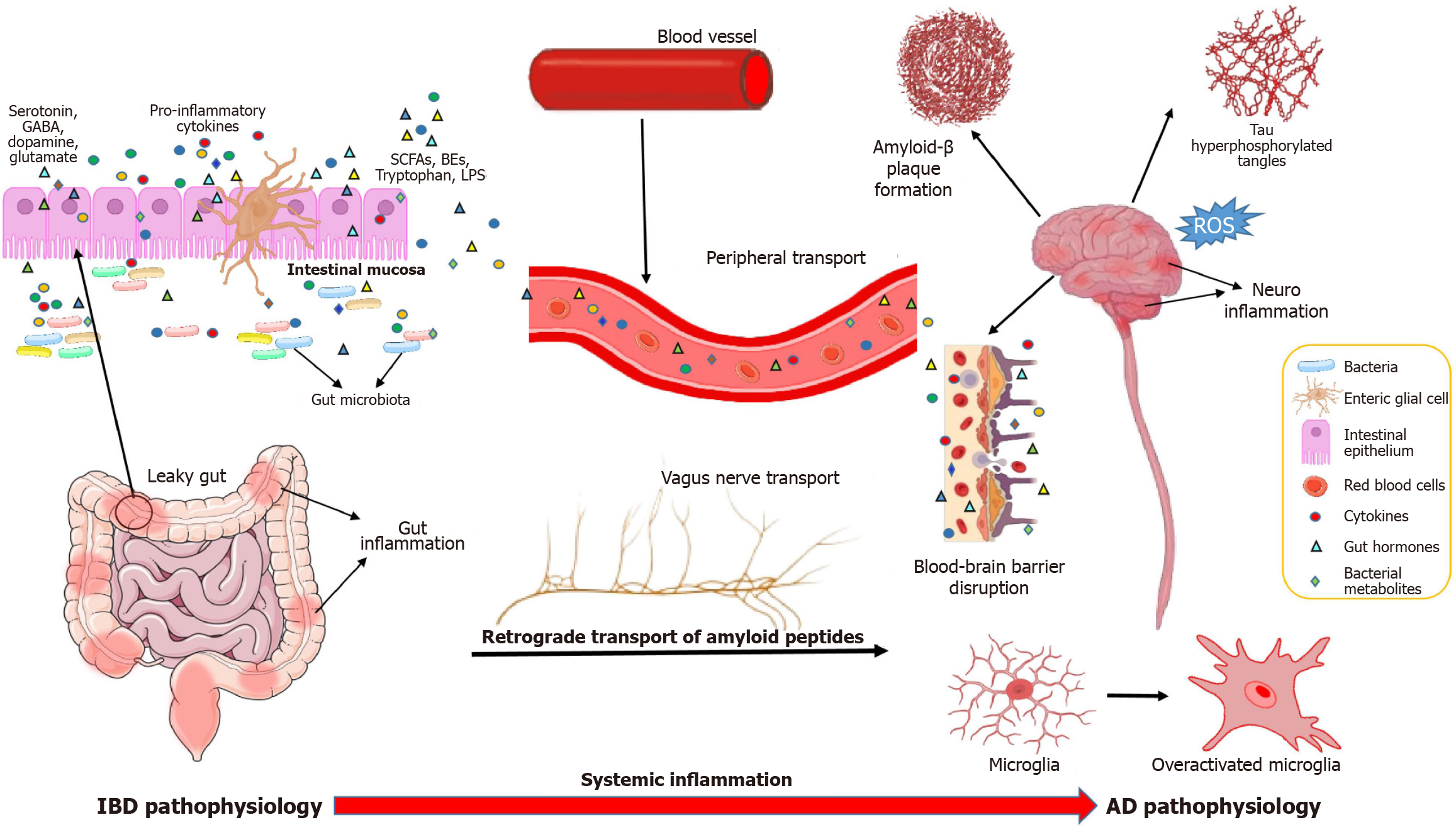
Figure 2 Detailed schematics of inflammatory bowel disease pathophysiology and its transformation into Alzheimer’s disease pathophysiology: Gut inflammation and increased intestinal permeability lead to systemic transport of inflammatory mediators via peripheral circulation and vagus nerve, resulting in blood-brain barrier disruption, amyloid-β accumulation, tau hyperphosphorylation, and neuroinflammation.
SCFAs: Short-chain fatty acids; LPS: Lipopolysaccharides; IBD: Inflammatory bowel disease; AD: Alzheimer’s disease; ROS: Reactive oxygen species; GABA: γ-aminobutyric acid.
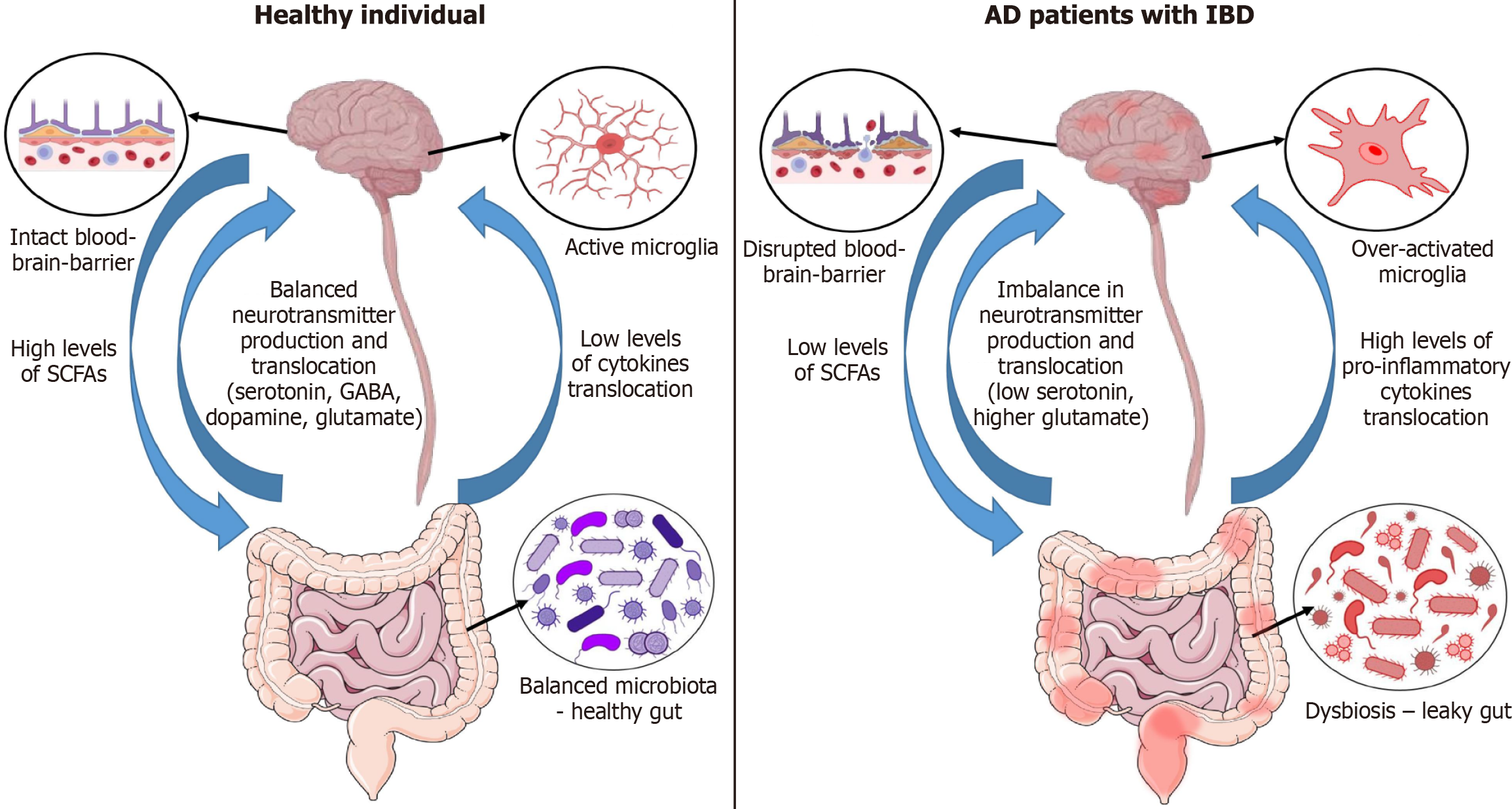
Figure 3 Gut-brain axis comparison between healthy individuals and Alzheimer's disease patients with inflammatory bowel disease.
Healthy individuals maintain intact blood-brain barrier (BBB), balanced neurotransmitters, and diverse gut microbiota, while Alzheimer’s disease patients with inflammatory bowel disease exhibit disrupted BBB, neuroinflammation, dysbiosis, and reduced short-chain fatty acids. SCFAs: Short-chain fatty acids; GABA: γ-aminobutyric acid.
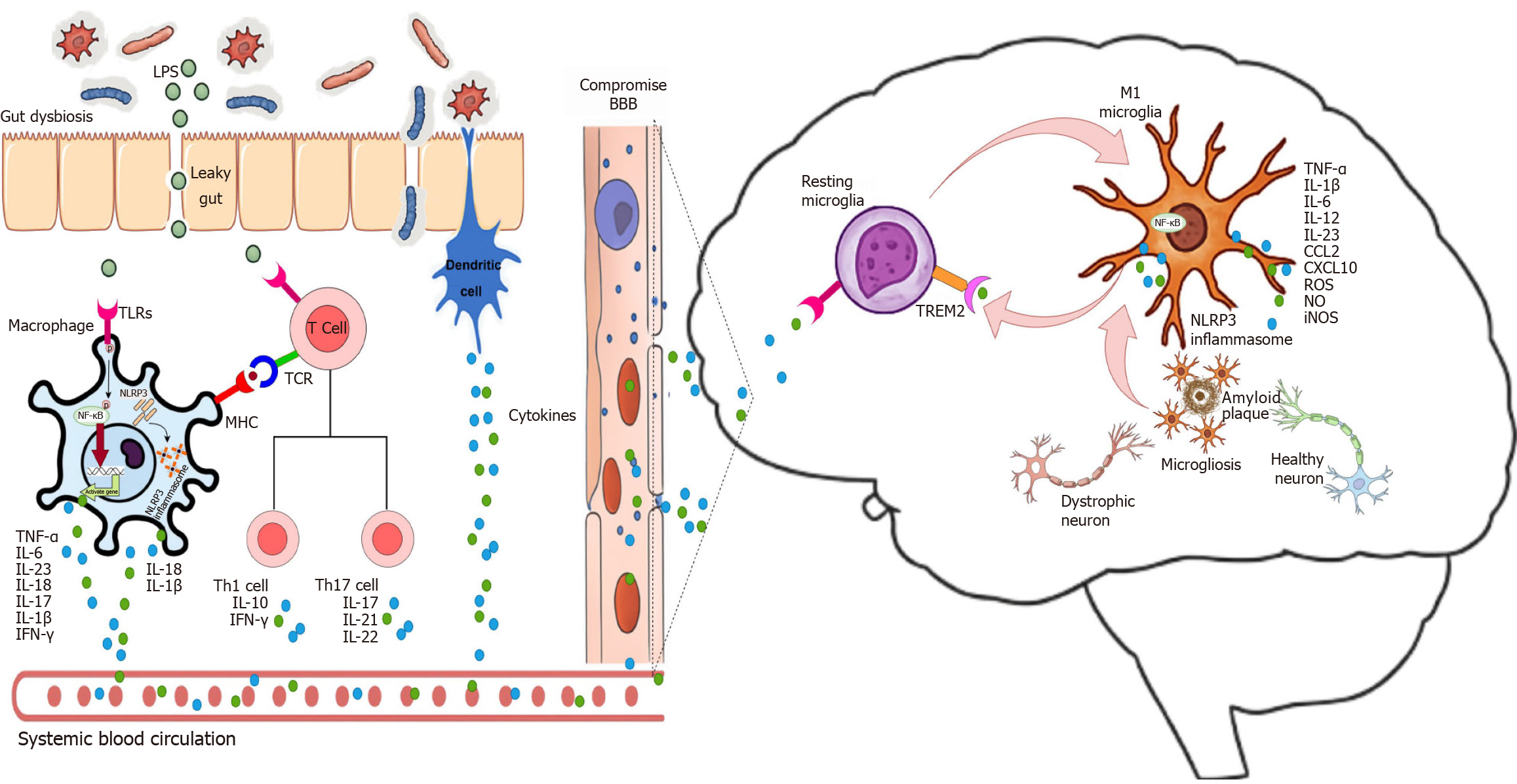
Figure 4 Gut-brain axis: From dysbiosis to neuroinflammation.
Gut dysbiosis leads to a leaky gut and systemic inflammation, releasing pro-inflammatory mediators. These mediators cross a compromised blood-brain barrier, activating resting microglia into a pro-inflammatory M1 phenotype. Activated M1 microglia release cytokines, chemokines, and reactive oxygen species, causing neuronal damage (dystrophic neurons) and contributing to pathologies like amyloid-β plaque formation and microgliosis, highlighting the gut-brain axis's role in neuroinflammation. LPS: Lipopolysaccharides; TLRs: Toll-like receptors; TNF-α: Tumor necrosis factor-alpha; IL: Interleukin; BBB: Blood-brain barrier; TREM2: Triggering receptor expressed on myeloid cells 2; NF-kB: Nuclear factor kappa B; ROS: Reactive oxygen species.
- Citation: Durairajan SSK, Singh AK, Sulaiman SM, Patnaik S, Krishnamoorthi S, Iyaswamy A, Vellingiri B, Yang CB, Williams LL. Molecular links between inflammatory bowel disease and Alzheimer’s disease through immune signaling and inflammatory pathways. World J Gastroenterol 2025; 31(48): 111301
- URL: https://www.wjgnet.com/1007-9327/full/v31/i48/111301.htm
- DOI: https://dx.doi.org/10.3748/wjg.v31.i48.111301