
















Copyright: ©Author(s) 2026.
World J Clin Cases. Mar 16, 2026; 14(8): 118420
Published online Mar 16, 2026. doi: 10.12998/wjcc.v14.i8.118420
Published online Mar 16, 2026. doi: 10.12998/wjcc.v14.i8.118420
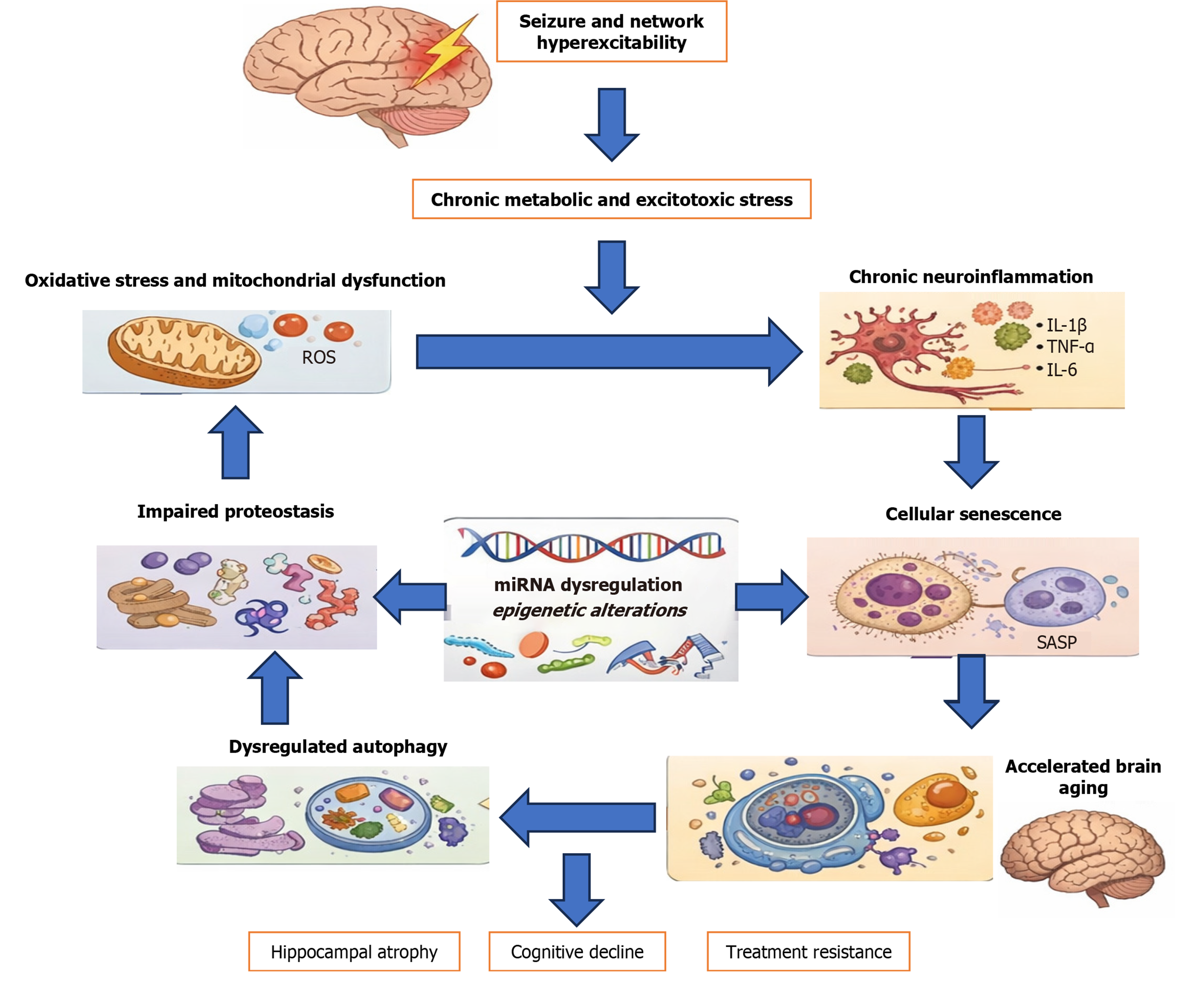
Figure 1 Recurrent seizures and persistent network hyperexcitability in temporal lobe epilepsy impose chronic metabolic stress, calcium dysregulation, and excitotoxic injury, leading to excessive reactive oxygen species generation and mitochondrial dysfunction.
These processes trigger sustained neuroinflammation (“inflammaging”), impaired proteostasis, dysregulated autophagy, and cellular senescence. Epigenetic alterations, particularly microRNA dysregulation, integrate these aging hallmarks by modulating inflammatory signaling, synaptic plasticity, apoptosis, and neuronal survival. The convergence of these mechanisms results in progressive hippocampal and cortical degeneration, early cognitive decline, and treatment resistance, thereby positioning temporal lobe epilepsy as a disorder of accelerated biological brain aging rather than a purely seizure-based condition. IL-1β: Interleukin-1 beta; IL-6: Interleukin-6; TNF-α: Tumor necrosis factor-alpha; ROS: Reactive oxygen species; SASP: Senescence-associated secretory phenotype; miRNA: MicroRNA.
- Citation: Dwivedi R, Gupta R, Pahuja M, Parihar J, Tripathi M, Dada R, Tiwari P. Temporal lobe epilepsy as a model of accelerated brain aging: Roles of biological aging markers and microRNA dysregulation. World J Clin Cases 2026; 14(8): 118420
- URL: https://www.wjgnet.com/2307-8960/full/v14/i8/118420.htm
- DOI: https://dx.doi.org/10.12998/wjcc.v14.i8.118420