
















Copyright: ©Author(s) 2026.
World J Clin Cases. Apr 26, 2026; 14(12): 119292
Published online Apr 26, 2026. doi: 10.12998/wjcc.v14.i12.119292
Published online Apr 26, 2026. doi: 10.12998/wjcc.v14.i12.119292
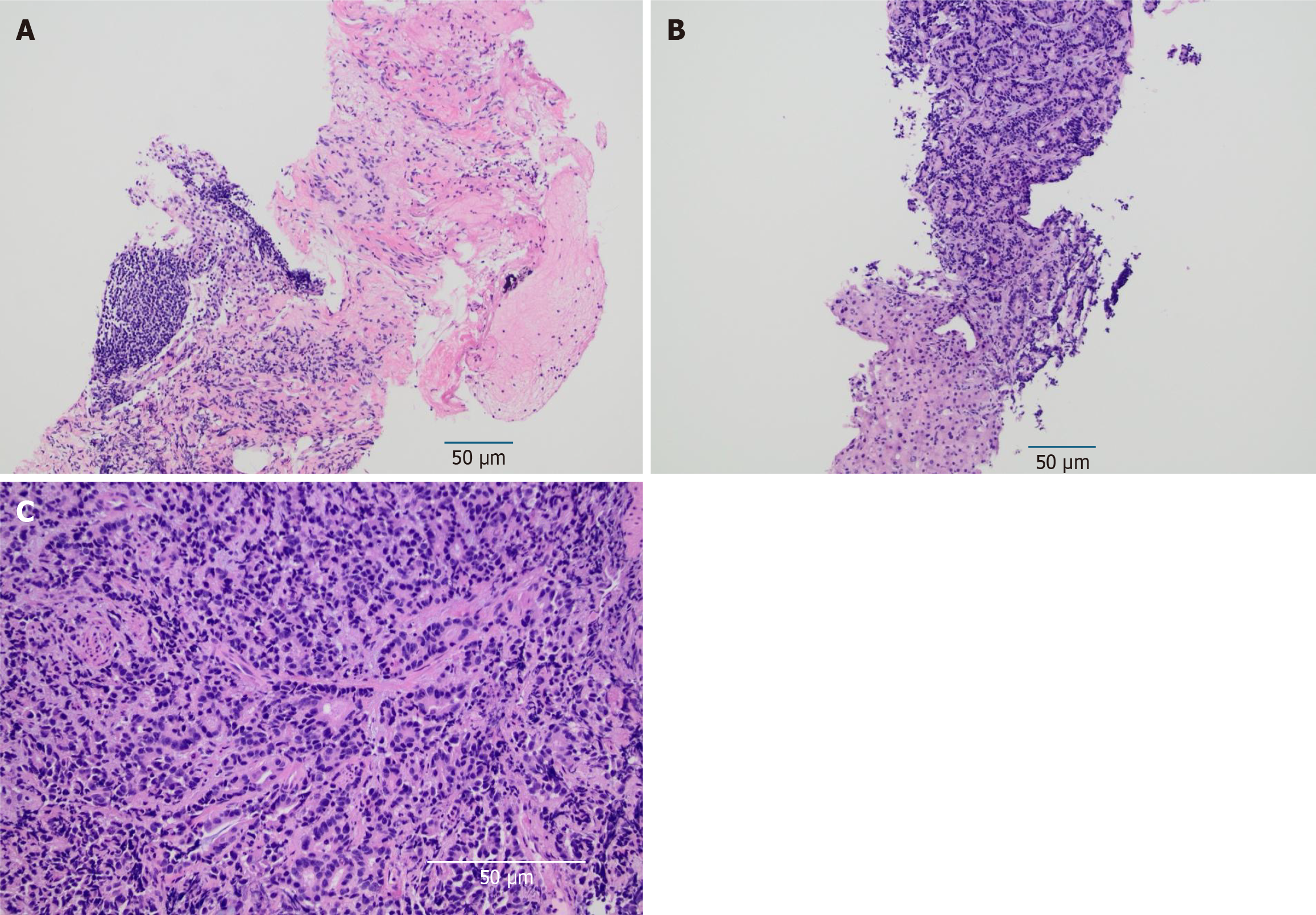
Figure 1 Histopathology.
A: Histopathology of the initial biopsy from the retroperitoneum showing benign lymphoid and fibroadipose tissue without any evidence of malignancy (magnification 40 × under the microscope); B: Histopathology of the liver biopsy demonstrating focal neoplastic infiltrate with neoplastic glands, occasionally in cribriform pattern with mucin production. Staining is suggestive of gastrointestinal primary. Benign liver tissue is seen in the lower half of this image (magnification 40 × under the microscope); C: Histopathology of the duodenum concerning a similar high-grade adenocarcinoma (magnification 100 × under the microscope).
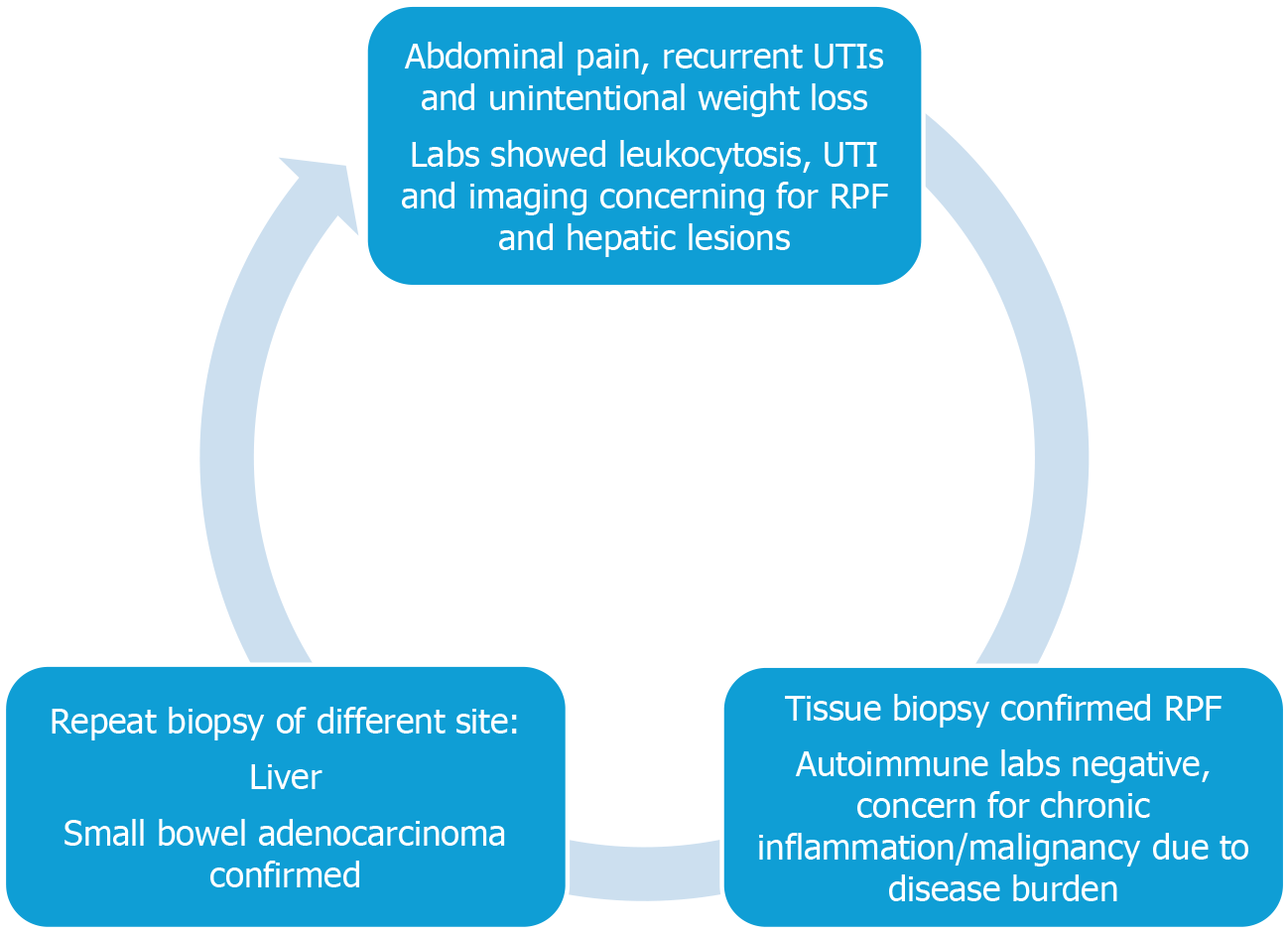
Figure 2 Pathway to final diagnosis of small bowel adenocarcinoma.
UTI: Urinary tract infection; RPF: Retroperitoneal fibrosis.
- Citation: Arora K, Tipmongkol S, Goyal MK, Matt-Amaral L. Retroperitoneal fibrosis mimicking benign disease - a paraneoplastic clue to small bowel adenocarcinoma: A case report. World J Clin Cases 2026; 14(12): 119292
- URL: https://www.wjgnet.com/2307-8960/full/v14/i12/119292.htm
- DOI: https://dx.doi.org/10.12998/wjcc.v14.i12.119292