
















Published online Jun 20, 2026. doi: 10.5662/wjm.v16.i2.115219
Revised: November 12, 2025
Accepted: January 7, 2026
Published online: June 20, 2026
Processing time: 194 Days and 16.9 Hours
The interplay between caffeine ingestion, beverage temperature, and orthostatic stress on cortical arousal and autonomic regulation remains poorly understood. Understanding these distinctions is critical in identifying non-pharmacologic str
To investigate the effect of ingesting cold and tepid caffeinated beverages on brain waves during prolonged orthostasis.
Thirty-six male individuals, averaging 20 years old, who satisfied the inclusion criteria were selected using respondent-driven sampling. Caffeinated beverages containing 10-12 mg of caffeine per 100 mL at 10 °C (cold) or 37 °C (tepid) were used for the study. Baseline EEG and pulse rate in a sitting position were recor
Pulse rate was significantly elevated by orthostasis when compared with the ba
Neither cold nor tepid caffeinated beverages altered EEG responses to prolonged orthostasis; caution is advised during standing, particularly for elderly individuals and patients prone to orthostatic syncope or autonomic dis
Core Tip: Electroencephalogram biomarkers highlight temperature-dependent differences in neurophysiologic adaptation and resilience to orthostatic stress. These findings underscore the potential of beverage-based interventions as simple, non-pharmacologic strategies to mitigate presyncope and fatigue. A significant finding from this study was the insignificant difference in alpha/beta ratio between orthostatic individuals administered tepid caffeinated beverage and orthostatic individuals who were given cold caffeinated beverages despite the fact that orthostatic individuals who ingested tepid caffeinated beverages exhibited higher beta wave frequency when compared with orthostatic individuals administered cold caffeinated beverages.
- Citation: Adeniyi MJ, Awosika A. Cortical arousal and autonomic regulation: The role of cold vs tepid caffeinated beverages during prolonged orthostasis. World J Methodol 2026; 16(2): 115219
- URL: https://www.wjgnet.com/2222-0682/full/v16/i2/115219.htm
- DOI: https://dx.doi.org/10.5662/wjm.v16.i2.115219
Syncope is a medical condition characterized by reversible loss of consciousness and falls. It has a prevalence of 15%-39% and an annual number of episodes of 18.1-39.7 per 1000 patients[1]. Orthostatic syncope, a specific type of syncope, is a debilitating condition associated with orthostatic hypotension. Although information about its worldwide prevalence is unknown, orthostatic hypotension, one of the causes of orthostatic syncope, has an estimated prevalence of about 22.2% according to a study conducted on a group of community-dwelling seniors[2]. Gender differences in orthostatic hyp
Several strategies have been developed to mitigate orthostatic hypotension and syncope. Compression stockings are an effective non-pharmacologic intervention as they reduce peripheral venous compliance, limit venous pooling associated with orthostasis, enhance venous return, and thereby augment cardiac output[9]. In addition, ingestion of water at room temperature or colder may confer hemodynamic benefits by promoting sympathetic activation[10]. This sympathetic predominance induces vasoconstriction and venoconstriction, further improving venous return and supporting cardiac output during orthostatic stress.
Despite some conflicting reports, caffeine (a widely consumed dietary constituent) has been shown to transiently increase vascular tone and attenuate orthostatic stress. These effects are largely mediated through adenosine receptor antagonism, phosphodiesterase inhibition, and central nervous system stimulation, leading to enhanced sympathetic neural activity[11]. However, the combined influence of caffeine and beverage temperature on cerebral activity remains insufficiently characterized. This knowledge gap is particularly relevant in males, who demonstrate a relative preference for colder beverages[12] and exhibit greater hormonal stability that may reduce confounding endocrine variability. Although the cognitive and cardiovascular stimulatory effects of caffeine are well established, the modulatory role of thermal properties of caffeinated beverages on electroencephalogram (EEG) dynamics and autonomic adaptation during orthostatic stress has not been systematically investigated.
EEG provides a compelling, noninvasive method for assessing cerebral activity[13]. Additional advantages are achieved through the use of telemetry-based systems such as PowerLab, which are simple to implement, less cum
Given the roles of dietary and environmental factors in disease mitigation, this study was designed to determine the effect of cold and tepid caffeinated beverages on patients engaged in prolonged orthostasis on their brain activity rec
The study utilized pre-experimental design and was executed in the Technologically Enhanced Laboratory unit of the Department of Physiology, College of Medical Sciences at 25 °C between 8:00 am and 10:00 am. A total of 50 young adult males were recruited for the study using respondent driven sampling. Overall, 36 apparently healthy young males averaging 20 years old satisfied the inclusion criteria and were selected for the study using Yamane’s formula[12]:
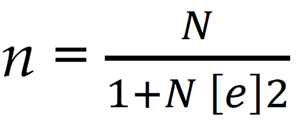 .
.
Informed consent and approval were obtained from the Ethical Committee of the University, approval No. EDO35-4.
Inclusion criteria used for the study were participants between the ages of 18-25 years, male gender, systolic blood pre
Individuals with a medical history of respiratory diseases, cardiovascular, kidney, hepatic, and metabolic diseases, sleeping disorders, and anatomical deformities were excluded. Those with a history of smoking, alcohol use disorder, and caffeine or any form of medication were ruled out as was previously reported[20-22]. Those with less than 6 h of dietary recall were also excluded.
The research was executed in the Physiology Laboratory at a temperature of 25 °C between 8:00 am and 10:00 am. The participants were acquainted with the experimental procedure including performance of orthostasis and how to report feelings of exertion and dizziness. The participants were asked to relax for 10 mins in a sitting position, and the baseline readings were measured (resting blood pressure, pulse rate, and anthropometric data). Participants were grouped into six categories: Baseline (resting); orthostatic postured individuals without beverage intake; tepid caffeinated beverage ingestion without orthostasis; cold caffeinated beverage ingestion without orthostasis; orthostatic postured individuals who ingested tepid caffeinated beverage; and orthostatic postured individuals who ingested cold caffeinated beverage.
Cold and tepid caffeinated beverages: Caffeinated beverages were commercially purchased from stores in 100 mL con
20-min orthostasis: Each participant ingested 100 mL of either cold or tepid drink before orthostatic activity. With EEG electrodes attached to the scalp and anchored through adhesive tape, each subject assumed an upright standing position from a sitting posture and stood for 20 min. EEG recording continued through the period of orthostasis.
EEG waves were recorded with the use of Powerlab 26T (Adinstruments PTY, Australia). As indicated in the manual, both white and blue marked electrodes were connected to the left and right side of the frontal part of the skull while the black electrode was attached to the occiput. Electrodes were held in place by means of electrode pads and supported by adhesive tape to tether the electrodes to the skin and avoid disconnection during the sit-to-stand switch. Other measures aimed at preventing artifacts included avoidance of ambient noise interference and maintaining proper cable connection. The sampling rate was 100 KS/second (100 kHz) per channel and a high-pass filter (low-frequency filter) of 1 Hz.
Pulse rate was determined from the wrist using palpatory method as the number of pulsations in 60 s.
Statistical analysis was conducted using SPSS 23. One-way analysis of variance and paired t test were performed as appropriate. Correlation analysis was conducted using the Pearson correlation.
Figure 1A shows that alpha wave frequency was significantly reduced after 20 min of orthostasis when compared with the baseline session (sitting at rest). However, ingestion of a tepid beverage before orthostasis increased alpha wave frequency when compared with the baseline. When compared with an orthostatic session (orthostatic postured indi

Figure 1B illustrates that 20 min of orthostasis increased beta wave frequency relative to baseline. Similarly, ingestion of either tepid or cold caffeinated beverages independently elevated beta wave frequency compared with baseline. Ortho
Figure 1C demonstrated that 20 min of orthostasis significantly decreased the alpha/beta ratio compared with baseline. Likewise, ingestion of either tepid or cold caffeinated beverages independently reduced the alpha/beta ratio relative to baseline. Orthostatically postured individuals who consumed either tepid or cold caffeinated beverages also exhibited reductions in the alpha/beta ratio compared with baseline. Compared with orthostasis alone, tepid caffeinated beverage, orthostasis + tepid caffeinated beverage, and orthostasis + cold caffeinated beverage all produced further decreases in alpha/beta ratio.
Cold caffeinated beverage ingestion alone resulted in a lower alpha/beta ratio than tepid caffeinated beverage ingestion. During orthostasis, ingestion of tepid caffeinated beverages decreased the alpha/beta ratio relative to tepid beverages alone, whereas ingestion of cold caffeinated beverages increased the alpha/beta ratio relative to cold beverage alone. Additionally, orthostasis with tepid caffeinated beverage produced a higher alpha/beta ratio than orthostasis with cold caffeinated beverage, indicating differential modulatory effects of beverage temperature on cortical activation during prolonged standing.
Figure 1D illustrates that 20 min of orthostasis significantly increased pulse rate compared with baseline. Similarly, ingestion of cold caffeinated beverages independently elevated pulse rate relative to baseline. Orthostatically postured individuals who consumed either tepid or cold caffeinated beverages also exhibited an increased pulse rate compared with baseline. When compared with orthostasis alone, ingestion of tepid or cold caffeinated beverages slightly reduced pulse rate, whereas orthostatically postured individuals consuming either beverage demonstrated an overall increase in pulse rate.
Cold caffeinated beverages elicited a greater increase in pulse rate than tepid caffeinated beverages. Furthermore, ingestion of tepid caffeinated beverages during orthostasis further elevated pulse rate relative to tepid beverage alone, and cold caffeinated beverages during orthostasis similarly increased pulse rate compared with cold beverage alone, highlighting additive effects of beverage consumption and orthostatic stress on cardiovascular response.
There was a significant positive correlation between alpha/beta ratio and pulse rate in orthostatically postured individuals who ingested tepid caffeinated beverages (Table 1). There was an insignificant negative correlation between alpha/beta ratio and pulse rate in orthostatically postured individuals who ingested cold caffeinated beverages.
Orthostasis is an unavoidable physiological challenge in daily human activity and like other stressors[23,24] elicits both acute and chronic compensatory responses. Upon upright standing gravitational blood pooling in the lower extremities unloads arterial baroreceptors, leading to reduced caudal ventrolateral medullary inhibition, activation of the rostral ventrolateral medulla, and heightened sympathetic outflow[25-27]. This neurogenic response increases vascular tone, peripheral resistance, and diastolic blood pressure. Concurrent venoconstriction limits venous pooling, thereby enhancing venous return, ventricular filling, cardiac output, and systolic blood pressure to preserve systemic perfusion. During prolonged orthostasis, additional humoral mechanisms, including glucocorticoids, antidiuretic hormone, and activation of the renin-angiotensin-aldosterone system, play critical roles in blood volume regulation[28]. Given the adverse health consequences associated with impaired orthostatic tolerance, strategies to modify these responses are clinically important. Accordingly, this study evaluated the effects of ingesting tepid or caffeinated beverages during prolonged orthostasis on cortical brain wave activity.
Although caffeine has been reported to transiently improve orthostatic tolerance[11,29], other studies suggest it may exacerbate orthostatic hypotension through increased renal excretion of sodium and water[12,30]. In the present study both tepid and cold caffeinated beverages were associated with increased beta wave frequency and a reduced alpha/beta ratio relative to baseline while alpha wave frequency remained unchanged. The observed elevation in beta activity and reduction in the alpha/beta ratio are indicative of heightened cortical arousal, consistent with the known stimulatory effects of caffeine mediated in part through antagonism of adenosine A1 receptors[31]. A decreased alpha/beta ratio has been linked to reduced fatigue[32] and has been observed during conditions of postural and vestibular challenge, inc
Orthostasis was associated with increased beta wave frequency alongside reductions in alpha wave frequency and the alpha/beta ratio compared with baseline, reflecting heightened sympathetic activation and relative parasympathetic withdrawal[26]. Alpha wave frequency was consistently lower during the orthostatic session than across all other experimental conditions. Consistent with established patterns, 20 min of orthostasis resulted in a significant elevation in beta wave frequency[33]. During orthostasis beta activity was higher than that observed following cold caffeinated beverage ingestion and in orthostatic individuals administered tepid caffeinated beverages yet lower than levels recorded during isolated ingestion of tepid or cold caffeinated beverages. These findings suggest that although both caffeine and cold exposure independently promoted cortical activation, and their combined influence on cerebral activity during ort
One of the principal findings of this study was the absence of a significant difference in the alpha/beta ratio between orthostatic individuals administered tepid vs cold caffeinated beverages despite higher beta wave frequency observed in the tepid caffeine group. Given that the alpha/beta ratio is a more integrative and reliable index of cortical activation than either alpha or beta activity alone, this result suggests no overall difference in cortical arousal between the two beverage temperature conditions during orthostasis. Notably, although prolonged standing, tepid caffeinated beverages, and cold caffeinated beverages each independently enhanced cortical activation, their combination did not produce a proportionately greater effect. This non-additive response may reflect a protective, homeostatic mechanism, supported by the similarly unchanged pulse rates observed between orthostatic individuals receiving tepid vs cold caffeinated beverages, indicating comparable metabolic demands.
Furthermore, the significant positive correlation between pulse rate and alpha/beta ratio in orthostatic individuals administered tepid caffeinated beverages suggests a coupling between cardiovascular demand and cortical activation under this condition. While the precise mechanisms underlying the interaction between beverage temperature and caffeine remain unclear, increased cortical metabolic activity likely contributes as reflected by elevated heart rate. Given the heightened susceptibility of elderly individuals and those receiving autonomic-modulating therapies to orthostatic syncope, these findings underscore the need for caution in the consumption of both cold and tepid caffeinated beverages during prolonged standing.
The findings of this study indicated that neither cold nor tepid caffeinated beverages significantly modulated the electroencephalographic changes induced by prolonged orthostasis in male participants. Accordingly, caution is warranted regarding the consumption of caffeine-rich beverages of either temperature during prolonged standing, particularly among individuals at increased risk for orthostatic syncope, including older adults, patients receiving antihypertensive therapy, individuals with Parkinson’s disease, and those with underlying metabolic disorders.
The authors are sincerely grateful to the laboratory staff for their support toward the success of the study.
| 1. | da Silva RM. Syncope: epidemiology, etiology, and prognosis. Front Physiol. 2014;5:471. [RCA] [PubMed] [DOI] [Full Text] [Full Text (PDF)] [Cited by in Crossref: 56] [Cited by in RCA: 77] [Article Influence: 6.4] [Reference Citation Analysis (0)] |
| 2. | Saedon NI, Pin Tan M, Frith J. The Prevalence of Orthostatic Hypotension: A Systematic Review and Meta-Analysis. J Gerontol A Biol Sci Med Sci. 2020;75:117-122. [RCA] [PubMed] [DOI] [Full Text] [Full Text (PDF)] [Cited by in Crossref: 57] [Cited by in RCA: 127] [Article Influence: 21.2] [Reference Citation Analysis (0)] |
| 3. | Cheng YC, Vyas A, Hymen E, Perlmuter LC. Gender differences in orthostatic hypotension. Am J Med Sci. 2011;342:221-225. [RCA] [PubMed] [DOI] [Full Text] [Cited by in Crossref: 34] [Cited by in RCA: 50] [Article Influence: 3.3] [Reference Citation Analysis (0)] |
| 4. | Rivasi G, Rafanelli M, Mossello E, Brignole M, Ungar A. Drug-Related Orthostatic Hypotension: Beyond Anti-Hypertensive Medications. Drugs Aging. 2020;37:725-738. [RCA] [PubMed] [DOI] [Full Text] [Full Text (PDF)] [Cited by in Crossref: 72] [Cited by in RCA: 121] [Article Influence: 20.2] [Reference Citation Analysis (0)] |
| 5. | Bhanu C, Nimmons D, Petersen I, Orlu M, Davis D, Hussain H, Magammanage S, Walters K. Drug-induced orthostatic hypotension: A systematic review and meta-analysis of randomised controlled trials. PLoS Med. 2021;18:e1003821. [RCA] [PubMed] [DOI] [Full Text] [Full Text (PDF)] [Cited by in Crossref: 11] [Cited by in RCA: 78] [Article Influence: 15.6] [Reference Citation Analysis (0)] |
| 6. | Ringer M, Hashmi MF, Lappin SL. Orthostatic Hypotension. 2025 Jan 17. In: StatPearls [Internet]. Treasure Island (FL): StatPearls Publishing; 2025 Jan-. [PubMed] |
| 7. | Hilsted J, Parving HH, Christensen NJ, Benn J, Galbo H. Hemodynamics in diabetic orthostatic hypotension. J Clin Invest. 1981;68:1427-1434. [RCA] [PubMed] [DOI] [Full Text] [Cited by in Crossref: 74] [Cited by in RCA: 66] [Article Influence: 1.5] [Reference Citation Analysis (0)] |
| 8. | Palma JA, Kaufmann H. Orthostatic Hypotension in Parkinson Disease. Clin Geriatr Med. 2020;36:53-67. [RCA] [PubMed] [DOI] [Full Text] [Cited by in Crossref: 26] [Cited by in RCA: 74] [Article Influence: 10.6] [Reference Citation Analysis (1)] |
| 9. | Protheroe CL, Dikareva A, Menon C, Claydon VE. Are compression stockings an effective treatment for orthostatic presyncope? PLoS One. 2011;6:e28193. [RCA] [PubMed] [DOI] [Full Text] [Full Text (PDF)] [Cited by in Crossref: 34] [Cited by in RCA: 35] [Article Influence: 2.3] [Reference Citation Analysis (0)] |
| 10. | Parsons IT, Hockin BCD, Taha OM, Heeney ND, Williams EL, Lucci VM, Lee RHY, Stacey MJ, Gall N, Chowienczyk P, Woods DR, Claydon VE. The effect of water temperature on orthostatic tolerance: a randomised crossover trial. Clin Auton Res. 2022;32:131-141. [RCA] [PubMed] [DOI] [Full Text] [Full Text (PDF)] [Cited by in RCA: 11] [Reference Citation Analysis (0)] |
| 11. | Onrot J, Goldberg MR, Biaggioni I, Hollister AS, Kingaid D, Robertson D. Hemodynamic and humoral effects of caffeine in autonomic failure. Therapeutic implications for postprandial hypotension. N Engl J Med. 1985;313:549-554. [RCA] [PubMed] [DOI] [Full Text] [Cited by in Crossref: 116] [Cited by in RCA: 106] [Article Influence: 2.6] [Reference Citation Analysis (0)] |
| 12. | Karjalainen S. Thermal comfort and gender: a literature review. Indoor Air. 2012;22:96-109. [RCA] [PubMed] [DOI] [Full Text] [Cited by in Crossref: 293] [Cited by in RCA: 98] [Article Influence: 7.0] [Reference Citation Analysis (0)] |
| 13. | Attar ET. Review of electroencephalography signals approaches for mental stress assessment. Neurosciences (Riyadh). 2022;27:209-215. [RCA] [PubMed] [DOI] [Full Text] [Full Text (PDF)] [Cited by in RCA: 31] [Reference Citation Analysis (0)] |
| 14. | Monllor P, Cervera-Ferri A, Lloret MA, Esteve D, Lopez B, Leon JL, Lloret A. Electroencephalography as a Non-Invasive Biomarker of Alzheimer's Disease: A Forgotten Candidate to Substitute CSF Molecules? Int J Mol Sci. 2021;22:10889. [RCA] [PubMed] [DOI] [Full Text] [Full Text (PDF)] [Cited by in Crossref: 11] [Cited by in RCA: 34] [Article Influence: 6.8] [Reference Citation Analysis (0)] |
| 15. | Adeniyi M, Fabunmi O, Olaniyan O, Adetunji C, Seriki S. Electroencephalographic findings of young adult males during prolonged unipedal orthostasis. Neurosci Res Notes. 2023;6. [DOI] [Full Text] |
| 16. | Adeniyi MJ, Ayoola A, Idaguko AC. Impact of Sudden Sit-Stand Postural Switch on Electroencephalogram. Middle East Res J Med Sci. 2024;4:25-30. [DOI] [Full Text] |
| 17. | Adeniyi M, Awosika A. Impact of Gender on Post-Exercise Orthostasis Related Changes in EEG Amplitudes. Middle East Res J Med Sci. 2023;3:1-8. [DOI] [Full Text] |
| 18. | Adeniyi M, Idaguko AC. Electroencephalogram of Young Healthy Individuals during and After Seated Rotatory Chair Activity. J of Clin Case Stu Rev Rep. 2024;2:1-4. |
| 19. | Adeniyi MJ, Adamu AA, Awosika A. Electroencephalogram of Normotensive Individuals During Sitting and Standing Blood Pressure Measurement Positions. Cureus. 2024;16:e72154. [RCA] [PubMed] [DOI] [Full Text] [Full Text (PDF)] [Cited by in RCA: 4] [Reference Citation Analysis (0)] |
| 20. | Oni TJ, Adeniyi MJ. Postural Difference in Expiratory Rate among Female Sanitary Workers and Its Relationship with Blood Pressure and Anthropometric Indices. Biomed J Sci Technol Res. 2017;1. [DOI] [Full Text] |
| 21. | Adeniyi MJ, Idaguko AC. Impact of Nocturnal Push-Up on Morning Values of Peripheral Oxygen Saturation and Cardiovascular Indices in Young Males. Middle East Res J Med Sci. 2024;4:12-17. [DOI] [Full Text] |
| 22. | Adeniyi MJ, Idaguko AC. Walking Pace Induced Cardiovascular Recovery in School Sport- Aversive Students: Role of Gender. Middle East Res J Med Sci. 2024;4:18-24. [DOI] [Full Text] |
| 23. | Adeniyi M. Impacts of Environmental Stressors on Autonomic Nervous System. In: Aslanidis T, Nouris C, editors. Autonomic Nervous System - Special Interest Topics. London: IntechOpen, 2022. [DOI] [Full Text] |
| 24. | Adeniyi MJ, Awosika A, Millis RM, Ige SF. Occupational Stress-Related Sleep Anomaly in Frontline COVID-19 Health Workers: The Possible Underlying Mechanisms. In: Palaniappan K, editor. Identifying Occupational Stress and Coping Strategies. London: IntechOpen, 2023. [RCA] [DOI] [Full Text] [Cited by in Crossref: 3] [Cited by in RCA: 4] [Article Influence: 1.3] [Reference Citation Analysis (0)] |
| 25. | Grenon SM, Xiao X, Hurwitz S, Sheynberg N, Kim C, Seely EW, Cohen RJ, Williams GH. Why is orthostatic tolerance lower in women than in men? Renal and cardiovascular responses to simulated microgravity and the role of midodrine. J Investig Med. 2006;54:180-190. [RCA] [PubMed] [DOI] [Full Text] [Cited by in Crossref: 21] [Cited by in RCA: 25] [Article Influence: 1.3] [Reference Citation Analysis (0)] |
| 26. | Adeniyi MJ, Fabunmi OA, Awosika A. Unravelling the interplay between Harmattan wind and baroreflex functions: implications on environmental health and cardiovascular pathophysiology. Explor Med. 2024;5:584-600. [RCA] [DOI] [Full Text] [Cited by in Crossref: 3] [Cited by in RCA: 6] [Article Influence: 3.0] [Reference Citation Analysis (0)] |
| 27. | Adeniyi MJ, Awosika A, Idaguko CA, Ekhoye E. The Influence of Artificial Light Exposure on Indigenous Populations: Exploring Its Impact on Menarcheal Age and Reproductive Function. J Reprod Infertil. 2024;25:171-183. [RCA] [PubMed] [DOI] [Full Text] [Full Text (PDF)] [Cited by in RCA: 2] [Reference Citation Analysis (0)] |
| 28. | Claydon VE, Schroeder C, Norcliffe LJ, Jordan J, Hainsworth R. Water drinking improves orthostatic tolerance in patients with posturally related syncope. Clin Sci (Lond). 2006;110:343-352. [RCA] [PubMed] [DOI] [Full Text] [Cited by in Crossref: 33] [Cited by in RCA: 39] [Article Influence: 2.0] [Reference Citation Analysis (1)] |
| 29. | Awosika A, Adeniyi M. Occupation-Related Stress and Stress-Related Risk Factors among Nurses in West Africa. Middle East Res J Med Sci. 2023;3:9-16. [DOI] [Full Text] |
| 30. | Awosika A, Adeniyi MJ, Okojie AA, Okeke C. Photic Stress and Rhythmic Physiological Processes: Roles of Selenium as a Chronobiotic. In: Gelen V, Kara A, Kükürt A, editors. Selenium and Human Health. London: IntechOpen, 2023. [RCA] [DOI] [Full Text] [Cited by in Crossref: 1] [Cited by in RCA: 2] [Article Influence: 0.7] [Reference Citation Analysis (0)] |
| 31. | Daly JW, Shi D, Nikodijevic O, Jacobson KA. The role of adenosine receptors in the central action of caffeine. Pharmacopsychoecologia. 1994;7:201-213. [PubMed] |
| 32. | Jap BT, Lal S, Fischer P, Bekiaris E. Using EEG spectral components to assess algorithms for detecting fatigue. Expert Syst Appl. 2009;36:2352-2359. [DOI] [Full Text] |
| 33. | Barrett K, Barman SM, Boitano S, Brooks H. Ganong's Review of Medical Physiology. 23rd ed. NY: McGraw-Hill Medical, 2009. |
| 34. | Awosika A, Adabanya U, Millis RM, Omole AE, Moon JH. Postprandial Hypotension: An Underreported Silent Killer in the Aged. Cureus. 2023;15:e35411. [RCA] [PubMed] [DOI] [Full Text] [Full Text (PDF)] [Cited by in RCA: 11] [Reference Citation Analysis (0)] |
| 35. | Adeniyi M, Olaniyan O, Fabunmi O, Okojie A, Ogunlade A, Ajayi O. Modulatory Role of Pre-exercise Water Ingestion on Metabolic, Cardiovascular and Autonomic Responses to Prolonged Exercise in Young Mildly Active Male Students. Int J Biomed Sci. 2022;18:24-34. [DOI] [Full Text] |
| 36. | Adeniyi MJ, Awosika A, Agaba Ameh S, Obogwu J, Ijoganu S, Nwamaka Kanikwu P. Electrophysiological analysis of the upward and downward phases of squat and lying leg raise work-out. J Res Appl Basic Med Sci. 2025;11:107-114. [RCA] [DOI] [Full Text] [Cited by in RCA: 1] [Reference Citation Analysis (0)] |
| 37. | Adeniyi MJ, Awosika A. Recovery pulse rate and cardiovascular function indices in young female adults following orthostasis. J Biol Methods. 2025;12:e99010068. [RCA] [PubMed] [DOI] [Full Text] [Full Text (PDF)] [Cited by in RCA: 1] [Reference Citation Analysis (0)] |
| 38. | Adeniyi M, Awosika A, Adamu AA. Relationship Between Orthostatic Cardiovascular Responses and Anthropometric Indices in Apparently Healthy Young Female Adults. Cureus. 2025;17:e81569. [RCA] [PubMed] [DOI] [Full Text] [Full Text (PDF)] [Cited by in RCA: 1] [Reference Citation Analysis (0)] |