
















©The Author(s) 2026.
World J Transplant. Mar 18, 2026; 16(1): 113034
Published online Mar 18, 2026. doi: 10.5500/wjt.v16.i1.113034
Published online Mar 18, 2026. doi: 10.5500/wjt.v16.i1.113034
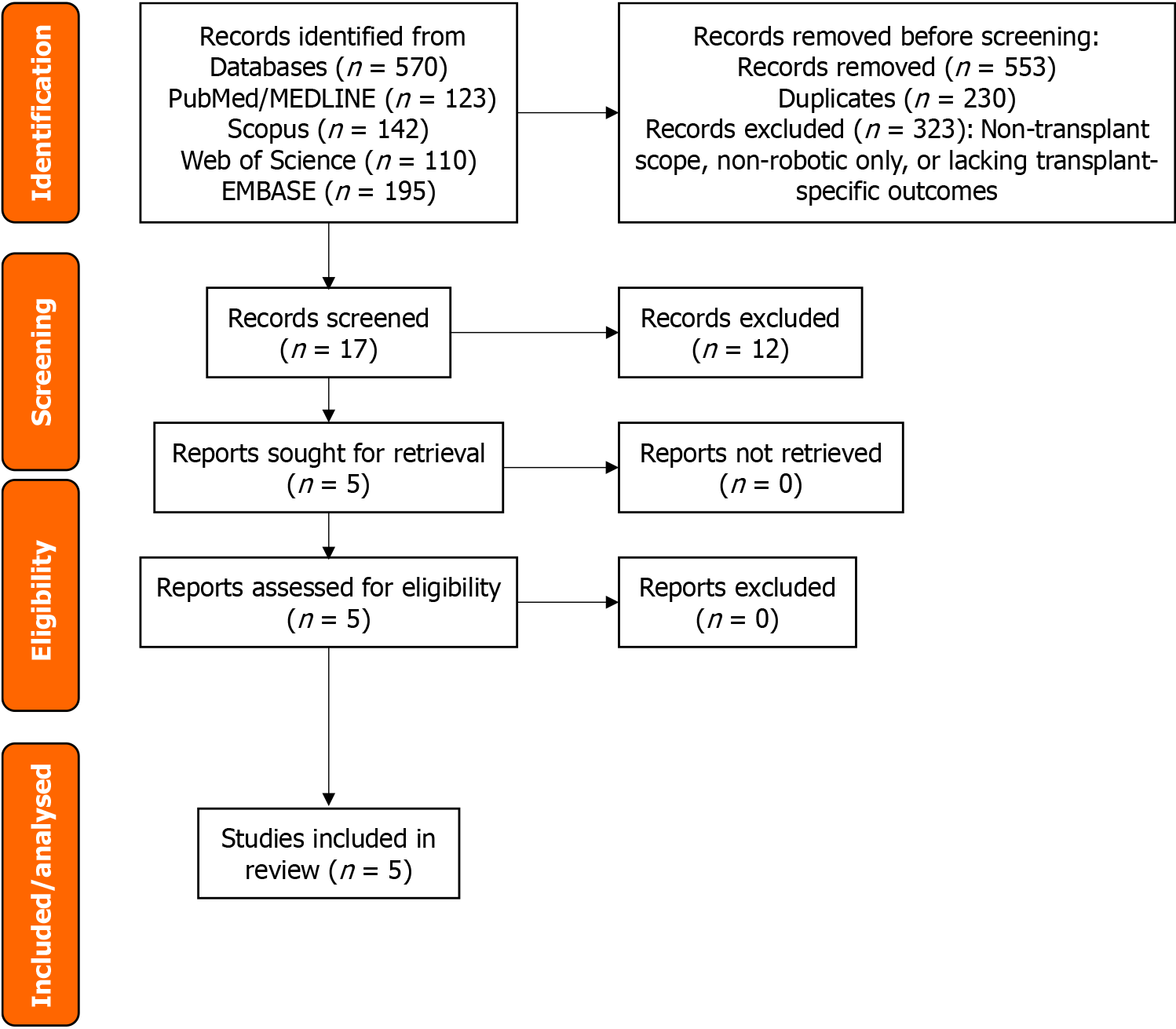
Figure 1
Preferred Reporting Items for Systematic reviews and Meta-Analyses 2020 flow diagram of record selection for the umbrella review on robotic-assisted donor and recipient hepatectomy in liver transplantation.
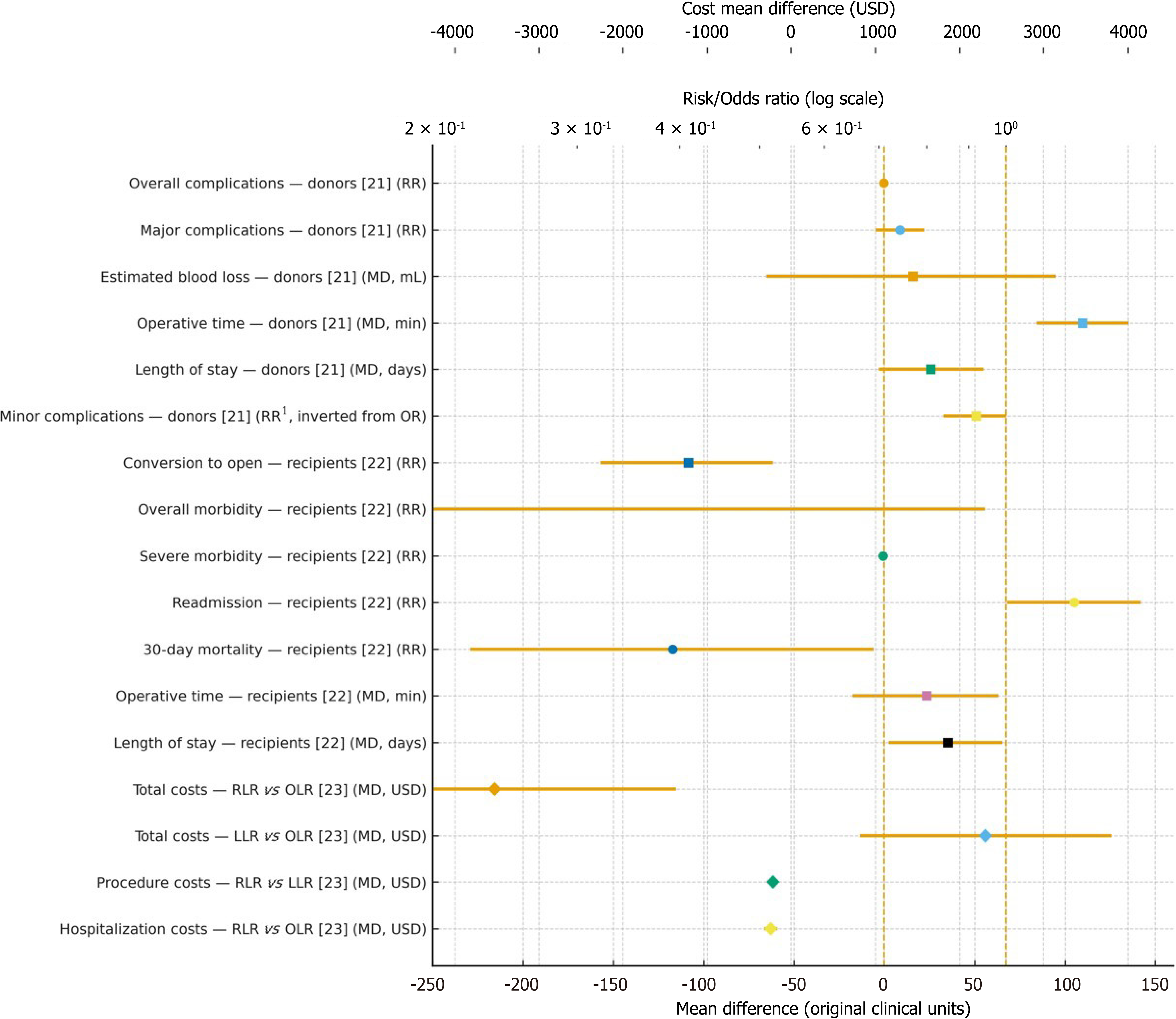
Figure 2 Forest summary of pooled effects: Donors (direct), recipients (indirect), and economics (indirect).
Continuous outcomes (operative time, blood loss, length of stay) are plotted as mean differences on the lower X-axis (no-effect at 0); dichotomous outcomes (overall/major morbidity, conversion to open, readmission, 30-day mortality) as risk ratios on the upper log-scale X-axis (no-effect at 1). A separate top axis shows cost mean differences (United State Dollar) from the economic network meta-analysis. Leftward estimates favor robotic for burden outcomes. Absolute effects per 1000 are provided only where a pooled risk difference/baseline risk was available (Table 3). Donor complication absolutes are not estimable (Table 2). The donor “minor complications” contrast was reported as open vs robotic in the source but is plotted here as robotic vs open after inversion to preserve directionality. Provenance and models: Donor random-effects meta-analysis[21]; recipients random-effects meta-analysis[22]; Bayesian economic random-effects network meta-analysis[23]. 1Risk ratio was inverted from odds ratio. RR: Risk ratios; MD: Mean difference; OR: Odds ratio; RLR: Robotic liver resection; OLR: Open surgery; LLR: Laparoscopic resections.
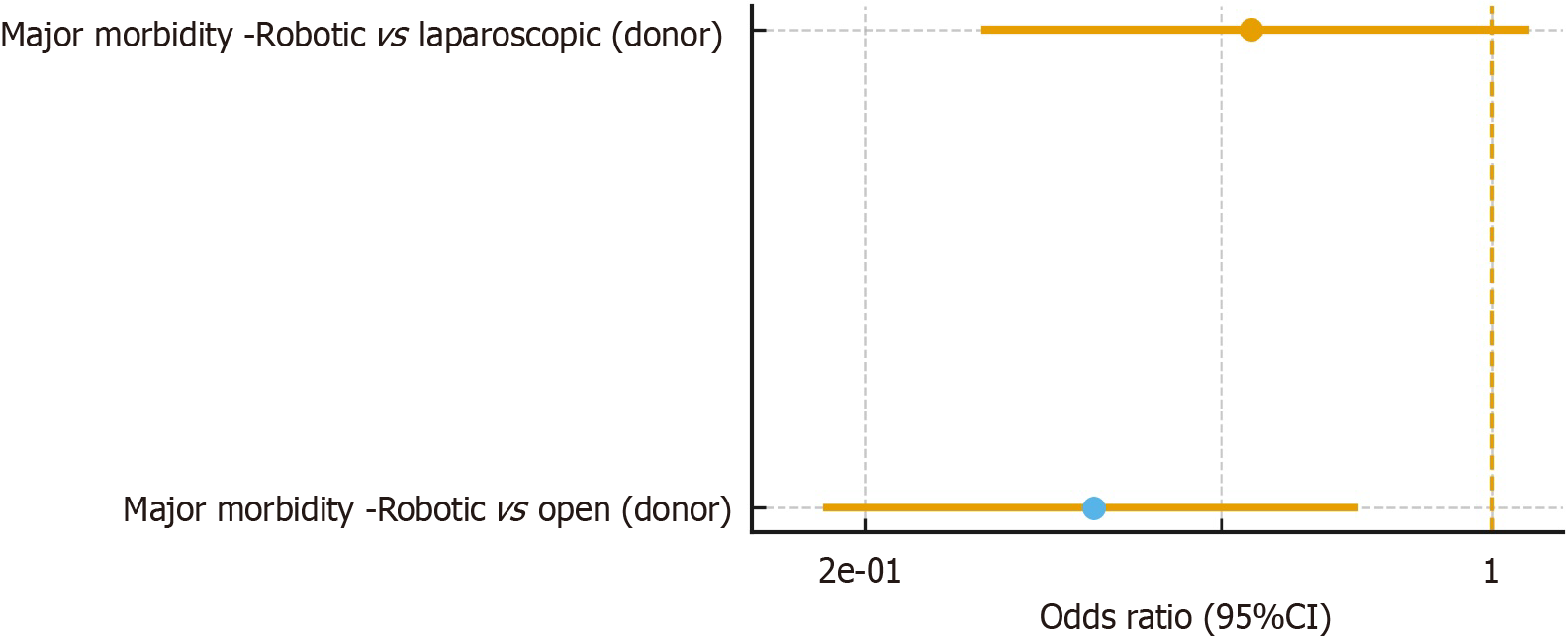
Figure 3 Context-only overlay from Broering et al[24] in 2024 (MIOT).
Liver-related pooled estimates from Broering et al[24] (systematic review with meta-analysis, MIOT) are shown as a contextual overlay to illustrate concordance in direction/magnitude with the transplant-focused syntheses. These contrasts aggregate transplant and non-transplant settings and are not included in Figure 2 and are not used for AMSTAR/grading of recommendations assessment, development and evaluation certainty to avoid indirectness and overlap. Markers and 95%CIs use the same scales as Figure 2 and are rendered with a distinct symbol/shade.
- Citation: Ardila CM, González-Arroyave D, Ramírez-Arbelaez J. Robotic-assisted donor and recipient hepatectomy in liver transplantation: An umbrella review of clinical outcomes, surgical performance, and cost-effectiveness. World J Transplant 2026; 16(1): 113034
- URL: https://www.wjgnet.com/2220-3230/full/v16/i1/113034.htm
- DOI: https://dx.doi.org/10.5500/wjt.v16.i1.113034