
















©Author(s) (or their employer(s)) 2026.
World J Psychiatry. Mar 19, 2026; 16(3): 114153
Published online Mar 19, 2026. doi: 10.5498/wjp.v16.i3.114153
Published online Mar 19, 2026. doi: 10.5498/wjp.v16.i3.114153
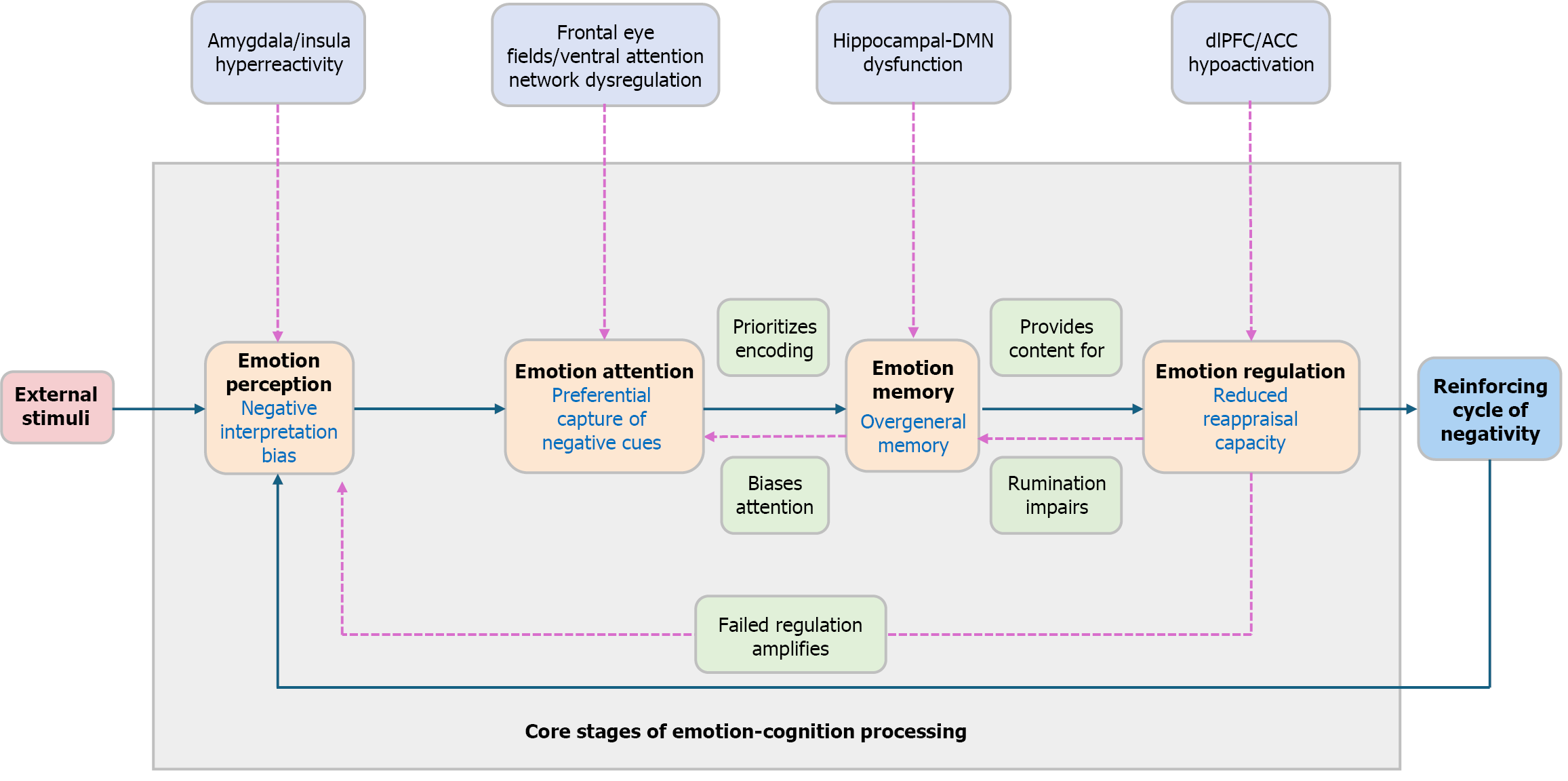
Figure 1 Dysfunctional multi-stage emotion-cognition processing model in major depressive disorder.
This schematic illustrates the cascading abnormalities in emotion-cognition processing in major depressive disorder, which evolves from a typical sequential hierarchy into a self-reinforcing pathological system. The model is initiated by external stimuli (e.g., facial expressions, social cues). Core processing stages (red boxes) are disrupted by specific biases and their associated neural substrates (blue boxes): Negative interpretation bias (amygdala/insula hyperreactivity), preferential attentional capture of negative cues (dysregulation of frontal eye fields and the ventral attention network), overgeneral autobiographical memory (hippocampal-DMN dysfunction), and reduced cognitive reappraisal capacity (dorsolateral prefrontal cortex/anterior cingulate cortex hypoactivation). Solid arrows represent the primary, forward flow of maladaptive information processing. Dashed arrows denote critical reinforcing interactions and feedback loops (e.g., failed top-down regulation amplifying initial perceptual bias, memory biases directing attention, and rumination impairing memory specificity). These cross-stage interactions collectively form a reinforcing cycle of negativity, which underlies the persistence of negative, self-focused thought and contributes to symptom chronicity and relapse vulnerability. DMN: Default mode network; dlPFC: Dorsolateral prefrontal cortex; ACC: Anterior cingulate cortex.
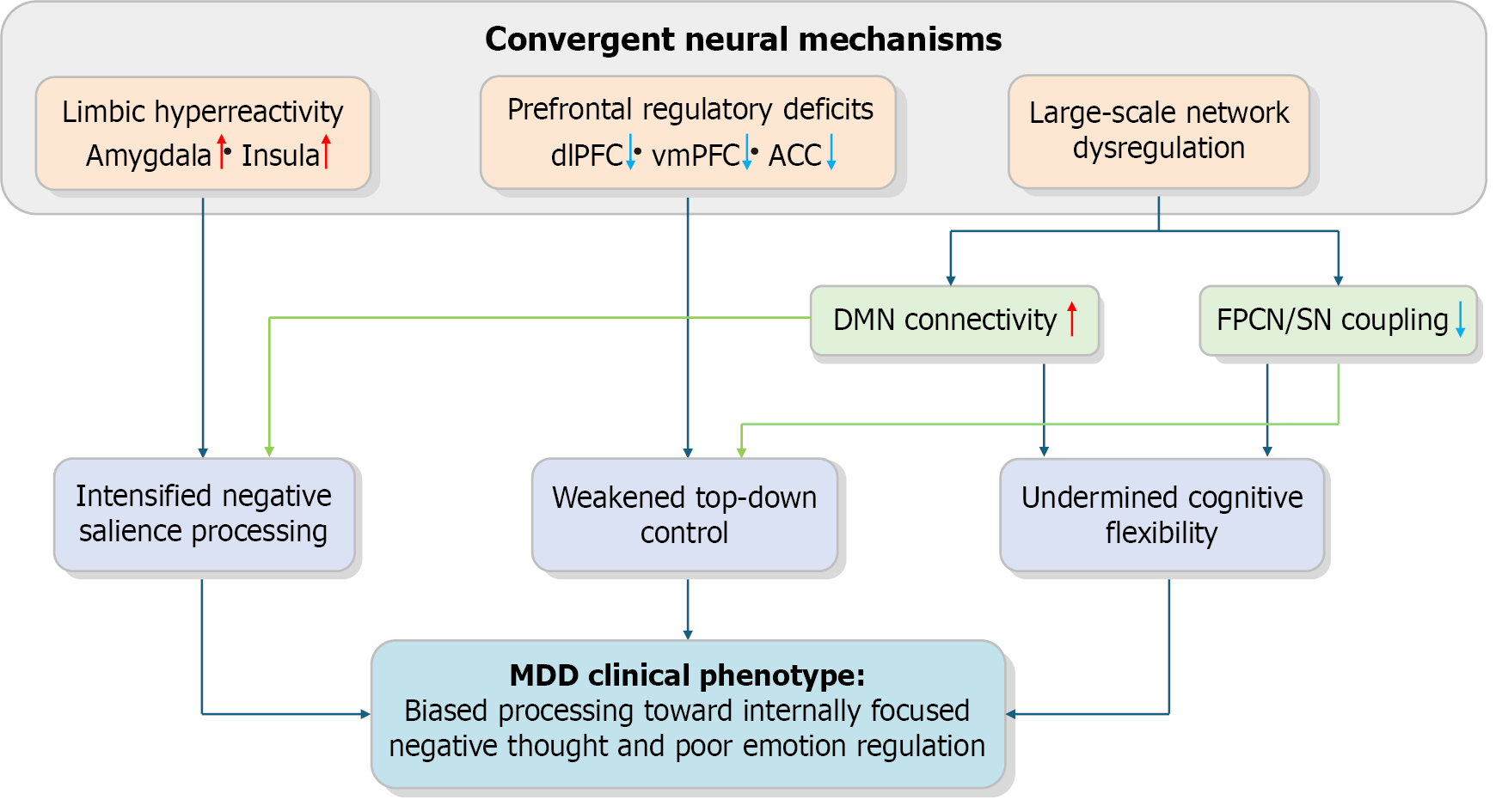
Figure 2 Neural circuit imbalance model of emotion-cognition dysfunction in major depressive disorder.
This model delineates three convergent neural disruptions and their integrative pathways leading to clinical dysfunction. The core disruptions are: (1) Limbic hyperreactivity (amygdala, insula), which intensifies the bottom-up processing of negative salience; (2) Prefrontal regulatory deficits (dorsolateral, ventromedial, and anterior cingulate cortices), which compromise top-down cognitive control; and (3) Large-scale network dysregulation, manifesting as default mode network hyperconnectivity and weakened coupling between the frontoparietal control network and salience network. vmPFC: Ventromedial prefrontal cortex; dlPFC: Dorsolateral prefrontal cortex; ACC: Anterior cingulate cortex; DMN: Default mode network; FPCN: Frontoparietal control network; SN: Salience network; MDD: Major depressive disorder.
- Citation: Gu Y, Wang YX, Xia WJ, Wang J. Emotion-cognition dysregulation in major depression: Multidimensional biases, neural circuit imbalance, and translational opportunities. World J Psychiatry 2026; 16(3): 114153
- URL: https://www.wjgnet.com/2220-3206/full/v16/i3/114153.htm
- DOI: https://dx.doi.org/10.5498/wjp.v16.i3.114153