
















©Author(s) (or their employer(s)) 2026.
World J Psychiatry. Mar 19, 2026; 16(3): 112962
Published online Mar 19, 2026. doi: 10.5498/wjp.v16.i3.112962
Published online Mar 19, 2026. doi: 10.5498/wjp.v16.i3.112962
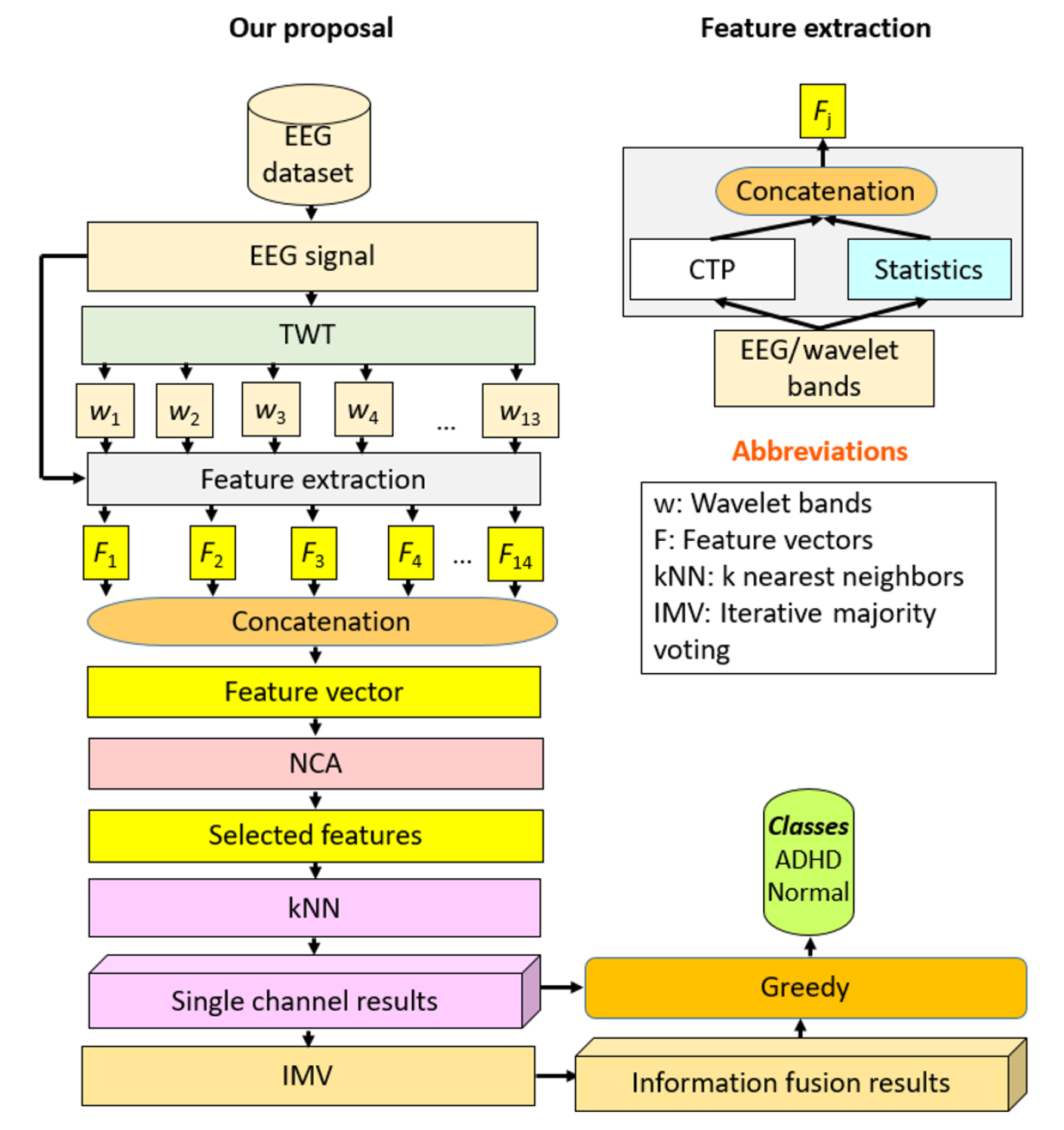
Figure 1 schematic of the recommended model.
EEG: Electroencephalography; TWT: Twin wavelet transform; kNN: K-nearest neighbors; NCA: Neighborhood component analysis; IMV: Iterative majority voting; CTP: Combination ternary pattern; ADHD: Attention-deficit/hyperactivity disorder.
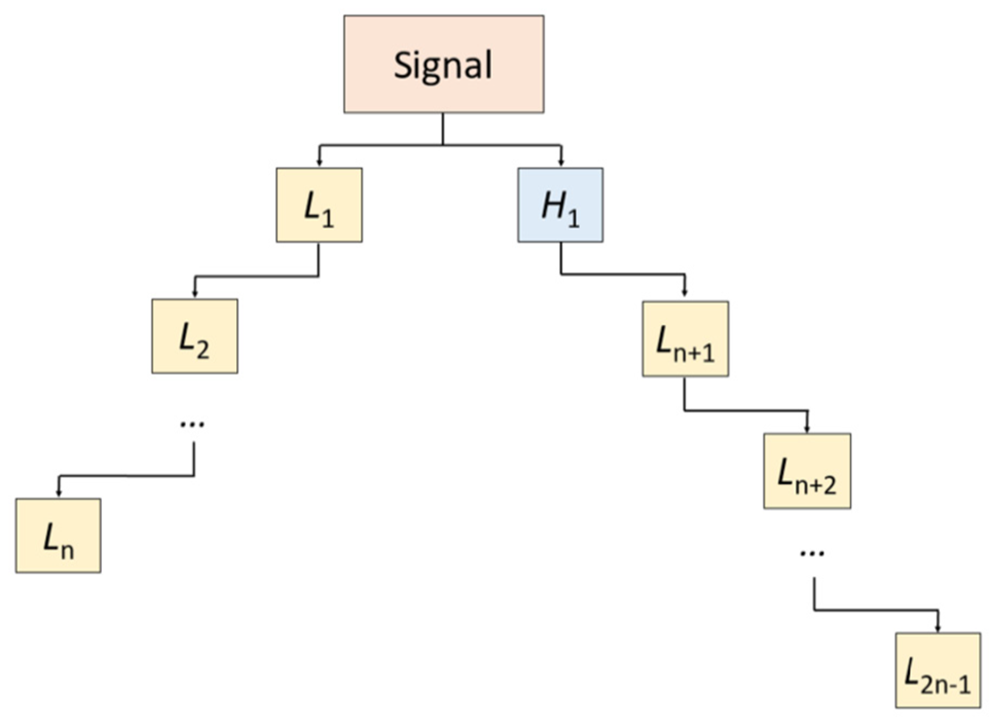
Figure 2 Schema of twin wavelet transformation.
H: High-pass filter band; L: Low-pass filter band.
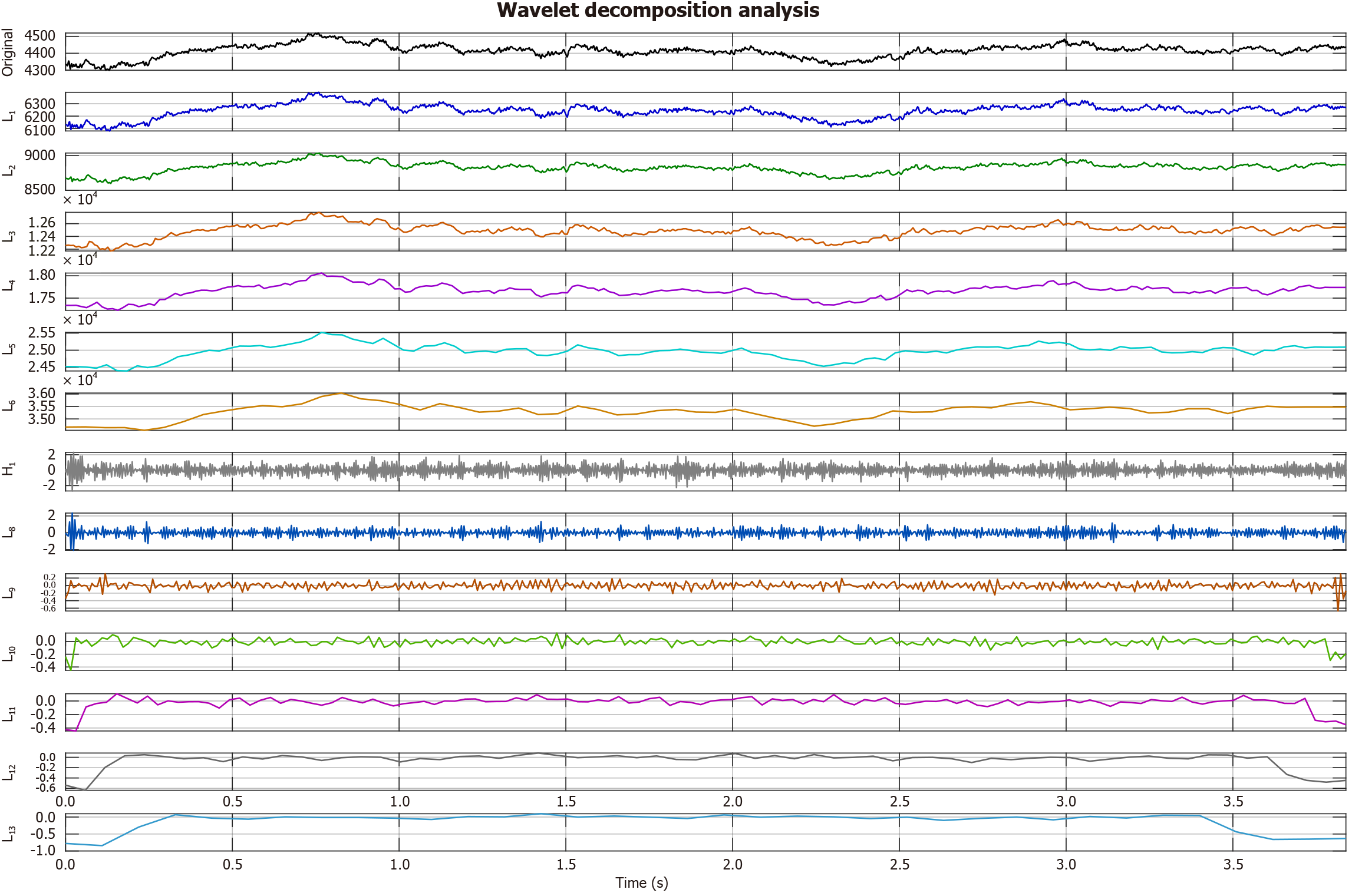
Figure 3
Sample signal and its wavelet bands.
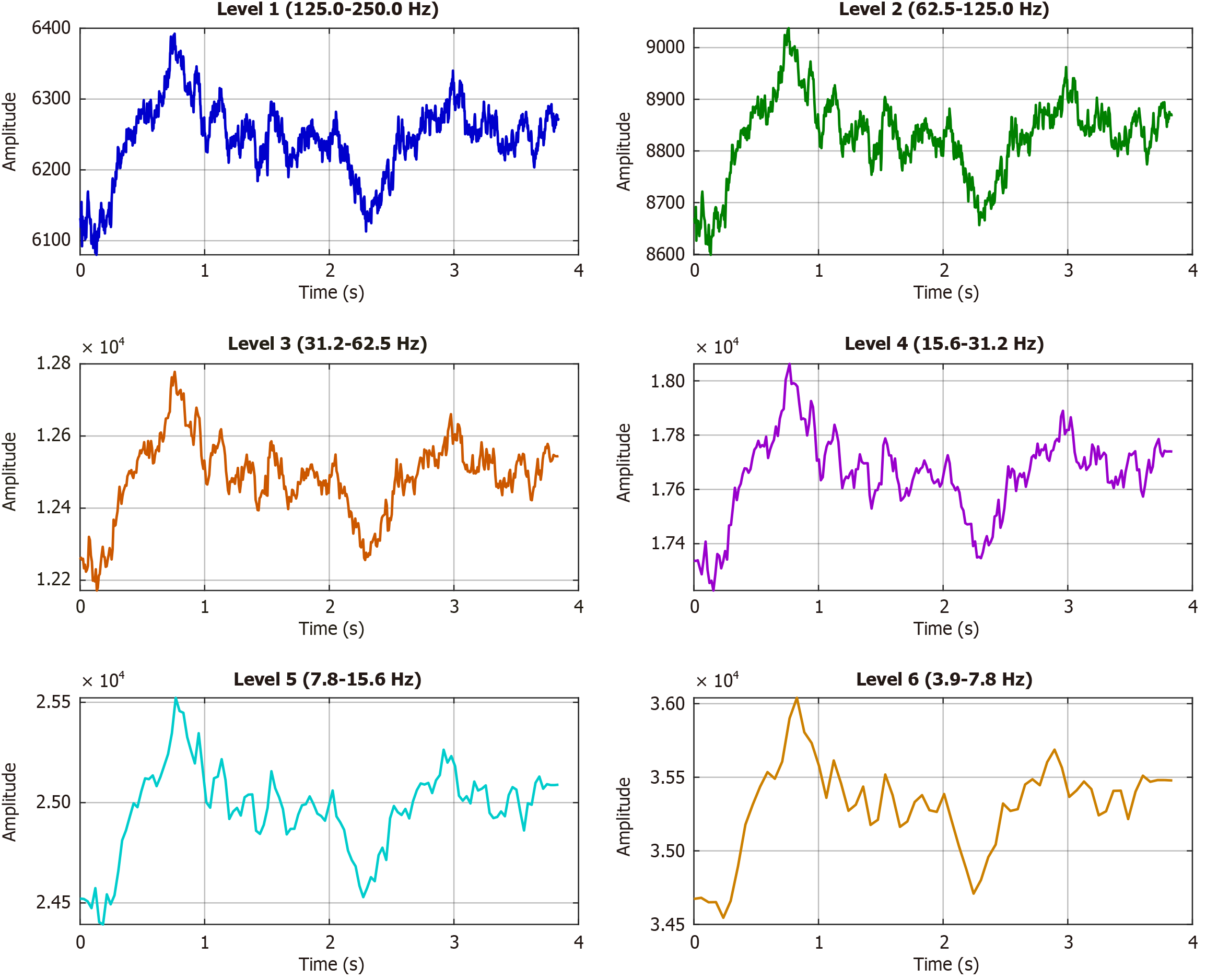
Figure 4
Frequency band analysis of wavelet decomposition showing the first six levels.
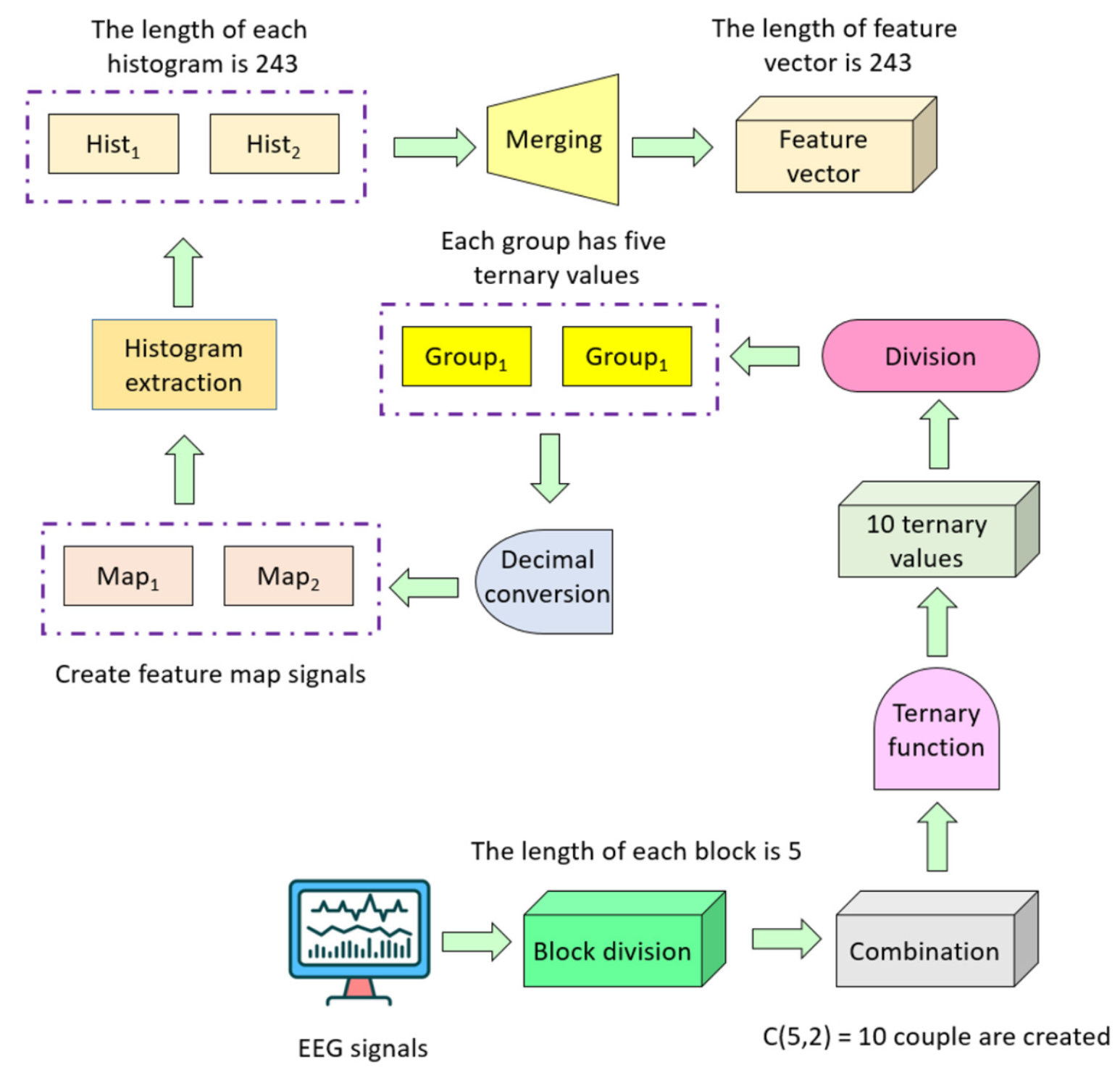
Figure 5 Graphical overview of the developed combination ternary pattern.
EEG: Electroencephalography.
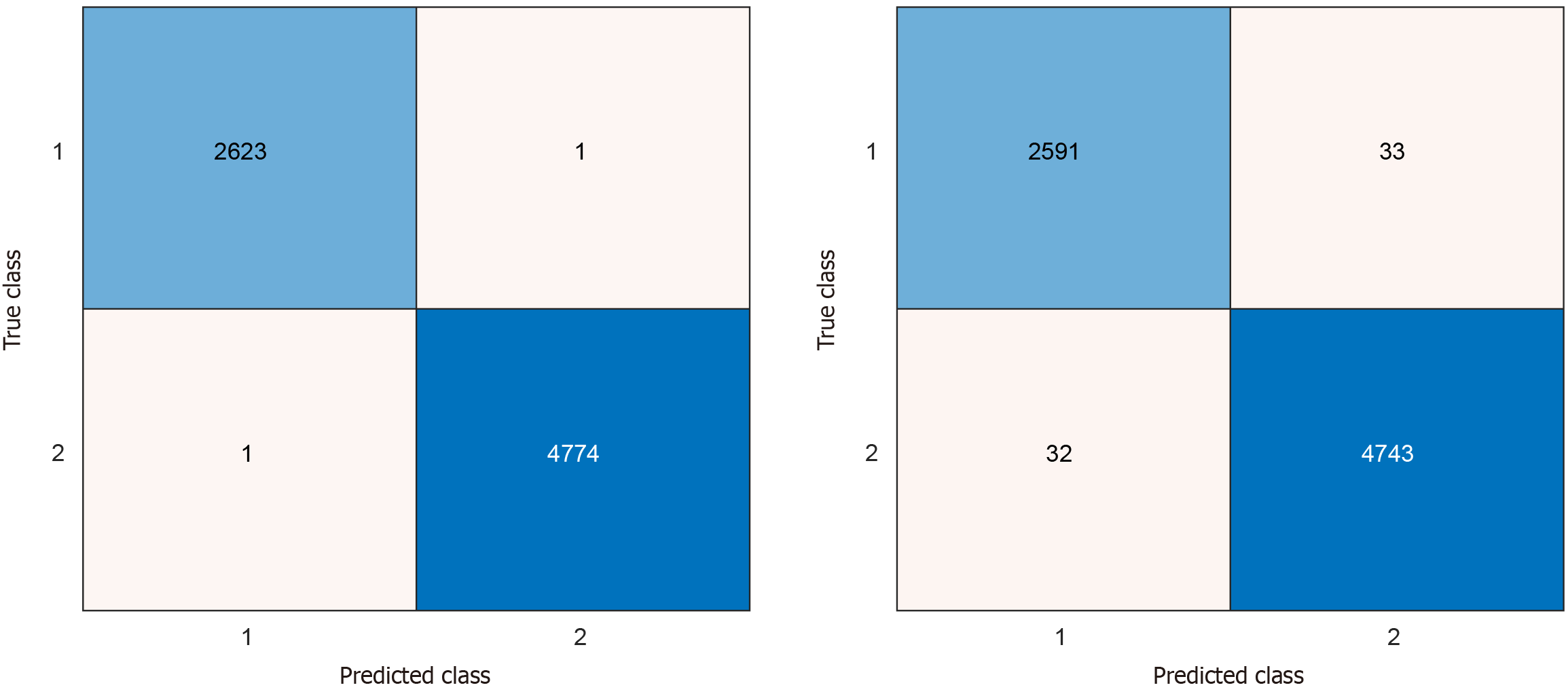
Figure 6
Confusion matrices of channel 8 (left) and the sixth iteration of majority voting (right).
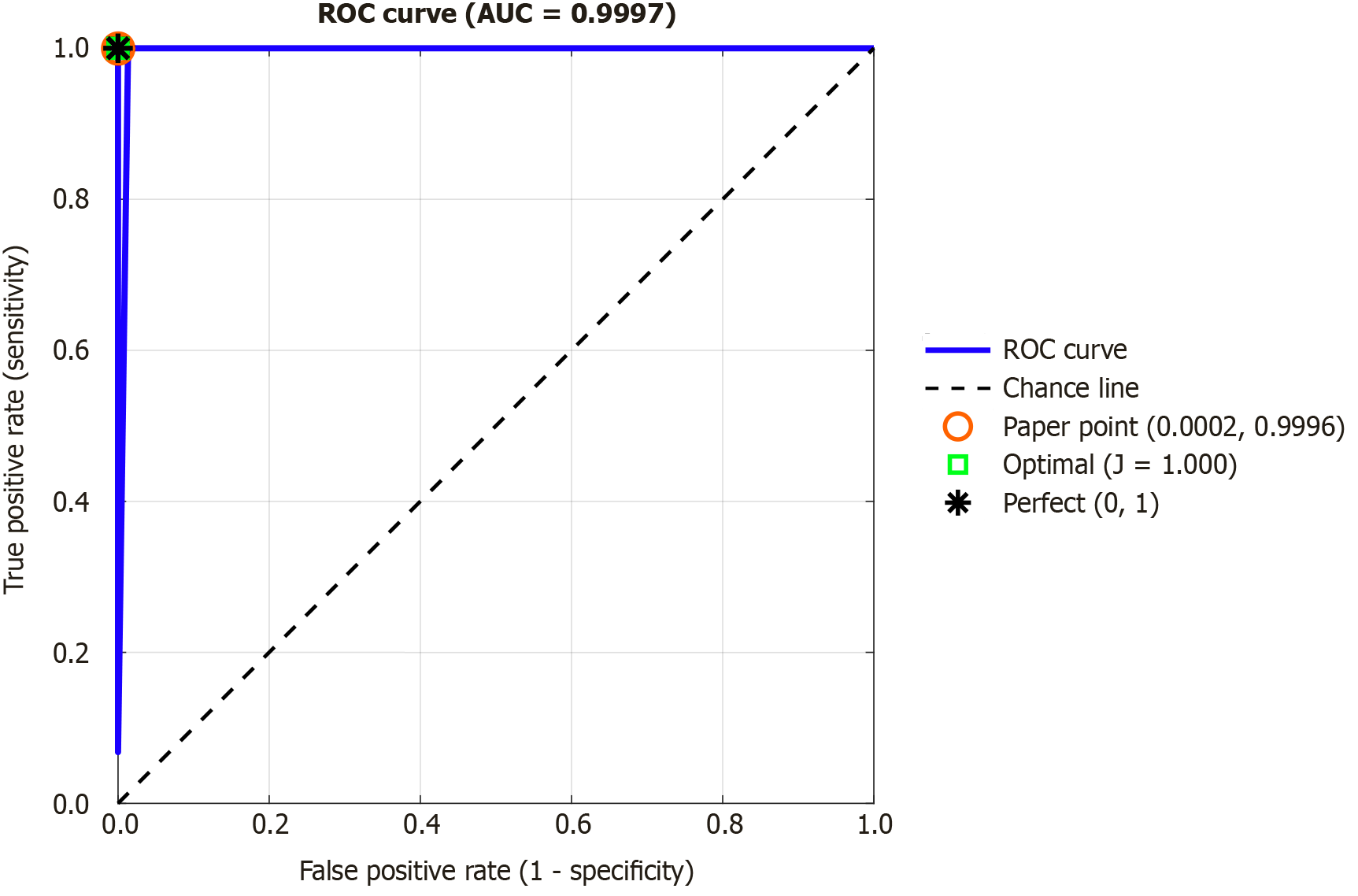
Figure 7 Receiver operating characteristic curve.
ROC: Receiver operating characteristic; AUC: Area under the curve.
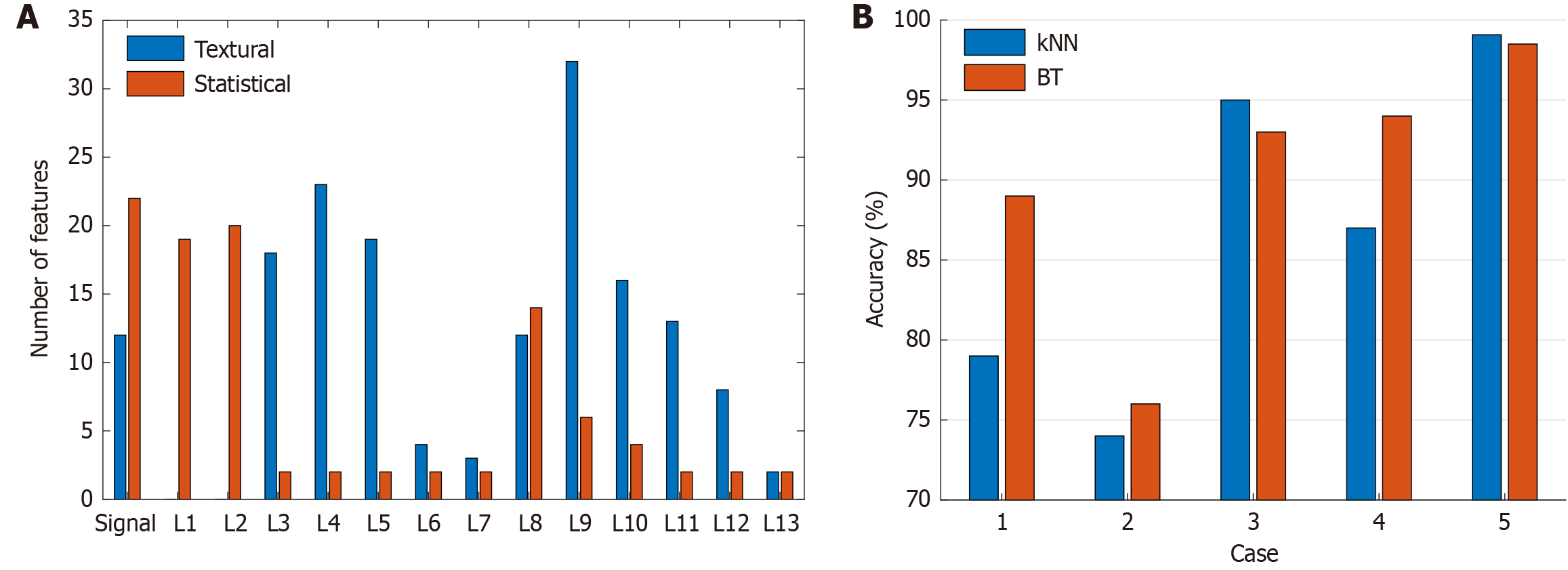
Figure 8 Channel 8.
A: Distribution of features on the selected feature vector generated from channel 8, stratified by signal/wavelet bands and textural/statistical features; B: Classification performance obtained for various ablation models using channel 8 electroencephalography input. The channel-wise classification was performed using k-nearest neighbors and a bagged tree with 10-fold cross-validation. kNN: K-nearest neighbors; BT: Bagged tree.
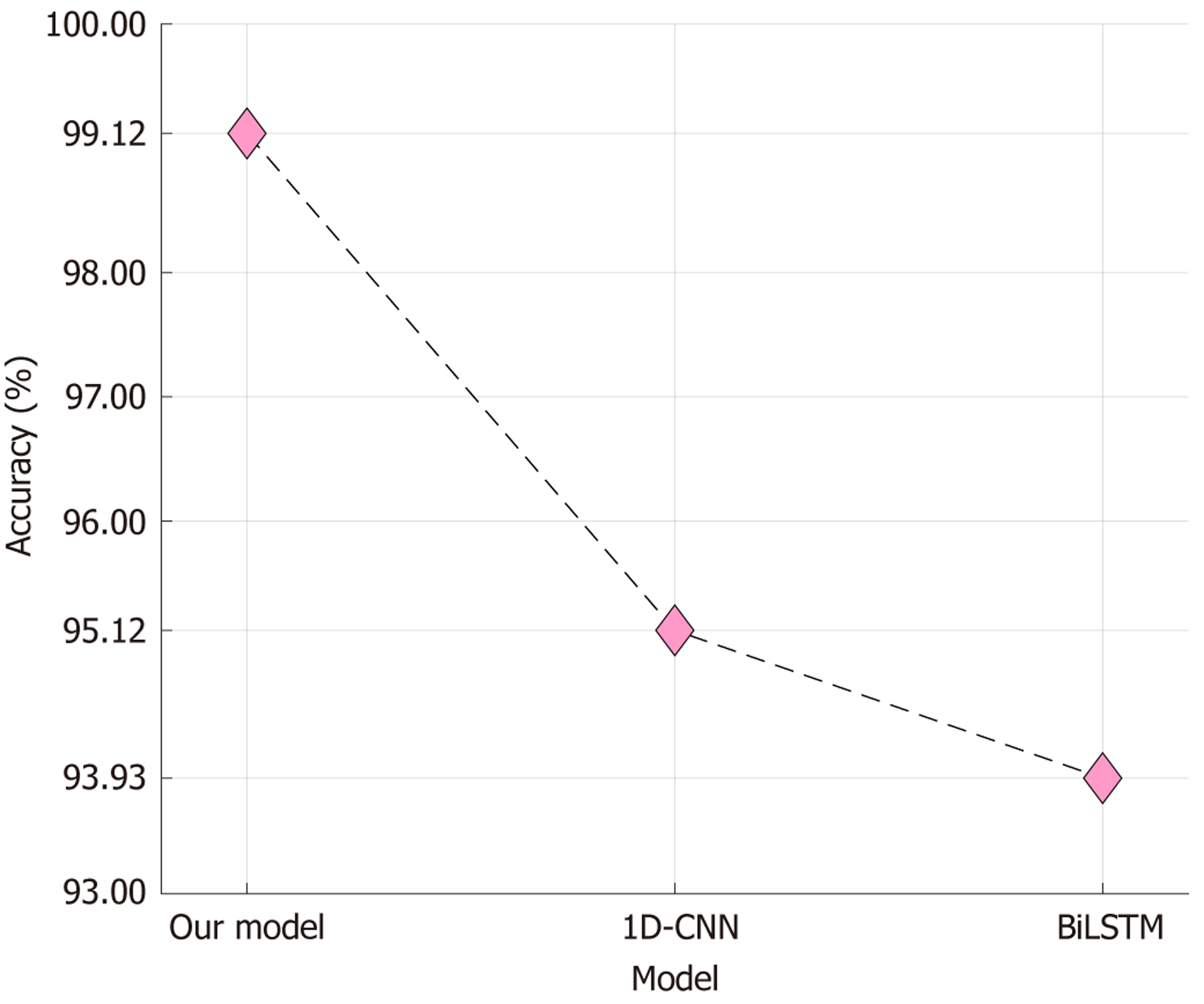
Figure 9 Comparison with deep learning.
1D-CNN: One-dimensional convolutional neural network; BilSTM: Bidirectional long short-term memory network.
- Citation: Atas Y, Kırık S, Yıldırım K, Tasci B, Barua PD, Balgetir F, Dogan S, Tuncer T, Tan RS, Palmer E, Devi A, Acharya UR. Explainable electroencephalography-based attention-deficit/hyperactivity disorder detection model with a combination of ternary pattern and twin wavelet transform. World J Psychiatry 2026; 16(3): 112962
- URL: https://www.wjgnet.com/2220-3206/full/v16/i3/112962.htm
- DOI: https://dx.doi.org/10.5498/wjp.v16.i3.112962