
















Copyright: ©Author(s) 2026.
World J Clin Oncol. May 24, 2026; 17(5): 117391
Published online May 24, 2026. doi: 10.5306/wjco.v17.i5.117391
Published online May 24, 2026. doi: 10.5306/wjco.v17.i5.117391
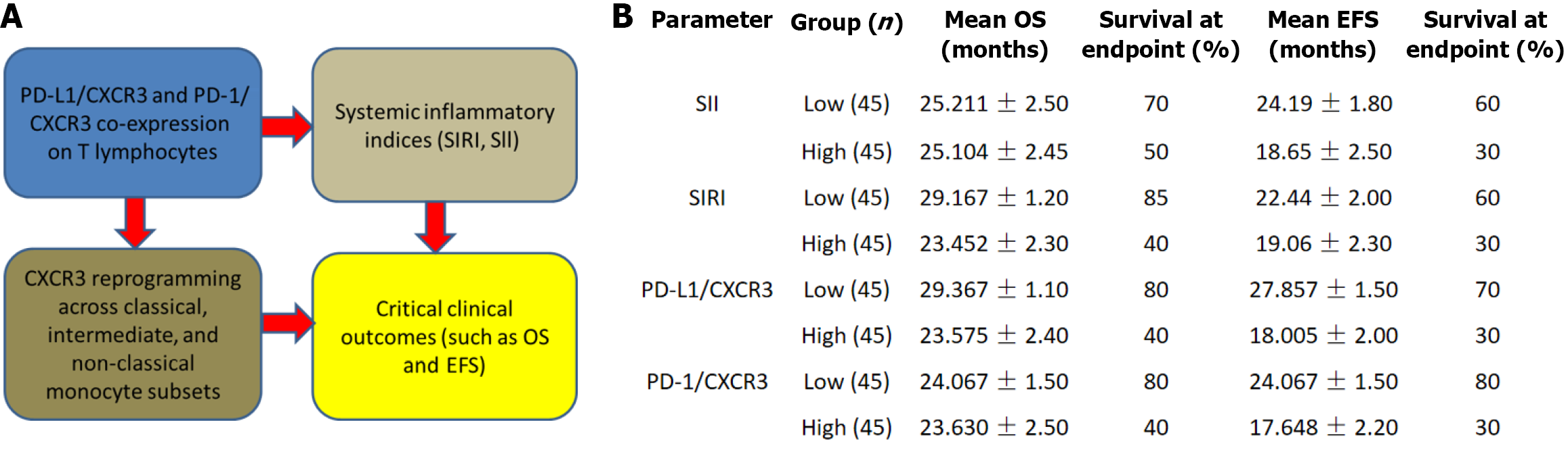
Figure 1 Summary of key findings and clinical implications of the immune-inflammatory biomarker, such as programmed death-ligand 1/ C-X-C motif chemokine receptor 3, programmed death-1/C-X-C motif chemokine receptor 3, systemic immune-inflammation index and systemic inflammatory response index, from Sherief et al[11].
A: Schematic overview of the integrated immune-inflammatory biomarker panel and its clinical implications in lymphoproliferative neoplasms; B: The survival at the endpoint for overall survival and event-free survival of patients with high expression of systemic immune-inflammation index, systemic inflammatory response index, programmed death-ligand 1/C-X-C motif chemokine receptor 3, and programmed death-1/C-X-C motif chemokine receptor 3 was shortened by 20%, 45%, 40% and 40%, and was reduced by 30%, 30%, 40% and 50%, respectively. These results indicate that when patients are diagnosed with lymphoproliferative neoplasms and have high co-expression of immune-inflammatory biomarkers, their prognosis is poor. Therefore, different strategies should be developed and adopted in clinical treatment for patients with high expression to improve efficacy. CXCR3: C-X-C motif chemokine receptor 3; EFS: Event-free survival; OS: Overall survival; PD-L1: Programmed death-ligand 1; PD-1: Programmed death-1; SII: Systemic immune-inflammation index; SIRI: Systemic inflammatory response index.
- Citation: Chiang ZC, Lin JZ, Chen Q. Immune checkpoint co-expression combined with systemic inflammatory index: A promising approach in prognostic evaluation of lymphoma in Egypt. World J Clin Oncol 2026; 17(5): 117391
- URL: https://www.wjgnet.com/2218-4333/full/v17/i5/117391.htm
- DOI: https://dx.doi.org/10.5306/wjco.v17.i5.117391