
















Copyright: ©Author(s) 2026.
World J Clin Oncol. Apr 24, 2026; 17(4): 117805
Published online Apr 24, 2026. doi: 10.5306/wjco.v17.i4.117805
Published online Apr 24, 2026. doi: 10.5306/wjco.v17.i4.117805
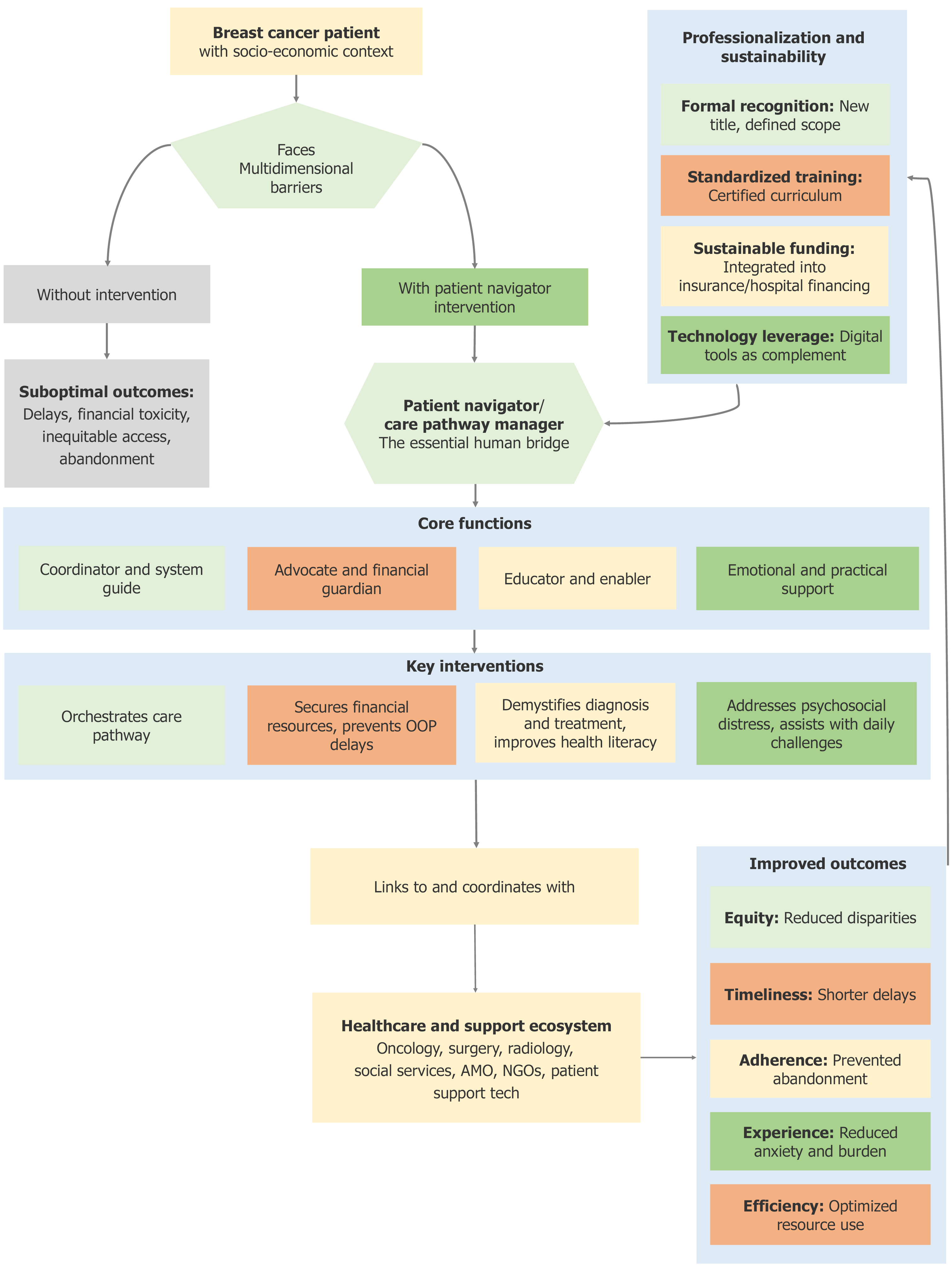
Figure 1 The transformative role of the patient navigator in breast cancer care: A systems flowchart.
This diagram illustrates how the patient navigator (or proposed designation: “Care pathway manager”) intervenes at critical junctures to transform the cancer care journey. Beginning with a patient facing multidimensional barriers, two pathways emerge: Without navigation leads to suboptimal outcomes, while with navigation enables barrier mitigation through core functions. These interventions yield immediate benefits that translate into systemic impacts centered on equity, timeliness, and patient-centered care. The sustainability and scalability of this role depend on a defined professional development pathway encompassing formal recognition, standardized training, sustainable funding, and appropriate technology integration. The model aligns with the principle that human connection remains central, augmented by, not replaced by, technology (President’s Cancer Panel, 2024). AMO: Mandatory health insurance (Morocco); NGOs: Non-profit organizations; OOP: Out-of-pocket expenses.
- Citation: Ismaili N, Guessous F, El Majjaoui S. Breast cancer in Morocco: Synthesizing two decades of national research to inform future action. World J Clin Oncol 2026; 17(4): 117805
- URL: https://www.wjgnet.com/2218-4333/full/v17/i4/117805.htm
- DOI: https://dx.doi.org/10.5306/wjco.v17.i4.117805