
















©The Author(s) 2025.
World J Radiol. Dec 28, 2025; 17(12): 112986
Published online Dec 28, 2025. doi: 10.4329/wjr.v17.i12.112986
Published online Dec 28, 2025. doi: 10.4329/wjr.v17.i12.112986
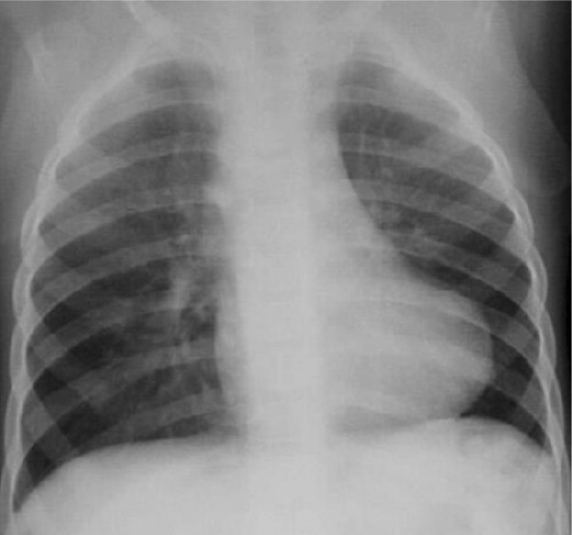
Figure 1
Frontal chest radiograph of a child who presented with cyanotic spells showing a boot-shaped heart (cor-en-sabot) with upturning of the cardiac apex, pulmonary oligemia, and absence of the pulmonary bay.
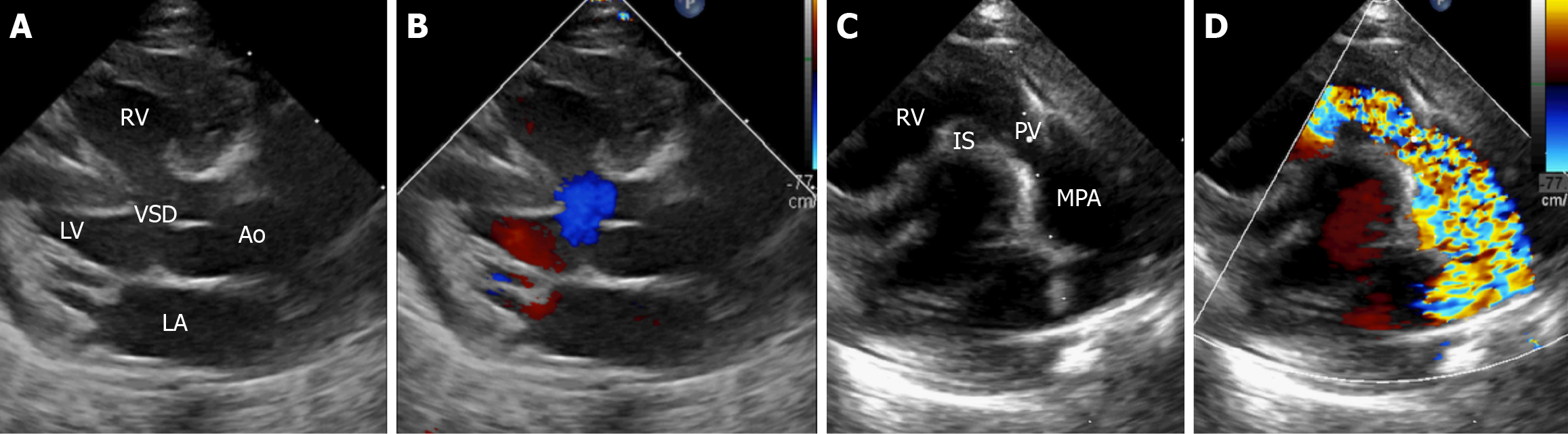
Figure 2 Trans-thoracic echocardiography in classical tetralogy of Fallot.
A and B: Parasternal long axis view (grayscale and Doppler images, respectively) focusing on the aortic valve showing the large ventricular septal defect, aortic override, and right-to-left shunt, blue color in (B); C and D: Parasternal long axis view (grayscale and Doppler images, respectively), focusing on the pulmonary valve showing the turbulence, mosaic pattern in (D) in blood flow due to right ventricular outflow tract obstruction. Ao: Aorta; VSD: Ventricular septal defect; RV: Right ventricle; LV: Left ventricle; MPA: Main pulmonary artery; PV: Pulmonary valve; IS: Infundibular septum.
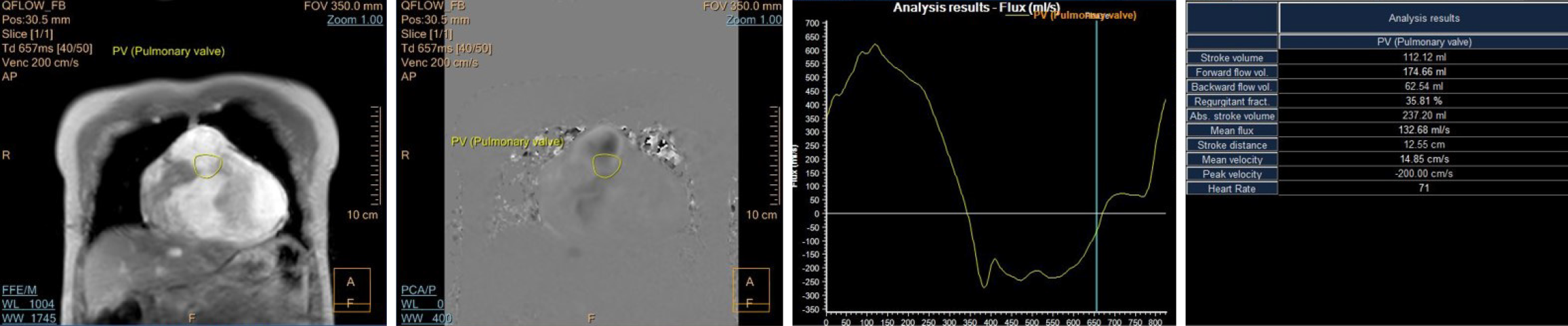
Figure 3 Cardiac magnetic resonance imaging with phase-contrast imaging of the pulmonary valve (region of interest represented by a yellow circle) showing the flow curve with antegrade flow above the baseline and retrograde flow below the baseline, representing the pulmonary regurgitation.
The absolute retrograde flow volume was 62.54 mL, and the regurgitant fraction was calculated by the software as 35.81%.
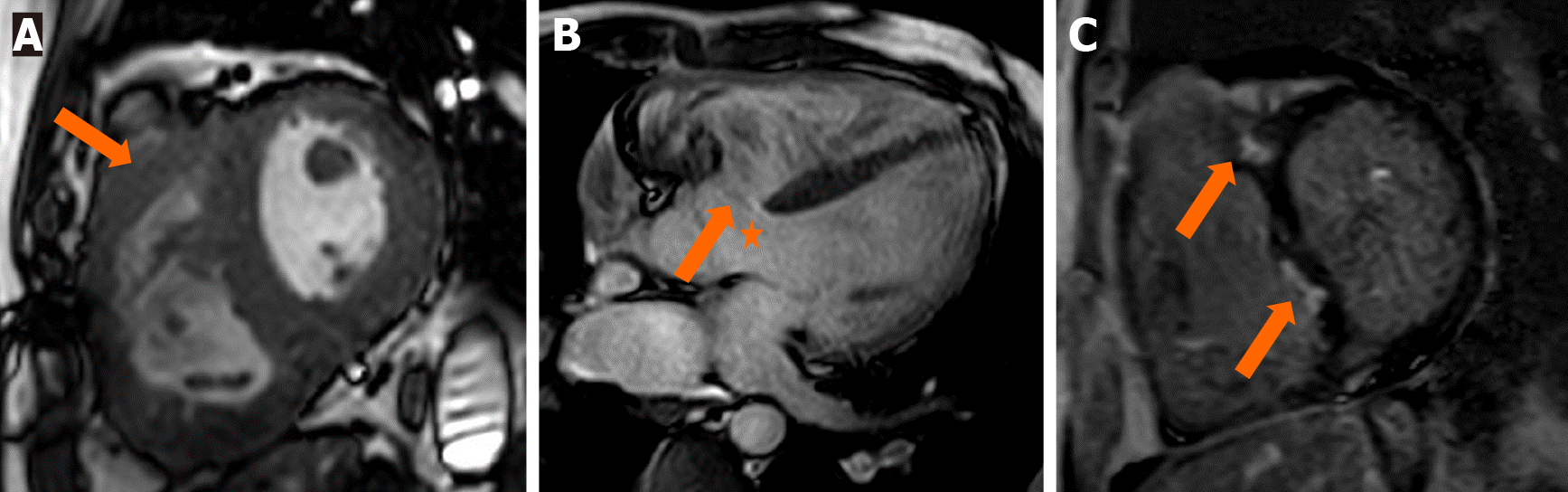
Figure 4 Cardiac magnetic resonance imaging in an operated patient of tetralogy of Fallot.
A: Short-axis view showing a dilated right ventricle (RV) with thickened walls; B: Perimembranous ventricular septal defect (asterisk) with regurgitant jet (block arrow) across the tricuspid valve, suggestive of regurgitation; C: Focal areas of late Gadolinium enhancement in the RV and RV side of the septum.
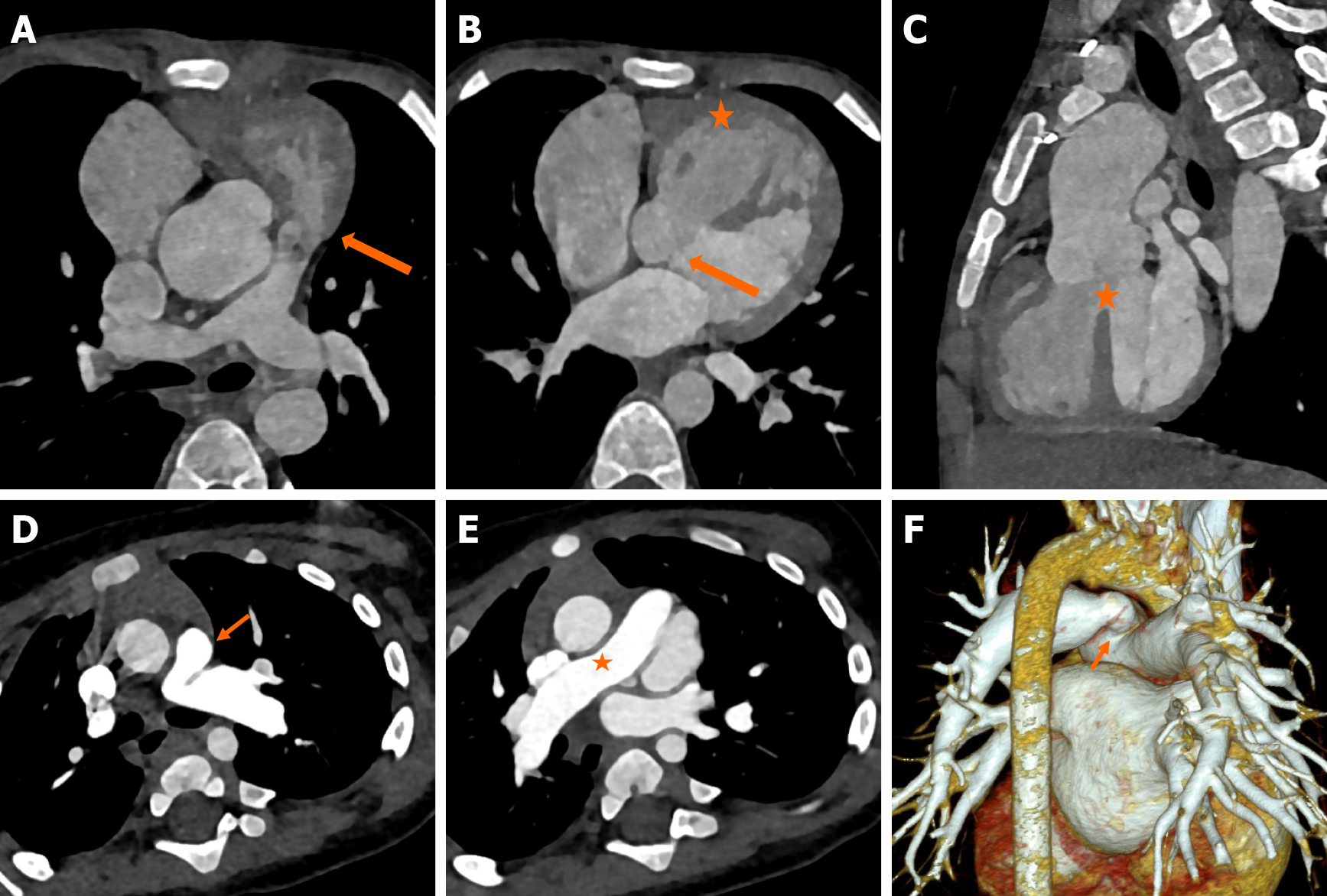
Figure 5 Computed tomography images.
A-C: Axial (A and B) and sagittal reformatted images (C) of computed tomography angiography in a child with cyanosis, showing infundibular pulmonary stenosis (block arrow in A), right ventricular hypertrophy (asterisk in B), perimembranous ventricular septal defect (block arrow in B) with 50% aortic override (asterisk in C) consistent with classical tetralogy of Fallot; D-F: Axial (D and E) images showing stenosis at the origin of the left pulmonary artery (arrow). The right pulmonary artery was normal (asterisk); F: Three-dimensional volume rendered image showing the left pulmonary artery stenosis (arrow).
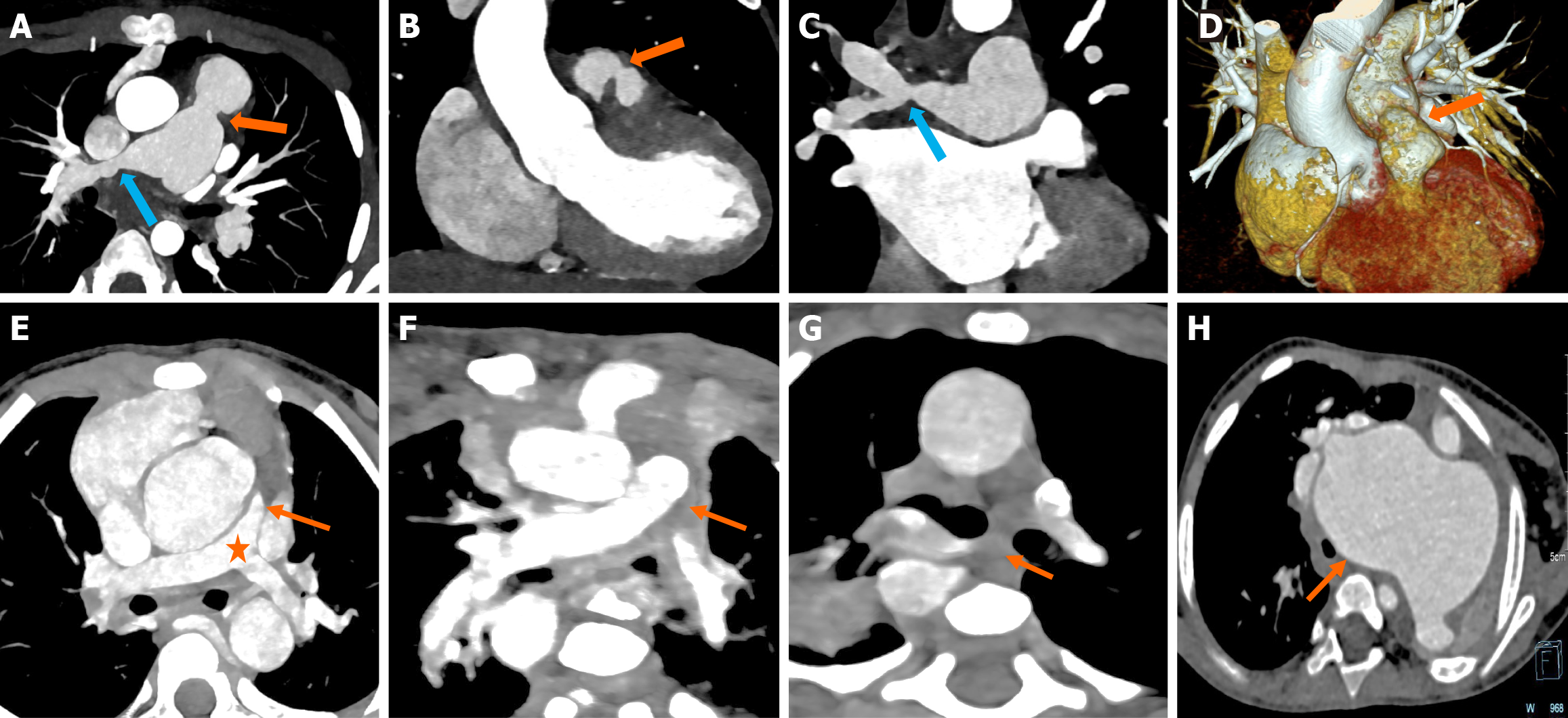
Figure 6 Computed tomography images.
A-D: Oblique axial maximum intensity projection images and volume rendered image showing supravalvular main pulmonary artery (orange arrow) and right pulmonary artery (blue arrow) stenosis in a known case of TOF (A); coronal reformat image showing the main pulmonary artery stenosis (arrow) (B); coronal reformat image showing right pulmonary artery stenosis (blue arrow) (C); three-dimensional volume rendered image showing supravalvular main pulmonary artery stenosis (arrow) (D); E-H: Axial computed tomography angiography images showing pulmonary arterial anomalies in different patients of tetralogy of Fallot. E: Pulmonary atresia (block arrow) with reformed, confluent pulmonary arteries (asterisk); F: Pulmonary atresia with non-confluent, reformed pulmonary arteries (block arrow); G: Pulmonary atresia with absent main and branch pulmonary arteries (block arrow); H: Aneurysmal dilatation of the main pulmonary artery (block arrow) due to absent pulmonary valve.
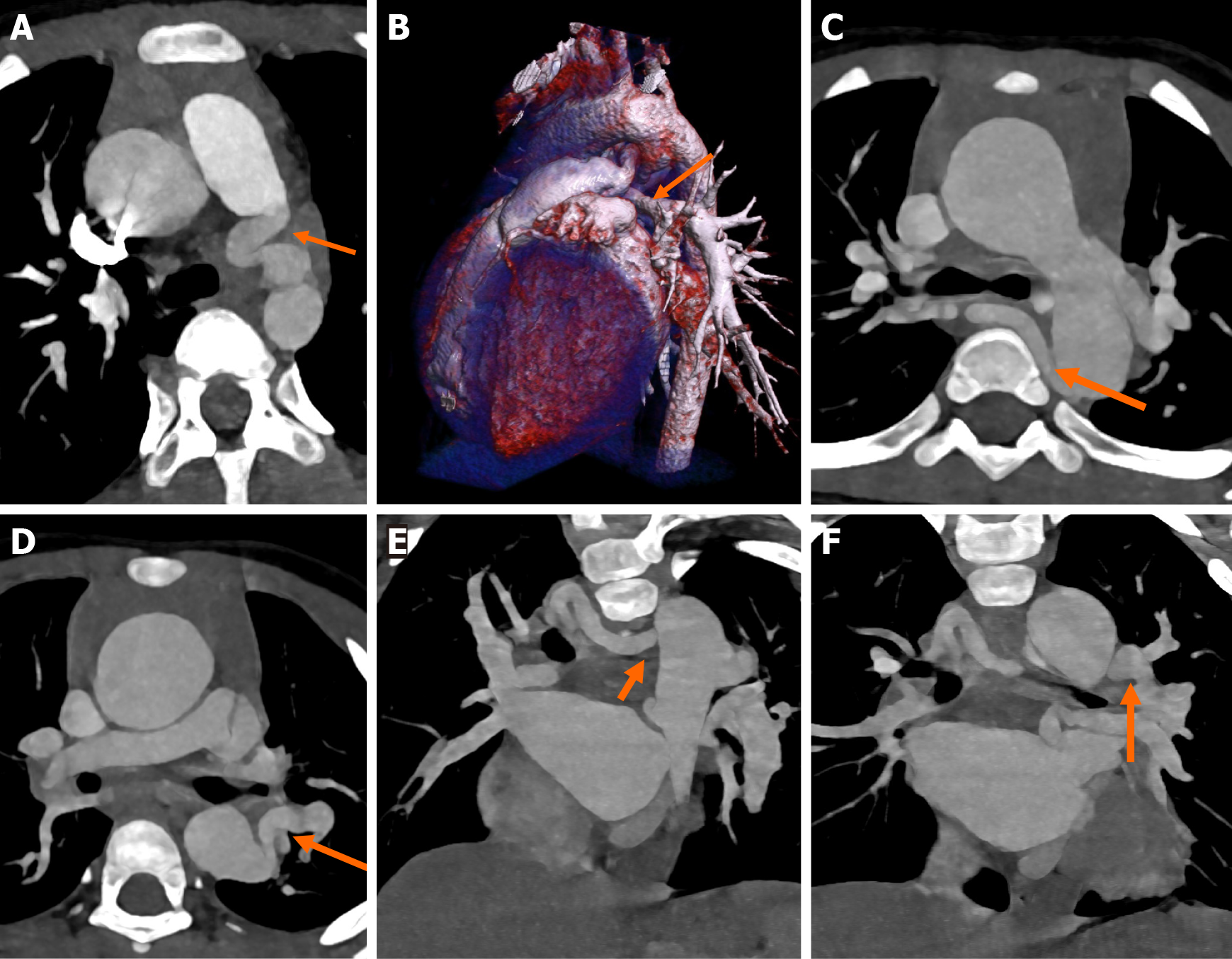
Figure 7 Computed tomography images.
A and B: Axial (A) and volume rendered image (B) of computed tomography angiography in a child with tetralogy of Fallot showing a large patent ductus arteriosus between the descending thoracic aorta and left pulmonary artery; C-F: Axial (C and D) and coronal reformatted images (E and F) of computed tomography angiography in a child with tetralogy of Fallot showing major aortopulmonary collateral arteries in the mediastinum arising from the descending thoracic aorta (block arrows) and reforming the right and left pulmonary arteries.
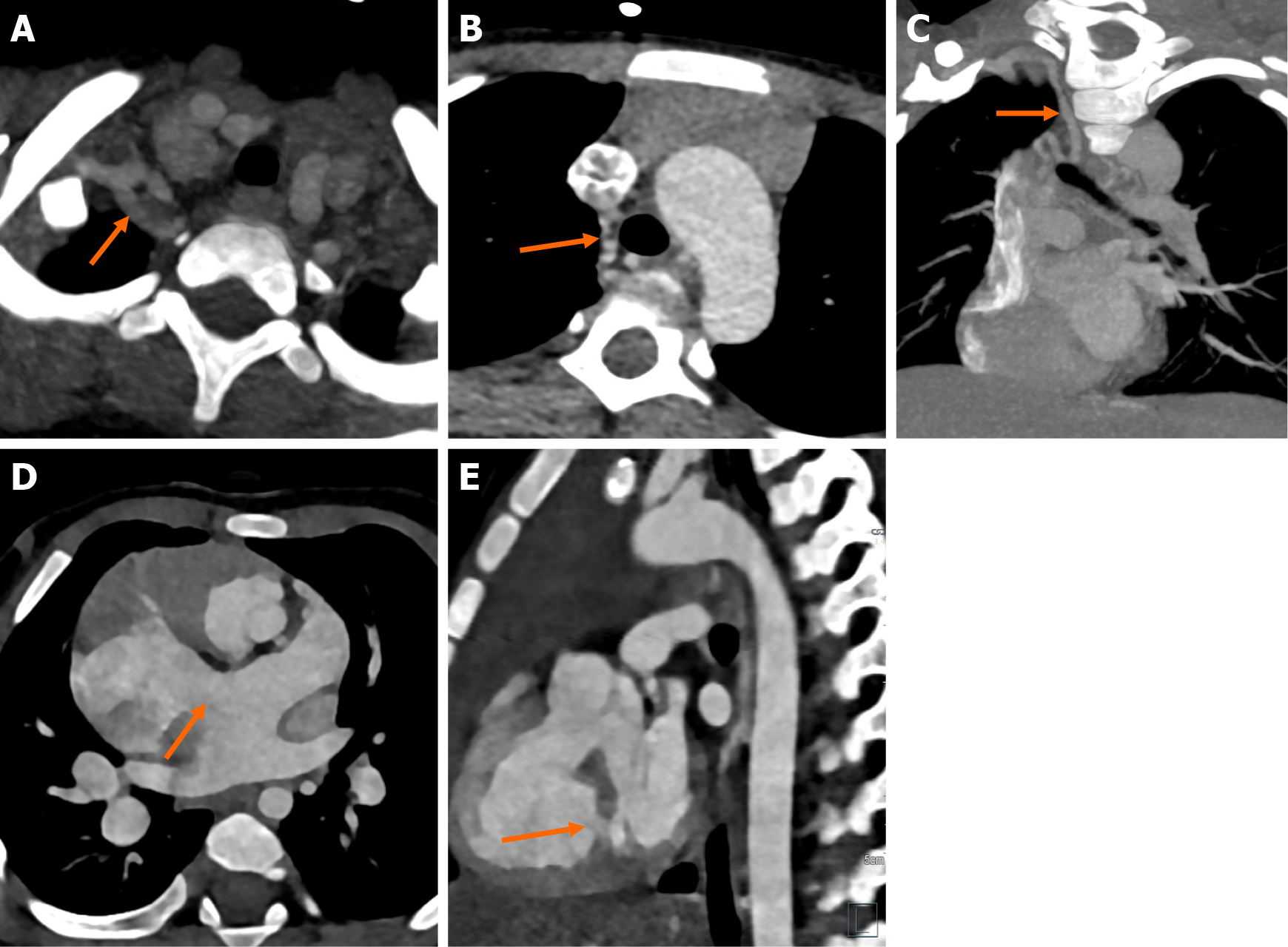
Figure 8 Computed tomography images.
A-C: Axial (A and B) and coronal reformatted images (C) of computed tomography angiography in a child with tetralogy of Fallot showing systemic aortopulmonary collateral artery in the right paratracheal location arising from the right subclavian artery and reforming the right pulmonary artery; D and E: Axial image of computed tomography angiography showing a large atrial septal defect in a patient with tetralogy of Fallot consistent with pentalogy (D); Sagittal reformat of another patient showing a small muscular ventricular septal defect (block arrow) in addition to the perimembranous ventricular septal defect (E).
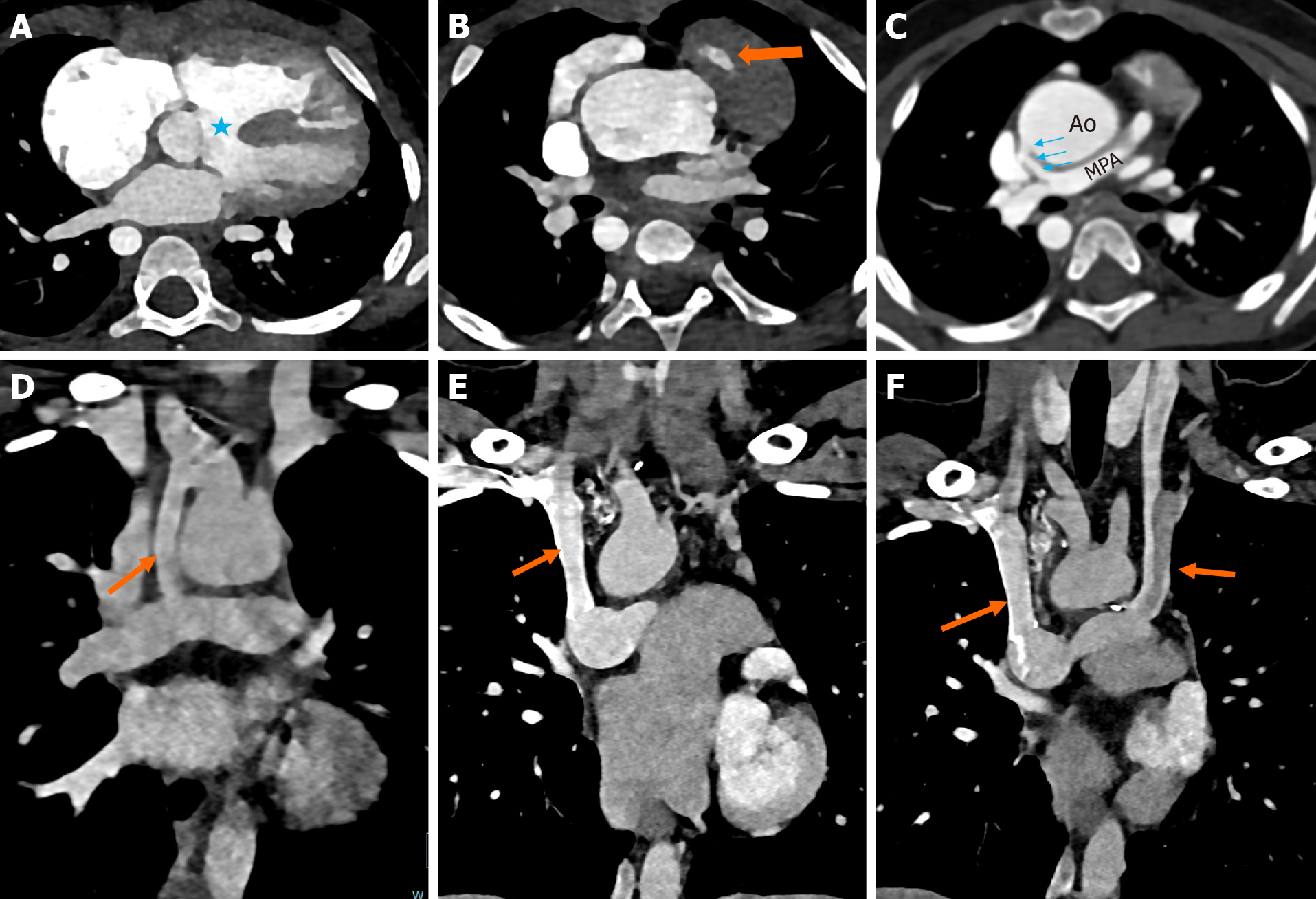
Figure 9 Operated patient with tetralogy of Fallot.
A-C: Axial computed tomography images of a postoperative patient with tetralogy of Fallot. Perimembranous ventricular septal defect (asterisk) (A). Infundibular pulmonary stenosis (arrow) with atresia of the main pulmonary artery (B). Central aor
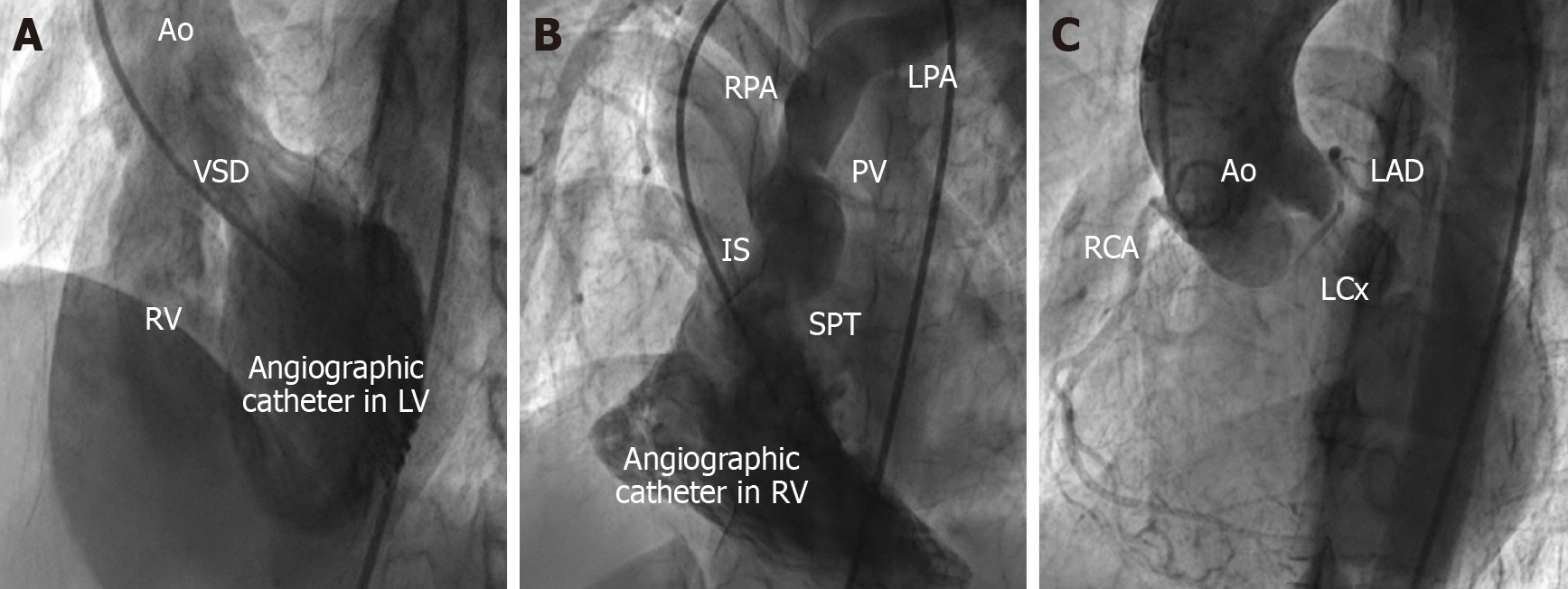
Figure 10 Catheter angiography images in a patient with tetralogy of Fallot.
A: Left ventricle angiography showing large ventricular septal defect, aortic override; B: Right ventricle angiography showing multilevel stenosis at sub-valvar, valvar, supra-valvar region; C: Aortic root angiography showing origin of coronaries. Ao: Aorta; VSD: Ventricular septal defect; RV: Right ventricle; LV: Left ventricle; RPA: Right pulmonary artery; LPA: Left pulmonary artery; PV: Pulmonary valve; IS: Infundibular septum; SPT: Septoparietal trabeculations; RCA: Right coronary artery; LCx: Left circumflex artery; LAD: Left anterior descending artery.
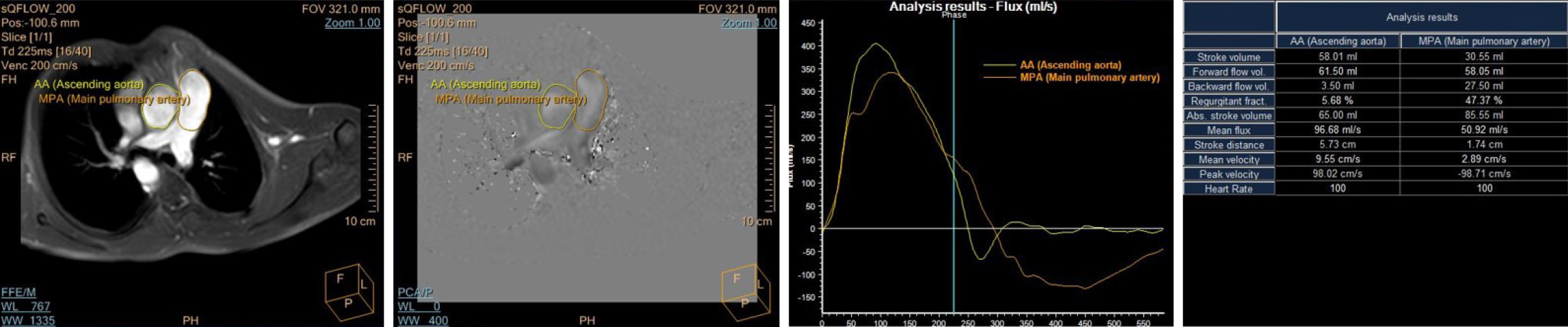
Figure 11 Cardiac magnetic resonance imaging to calculate Qp:Qs.
Regions of interest are placed in the aorta and main pulmonary artery (yellow and orange circles, respectively), and phase-contrast magnetic resonance imaging is performed. The graph shows the quantity and directions of flow at these levels. The flow parameters and Qp:Qs are shown in the system-generated table.
- Citation: Sharma A, Subramanian P, Soundararajan R, Maralakunte M, Mallick A, Debi U, Jaswal V, Manoj Kumar R, Singhal M. Imaging considerations in tetralogy of Fallot: A comprehensive review. World J Radiol 2025; 17(12): 112986
- URL: https://www.wjgnet.com/1949-8470/full/v17/i12/112986.htm
- DOI: https://dx.doi.org/10.4329/wjr.v17.i12.112986