
















Copyright: ©Author(s) 2026.
World J Gastrointest Surg. Apr 27, 2026; 18(4): 116138
Published online Apr 27, 2026. doi: 10.4240/wjgs.v18.i4.116138
Published online Apr 27, 2026. doi: 10.4240/wjgs.v18.i4.116138
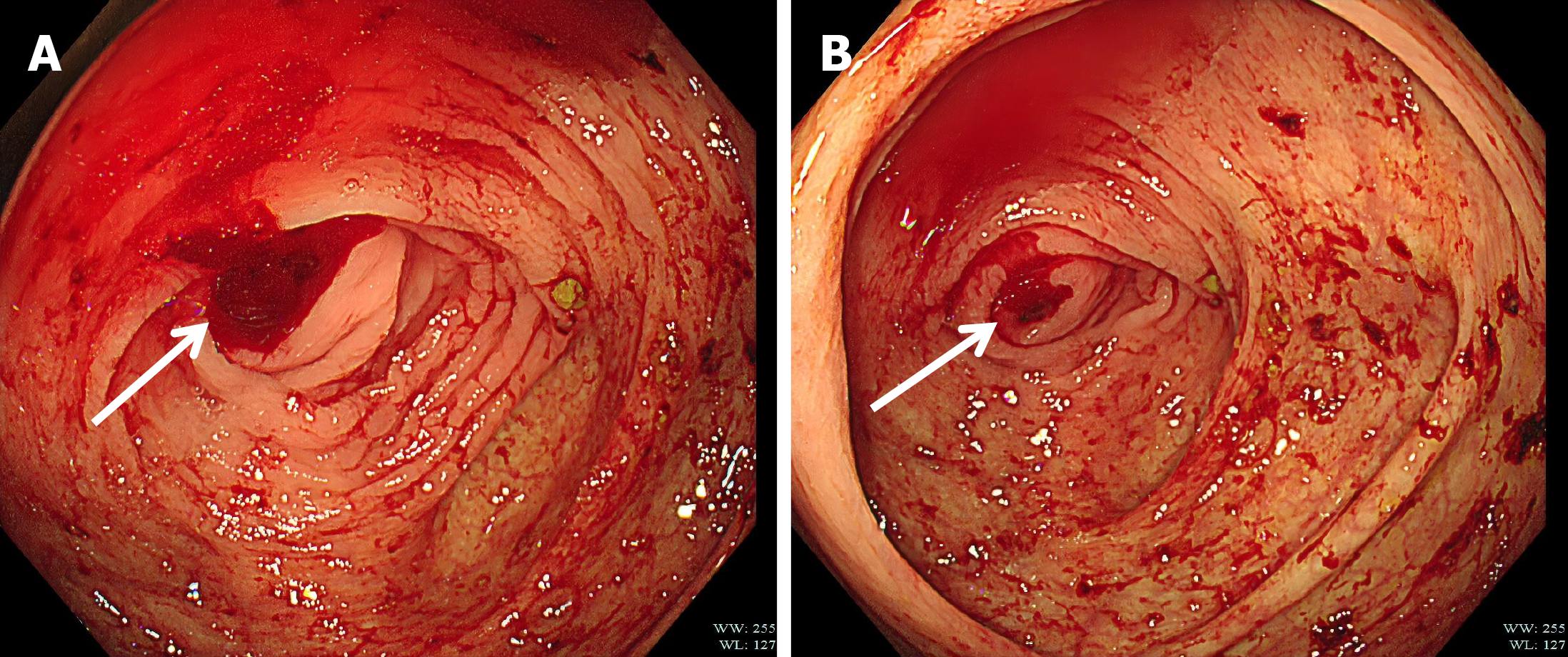
Figure 1 Colonoscopic examination shows bright red blood in the ileocecal region, and a blood clot and blood flowing from the appendix orifice.
A: Blood clot at the appendiceal orifice (arrow); B: Extravasation of blood from the orifice of the appendix after flushing (arrow).
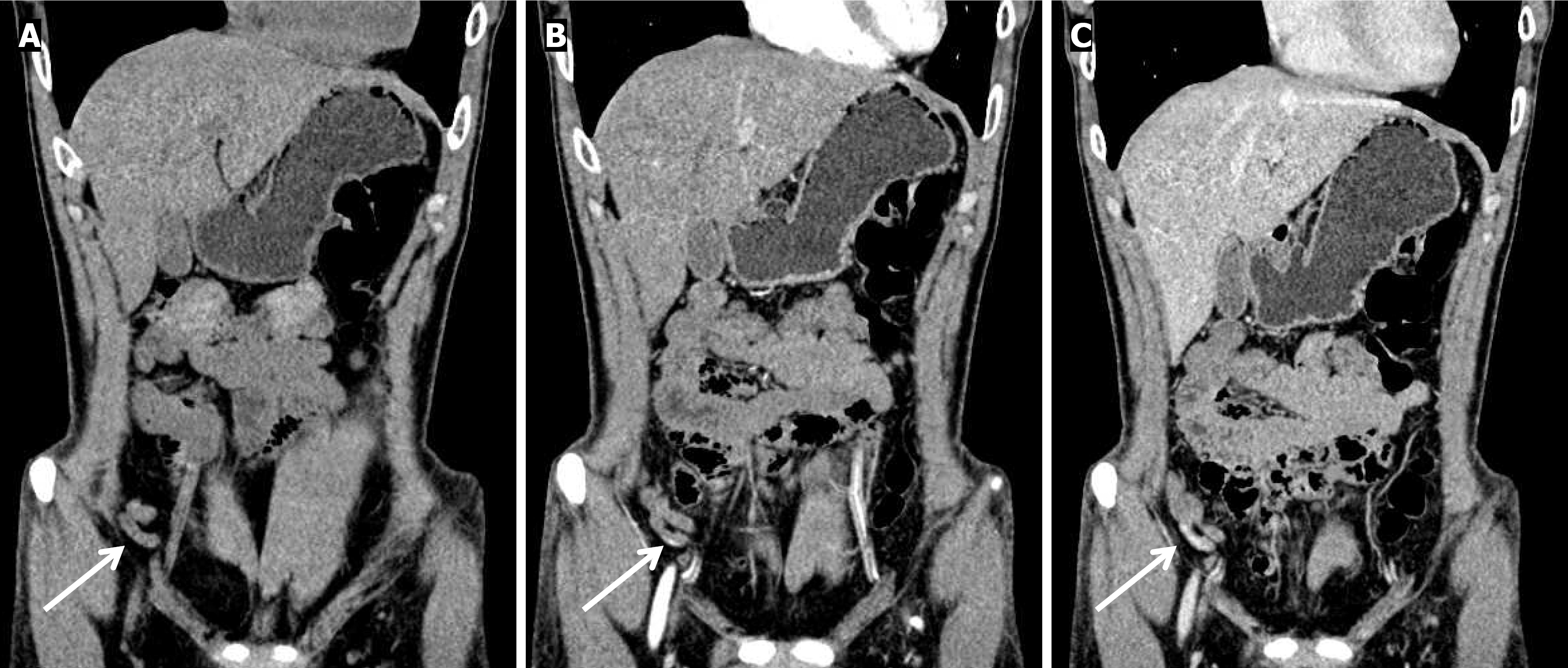
Figure 2 Abdominal computed tomography angiography reveals active appendiceal bleeding.
A: Computed tomography scan without contrast showing no abnormalities (arrow); B: The arterial phase showing an active contrast leak in the appendix (arrow); C: The venous phase showing progressive enlargement of the contrast leak (arrow).
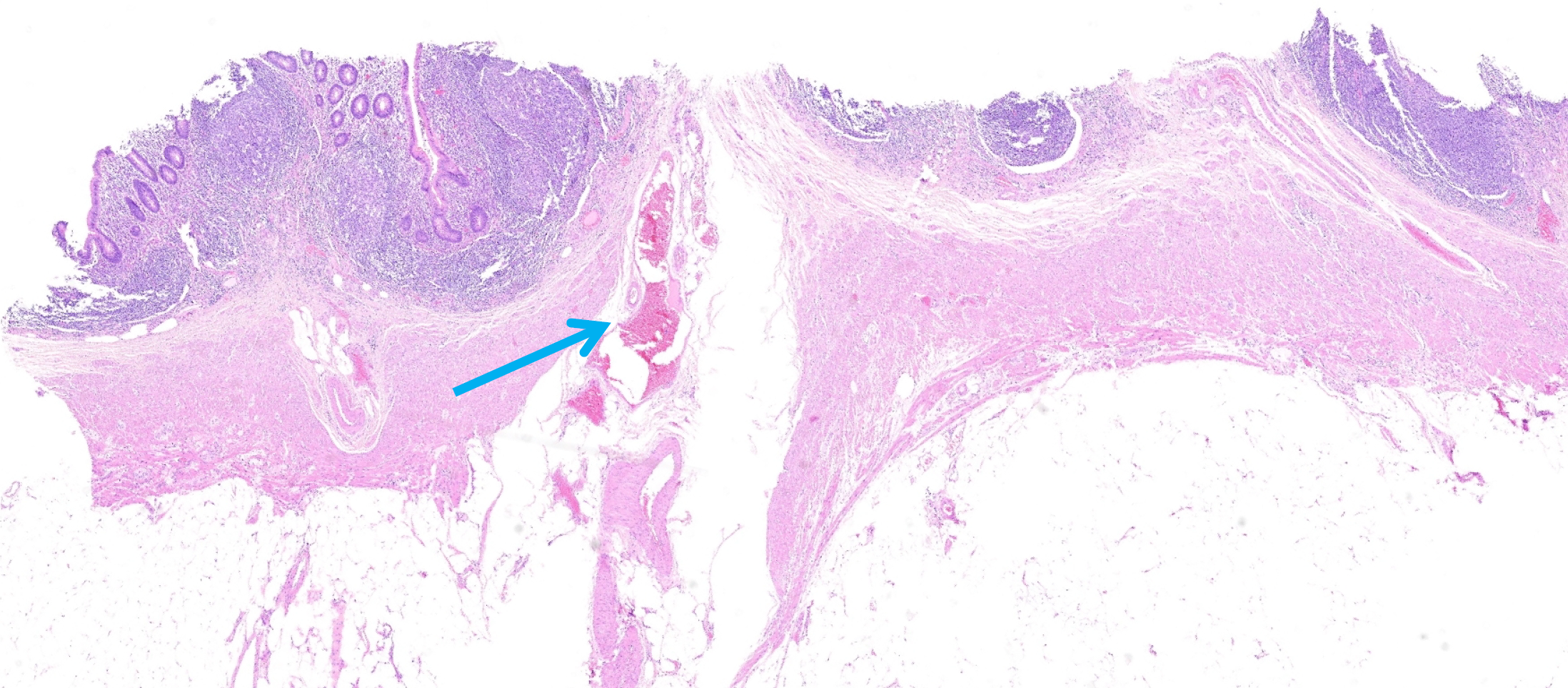
Figure 3 The histopathology of the resected specimen.
Abnormal veins piercing the muscle layers of the appendix can be seen. Blue arrow: Abnormal veins.
- Citation: Zhou JW, Jin CF, Lei WS, Zhu ML, Yu XP, Yu WH. Appendiceal bleeding caused by angiodysplasia: A case report and review of literature. World J Gastrointest Surg 2026; 18(4): 116138
- URL: https://www.wjgnet.com/1948-9366/full/v18/i4/116138.htm
- DOI: https://dx.doi.org/10.4240/wjgs.v18.i4.116138