
















Copyright: ©Author(s) 2026.
World J Gastrointest Surg. Apr 27, 2026; 18(4): 115467
Published online Apr 27, 2026. doi: 10.4240/wjgs.v18.i4.115467
Published online Apr 27, 2026. doi: 10.4240/wjgs.v18.i4.115467
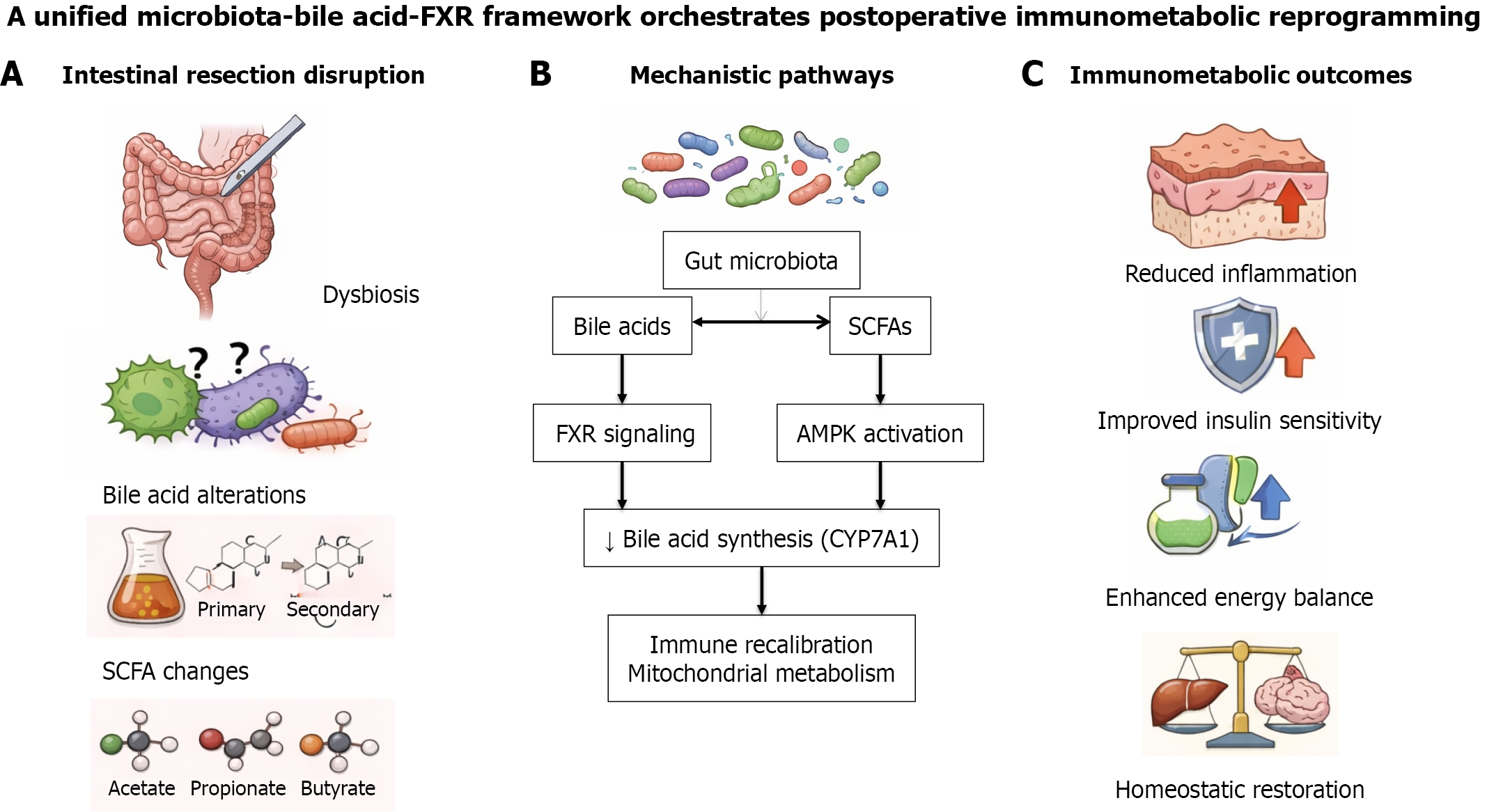
Figure 1 A unified microbiota-bile acid - farnesoid X receptor framework orchestrates postoperative immunometabolic reprogramming.
This schematic illustrates a unified, three-stage framework of postoperative immunometabolic reprogramming following intestinal resection, structured as perturbation, mechanistic reprogramming, and system-level outcomes. A: Intestinal resection induces a primary perturbation characterized by altered nutrient flow and microbial ecological disruption (dysbiosis). These changes initiate downstream alterations in gut-derived metabolites, including bile acids and short-chain fatty acids, thereby reshaping the intestinal metabolic environment; B: Microbiota-driven metabolic reprogramming is mediated through two principal axes. First, microbial modulation of bile acid composition promotes the conversion of primary to secondary bile acids, leading to activation of farnesoid X receptor signaling across the intestine-liver axis. Farnesoid X receptor activation regulates enterohepatic feedback, including suppression of hepatic bile acid synthesis (e.g., CYP7A1 inhibition), and coordinates metabolic homeostasis. Second, microbial fermentation generates short-chain fatty acids, which activate metabolic signaling pathways such as AMP-activated protein kinase, contributing to enhanced mitochondrial oxidative metabolism. These signaling pathways converge to drive immune recalibration and mitochondrial metabolic adaptation, representing an integrated host response to microbiota-derived metabolic cues; C: The integrated effects of these pathways result in system-level outcomes, including reduced inflammatory tone, improved metabolic regulation, enhanced energy homeostasis, and restoration of physiological balance. These coordinated adaptations support recovery of systemic metabolic stability following surgical perturbation. Together, this framework highlights that postoperative metabolic remodeling emerges from a coordinated microbiota-metabolite-host signaling network, rather than from isolated pathways, providing a conceptual basis for targeted therapeutic modulation of the gut-liver axis. FXR: Farnesoid X receptor; SCFA: Short-chain fatty acid; AMPK: AMP-activated protein kinase.
- Citation: Wang G, Pan SJ. Microbiota-bile acid crosstalk and hepatic gluconeogenesis after intestinal resection: Revisiting the gut-liver axis for metabolic recovery. World J Gastrointest Surg 2026; 18(4): 115467
- URL: https://www.wjgnet.com/1948-9366/full/v18/i4/115467.htm
- DOI: https://dx.doi.org/10.4240/wjgs.v18.i4.115467