
















Copyright: ©Author(s) 2026.
World J Gastrointest Oncol. Jun 15, 2026; 18(6): 118708
Published online Jun 15, 2026. doi: 10.4251/wjgo.v18.i6.118708
Published online Jun 15, 2026. doi: 10.4251/wjgo.v18.i6.118708
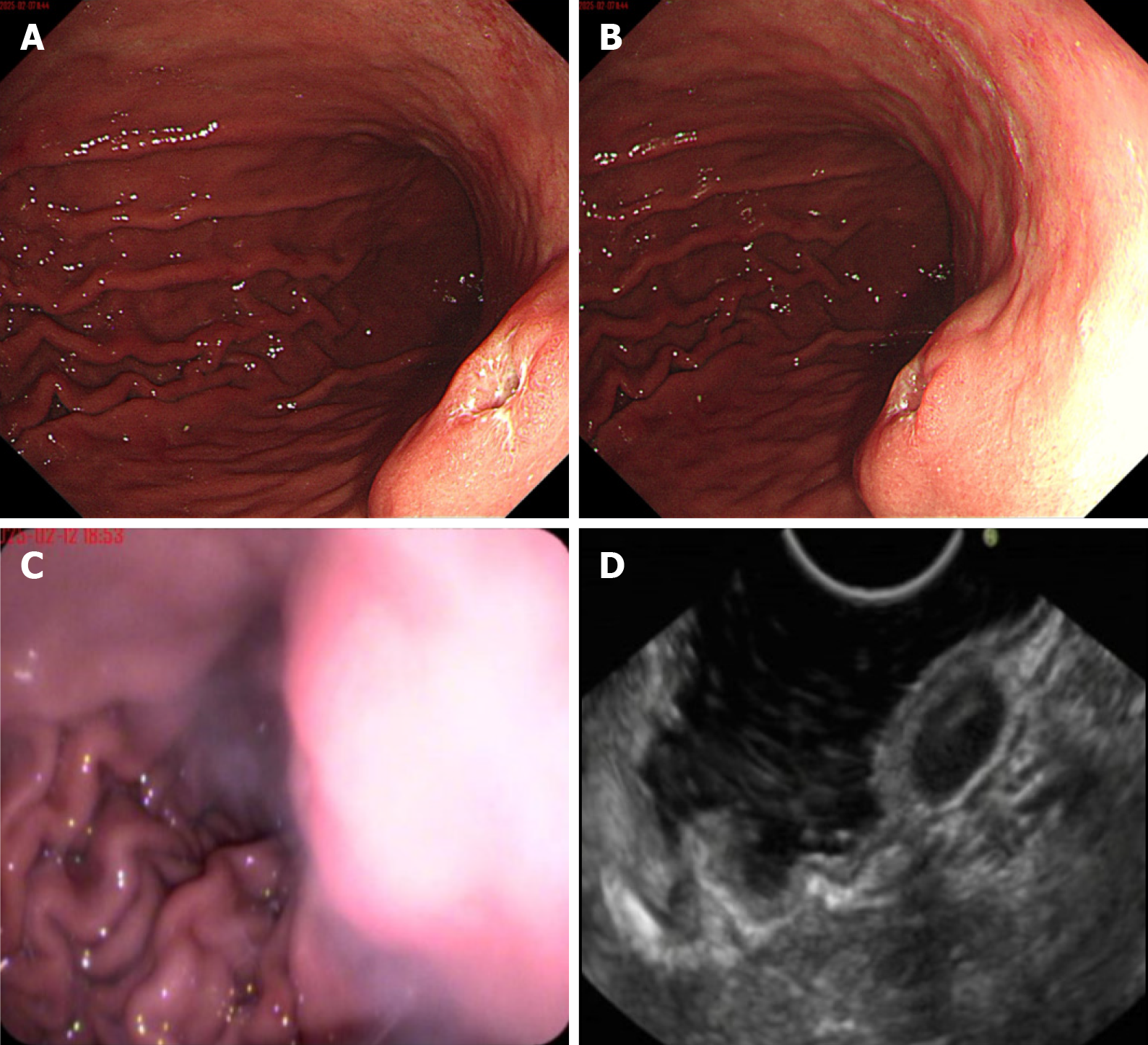
Figure 1 Endoscopic findings.
A and B: Visible under white light: A hemispherical mucosal elevation is observed on the posterior wall of the gastric body, measuring approximately 1.5 cm × 2.0 cm in diameter. The surface is depressed with ulceration, covered by a white coating, and the surrounding mucosa appears congested and edematous; C and D: Endoscopic ultrasound findings: The gastric body lesion was hypoechoic, ellipsoid-like, with a still homogeneous internal echo and partially visible hypoechoic, and the size of the slice was about 1.0 cm × 1.0 cm, with a still clear border, originating in the intrinsic muscularis propria layer.
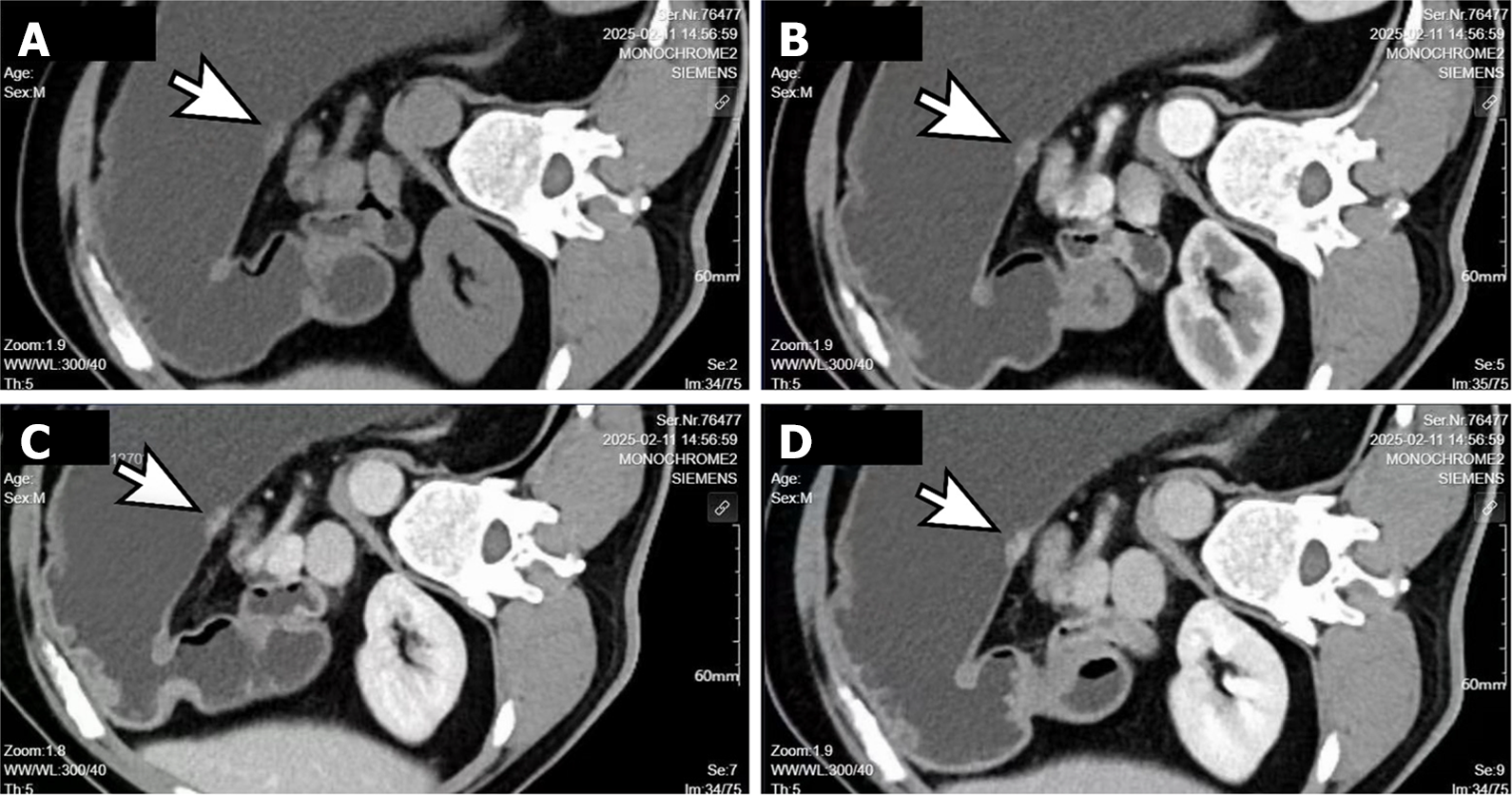
Figure 2 Enhanced gastric computed tomography.
The posterior wall of the lower gastric body shows focal nodular thickening measuring approximately 16 mm × 8 mm. On contrast-enhanced imaging, the lesion demonstrates progressive, marked enhancement with heterogeneous filling. The lesion protrudes into the gastric lumen with localized surface indentation. The serosal margin of the lesion appears smooth. No significant perigastric lymphadenopathy is noted. A: Non-contrast; B: Arterial phase; C: Venous phase; D: Delayed phase. Arrow: Location of the lesion.
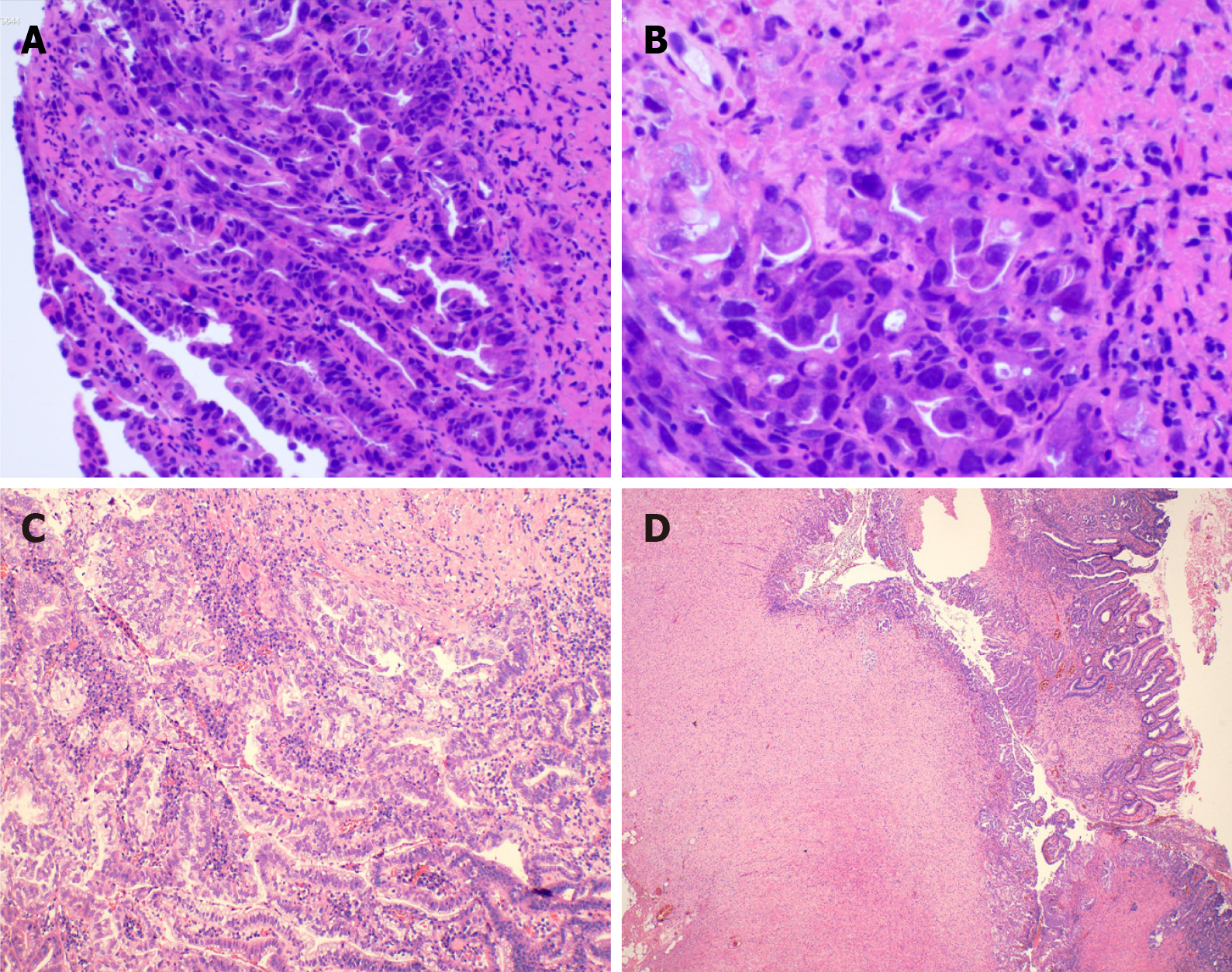
Figure 3 Hematoxylin and eosin staining was performed on the tumor tissue.
A and B: The structure of the gastric mucosal glands was disordered, presenting a sieve-like fusion-like change. The glandular epithelial cells are significantly abnormal, manifested as enlarged nuclei, increased nucleoplasmic ratio, disordered cell arrangement, and loss of polarity; C and D: The cancer cells are arranged in an irregular glandular and nest-like pattern, with obvious cell atypia and distinct mitotic signs. The tumor infiltrated into the submucosa and invaded the surrounding leiomyoma tissue. The measured depth of infiltration was approximately 4.26 mm.
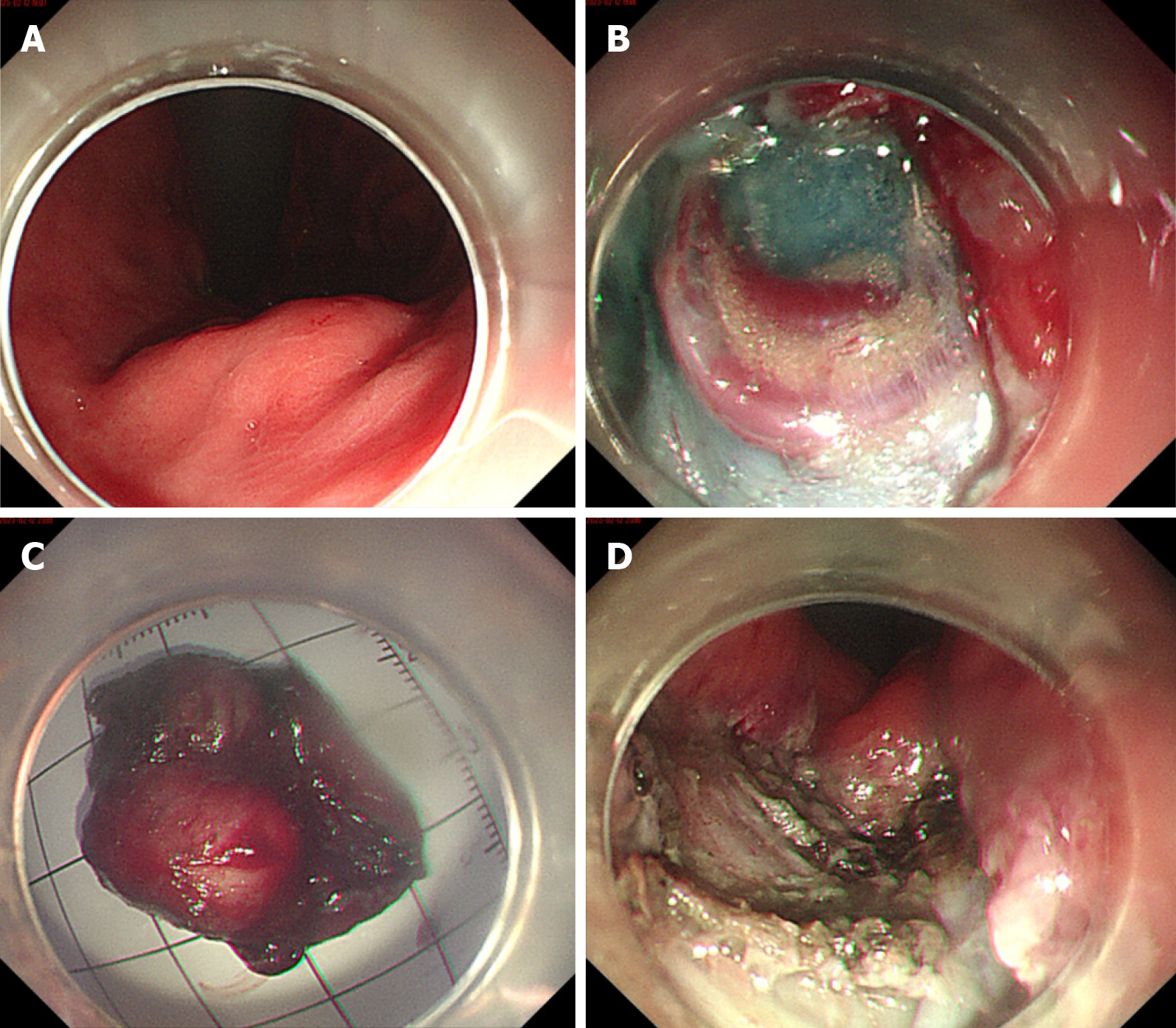
Figure 4 Intraoperative and postoperative images of endoscopic submucosal dissection.
A: White-light; B: Peeling along the submucosa; C: Specimen fixation; D: Postoperative wound.
- Citation: Wang QJ, Gao JN, Wu PT, Lu GR, Xu XZ. Moderately to poorly differentiated adenocarcinoma invading a leiomyoma: A case report. World J Gastrointest Oncol 2026; 18(6): 118708
- URL: https://www.wjgnet.com/1948-5204/full/v18/i6/118708.htm
- DOI: https://dx.doi.org/10.4251/wjgo.v18.i6.118708