
















Copyright: ©Author(s) 2026.
World J Gastrointest Oncol. Apr 15, 2026; 18(4): 115719
Published online Apr 15, 2026. doi: 10.4251/wjgo.v18.i4.115719
Published online Apr 15, 2026. doi: 10.4251/wjgo.v18.i4.115719
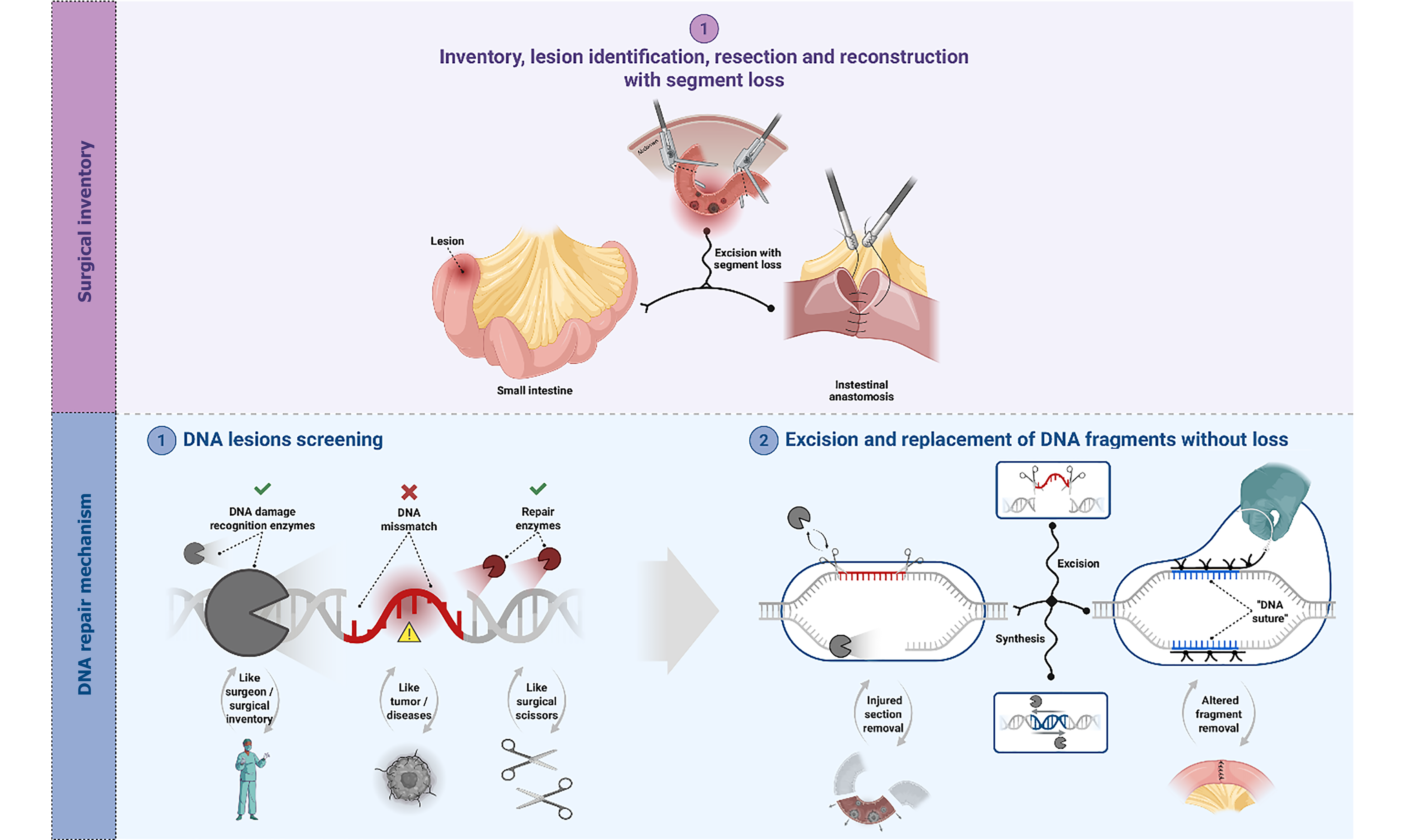
Figure 1 Two fundamental processes in the context of biological lesions and their respective surgical approaches to repair.
In the top panel (surgical inventory), the first step is the identification and resection of a bowel lesion, followed by segment-loss reconstruction, representing excision and intestinal anastomosis. Meanwhile, the bottom panel (DNA repair mechanism) describes the DNA repair processes. The first step involves screening for DNA lesions, with damage-recognizing enzymes acting analogously to a “surgical inventory” of lesions. The second step illustrates the excision and replacement of damaged DNA fragments without loss of genetic information, with DNA synthesis and repair similar to the suturing of a biological wound. The analogies between the two processes are intended to facilitate understanding of the similarities between surgery and molecular repair.
- Citation: de Assumpção PP, Ishak G, de Assumpção PB, Casseb SMM, Acioli JF, Ramos SAA, Silva JMC, Guimarães KSP, de Assumpção CB, Kassab P, Mansfield P. What does the surgeon need to know about microsatellite instability in gastric cancers? World J Gastrointest Oncol 2026; 18(4): 115719
- URL: https://www.wjgnet.com/1948-5204/full/v18/i4/115719.htm
- DOI: https://dx.doi.org/10.4251/wjgo.v18.i4.115719