
















Copyright: ©Author(s) 2026.
World J Hepatol. Apr 27, 2026; 18(4): 116176
Published online Apr 27, 2026. doi: 10.4254/wjh.v18.i4.116176
Published online Apr 27, 2026. doi: 10.4254/wjh.v18.i4.116176
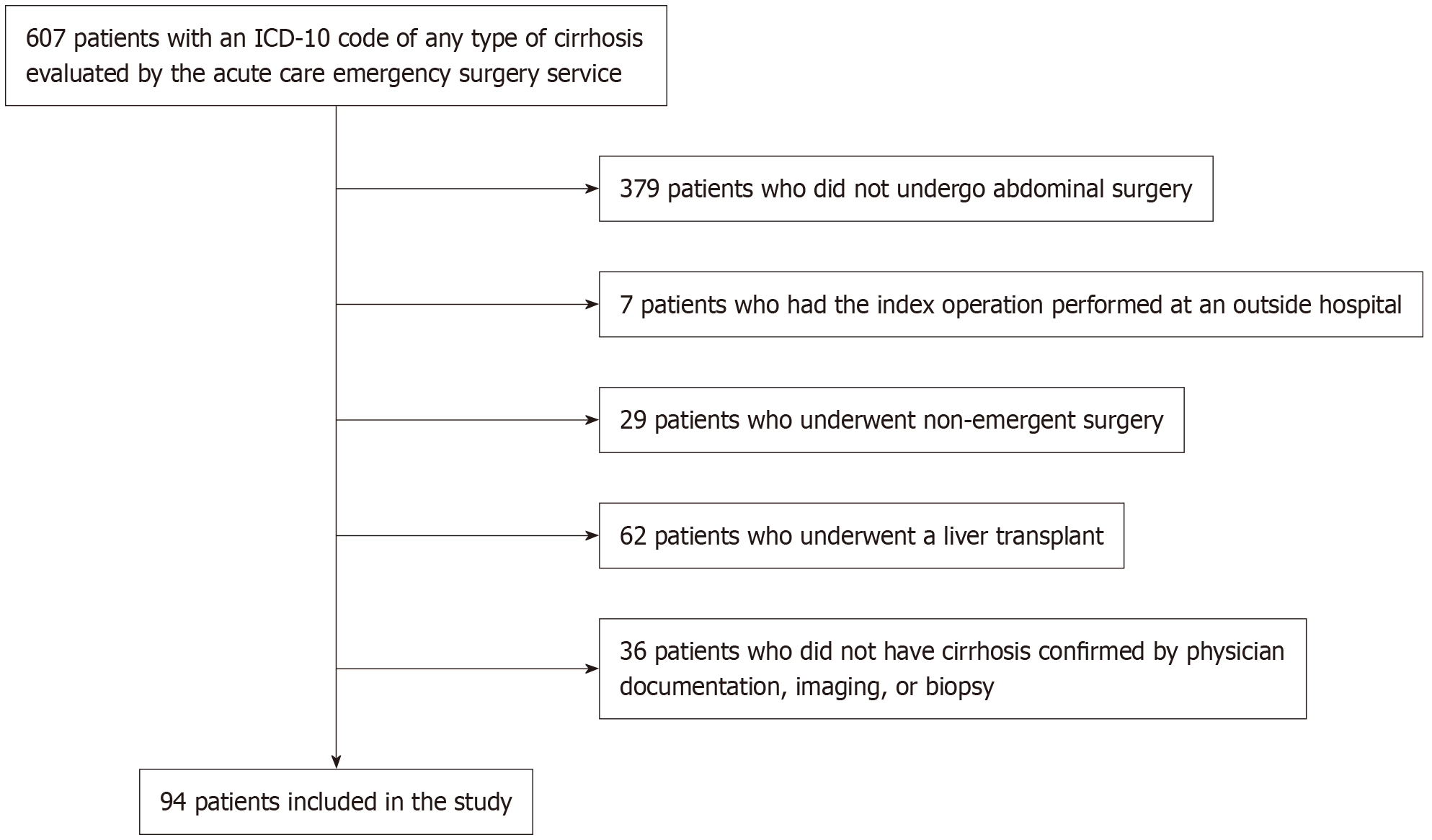
Figure 1 Process of screening for patients with cirrhosis who underwent an abdominal emergency general surgery procedure.
ICD-10: International Classification of Diseases, 10th Revision.
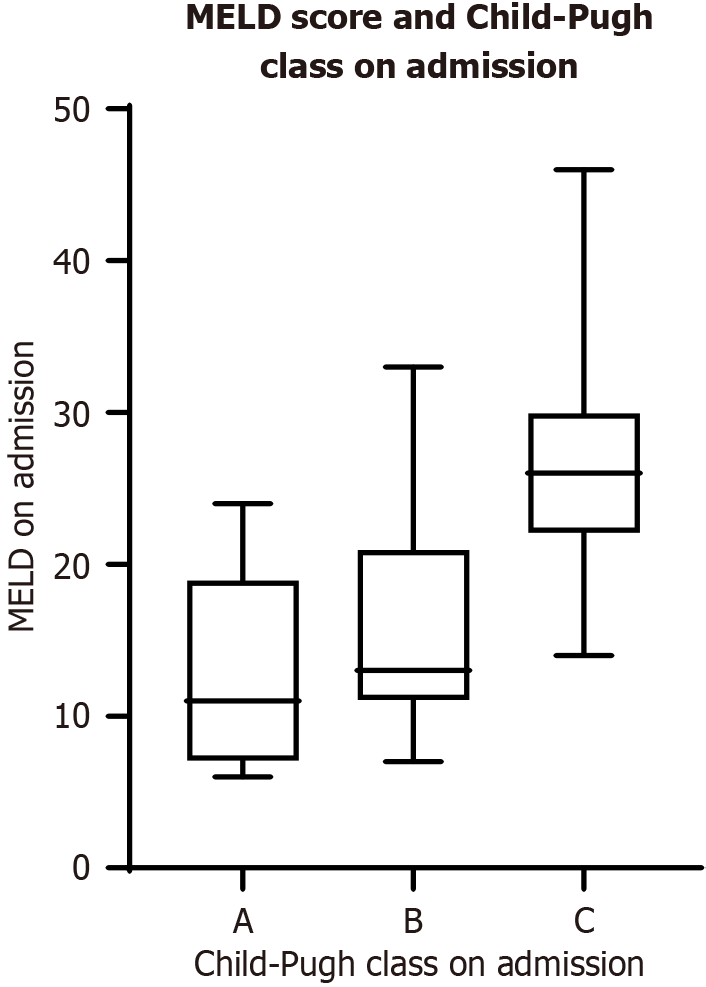
Figure 2 Median model for end-stage liver disease scores within each Child-Pugh class at the time of admission.
Among patients admitted with Child-Pugh class A, B, and C, the median model for end-stage liver disease (MELD) scores on admission were 11 (7-19), 13 (11-21), and 26 (22-30), respectively.
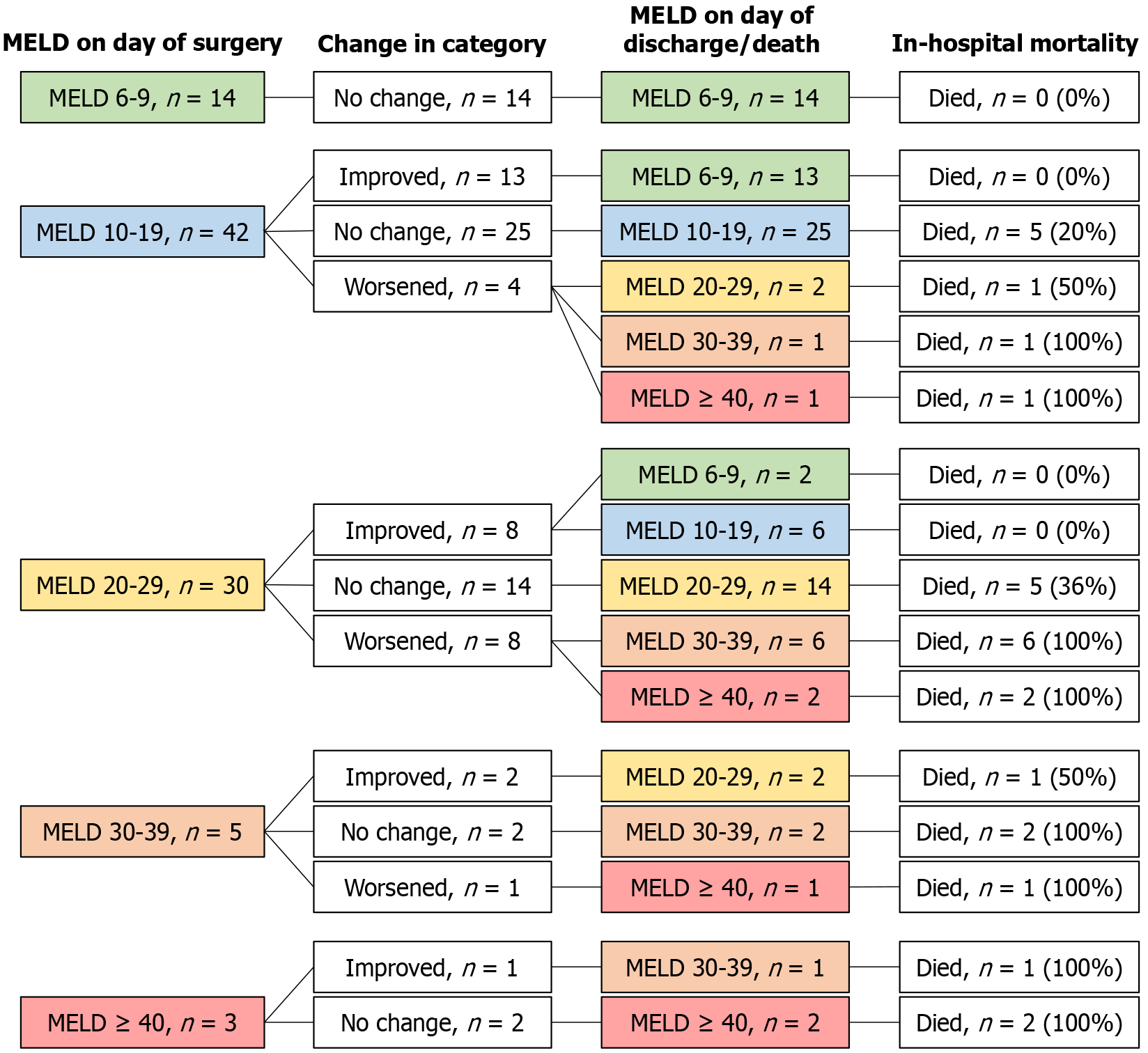
Figure 3 Pathways of change in model for end-stage liver disease scores from day of surgery to discharge/death and associated in-hospital mortality.
MELD: Model for end-stage liver disease.
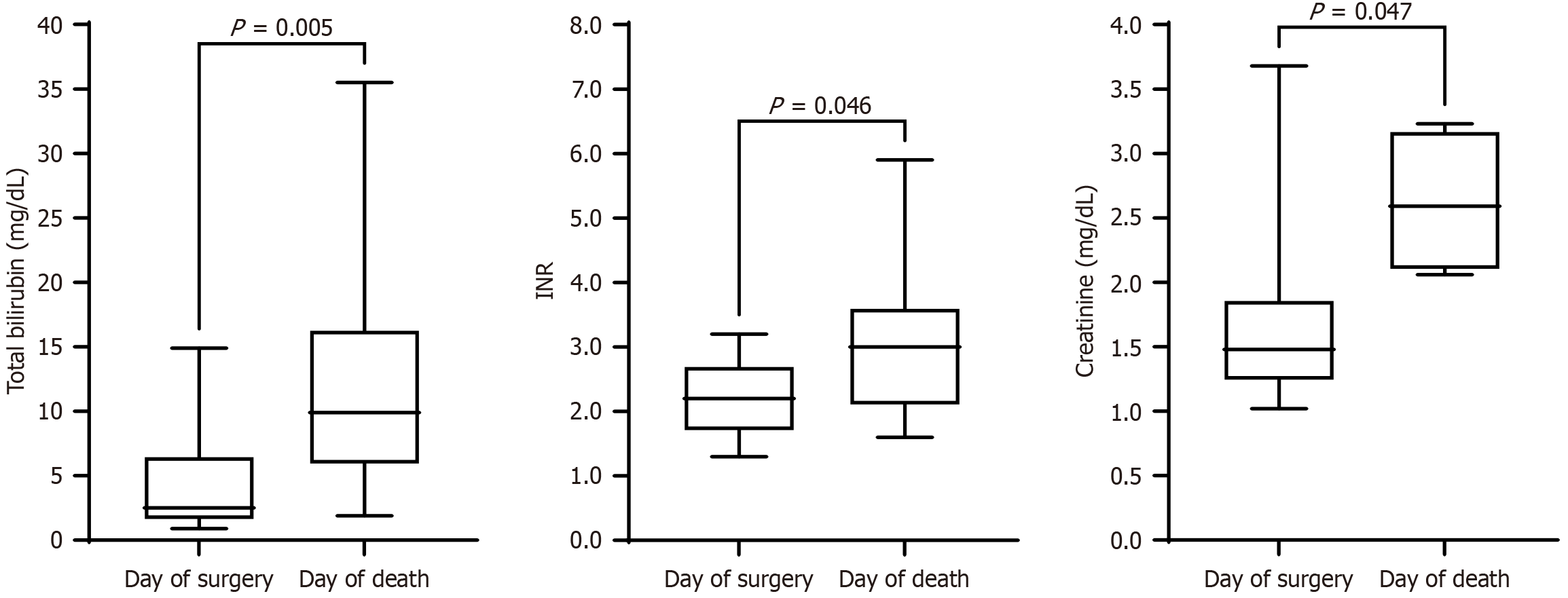
Figure 4 Change in model for end-stage liver disease score components among patients whose model for end-stage liver disease category worsened to ≥ 30 (n = 11).
INR: International normalized ratio.
- Citation: Zhang AL, Tessema N, Clark J, Vesselinov R, O’Meara L, Efron DT, Ghneim MH. In-hospital mortality and dynamic modified end-stage liver disease score after emergency general surgery in patients with cirrhosis. World J Hepatol 2026; 18(4): 116176
- URL: https://www.wjgnet.com/1948-5182/full/v18/i4/116176.htm
- DOI: https://dx.doi.org/10.4254/wjh.v18.i4.116176