
















Copyright: ©Author(s) 2026.
World J Hepatol. Mar 27, 2026; 18(3): 115539
Published online Mar 27, 2026. doi: 10.4254/wjh.v18.i3.115539
Published online Mar 27, 2026. doi: 10.4254/wjh.v18.i3.115539
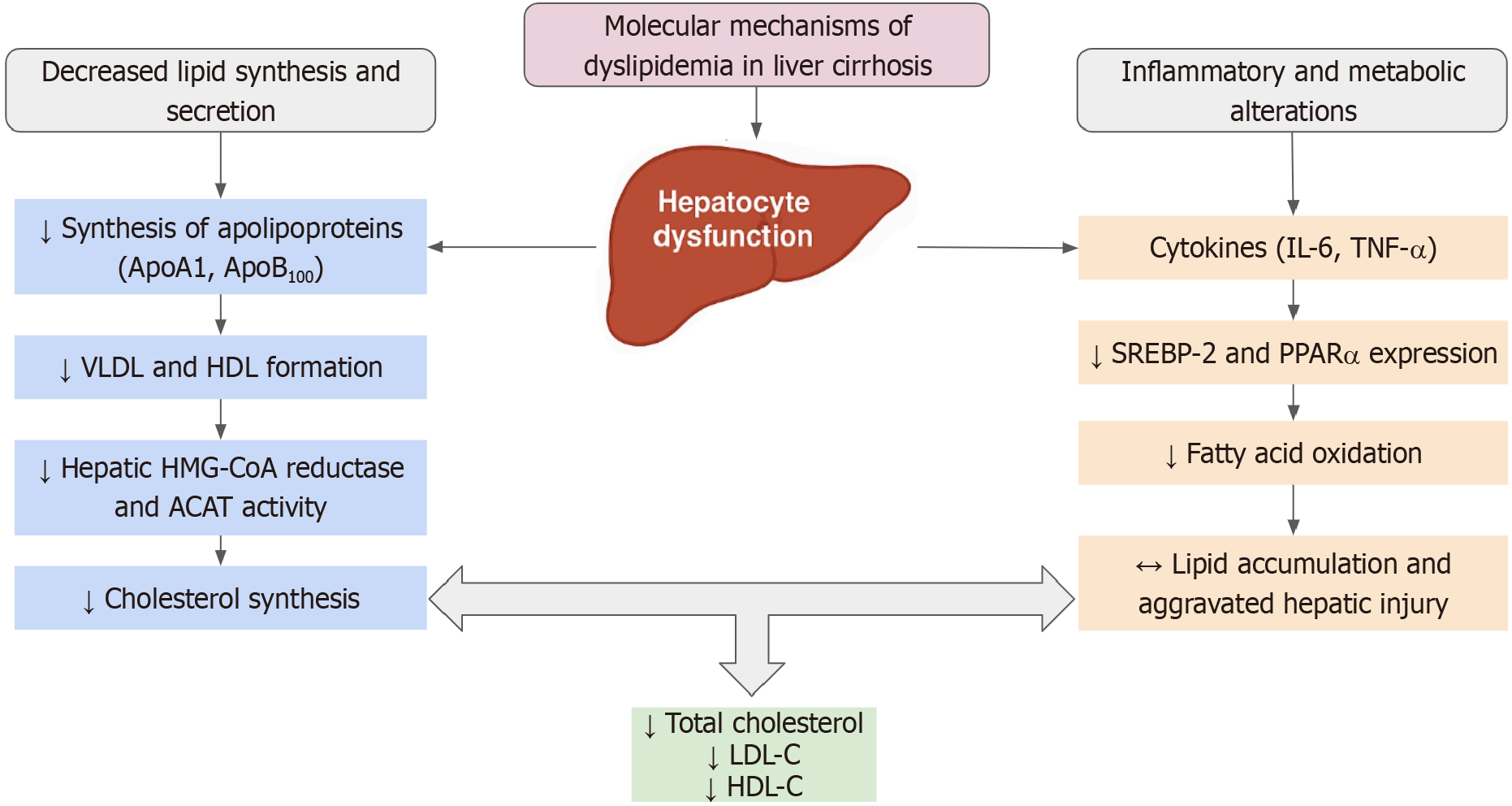
Figure 1 Molecular mechanisms of dyslipidemia in liver cirrhosis.
Progressive hepatocellular dysfunction, cholestasis, and inflammation alter apolipoprotein synthesis, lipoprotein remodeling, and receptor-mediated clearance, promoting lipid imbalance and oxidative injury. ApoA1: Apolipoprotein A1; ApoB100: Apolipoprotein B100; VLDL: Very low-density lipoprotein; HDL: High-density lipoprotein; HMG-CoA: 3-hydroxy-3-methylglutaryl coenzyme A; ACAT: Acyl-coenzyme A cholesterol acyltransferase; LDL-C: Low-density lipoprotein cholesterol; HDL-C: High-density lipoprotein cholesterol; IL: Interleukin; TNF: Tumor necrosis factor; SREBP-2: Sterol regulatory element-binding protein 2; PPAR: Peroxisome proliferator-activated receptor.
- Citation: Fuentes-Mendoza JM, Concepción-Zavaleta MJ, Mendoza-Godoy JJ, Concepción-Urteaga LA, Martínez-Gutiérrez CO, Paz-Ibarra J. Dyslipidemia in liver cirrhosis: Pathophysiology and emerging therapeutic approaches. World J Hepatol 2026; 18(3): 115539
- URL: https://www.wjgnet.com/1948-5182/full/v18/i3/115539.htm
- DOI: https://dx.doi.org/10.4254/wjh.v18.i3.115539