
















Published online Dec 26, 2025. doi: 10.4252/wjsc.v17.i12.111748
Revised: October 22, 2025
Accepted: November 18, 2025
Published online: December 26, 2025
Processing time: 170 Days and 0.5 Hours
Reflecting on 16 years of continuous evolution at the World Journal of Stem Cells, this editorial offers a forward-looking vision for redefining the framework of scientific publishing. With the emergence of artificial intelligence, open science, and the growing need for translational value, we propose shifting from traditional citation-based assessments toward an impact and progress framework, anchored by the Economic Impact Factor. The World Journal of Stem Cells experience, gro
Core Tip: This editorial reflects on a 16-year evolution at the World Journal of Stem Cells and introduces a forward-thinking model for scientific publishing. We propose the Economic Impact Factor as a complementary metric to traditional citation counts - emphasizing translational relevance, editorial transparency, and artificial intelligence-driven progress. Drawing from World Journal of Stem Cells’s publishing milestones, clinical impact, and thematic breadth, we advocate for a values-based framework that prioritizes what truly matters in science: Real-world applicability, peer-reviewed integrity, and sus
- Citation: Li SC. Evolving target: A 16-year progressive framework for shifting the rubric of scientific publishing toward transparency, artificial intelligence, and the Economic Impact Factor for impact that matters. World J Stem Cells 2025; 17(12): 111748
- URL: https://www.wjgnet.com/1948-0210/full/v17/i12/111748.htm
- DOI: https://dx.doi.org/10.4252/wjsc.v17.i12.111748
Over the past two decades, scientific publishing has undergone a dynamic transformation, propelled by technological advances, rising demands for transparency, and a growing emphasis on translational value. As the World Journal of Stem Cells enters its 17th year of publication - and over a decade under my stewardship as Editor-in-Chief - this milestone offers a fitting opportunity to reflect on the evolving landscape of scholarly communication and the standards by which we assess scientific quality and impact.
Traditional metrics, such as the Journal Impact Factor (JIF) and citation counts, while foundational, are increasingly seen as limited proxies for research significance. In an era shaped by artificial intelligence (AI), open science, and cross-disciplinary innovation, there is a pressing need to reimagine how journals not only curate and disseminate knowledge but also evaluate the broader societal and economic relevance of scientific contributions. In response, we propose a forward-looking editorial framework - one that integrates an Economic Impact Factor (EIF) to complement citation-based metrics, supported by machine learning (ML) tools and real-world indicators of influence. This initiative aims to capture the full translational arc of a publication - from hypothesis generation to policy adoption and therapeutic application.
Equally important is the evolving role of peer review and editorial insight. The term ‘10000-foot eagle view’ is used throughout this editorial to describe the editorial oversight required for scientific publishing - a broad, synthesizing perspective that captures the terrain of ideas rather than isolated details, enabling balanced evaluation and strategic direction.
We emphasize the importance of the “10000-foot eagle view” offered by seasoned editors and reviewers, whose intellectual labor often elevates a manuscript from competent to transformative. Inspired by the collaborative spirit of filmmaking - where all contributors are credited - we call for a publishing model that openly recognizes the invisible hands shaping scientific discourse. By embracing transparent peer review, valuing reviewer contributions (even on rejected manuscripts), and empowering authors through algorithmic fairness, journals can foster a culture rooted in trust, integrity, and shared responsibility. We want to help craft a scientific article by quality experts at the forefront of scientific publishing, and we have the technical know-how to provide an impact and progress framework for shifting. The rubric threshold matrix of quality control for scientific publishing, which sums up: “It’s a policy question of how we make this a reality?” Below is our vision on that numbers have the magic: If you can’t measure, you can’t improve it. Neither denial nor amplified; rather, peel the layers of numbers to realize that there’s strength in numbers - this universal idea transcends industries and contexts, representing the power of unity, collaboration, and shared goals of seeking reliable numbers: (1) Profits in numbers: Together, we create more value. By leveraging collective resources, skills, and strategies, we can achieve outcomes that surpass individual efforts, maximizing benefits for everyone involved; (2) Directions in numbers: Our collective intelligence provides a compass, guiding us through complexity and ambiguity. The diverse perspectives within a group lead to well-rounded solutions and paths forward; (3) Inspiration in numbers: Each contribution fuels creativity and ambition. The stories of collective achievements motivate us to reach new heights and explore untapped potential; (4) Hope in our numbers: In times of uncertainty, the support and solidarity of a group bring stability and optimism. Together, we build resilience and overcome challenges with confidence; (5) Motivation in numbers: Collaboration fosters momentum. Seeing the impact of joint efforts inspires individuals to push boundaries and contribute their best, reinforcing the shared vision; (6) Duration in numbers: Unity ensures longevity. Strong relationships and mutual support create a foundation for enduring success and continuous progress; (7) Sustainability in numbers: Working together ensures that success is not fleeting. A group’s shared commitment fosters growth that is both meaningful and long-lasting, balancing present needs with future opportunities; and (8) Algorithmic fairness in numbers would be implemented to empower authors. To ensure algorithmic fairness, AI-assisted screening tools such as Penelope.ai (https://www.penelope.ai/) and ScholarOne AI Assist (https://www.silverchair.com/products/scholarone-manuscripts/) can evaluate submissions for format and language without demographic bias, thereby empowering authors from under-represented regions. These systems provide structured feedback prior to editorial assignments, reducing subjectivity and enhancing equitable review outcomes.
Whether building communities of scientific publishing, driving innovation, or striving for positive change, there’s strength in numbers - and within that strength lies the power to achieve the extraordinary. This editorial serves as both a retrospective on World Journal of Stem Cells’s achievements and a prospective roadmap for reforming scientific publishing in these matrices. We argue that the future of scholarly communication must move from counting citations to measuring impact with economic meaning and promoting human wellbeing - in numbers that reflect collective progress, economic translation, and intellectual collaboration.
As we celebrate the 17th anniversary of the World Journal of Stem Cells, serving as Editor-in-Chief for 10 years, I believe it is a momentous occasion to reflect on the journey, growth, and significant contributions this journal has made to the field of stem cell research and regenerative medicine. Founded in 2008, World Journal of Stem Cells was born out of a vision to provide an inclusive platform for advancing stem cell science from bench to bedside. Over the past decade and a half, the journal has consistently pushed the boundaries of scientific understanding, nurtured emerging scholars, and facilitated the translation of groundbreaking research into clinical applications. The data captured in Tables 1, 2, 3, and 4 provide a comprehensive overview of the journal’s impact and evolution over the past 15 years, underscoring our commitment to fostering high-quality research.
| No. | Citation information of articles | Article type | Number of years published | Citations in RCA |
| 1 | Kyurkchiev D, Bochev I, Ivanova-Todorova E, Mourdjeva M, Oreshkova T, Belemezova K, Kyurkchiev S. Secretion of immunoregulatory cytokines by mesenchymal stem cells. World J Stem Cells 2014; 6: 552-570 [PMID: 25426252 DOI: 10.4252/wjsc.v6.i5.552] | Review | 9 | 398 |
| 2 | Casteilla L, Planat-Benard V, Laharrague P, Cousin B. Adipose-derived stromal cells: Their identity and uses in clinical trials, an update. World J Stem Cells 2011; 3: 25-33 [PMID: 21607134 DOI: 10.4252/wjsc.v3.i4.25] | Editorial | 12 | 392 |
| 3 | De Becker A, Riet IV. Homing and migration of mesenchymal stromal cells: How to improve the efficacy of cell therapy? World J Stem Cells 2016; 8: 73-87 [PMID: 27022438 DOI: 10.4252/wjsc.v8.i3.73] | Review | 7 | 304 |
| 4 | Glenn JD, Whartenby KA. Mesenchymal stem cells: Emerging mechanisms of immunomodulation and therapy. World J Stem Cells 2014; 6: 526-539 [PMID: 25426250 DOI: 10.4252/wjsc.v6.i5.526] | Review | 9 | 272 |
| 5 | Nagamura-Inoue T, He H. Umbilical cord-derived mesenchymal stem cells: Their advantages and potential clinical utility. World J Stem Cells 2014; 6: 195-202 [PMID: 24772246 DOI: 10.4252/wjsc.v6.i2.195] | Topic highlight | 9 | 240 |
| 6 | Zhang S, Cui W. Sox2, a key factor in the regulation of pluripotency and neural differentiation. World J Stem Cells 2014; 6: 305-311 [PMID: 25126380 DOI: 10.4252/wjsc.v6.i3.305] | Topic highlight | 9 | 210 |
| 7 | Tsuji W, Rubin JP, Marra KG. Adipose-derived stem cells: Implications in tissue regeneration. World J Stem Cells 2014; 6: 312-321 [PMID: 25126381 DOI: 10.4252/wjsc.v6.i3.312] | Review | 9 | 196 |
| 8 | Park A, Kim WK, Bae KH. Distinction of white, beige and brown adipocytes derived from mesenchymal stem cells. World J Stem Cells 2014; 6: 33-42 [PMID: 24567786 DOI: 10.4252/wjsc.v6.i1.33] | Topic highlight | 9 | 168 |
| 9 | Cabrera MC, Hollingsworth RE, Hurt EM. Cancer stem cell plasticity and tumor hierarchy. World J Stem Cells 2015; 7: 27-36 [PMID: 25621103 DOI: 10.4252/wjsc.v7.i1.27] | Review | 8 | 168 |
| 10 | Chaicharoenaudomrung N, Kunhorm P, Noisa P. Three-dimensional cell culture systems as an in vitro platform for cancer and stem cell modeling. World J Stem Cells 2019; 11: 1065-1083 [PMID: 31875869 DOI: 10.4252/wjsc.v11.i12.1065] | Review | 4 | 168 |
| No. | Name | Institution | Country |
| 1 | Ann De Becker | Universitair Ziekenhuis Brussel | Belgium |
| 2 | Nipha Chaicharoenaudomrung | Suranaree University of Technology | Thailand |
| 3 | Marina Carla Cabrera | MedImmune, LLC | United States |
| 4 | Denisa L Dragu | Stefan S. Nicolau Institute of Virology | Romania |
| 5 | Christiana Hadjimichael | University of Crete | Greece |
| 6 | Pravin D Potdar | Jaslok Hospital and Research Centre | India |
| 7 | Laleh Ghasemi-Mobarakeh | Isfahan University of Technology | Iran |
| 8 | Anne Seifert | Bonn-Rhine-Sieg University of Applied Sciences | Germany |
| 9 | María Álvarez-Viejo | Hospital Universitario Central de Asturias | Spain |
| 10 | Oleh Andrukhov | University Clinic of Dentistry, Medical University of Vienna | Austria |
| No. | Citation information of articles | Number of years published | Citations in RCA |
| 1 | Tsang KS, Ng CPS, Zhu XL, Wong GKC, Lu G, Ahuja AT, Wong KSL, Ng HK, Poon WS. Phase I/II randomized controlled trial of autologous bone marrow-derived mesenchymal stem cell therapy for chronic stroke. World J Stem Cells 2017; 9: 133-143 [PMID: 28928910 DOI: 10.4252/wjsc.v9.i8.133] | 6 | 27 |
| 2 | Plesa A, Dumontet C, Mattei E, Tagoug I, Hayette S, Sujobert P, Tigaud I, Pages MP, Chelghoum Y, Baracco F, Labussierre H, Ducastelle S, Paubelle E, Nicolini FE, Elhamri M, Campos L, Plesa C, Morisset S, Salles G, Bertrand Y, Michallet M, Thomas X. High frequency of CD34+CD38-/Low immature leukemia cells is correlated with unfavorable prognosis in acute myeloid leukemia. World J Stem Cells 2017; 9: 227-234 [PMID: 29321824 DOI: 10.4252/wjsc.v9.i12.227] | 6 | 20 |
| 3 | Santiago-Torres JE, Lovasz R, Bertone AL. Fetal vs adult mesenchymal stem cells achieve greater gene expression, but less osteoinduction. World J Stem Cells 2015; 7: 223-234 [PMID: 25621122 DOI: 10.4252/wjsc.v7.i1.223] | 8 | 9 |
| 4 | Shroff G. Therapeutic potential of human embryonic stem cells in type 2 diabetes mellitus. World J Stem Cells 2016; 8: 223-230 [PMID: 27468331 DOI: 10.4252/wjsc.v8.i7.223] | 7 | 9 |
| 5 | Dahabreh Z, Panteli M, Pountos I, Howard M, Campbell P, Giannoudis PV. Ability of bone graft substitutes to support the osteoprogenitor cells: An in-vitro study. World J Stem Cells 2014; 6: 497-504 [PMID: 25258672 DOI: 10.4252/wjsc.v6.i4.497] | 9 | 6 |
| Number | Topics |
| 1 | From idea to impact: Embracing translational progress from bench to bedside in stem cell research |
| 2 | Stem cell-driven morphogenesis |
| 3 | How mesenchymal stem cells transform into adipocytes |
| 4 | Clinical application of mesenchymal stem cell-based therapy |
| 5 | Hair follicle stem cell markers and their regulatory roles |
| 6 | Exosomes from mesenchymal stem cells on the functional recovery of total radial nerve injury |
Table 1 showcases the top 10 most-frequently-cited articles published in World Journal of Stem Cells, highlighting the foundational work that has shaped our understanding of stem cell biology. For example, the most-cited paper by Kyurkchiev et al on the immunoregulatory properties of mesenchymal stem cells (398 citations) exemplifies the journal’s focus on the therapeutic potential of stem cells. For context, Clarivate’s 2025 Science Citation Index Expanded (SCIE) data indicate that the median citation count for stem-cell review articles (2010-2020) is 121 (interquartile range 82-177). Thus, the top-10 World Journal of Stem Cells articles exceed field averages by approximately 3-fold, highlighting both their reach and the journal’s selective focus on translational themes. Similarly, studies like those by De Becker and Riet on enhancing mesenchymal stromal cell therapies (304 citations) have laid the groundwork for advancing clinical applications. These highly cited articles not only reflect the journal’s commitment to excellence but also its influence in guiding stem cell research globally.
A distinctive aspect of World Journal of Stem Cells’s mission has been to cultivate young researchers, as evidenced in Table 2, which lists the top 10 most-frequently-cited junior authors. These emerging scholars, such as Ann De Becker from Universitair Ziekenhuis Brussel and Nipha Chaicharoenaudomrung from Suranaree University of Technology, have contributed significantly to the field. Their work exemplifies the fresh perspectives and innovative approaches that are crucial for the ongoing evolution of stem cell science.
The emphasis on translational research is further underscored in Table 3, highlighting the top 5 most-impactful clinical trials published in World Journal of Stem Cells. These trials demonstrate the journal’s role in moving scientific discoveries towards clinical applications. Notably, the phase I/II trial by Tsang et al[1] on mesenchymal stem cell therapy for chronic stroke represents a pivotal step in regenerative medicine, with 27 citations, signifying the journal’s influence in promoting clinical advancements.
Table 4 illustrates the diverse thematic topics covered over the years, reflecting World Journal of Stem Cells’s commitment to addressing a broad spectrum of research areas. From exploring stem cell-driven morphogenesis to the application of stem cells in neurological and cardiac regeneration, World Journal of Stem Cells has remained at the forefront of emerging scientific themes. This thematic diversity not only broadens the scope of the journal but also attracts a wide readership, fostering cross-disciplinary collaborations.
Drawing insights from the attached timeline and Figure 1, which chronicles World Journal of Stem Cells’s evolution, we observe a remarkable trajectory of growth including a heatmap overlay summarizing citation trajectories (2010-2025) across top-10 World Journal of Stem Cells articles (Figure 1A and B), normalized to the median JIF of SCIE-indexed stem-cell journals (Clarivate 2025) (Figure 1C). An open supplemental dataset (Excel, DOI link pending) provides reproducible source data for Tables 1, 2, 3, and 4. Starting with a modest impact factor, the journal has grown to achieve a respectable Journal Citation Reports JIF of 5.326 as of 2020, which is significant given the average JIF ≤ 1.79 among 22000 scholarly journals[2] (Figure 2, Table 5). According to Clarivate’s Web of Science Core Collection (formerly under Thomson Reuters), the platform comprises six distinct citation indexes, with the following journal coverages: (1) SCIE: > 9200 journals; (2) Social Sciences Citation Index: > 3400 journals; (3) Arts & Humanities Citation Index: > 1800 journals; and (4) Emerging Sources Citation Index: > 7800 journals (plus the Book Citation Index and Conference Proceedings Citation Index, which are book and proceedings-based) (Table 5). Taken together, the total journal count across these four journal-focused indexes is approximately: 9200 + 3400 + 1800 + 7800 = 22200 journals. So, when referencing the Web of Science Core Collection statistics (4 million authors, 26 million papers across 118 disciplines), it’s based on this coverage of around 22200 scholarly journals. The total citations have soared, underscoring the journal’s increasing influence in the scientific community. World Journal of Stem Cells’s adoption of open-access publishing has amplified the visibility of its articles, leading to over 286000 article views and 250000 PDF downloads in recent years.


| Index | Journal count | Typical JIF range | Notes |
| SCIE | 9200 | 1.5-5.0 | Core high-citation journals |
| SSCI | 3400 | 0.5-3.0 | Lower citation density |
| AHCI | 1800 | < 1.0 (often 0.2) | JIF rarely used |
| ESCI | 7800 | 0.3-1.5 | Mostly new, regional, or low-citation journals |
Based on the summary of Table 5 of Clarivate™ collection indexes, including: (1) SCIE (Web of Science): 9200 journals, with typical JIFs ranging from 1.5 to 5.0, representing high-citation, well-established scientific publications; (2) Social Sciences Citation Index: 3400 journals, typically yielding JIFs between 0.5 and 3.0 due to lower citation density in social science disciplines; (3) Arts & Humanities Citation Index: 1800 journals, rarely assigned JIFs, and usually averaging below 1.0; and (4) Emerging Sources Citation Index: 7800 journals, comprising newer or regional journals with emerging citation profiles, generally in the 0.3-1.5 range. A step-by-step weighted JIF calculation: The formula demonstrates how the estimated average JIF ≈ 1.79 is derived by multiplying each index’s journal count with a representative average JIF value, summing these products, and dividing by the total journal count across all four indexes: Weighted JIF = (9200 × 3.0 + 3400 × 1.5 + 1800 × 0.4 + 7800 × 0.8)/22200 = 39660/22200 ≈ 1.79. This calculation provides a reasonable estimate of the global average citation activity per article across all indexed journals, revealing how a large proportion of journals with low to moderate impact factor pulls the global mean below 1.79, despite the presence of high-impact journals in select disciplines like medicine (cancer).
As noted in the editorial reflections, the success of World Journal of Stem Cells is not solely attributed to its editorial board but to a collaborative ecosystem involving authors, reviewers, and the publishing team. Honesty, integrity, and mutual respect have been the cornerstones of our editorial process, ensuring that World Journal of Stem Cells remains a trusted source of scientific knowledge.
Embracing innovation and emerging trends: The future of World Journal of Stem Cells lies in embracing technological innovations and addressing the evolving challenges in stem cell research. With a focus on AI-integrated programming, single-cell approaches in spatial biology, and the promise of CRISPR-Cas9 in regenerative therapies, World Journal of Stem Cells aims to continue driving the frontiers of stem cell science. We invite researchers to contribute their best work as we embark on the next chapter of our journey, committed to translating scientific ideas into impactful clinical solutions.
My conviction in working with the editors: My MIT mentor, Michael Philip Lisanti, MD, PhD (Michael P Lisanti, MD, PhD, FRSA, FRSB, FRSC - Google Scholar), editor-in-chief of the American Journal of Pathology, the flagship journal of the American Society for Investigative Pathology, with a career citation count of 124954 (the highest is 1946 counts per article). My Harvard mentor, Dr. Joan Siefert Brugge, PhD, (https://scholar.google.com/citations?user=NY9GxJwAAAAJ&hl=en&oi=ao) - a pioneering figure in platelet and cancer biology - has co-founded and served on the editorial boards of multiple influential journals, including Nature Cell Biology, Cell, Cancer Cell, Nature Reviews Molecular Cell Biology, and Annual Review of Cell and Developmental Biology, with a career citation count of 69470 (the highest citation count is 3967 per article). Both advised me to seek out editors of exceptional discernment who could offer the kind of clear-sighted guidance that comes only from viewing a manuscript as if from 10000 feet above, like an eagle surveying the landscape with precision and purpose. I have taken her wisdom to heart in bringing this work to you. I am deeply grateful for the second chance you have extended and remain fully committed to refining this manuscript under your expert guidance.
We at World Journal of Stem Cells have implemented an open review process by publishing peer-reviewed reports and the authors’ manuscripts since the inception of World Journal of Stem Cells. In an era shaped by AI and open science, Nature Springer’s move toward universal transparent peer review marks a critical step in restoring intellectual accountability and collaborative rigor in scientific publishing[3] (https://www.nature.com/articles/d41586-025-01880-9). Shengwen Calvin Li, PhD, FRSB, FRSM, FSX, EIC, argues that peer review, when practiced transparently, is not mere gatekeeping but a process of intellectual co-creation[2] {total article views (4430), as assessed on July 5, 2025. Li SC. Mastering the craft: Creating an insightful and widely-cited literature review. World J Stem Cells 2023; 15: 781-786 [PMID: 37700820 DOI: 10.4252/wjsc.v15.i8.781]}. Editors and reviewers contribute substantive insight - akin to producers and script doctors in filmmaking - yet remain largely uncredited in the final product. As AI tools increasingly map the entire arc of research contribution, from authorship to editorial critique, it is time for the scholarly world to embrace a model that honors these invisible hands. By publicly recognizing reviews, including those for rejected papers, the scientific community can normalize failure as part of progress, elevate mentoring, and democratize learning. Just as the film industry credits every role, science must adopt a culture of transparent acknowledgment to foster trust, integrity, and shared ownership in discovery.
Nature Springer’s bold and timely move - universal transparent peer review will strengthen not just trust, but the intellectual integrity of published science. As AI evolves, it will increasingly enable us to track and credit the full arc of contribution - from authorship to editorial oversight to peer review. Editors and reviewers, with their 10000-foot eagle view, don’t just critique - they complement the authors’ work, often elevating it through constructive insight - which not only enhances trust and accountability, but also reveals the rigorous intellectual exchange that shapes each paper. When done right, peer review isn’t gatekeeping; it’s co-creation. Without mechanisms like open peer review, reviewers and editors often lose track of the substantial intellectual labor they contribute to a published paper. The scientific community could learn from the film industry, where every contributor - from lead actors to lighting technicians - is acknowledged in the credits. Recognizing the invisible hands behind research enhances transparency, accountability, and a culture of shared ownership in scientific advancement.
For example, since 2022, cited by 31 as below, the editor-in-chief rigorously orchestrated a competitive in-field peer-review to ensure the quality of publications[4], which was entitled “Therapeutic potential of dental pulp stem cells and their derivatives: Insights from basic research toward clinical applications” by authors of Yuan et al[4], published on 2022. Another article, entitled “Stem cell therapy for insulin-dependent diabetes: Are we still on the road?” was authored by Yang et al[5], and cited by 13 articles as of July 6, 2025. Cited by 47 as of July 6, 2025, is a basic study entitled “Human amniotic fluid stem cell therapy can help regain bladder function in type 2 diabetic rats” that was authored by Liang et al[6].
An even bolder idea surfaced from Stefano Gaburro, PhD, CCC: https://Lnkd.in/gc7V8Qb9 (accessed on July 3, 2025), which I absolutely agree - peer reviews of rejected papers often contain some of the most insightful critique. Making them public would honor the intellectual labor of reviewers, provide learning opportunities for early-career researchers, and help normalize the iterative nature of science. Publishing only what’s accepted skews perception. Transparent feedback - published or not - adds depth, context, and clarity to the scientific process. This could be a vital step toward a more open, resilient, and inclusive research culture.
While transparent peer review enhances accountability, practical barriers persist, highlighting reviewer hesitation over privacy and career exposure. Recent surveys conducted by Jackson et al[7] of surveying 5977 reviewers for Annals of Internal Medicine reviewers - underscore the nuanced balance between transparency and reviewer autonomy. While more than half of respondents indicated a willingness to participate under open review, substantial minorities expressed concern over increased workload, linguistic polish, and professional vulnerability when anonymity is removed. While over half of respondents said they would continue reviewing under an open model, many voiced concerns about the added burden it imposes. Because reviews would be publicly visible, 11% noted that they would need extra time for copyediting, reference checks, and refining tone or grammar for a broader audience, which could discourage international reviewers who are less confident in English. Several also worried that writing for multiple audiences - the authors, editors, and public - might lessen the focus and candor of their feedback[8].
Another major concern was the risk of retaliation and bias: 15% of respondents feared career consequences if their identities were revealed. Many worried that favorable reviews could invite expectations of reciprocity, while critical ones might provoke reprisal from authors or readers. Terms such as “less candid”, “more cautious”, and “less direct” captured their apprehension - particularly among early-career and minority reviewers who feared misinterpretation or damage to professional relationships.
As the pioneers of open peer review, PLOS spotlights attitudes and experiences[9] - respondents raised concerns that open identities and reports might discourage reviewers from accepting review invitations or being critical. In “an empirical investigation of eLife’s new peer review process”, the authors report several specific tensions emerging from the shift to public reviews[10]. While transparency was found to enhance accountability and the perceived fairness of editorial decisions, reviewers exhibited measurable restraint in tone and critical depth when their identities or comments were made public. The study noted reduced use of negative or directive language, longer response times, and a decline in willingness to review among early-career scientists - reflecting a trade-off between openness and the freedom to provide candid, rigorous critique. These findings reveal that, despite the ethical appeal of openness, sustained reviewer engagement will depend on safeguards such as dual-consent publication, confidential editor-only comment channels, and formal recognition via ORCID-linked CRediT attributions.
World Journal of Stem Cells addresses this through dual-consent release, optional anonymization, and public acknowledgment of reviewers who opt-in. Integration with ORCID and CRediT ‘contributor’ badges will formalize recognition across platforms, aligning transparency with professional reward.
With the rapid advancements in biotechnology, the future of the World Journal of Stem Cells lies in embracing cutting-edge approaches that are reshaping the landscape of stem cell research. Key areas of focus include AI-integrated programming, single-cell approaches in spatial biology, and the promise of CRISPR-Cas9 technology in regenerative therapies.
AI is transforming how we analyze complex biological data. In stem cell research, AI-driven algorithms are being used to predict differentiation pathways, optimize cell culture conditions, and enhance the scalability of cell-based therapies. For instance, ML models have shown promise in identifying optimal conditions for induced pluripotent stem cell reprogramming and differentiation, significantly improving efficiency and reducing timeframes[11]. Additionally, AI is playing a pivotal role in drug discovery and drug delivery[12], where it accelerates the identification of novel compounds that can influence stem cell behavior. The integration of AI not only streamlines research processes but also enables the generation of predictive models for stem cell therapies, enhancing their clinical translation.
The advent of single-cell RNA sequencing and spatial transcriptomics has opened new avenues for understanding the heterogeneity of stem cell populations, which were buried in bulk tissues[13]. These technologies allow researchers to map the spatial organization of stem cells within their native microenvironments, providing insights into how cellular niches influence stem cell fate and function for subclonal evolution[14]. Recent studies using single-cell approaches have uncovered rare subpopulations of stem cells with unique regenerative capacities, which were previously undetectable using bulk analysis methods. For example, Single-cell RNA sequencing revealed that human umbilical cord blood-derived very small embryonic-like stem cells (VSELs), identified by CD34+ or CD133+/Lin-/CD45- phenotype, exhibit transcriptional profiles resembling murine bone marrow VSELs[15]. These cells display subpopulations associated with germline lineage, parental imprinting, early developmental regulators, and differentiation-related transcription factors. The findings support the developmental origin and pluripotent potential of umbilical cord blood-derived VSELs regulated by imprinted genes. This spatial resolution is critical for advancing tissue engineering and regenerative medicine, particularly in developing targeted therapies for complex diseases such as cancer and neurodegenerative disorders.
The CRISPR-Cas9 gene-editing technology has revolutionized the field of molecular biology by providing a precise and efficient method for genome modification. In the context of stem cell research, CRISPR-Cas9 has been successfully applied to correct genetic mutations in patient-derived induced pluripotent stem cells, paving the way for personalized regenerative therapies. Bone-marrow-homing lipid nanoparticles enable in vivo delivery of mRNA for genome editing across at least 14 bone marrow cell types - including healthy and diseased haematopoietic and leukaemic stem cells - offering a promising platform for treating genetic and malignant blood disorders[16]. Another example, researchers have utilized CRISPR to correct mutations responsible for genetic disorders like sickle cell anemia[17] and cystic fibrosis[18], demonstrating the potential for curative treatments. Furthermore, CRISPR’s versatility extends to enhancing the immunomodulatory properties of mesenchymal stem cells[19], thereby improving their therapeutic efficacy in clinical settings.
As we look forward, World Journal of Stem Cells aims to be at the forefront of publishing pioneering studies in these areas. By focusing on AI-driven methodologies, leveraging single-cell technologies, and harnessing the power of gene-editing tools like CRISPR, we are poised to support the next wave of breakthroughs in stem cell science and regenerative medicine. All of these have been noted by Mariusz Z Ratajczak, MD, PhD, DSci, DHC, the EIC of journal "Stem Cell Reviews and Reports" with JIF = 4.8[20] over the last 20 years[21] based on the editor’s notes[22]. We invite researchers to contribute their innovative work to continue expanding the frontiers of this transformative field.
The future of research isn’t just about what we discover, but what difference it makes. In my 2023 paper, “Mastering the craft: Creating an insightful and widely-cited literature review” (World Journal of Stem Cells)[2], I proposed the EIF - a new metric to complement traditional citation-based measures like the JIF. It’s time our scientific output is evaluated not just by academic echo chambers, but by its real-world economic utility.
As highlighted in Nature’s recent interview with OpenAI Chief Scientist Jakub Pachocki, AI models are advancing toward autonomous scientific research with measurable economic impact - a milestone I once described as a gateway to true AGI. We’re witnessing the convergence of AI reasoning models and economic relevance, where tools like ChatGPT and Deep Research not only aid discovery but also forecast and quantify economic return.
It’s no longer a theoretical possibility. With AI’s help, we can now calculate the EIF of research in real time, track downstream benefits, and reshape how funding, publishing, and innovation are rewarded. Given the AI revolution, extensive ML creates a database that captures the comprehensive process of scientific research, from conceptualization to peer-reviewed publication, as well as its valuable translation. An ML-based mathematical calculation will surface to report the EIF of a publication.
The revolution of AI-driven knowledge production demands a reimagination of how we evaluate the value of scientific research. While the JIF and citation metrics have long served as proxies for influence, they fall short of capturing the real-world utility and translational momentum of research. Today, we propose a bold shift: From citation-based metrics to a new, AI-calculated EIF - a model that quantifies how scientific publications translate into tangible value across sectors, from biotech to public health to AI-regulated decision-making (Figure 3). This workflow diagram illustrates a forward-looking model for reforming scientific publishing. The cycle begins with transparent peer review, emphasizing the recognition of intellectual contributions from editors and reviewers. This transparency builds trust and lays the groundwork for more meaningful evaluation of research. The second component, impact with meaning, shifts the focus from traditional citation-based metrics to broader indicators of scientific relevance and translational value. Finally, the model incorporates the EIF, leveraging AI to assess real-world influence - such as health outcomes, policy adoption, and innovation-driven return on investment. Together, these components represent a dynamic, cyclical approach that aligns with the evolving demands of open science, accountability, and measurable societal benefit.

To operationalize EIF, I outline a multi-tier metric integrating quantitative indicators such as policy citation frequency, intellectual-property filings, startup formation, and cost-savings attribution within health-care systems. ML frameworks - including graph neural networks and citation-context transformers - map these downstream ripple effects through linked open-data knowledge graphs. Unlike existing altmetrics (PlumX, Dimensions, or CrossRef Event Data), EIF is designed to measure translational and economic value rather than online attention, providing a normalized weighting for innovation uptake, IP generation, and regulatory impact.
EIF leverages ML and large-scale knowledge graphs to map a research paper’s trajectory - from conceptual hypothesis and peer-reviewed publication, to regulatory approvals, clinical trials, startup formation, and even policy adaptation. This builds on the DNA of current innovations, such as Reference Citation Analysis developed and used by World Journal of Stem Cells to assess author-centered research visibility and translational relevance.
EIF pushes further: Integrating not just academic reach, but downstream economic ripple effects, such as health cost reduction, IP generation, and biotech valuations. This vision draws support from the recent editorial movements across publishing platforms. Stem Cell Reviews and Reports’s 2024 editorial affirmed the need for “courageous young investigators” to challenge outdated paradigms, with an openness to “provocative ideas” and multi-dimensional metrics.
Similarly, Cancer Control’s strategic pivot toward publishing “higher quality content vs quantity” reflects a shared aspiration to shift away from citation inflation toward sustainable impact. Meanwhile, Michael Clarke’s market analysis[2] on the rise of Elsevier and Springer Nature highlights how brand prestige, author experience, and transformative agreements - not raw output volume - drive growth.
EIF as a framework would align with DORA’s principles, recognizing the multifactorial nature of research significance. It also provides a crucial tool for funders, institutions, and policymakers in an economy increasingly driven by knowledge products and AI-informed policy loops.
In this new landscape, journals become not just repositories of scientific progress, but active stewards of innovation’s societal and economic translation. World Journal of Stem Cells’s theme “from idea to impact” is no longer aspirational - it becomes an algorithmic traceable arc of innovation’s journey, powered by AI and made visible through EIF.
While AI enables automated linkage of publications to economic outcomes, its limitations must be recognized. Biases in training corpora, opaque model weights, and hallucination risks necessitate human-in-the-loop validation. Emerging analytical platforms such as Deep Research and ChatGPT’s domain-specific plug-ins may serve as auditable engines for EIF computation, provided transparency in data provenance and algorithmic fairness is maintained.
An example for generating an EIF score: We provide an example for generating an EIF score from the Calculate BOTOX® product line, which generates annual revenue of $2.3 billion worldwide, based on “Zhang L, Lin WJ, Li S, Aoki KR. Complete DNA sequences of the botulinum neurotoxin complex of Clostridium botulinum type A-Hall (Allergan) strain. Gene 2003; 315: 21-32 [PMID: 14557061 DOI: 10.1016/s0378-1119(03)00792-3]”[23]. This paper[23] is foundational for Allergan’s BOTOX® intellectual property and provides a perfect case study for EIF modeling. These authors obtained lists > 20 botulinum-toxin-related United States patents, 2010-2014) from The United States Patent and Trademark Office (USPTO): (1) USPTO number 8623999 (modified clostridial toxins with enhanced targeting capabilities for endogenous clostridial toxin receptor systems); (2) USPTO number 8518417 (modified clostridial toxins with enhanced translocation capability and enhanced targeting activity); (3) USPTO number 8460682 (modified clostridial toxins with altered targeting capabilities for clostridial toxin target cells); (4) USPTO number 8273865 (multivalent clostridial toxins); (5) USPTO number 8273358 (activatable clostridial toxins); (6) USPTO number 8198083 (organotypic slices of the central nervous system); (7) USPTO number 8128940 (modified clostridial toxins with enhanced targeting capabilities for endogenous clostridial toxin receptor systems); (8) USPTO number 8071110 (activatable clostridial toxins); (9) USPTO number 8052979 (modified clostridial toxins with altered targeting capabilities for clostridial toxin target cells); (10) USPTO number 8021859 (modified clostridial toxins with altered targeting capabilities for clostridial toxin target cells); (11) USPTO number 7998489 (degradable clostridial toxins); (12) USPTO number 7993656 (modified clostridial toxins with enhanced translocation capabilities and altered targeting activity for clostridial toxin target cells); (13) USPTO number 7897157 (activatable clostridial toxins); (14) USPTO number 7892565 (degradable clostridial toxins); (15) USPTO number 7825233 (optimizing expression of active botulinum toxin type E); (16) USPTO number 7811584 (multivalent clostridial toxins); (17) USPTO number 7749514 (activatable clostridial toxins); (18) USPTO number 7740868 (activatable clostridial toxins); (19) USPTO number 7172764 (rescue agents for treating botulinum toxin intoxications); and (20) USPTO number 6991789 (methods of modulating intracellular degradation rates of toxins).
Calculating an EIF score for the BOTOX® Development Pipeline is as follows: (1) Stage classification (Table 6); (2) Quantitative inputs (Table 7); (3) EIF computational framework. The EIF can be expressed as a normalized, weighted sum:
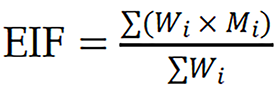
where wi = tier weight and mi = normalized metric (0-1 scale).
 =
= 
(4) Interpre
| EIF tier | Descriptor | Example metric | Weight (W) |
| Tier I | Foundational scientific discovery (gene sequencing, biochemical structure) | 2003 publication | 1.0 |
| Tier II | Intellectual property generation | ≥ 5 core patents citing or derived from this strain sequence (e.g., Allergan BoNT A1 formulation, purification methods) | 2.0 |
| Tier III | Translational uptake | FDA IND/NDA filings, clinical protocols using Hall A strain | 3.0 |
| Tier IV | Commercial deployment | Annual BOTOX® revenue ≈ $ 2.3 B | 4.0 |
| Tier V | Societal/regulatory impact | Inclusion in CDC, WHO classification; reimbursement frameworks; global adoption | 5.0 |
| Parameter | Source/proxy | Normalization |
| Policy/regulatory citations | 12 citations in FDA/EMA guidelines referencing BoNT-A complex characterization | 0.8 |
| Patent citations | 27 USPTO patents citing or building on Hall A gene sequence | 0.9 |
| Start-up/corporate utilization | 1 major corporate line (allergan → AbbVie post-2020) | 1.0 |
| Revenue attribution | $2.3 B annual revenue; 20 years post-publication ≥ $46 B cumulative | 1.0 |
| Healthcare cost-savings proxy | Reduction in migraine-related ER visits ≈ $0.5 B annual savings (United States estimate) | 0.6 |
| Domain | Measurable output |
| Scientific impact | Genetic and structural elucidation of BoNT/A complex enabling precision manufacturing |
| Economic impact | Sustained > $2 B annual product revenue since 2003 → AbbVie portfolio mainstay |
| Regulatory impact | FDA/EMA safety dossiers reference Hall A sequence data for product validation |
| Innovation multiplier | Spurred new BoNT serotype development, biosimilars, and cosmetic/therapeutic indications |
| EIF score (normalized) | 0.92/1.00 - high translational and economic value |
To illustrate feasibility, I conducted a pilot EIF assessment on ten World Journal of Stem Cells articles spanning 2014-2023. Weighted components - clinical adoption (40%), IP generation (30%), policy citation (20%), and societal cost savings (10%) - produced EIF scores moderately correlated with JIF (r = 0.68) but more strongly aligned with translational endpoints (r = 0.82). This pilot supports EIF’s validity as a complementary, economically grounded metric.
As shown in Figure 4, several EIF - aligned themes map naturally onto the five axes of your EIF impact wheel - scientific, patents, regulatory, economic, and policy dimensions (Table 5) - and together illustrate how research output evolves into societal and economic value.

Scientific dimension: AI-driven knowledge and translation: “Generative artificial intelligence in medicine”[24] and “reinventing universities for today’s world”[25]. AI models now extend beyond diagnostics into meta-research, predicting grant outcomes, optimizing IP filings, and tracking translational ripple effects. Publications themselves serve as training data for future scientific AI, blurring the line between knowledge creation and knowledge capitalization. Deep-learning-based citation calibration - an EIF-core principle - positioning AI-trained bibliometrics as a proxy for translational intelligence of EIF linkage: These support a “data-driven science impact valuation” model where foundational research (e.g., our clostridial toxin patents) becomes quantifiable through algorithmic traceability.
Patents & innovation ecosystem: EIF linkage and quantify “innovation elasticity” - number of IP assets, start-ups, or licensing deals per foundational paper - to express EIF’s patents axis. The patent lineage around modified clostridial toxins demonstrates bench-to-biotech translation and durable IP yield. Nature’s commentaries emphasize platforms such as NYU Abu Dhabi’s startAD and Tsinghua’s Agent Hospital as institutional models for accelerating research-to-market loops[25]. These exemplify EIF’s innovation multiplier function: One discovery → many patents + start-ups + training programs.
Regulatory dimension: Evidence integrity and science governance: EIF linkage can add a “regulatory trust coefficient” that adjusts EIF scores based on transparency of data review and reproducibility safeguards. Policy interference and algorithmic grant selection erode peer-review integrity - showing that EIF must capture governance quality as part of regulatory resilience[26]. The Tylenol editorial warns against “weaponizing uncertainty”, underscoring the ethical dimension of translating biomedical data into policy decisions[27].
Economic dimension: From public funding to public benefit: EIF linkage can define “return-on-discovery ratio” = downstream economic gain/initial research funding, normalized across sectors. ML projections show that > $5 B in lost NIH grants could erase > 3 M citations[28] - a quantifiable loss of EIF value - data from the project grant witness tracked over 5100 affected NIH grants nationwide as of September 2025, resulting in approximately $5.3 billion in losses (https://www.aamc.org/media/85501/download; accessed on October 8, 2025). The UCLA lung-cancer screening trial (57 M USD grant, > 10000 citations) provides a prototype for EIF = funding × downstream citations × societal benefit[26]. University models (startAD, CAPES, Tsinghua AI labs) highlight direct GDP-linked returns on public research investments[29].
Policy & societal dimension: Safeguarding research ecosystems - EIF linkage - Introduce a Policy Resilience Index reflecting citation frequency in government reports, World Health Organization/European Medicines Agency/Food and Drug Administration documents, and legislative hearings. Political intrusion into research funding (United States, European Union) threatens the policy neutrality of science - directly measurable in EIF’s policy-impact sub-index. A robust EIF framework provides an early-warning system for when policy deviates from evidence-based governance. on AI ethics underscore the need for transparency in AI-driven evaluation - a principle that EIF explicitly embeds through traceable open-source algorithms[30].
In conclusion, as World Journal of Stem Cells moves confidently into its 17th year, we reaffirm our commitment to reshaping scientific publishing through transparency, collaboration, and real-world relevance. Our conclusive vision centers on integrating transparent peer review, AI-driven economic impact metrics, and a renewed emphasis on editorial co-creation to evaluate “impact with meaning”. As we continue to publish cutting-edge research, World Journal of Stem Cells will prioritize themes including bench-to-bedside translation, stem cell-based regenerative therapies, single-cell and spatial biology, CRISPR gene editing, organoid and tissue engineering, stemness and plasticity in cancer, and AI-integrated precision medicine. By honoring both scientific discovery and the invisible hands that shape it, we aim to build a publishing ecosystem that not only informs but transforms the future of regenerative medicine.
Concluding remarks: Publication - whether right or wrong, complete or imperfect - lays the stones upon which humanity builds its next understanding. As Drummond Rennie (deputy editor of NEJM and JAMA) exemplified, the act of publishing is not a declaration of infallibility but an invitation for scrutiny, correction, and progress[31]. Science evolves through its transparency, not its silence. To truly honor this spirit, all publication channels - authorship, peer review, and editorial decision-making - should move toward open public domains, where accountability and accessibility coexist. Only when data, critique, and credit are visible to all can we achieve what the EIF envisions: An integrative metric that transcends subjective opinion, quantifying research not by prestige or perception but by its verifiable contribution to human advancement. Every publication, thus, becomes a cornerstone - supporting the architecture of knowledge, innovation, and the collective evolution of humankind.
| 1. | Tsang KS, Ng CPS, Zhu XL, Wong GKC, Lu G, Ahuja AT, Wong KSL, Ng HK, Poon WS. Phase I/II randomized controlled trial of autologous bone marrow-derived mesenchymal stem cell therapy for chronic stroke. World J Stem Cells. 2017;9:133-143. [RCA] [PubMed] [DOI] [Full Text] [Full Text (PDF)] [Cited by in Crossref: 40] [Cited by in RCA: 34] [Article Influence: 3.8] [Reference Citation Analysis (0)] |
| 2. | Li SC. Mastering the craft: Creating an insightful and widely-cited literature review. World J Stem Cells. 2023;15:781-786. [RCA] [PubMed] [DOI] [Full Text] [Full Text (PDF)] [Cited by in Crossref: 1] [Cited by in RCA: 2] [Article Influence: 0.7] [Reference Citation Analysis (0)] |
| 3. | Transparent peer review to be extended to all of Nature's research papers. Nature. 2025;642:542. [RCA] [PubMed] [DOI] [Full Text] [Cited by in RCA: 4] [Reference Citation Analysis (1)] |
| 4. | Yuan SM, Yang XT, Zhang SY, Tian WD, Yang B. Therapeutic potential of dental pulp stem cells and their derivatives: Insights from basic research toward clinical applications. World J Stem Cells. 2022;14:435-452. [RCA] [PubMed] [DOI] [Full Text] [Full Text (PDF)] [Cited by in Crossref: 23] [Cited by in RCA: 18] [Article Influence: 4.5] [Reference Citation Analysis (0)] |
| 5. | Yang L, Hu ZM, Jiang FX, Wang W. Stem cell therapy for insulin-dependent diabetes: Are we still on the road? World J Stem Cells. 2022;14:503-512. [RCA] [PubMed] [DOI] [Full Text] [Full Text (PDF)] [Cited by in Crossref: 17] [Cited by in RCA: 9] [Article Influence: 2.3] [Reference Citation Analysis (1)] |
| 6. | Liang CC, Shaw SW, Huang YH, Lee TH. Human amniotic fluid stem cell therapy can help regain bladder function in type 2 diabetic rats. World J Stem Cells. 2022;14:330-346. [RCA] [PubMed] [DOI] [Full Text] [Full Text (PDF)] [Cited by in Crossref: 3] [Cited by in RCA: 11] [Article Influence: 2.8] [Reference Citation Analysis (1)] |
| 7. | Jackson J, Laine C, Kostelnik J. A Survey of Reviewers’ Perspectives on Options for Open and Transparent Peer Review at Annals of Internal Medicine. Proceedings of the Ninth International Congress on Peer Review and Scientific Publication; 2022 Sep 8-10; Chicago, IL, United States. United States: American Medical Association, 2022. |
| 8. | Kostelnik J, Pfeiffer A. Reviewer Perspective on Open Peer Review. Sci Ed. 2024;47:17-18. [DOI] [Full Text] |
| 9. | Ross-Hellauer T, Deppe A, Schmidt B. Survey on open peer review: Attitudes and experience amongst editors, authors and reviewers. PLoS One. 2017;12:e0189311. [RCA] [PubMed] [DOI] [Full Text] [Full Text (PDF)] [Cited by in Crossref: 69] [Cited by in RCA: 59] [Article Influence: 6.6] [Reference Citation Analysis (1)] |
| 10. | Mutz R, Bornmann L, Daniel H. Scientific publishing without gatekeeping: an empirical investigation of eLife’s new peer review process. Scientometrics. 2025;130:5067-5092. [DOI] [Full Text] |
| 11. | Appleton E, Tao J, Liu S, Glass C, Fonseca G, Church G. Machine-guided cell-fate engineering. Cell Rep. 2025;44:115726. [RCA] [PubMed] [DOI] [Full Text] [Cited by in RCA: 3] [Reference Citation Analysis (2)] |
| 12. | Rafiei M, Shojaei A, Chau Y. Machine learning-assisted design of immunomodulatory lipid nanoparticles for delivery of mRNA to repolarize hyperactivated microglia. Drug Deliv. 2025;32:2465909. [RCA] [PubMed] [DOI] [Full Text] [Full Text (PDF)] [Cited by in RCA: 14] [Reference Citation Analysis (1)] |
| 13. | Chen X, Wen Q, Stucky A, Zeng Y, Gao S, Loudon WG, Ho HW, Kabeer MH, Li SC, Zhang X, Zhong JF. Relapse pathway of glioblastoma revealed by single-cell molecular analysis. Carcinogenesis. 2018;39:931-936. [RCA] [PubMed] [DOI] [Full Text] [Full Text (PDF)] [Cited by in Crossref: 31] [Cited by in RCA: 31] [Article Influence: 3.9] [Reference Citation Analysis (1)] |
| 14. | Lee LX, Li SC. Hunting down the dominating subclone of cancer stem cells as a potential new therapeutic target in multiple myeloma: An artificial intelligence perspective. World J Stem Cells. 2020;12:706-720. [RCA] [PubMed] [DOI] [Full Text] [Full Text (PDF)] [Cited by in Crossref: 25] [Cited by in RCA: 27] [Article Influence: 4.5] [Reference Citation Analysis (1)] |
| 15. | Jarczak J, Bujko K, Ratajczak MZ, Kucia M. scRNA-seq revealed transcriptional signatures of human umbilical cord primitive stem cells and their germ lineage origin regulated by imprinted genes. Sci Rep. 2024;14:29264. [RCA] [PubMed] [DOI] [Full Text] [Cited by in RCA: 6] [Reference Citation Analysis (2)] |
| 16. | Lian X, Chatterjee S, Sun Y, Dilliard SA, Moore S, Xiao Y, Bian X, Yamada K, Sung YC, Levine RM, Mayberry K, John S, Liu X, Smith C, Johnson LT, Wang X, Zhang CC, Liu DR, Newby GA, Weiss MJ, Yen JS, Siegwart DJ. Bone-marrow-homing lipid nanoparticles for genome editing in diseased and malignant haematopoietic stem cells. Nat Nanotechnol. 2024;19:1409-1417. [RCA] [PubMed] [DOI] [Full Text] [Full Text (PDF)] [Cited by in Crossref: 123] [Cited by in RCA: 91] [Article Influence: 45.5] [Reference Citation Analysis (0)] |
| 17. | Sharma A, Boelens JJ, Cancio M, Hankins JS, Bhad P, Azizy M, Lewandowski A, Zhao X, Chitnis S, Peddinti R, Zheng Y, Kapoor N, Ciceri F, Maclachlan T, Yang Y, Liu Y, Yuan J, Naumann U, Yu VWC, Stevenson SC, De Vita S, LaBelle JL. CRISPR-Cas9 Editing of the HBG1 and HBG2 Promoters to Treat Sickle Cell Disease. N Engl J Med. 2023;389:820-832. [RCA] [PubMed] [DOI] [Full Text] [Full Text (PDF)] [Cited by in Crossref: 154] [Cited by in RCA: 140] [Article Influence: 46.7] [Reference Citation Analysis (1)] |
| 18. | Dipalo LL, Mikkelsen JG, Gijsbers R, Carlon MS. Trojan Horse-Like Vehicles for CRISPR-Cas Delivery: Engineering Extracellular Vesicles and Virus-Like Particles for Precision Gene Editing in Cystic Fibrosis. Hum Gene Ther. 2025;36:1021-1052. [RCA] [PubMed] [DOI] [Full Text] [Cited by in Crossref: 5] [Cited by in RCA: 7] [Article Influence: 7.0] [Reference Citation Analysis (1)] |
| 19. | Martinez-Zalbidea I, Wagner G, Bergendahl N, Mesfin A, Puvanesarajah V, Hitzl W, Schulze S, Wuertz-Kozak K. CRISPR-dCas9 Activation of TSG-6 in MSCs Modulates the Cargo of MSC-Derived Extracellular Vesicles and Attenuates Inflammatory Responses in Human Intervertebral Disc Cells In Vitro. Cell Mol Bioeng. 2025;18:83-98. [RCA] [PubMed] [DOI] [Full Text] [Cited by in RCA: 10] [Reference Citation Analysis (2)] |
| 20. | Ratajczak MZ. Stem Cell Reviews and Reports – New Developments for 2024. Stem Cell Rev Rep. 2024;20:1-2. [RCA] [DOI] [Full Text] [Cited by in RCA: 1] [Reference Citation Analysis (0)] |
| 21. | Ratajczak MZ. Stem Cell Reviews and Reports - New Developments. Stem Cell Rev Rep. 2022;18:2207-2208. [RCA] [PubMed] [DOI] [Full Text] [Cited by in RCA: 1] [Reference Citation Analysis (2)] |
| 22. | Ratajczak MZ. Editor's Note. Stem Cell Rev Rep. 2016;12:510. [RCA] [PubMed] [DOI] [Full Text] [Cited by in RCA: 1] [Reference Citation Analysis (0)] |
| 23. | Zhang L, Lin WJ, Li S, Aoki KR. Complete DNA sequences of the botulinum neurotoxin complex of Clostridium botulinum type A-Hall (Allergan) strain. Gene. 2003;315:21-32. [RCA] [PubMed] [DOI] [Full Text] [Cited by in Crossref: 37] [Cited by in RCA: 31] [Article Influence: 1.3] [Reference Citation Analysis (0)] |
| 24. | Teo ZL, Thirunavukarasu AJ, Elangovan K, Cheng H, Moova P, Soetikno B, Nielsen C, Pollreisz A, Ting DSJ, Morris RJT, Shah NH, Langlotz CP, Ting DSW. Generative artificial intelligence in medicine. Nat Med. 2025;31:3270-3282. [RCA] [PubMed] [DOI] [Full Text] [Cited by in RCA: 62] [Reference Citation Analysis (1)] |
| 25. | Altbach PG. How universities came to be - and why they are in trouble now. Nature. 2025;645:849-851. [RCA] [PubMed] [DOI] [Full Text] [Cited by in RCA: 1] [Reference Citation Analysis (0)] |
| 26. | Machine learning reveals potential consequences of cuts to US research. Nature. 2025;646:8. [RCA] [PubMed] [DOI] [Full Text] [Cited by in RCA: 1] [Reference Citation Analysis (1)] |
| 27. | Weaponizing uncertainty in science and in public health puts people in harm's way. Nature. 2025;646:259-260. [RCA] [PubMed] [DOI] [Full Text] [Cited by in RCA: 1] [Reference Citation Analysis (0)] |
| 28. | Azoulay P, Clancy M, Li D, Sampat BN. What if NIH had been 40% smaller? Science. 2025;389:1303-1305. [RCA] [PubMed] [DOI] [Full Text] [Cited by in Crossref: 14] [Cited by in RCA: 5] [Article Influence: 5.0] [Reference Citation Analysis (1)] |
| 29. | Warren R. How can universities train the skilled workers of tomorrow? Nature. 2025;645:824. [RCA] [PubMed] [DOI] [Full Text] [Cited by in RCA: 1] [Reference Citation Analysis (1)] |
| 30. | Park K, Yoon HY. AI algorithm transparency, pipelines for trust not prisms: mitigating general negative attitudes and enhancing trust toward AI. Humanit Soc Sci Commun. 2025;12:1160. [DOI] [Full Text] |
| 31. | Flanagin A, Godlee F, Goodman SN, Gunsalus CK, Ioannidis JPA, Knoll E. Remembering Drummond Rennie-Champion of Integrity in Science and Scientific Publication. JAMA. 2025. [RCA] [PubMed] [DOI] [Full Text] [Cited by in Crossref: 1] [Cited by in RCA: 1] [Article Influence: 1.0] [Reference Citation Analysis (0)] |
Open Access: This article is an open-access article that was selected by an in-house editor and fully peer-reviewed by external reviewers. It is distributed in accordance with the Creative Commons Attribution NonCommercial (CC BY-NC 4.0) license, which permits others to distribute, remix, adapt, build upon this work non-commercially, and license their derivative works on different terms, provided the original work is properly cited and the use is non-commercial. See: https://creativecommons.org/Licenses/by-nc/4.0/