
















Copyright: ©Author(s) 2026.
World J Stem Cells. May 26, 2026; 18(5): 119231
Published online May 26, 2026. doi: 10.4252/wjsc.v18.i5.119231
Published online May 26, 2026. doi: 10.4252/wjsc.v18.i5.119231
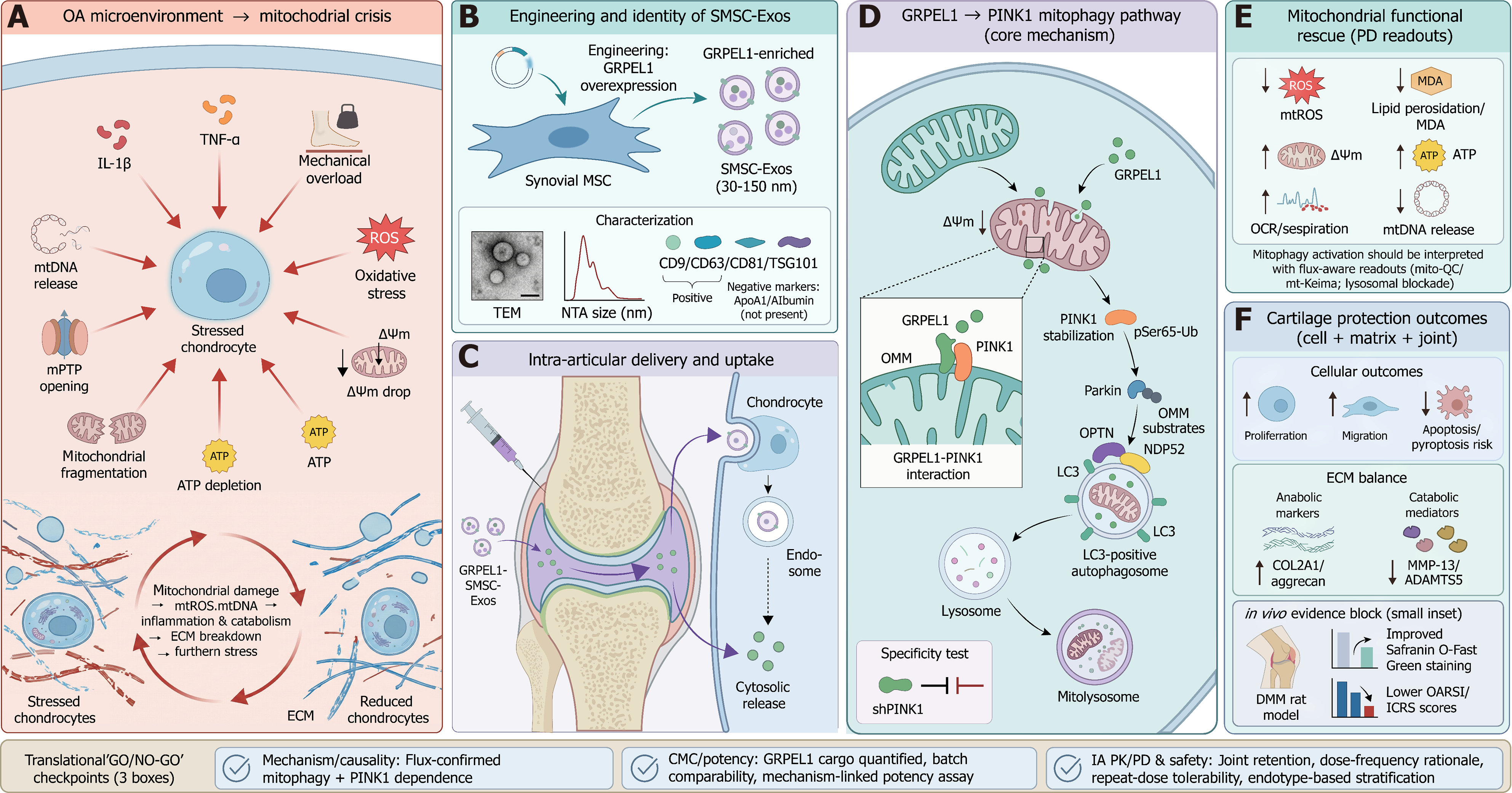
Figure 1 GrpE-like 1-loaded synovial mesenchymal stem cell-derived exosomes activate phosphatase and tensin homolog-induced kinase 1-dependent mitophagy to protect cartilage in osteoarthritis.
A: Osteoarthritis microenvironment-mitochondrial crisis. Inflammatory cytokines (interleukin-1β and tumor necrosis factor-alpha) and mechanical overload converge on chondrocytes to trigger oxidative stress [reactive oxygen species (ROS)], mitochondrial fragmentation, mitochondrial permeability transition pore opening, mitochondrial DNA (mtDNA) release, mitochondrial membrane potential (ΔΨm) loss, and ATP depletion, forming a self-amplifying loop of mitochondrial damage → mitochondrial ROS/mtDNA → inflammation/catabolism → extracellular matrix breakdown → further stress; B: Engineering and identity of synovial mesenchymal stem cell-derived exosomes. Synovial mesenchymal stem cells are engineered to overexpress GrpE-like 1 (GRPEL1), generating GRPEL1-enriched exosomes (30-150 nm). Exosomes are characterized by morphology (transmission electron microscopy), size distribution (nanoparticle tracking analysis), extracellular vesicle markers (CD9/CD63/CD81/tumor susceptibility gene 101), and absence of selected impurities/negative markers (apolipoprotein A1/albumin); C: Intra-articular delivery and uptake. GRPEL1-synovial mesenchymal stem cell-derived exosomes are administered by intra-articular injection, traffic within the joint space, and are internalized by chondrocytes via endocytosis followed by intracellular release of functional cargo; D: Core mechanism: GRPEL1 → phosphatase and tensin homolog-induced kinase 1 (PINK1) mitophagy pathway. GRPEL1 localizes to mito
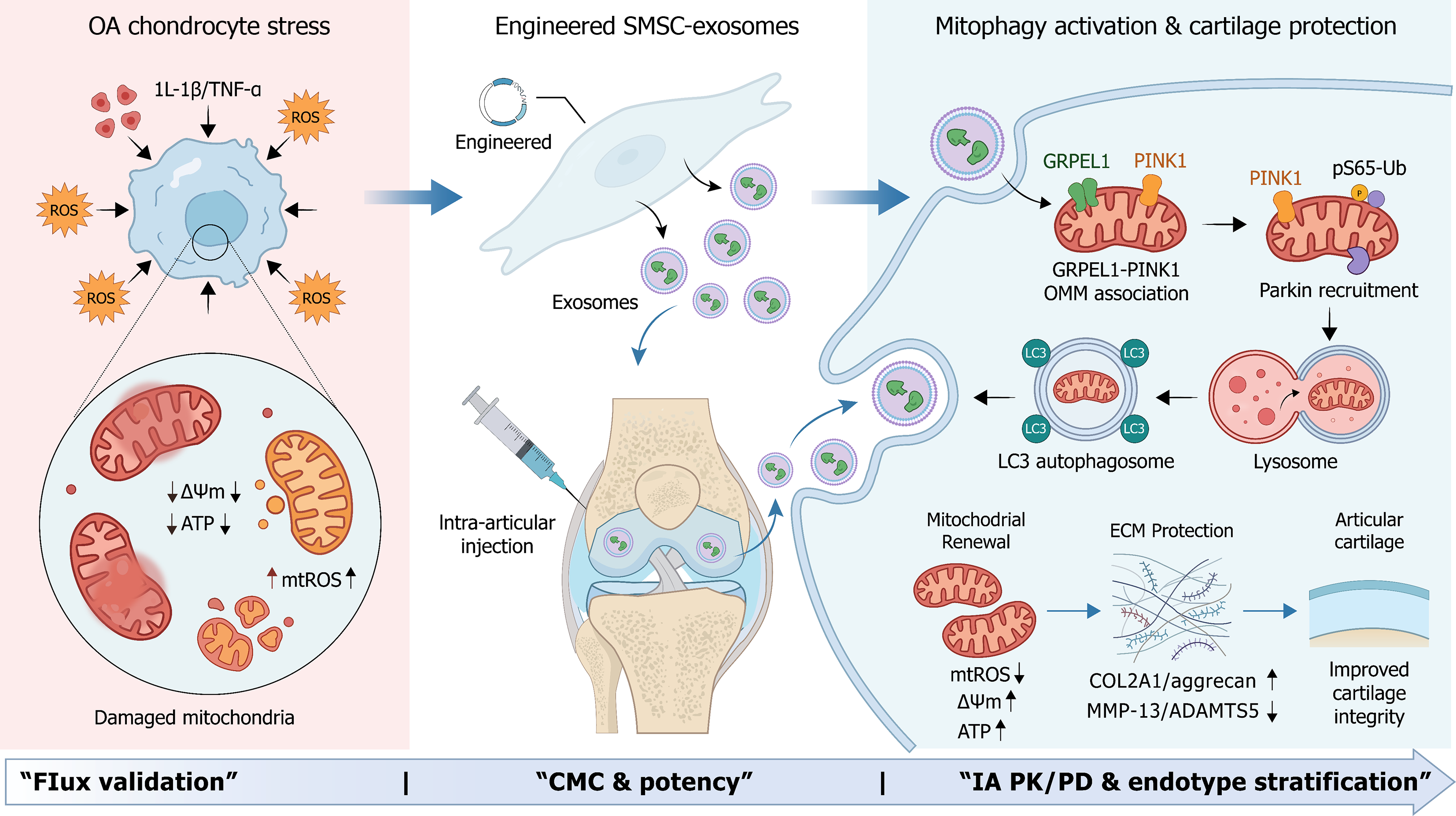
Figure 2 Integrated mechanism-to-translation schematic for GrpE-like 1-engineered synovial mesenchymal stem cell-derived exosomes targeting phosphatase and tensin homolog-induced kinase 1-dependent mitophagy in osteoarthritis.
A left-to-right workflow summarizes the proposed therapeutic logic. Osteoarthritis-relevant inflammatory stress (interleukin-1β/tumor necrosis factor-alpha) and oxidative pressure (ROS) precipitate chondrocyte mitochondrial injury, characterized by decreased mitochondrial membrane potential (ΔΨm) and ATP production with increased mitochondrial ROS. Synovial mesenchymal stem cell-derived exosomes engineered to carry GrpE-like 1 are delivered intra-articularly and internalized by chondrocytes. GrpE-like 1 associates with phosphatase and tensin homolog-induced kinase 1 at the outer mitochondrial membrane, promoting phosphatase and tensin homolog-induced kinase 1 signaling (phospho-Ser65 ubiquitin), Parkin recruitment, and LC3-positive autophagosome formation followed by lysosomal degradation, thereby activating mitophagy. Enhanced mitochondrial renewal (mitochondrial ROS↓, ΔΨm↑, ATP↑) is linked to restoration of extracellular matrix homeostasis (collagen type II alpha 1/aggrecan↑; matrix metalloproteinase-13/A disintegrin and metalloproteinase with thrombospondin motifs 5↓) and improved cartilage integrity. The bottom ribbon highlights the minimal translational priorities required to move from proof-of-concept to an actionable disease-modifying osteoarthritis drug pathway: Flux validation, chemistry, manufacturing, and controls and mechanism-linked potency, and intra-articular pharmacokinetics/pharmacodynamics with endotype-aware stratification. OA: Osteoarthritis; IL-1β: Interleukin-1β; TNF-α: Tumor necrosis factor-alpha; ROS: Reactive oxygen species; ΔΨm: Mitochondrial membrane potential; mtROS: Mitochondrial reactive oxygen species; SMSC: Synovial mesenchymal stem cell; GRPEL1: GrpE-like 1; PINK1: Phosphatase and tensin homolog-induced kinase 1; pS65-Ub: Phospho-Ser65 ubiquitin; OMM: Outer mitochondrial membrane; ECM: Extracellular matrix; COL2A1: Collagen type II alpha 1; MMP-13: Matrix meta
- Citation: Shi Z, Li HY, Lv BK, Li D, Lu PY, Zhou XY, Xue ME, Wang RB. GrpE-like 1-engineered synovial mesenchymal stromal cell exosomes: Mechanistic and translational priorities in osteoarthritis. World J Stem Cells 2026; 18(5): 119231
- URL: https://www.wjgnet.com/1948-0210/full/v18/i5/119231.htm
- DOI: https://dx.doi.org/10.4252/wjsc.v18.i5.119231