
















Copyright: ©Author(s) 2026.
World J Stem Cells. Mar 26, 2026; 18(3): 116226
Published online Mar 26, 2026. doi: 10.4252/wjsc.v18.i3.116226
Published online Mar 26, 2026. doi: 10.4252/wjsc.v18.i3.116226
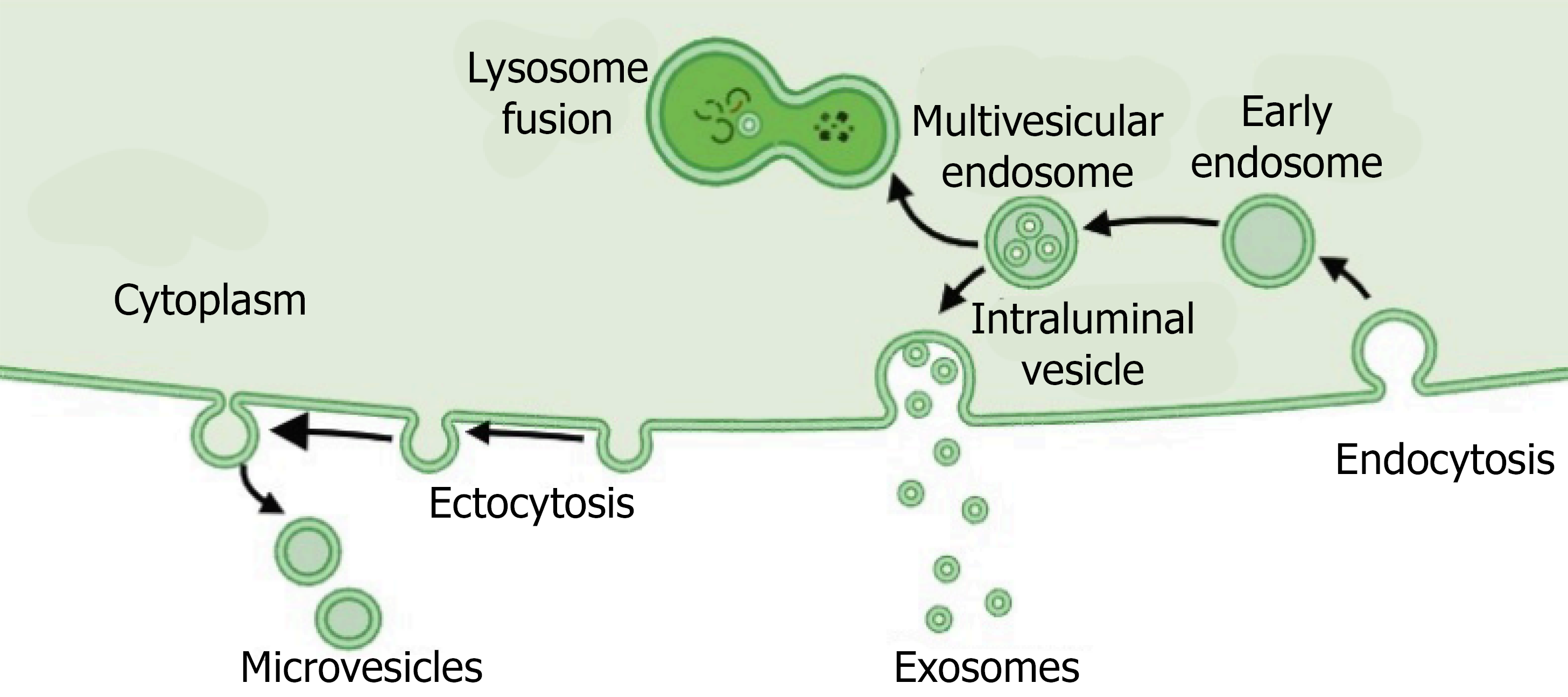
Figure 1 Exosomes biogenesis.
Exosomes fuse with the plasma membrane after being generated within multivesicular endosomes during intraluminal vesicle production and are subsequently released through exocytosis. In an alternative mechanism, lysosome fusion, the multivesicular endosome merges with a lysosome to undergo degradation rather than exosome discharge. Ectocytosis causes microvesicles to form directly from the plasma membrane.
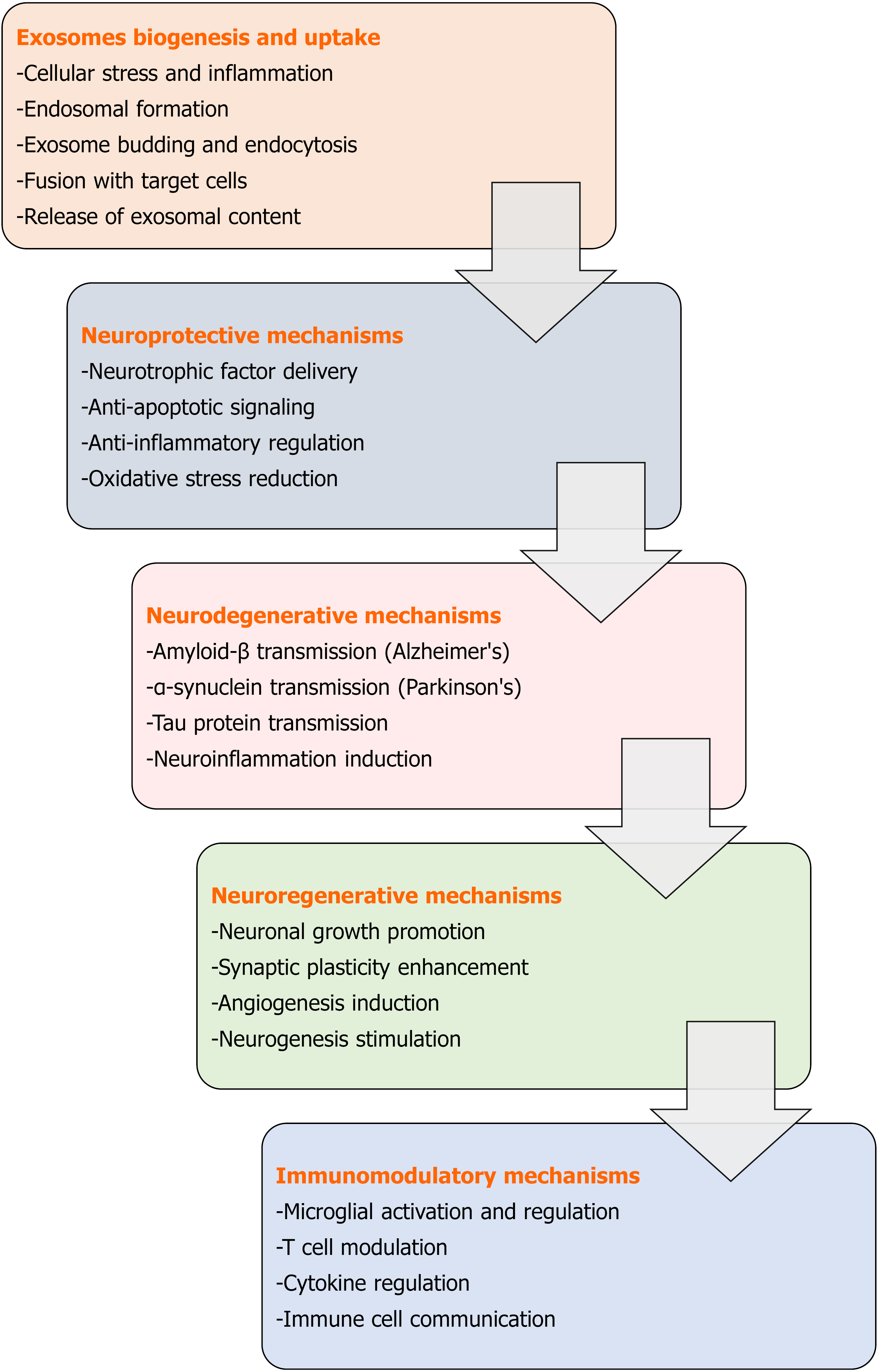
Figure 2 Exosomes mechanism of action.
This flow chart illustrates the complex mechanisms of exosomes in neurobiology, including their biogenesis, uptake, and effects on neuroprotection, neurodegeneration, neuroregeneration, and immunomodulation.
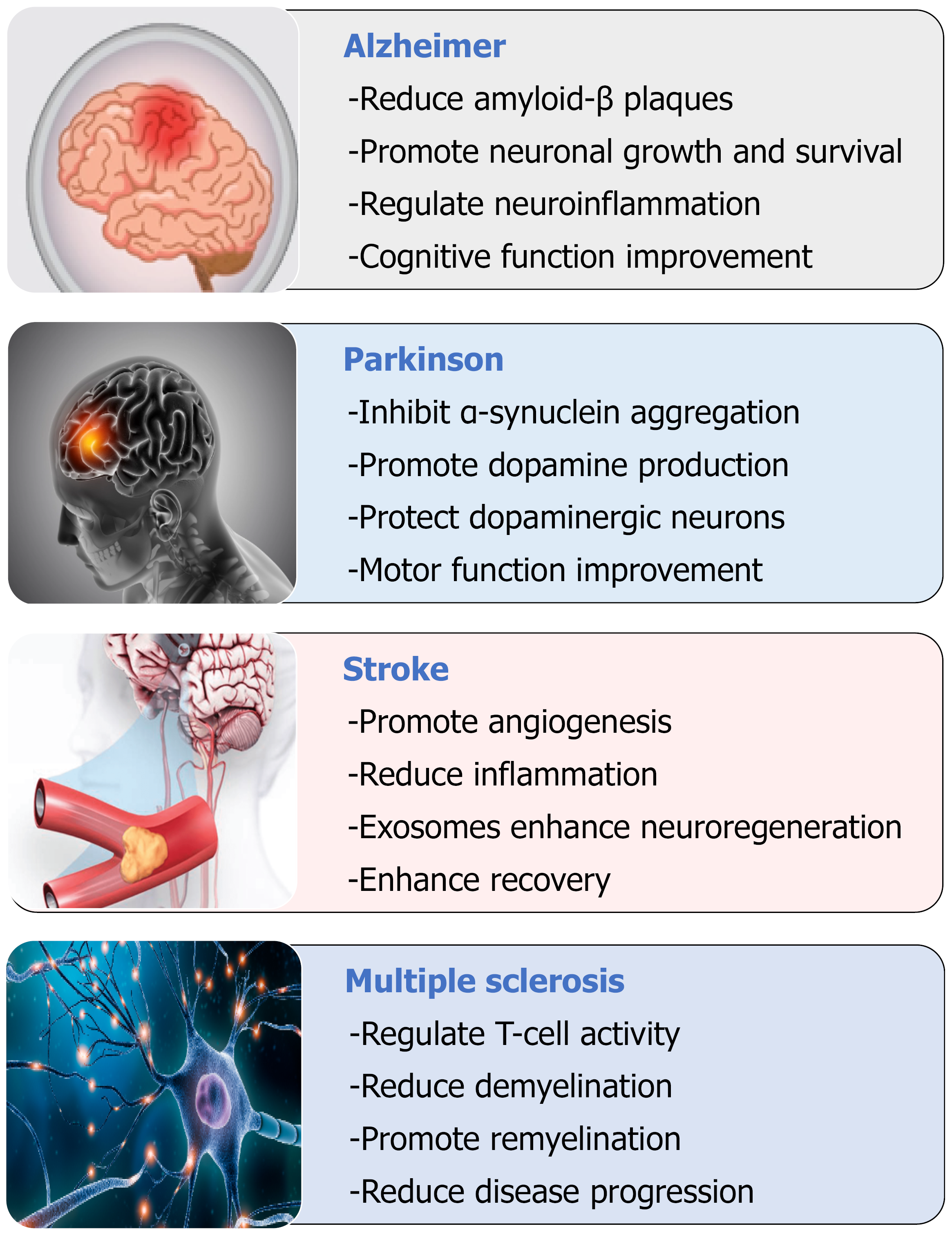
Figure 3 Exosome therapeutic applications in neurodegenerative diseases.
Exosomes improve cognitive function in Alzheimer’s disease, improve motor function in Parkinson’s diseases, enhance recovery in stroke, and reduce disease progression in multiple sclerosis.
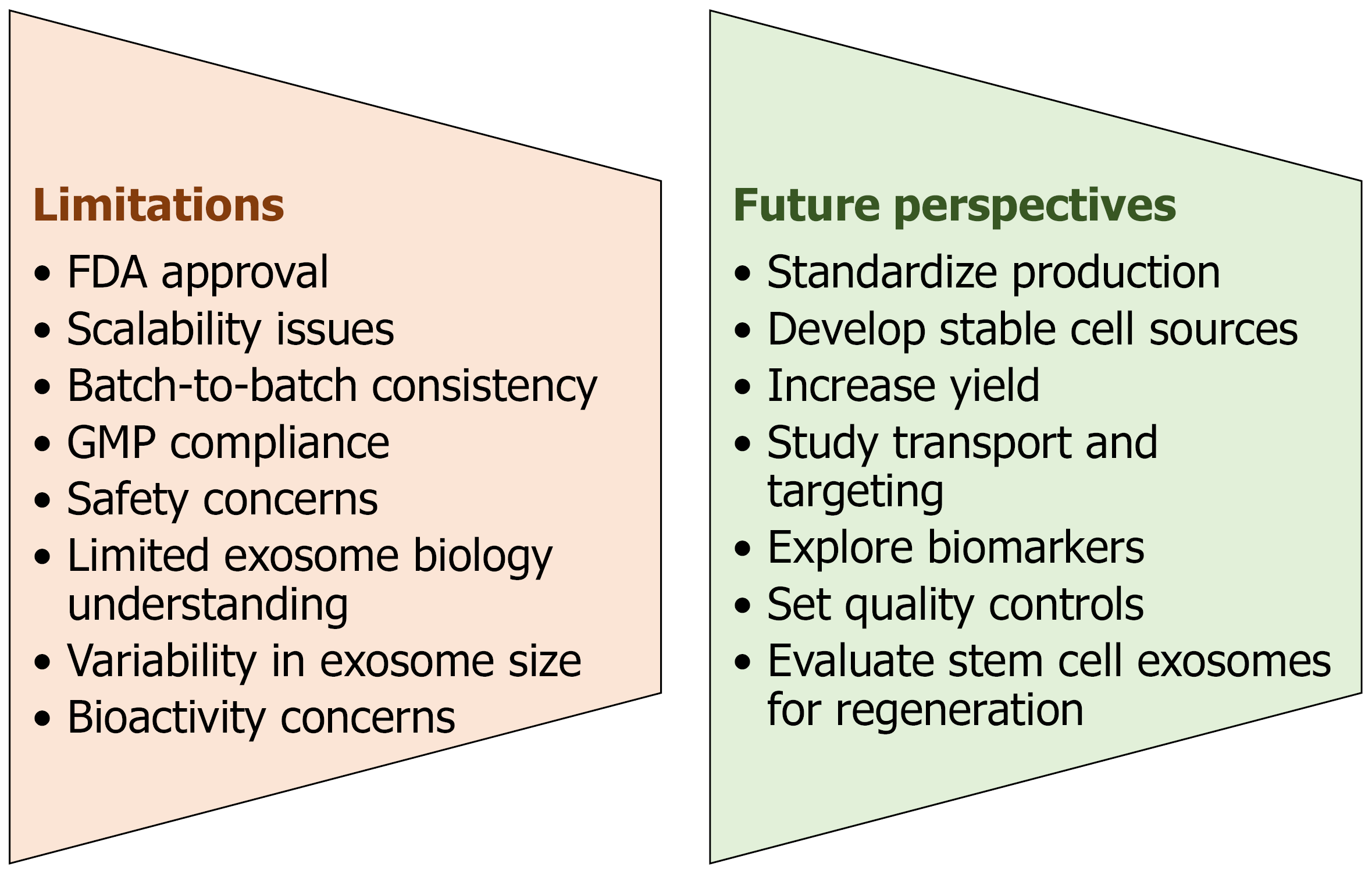
Figure 4 Limitations and future perspectives of exosomes.
The figure represents the limitations and future perspectives of exosomes in therapeutic application of neurodegenerative diseases. FDA: Food and Drug Administration; GMP: Good manufacturing practices.
- Citation: Choudhery MS, Arif T, Mahmood R, Harris DT. Stem cell derived exosomes: Emerging cell-free therapeutics for neurodegenerative disorders. World J Stem Cells 2026; 18(3): 116226
- URL: https://www.wjgnet.com/1948-0210/full/v18/i3/116226.htm
- DOI: https://dx.doi.org/10.4252/wjsc.v18.i3.116226