
















©The Author(s) 2026.
World J Gastroenterol. Feb 28, 2026; 32(8): 115416
Published online Feb 28, 2026. doi: 10.3748/wjg.v32.i8.115416
Published online Feb 28, 2026. doi: 10.3748/wjg.v32.i8.115416
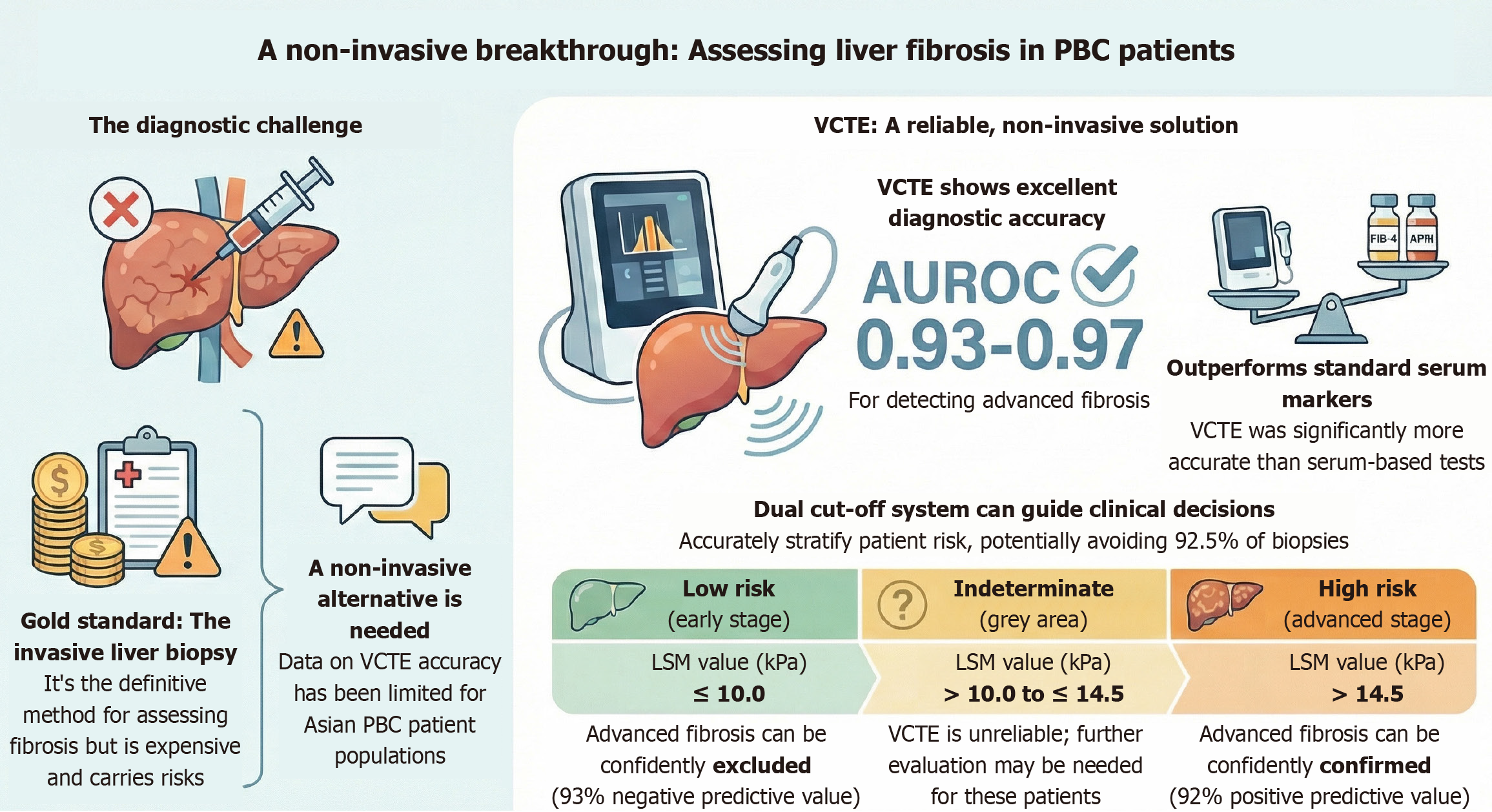
Figure 1 Assessment of liver fibrosis in primary biliary cholangitis using vibration-controlled transient elastography according to the results of study by Chen et al[7].
Vibration-controlled transient elastography provides a reliable non-invasive alternative to liver biopsy, showing excellent diagnostic accuracy for advanced fibrosis (area under the receiver operating characteristic curve: 0.93-0.97) and outperforming standard serum-based fibrosis markers. A dual liver stiffness cut-off strategy (low risk ≤ 10.0 kPa; high risk > 14.5 kPa) allows advanced fibrosis to be confidently excluded (negative predictive value 93%) or confirmed (positive predictive value 92%), leaving an indeterminate “grey zone” (10.0-14.5 kPa) where additional evaluation is needed and potentially avoiding up to 92.5% of liver biopsies in patients with primary biliary cholangitis. PBC: Primary biliary cholangitis; VCTE: Vibration-controlled transient elastography; AUROC: Area under the receiver operating characteristic curve; FIB-4: Fibrosis-4; LSM: Liver stiffness measurement.
- Citation: Isakov V, Goncharov A. Dual cut-offs and beyond: Expanding the role of transient elastography in primary biliary cholangitis. World J Gastroenterol 2026; 32(8): 115416
- URL: https://www.wjgnet.com/1007-9327/full/v32/i8/115416.htm
- DOI: https://dx.doi.org/10.3748/wjg.v32.i8.115416