
















©The Author(s) 2026.
World J Gastroenterol. Feb 14, 2026; 32(6): 113195
Published online Feb 14, 2026. doi: 10.3748/wjg.v32.i6.113195
Published online Feb 14, 2026. doi: 10.3748/wjg.v32.i6.113195
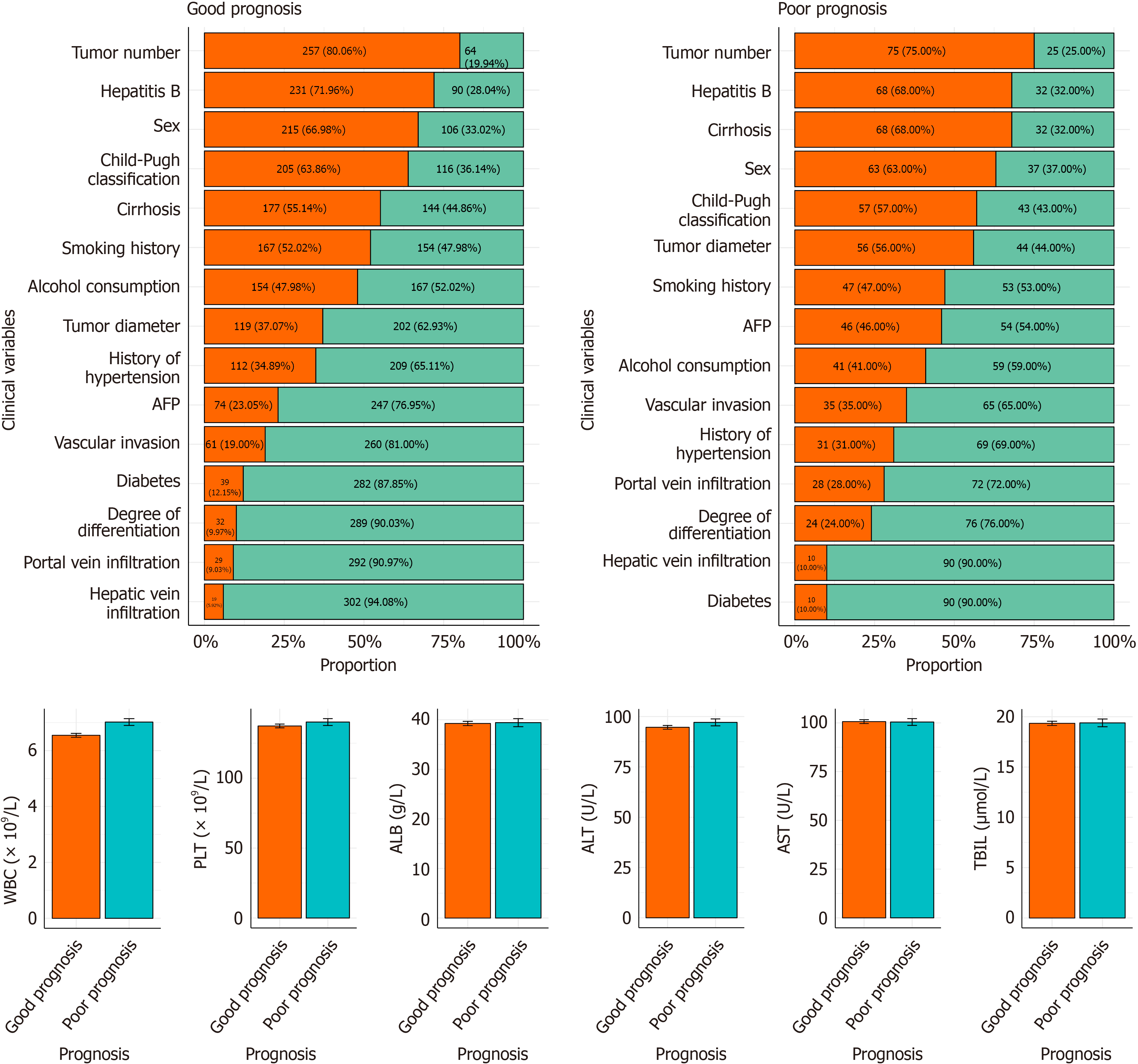
Figure 1 Baseline data of patients in the poor and good prognosis groups.
In the figure, orange represents the following: Male (sex), history of smoking (smoking history), history of alcohol consumption (alcohol consumption), history of hypertension (history of hypertension), diabetes (diabetes), hepatitis B (hepatitis B), Child-Pugh classification A (Child-Pugh classification), tumor diameter ≥ 5 cm (tumor diameter), single tumor (tumor number), poorly differentiated tumor (degree of differentiation), vascular invasion present (vascular invasion), hepatic vein infiltration present (hepatic vein infiltration), portal vein infiltration present (portal vein infiltration), cirrhosis present (cirrhosis), alpha-fetoprotein (AFP) ≥ 400 μg/L (AFP). Green represents the following: Female (sex), no history of smoking (smoking history), no history of alcohol consumption (alcohol consumption), no history of hypertension (history of hypertension), no diabetes (diabetes), no hepatitis B (hepatitis B), Child-Pugh classification B (Child-Pugh classification), tumor diameter < 5 cm (tumor diameter), multiple tumors (tumor number), moderately to well differentiated tumor (degree of differentiation), no vascular invasion (vascular invasion), no hepatic vein infiltration (hepatic vein infiltration), no portal vein infiltration (portal vein infiltration), no cirrhosis (cirrhosis), AFP < 400 μg/L (AFP). AFP: Alpha-fetoprotein; WBC: White blood cell; PLT: Platelet; ALB: Albumin; ALT: Alanine aminotran
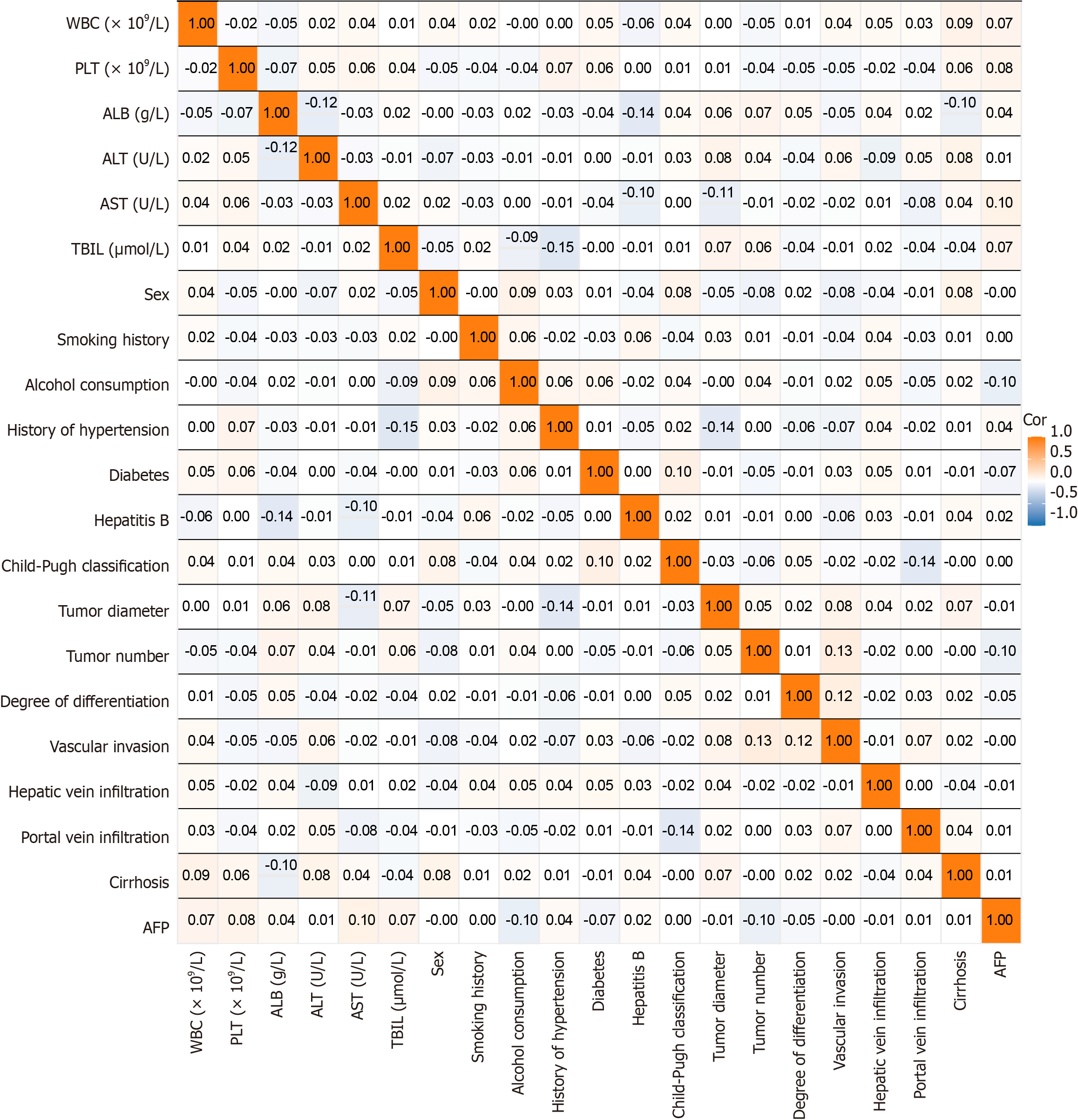
Figure 2 Correlation analysis of baseline data.
The figure shows the correlation coefficients between each clinical characteristic and laboratory indicator. The color depth represents the correlation coefficient’s magnitude, with orange and blue indicating positive and inverse correlations, respectively. A darker color signifies a stronger association. AFP: Alpha-fetoprotein; WBC: White blood cell; PLT: Platelet; ALB: Albumin; ALT: Alanine aminotransferase; AST: Aspartate aminotransferase; TBIL: Total bilirubin.
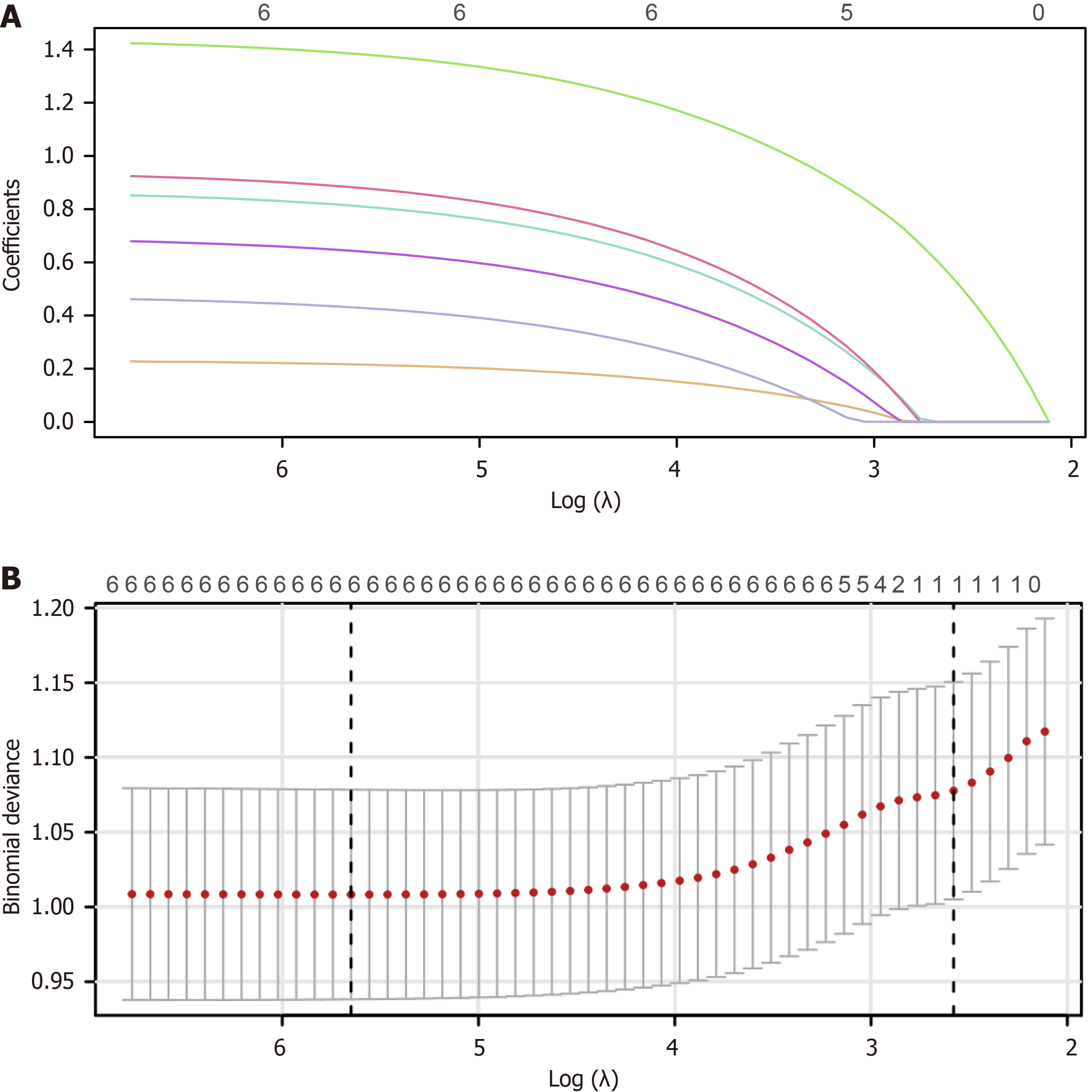
Figure 3 Least absolute shrinkage and selection operator regression screening of risk characteristic variables for poor prognosis.
A: Least absolute shrinkage and selection operator regression path diagram. As Log(λ) augments, the regression coefficients of the characteristic variables gradually contract to zero. When the λ value is small, most variables are included in the model. As the λ value escalates, the coefficients of some variables incline towards zero, and ultimately 6 key characteristic variables are screened out; B: Cross-validation curve diagram. The vertical axis represents the binomial deviation, and the horizontal axis denotes Log(λ). The optimal λ value is selected via 10-fold cross-validation. The dotted line position corresponds to the minimum value of λ (λ = 0.0035191), and the model corresponding to this value has the lowest deviation. Six characteristic variables are screened out at this point for the final model construction.
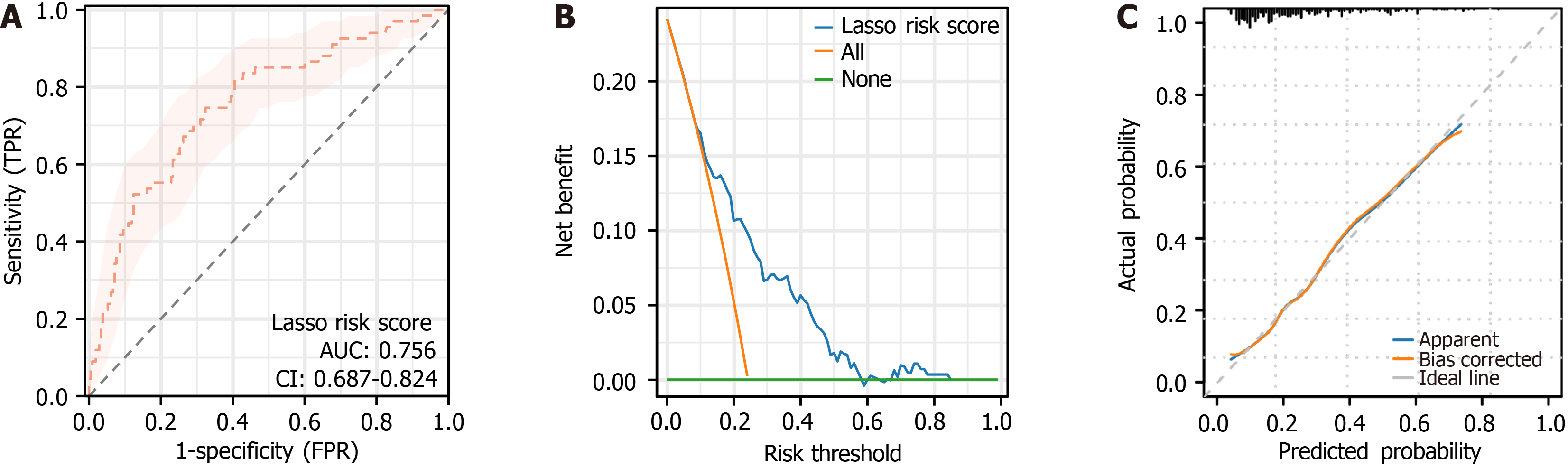
Figure 4 Receiver operating characteristic curve, decision curve, and calibration curve validation of the least absolute shrinkage and selection operator model (training group).
A: The receiver operating characteristic curve demonstrates the model’s good discriminatory power (area under the curve = 0.756) in the training group; B: Decision curve analysis evaluation of the model’s clinical net benefit showed a maximum net benefit of 24.18% within the 0%-84% threshold range; C: The calibration curve shows a good fit and calibration between model predictions and the actual occurrence rate. The χ2 value of the goodness of fit test is 5.5714, and the P value is 0.6951. TPR: True positive rate; FPR: False positive rate; AUC: Area under the curve; CI: Confidence interval.
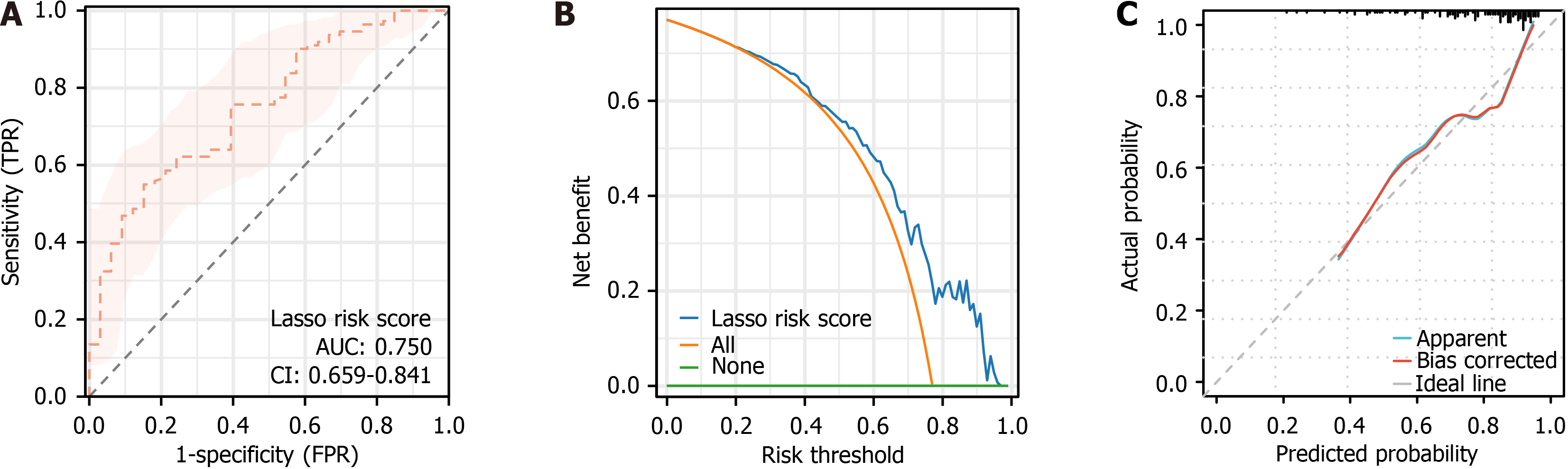
Figure 5 Receiver operating characteristic, decision curve analysis, and calibration curve validation of the least absolute shrinkage and selection operator model (validation group).
A: The receiver operating characteristic curve demonstrates the model’s good discrimination ability in the validation group (area under the curve = 0.750); B: Decision curve analysis reveals the model’s significant clinical net benefit within the 0%-96% threshold range; C: The calibration curve shows a good fit and favorable calibration between model predictions and the actual occurrence rate. The χ2 value of the goodness-of-fit test is 8.2821, and the P value is 0.4064. TPR: True positive rate; FPR: False positive rate; AUC: Area under the curve; CI: Confidence interval.
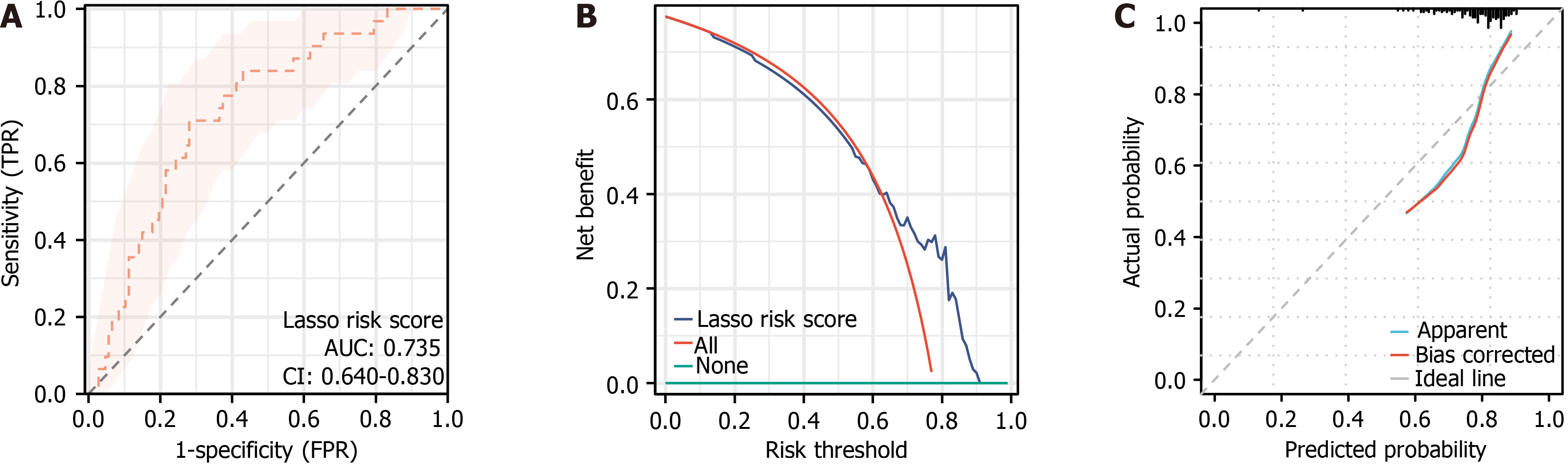
Figure 6 Receiver operating characteristic, decision curve analysis, and calibration curve validation of the least absolute shrinkage and selection operator model (external validation group).
A: The receiver operating characteristic curve shows an area under the curve of 0.735 (95%confidence interval: 0.640-0.830) of the least absolute shrinkage and selection operator model in the external validation group, indicating good discriminatory ability; B: The decision curve analysis curve evaluates the model’s clinical net benefit, revealing a significant net benefit within the 0%-90% threshold probability range, with a maximum net benefit of 77.53%; C: The calibration curve illustrates the agreement between the predicted probabilities and actual outcomes. Good model calibration is evidenced by a non-significant goodness-of-fit result (χ2 = 7.1336, P = 0.5223). TPR: True positive rate; FPR: False positive rate; AUC: Area under the curve; CI: Confidence interval.
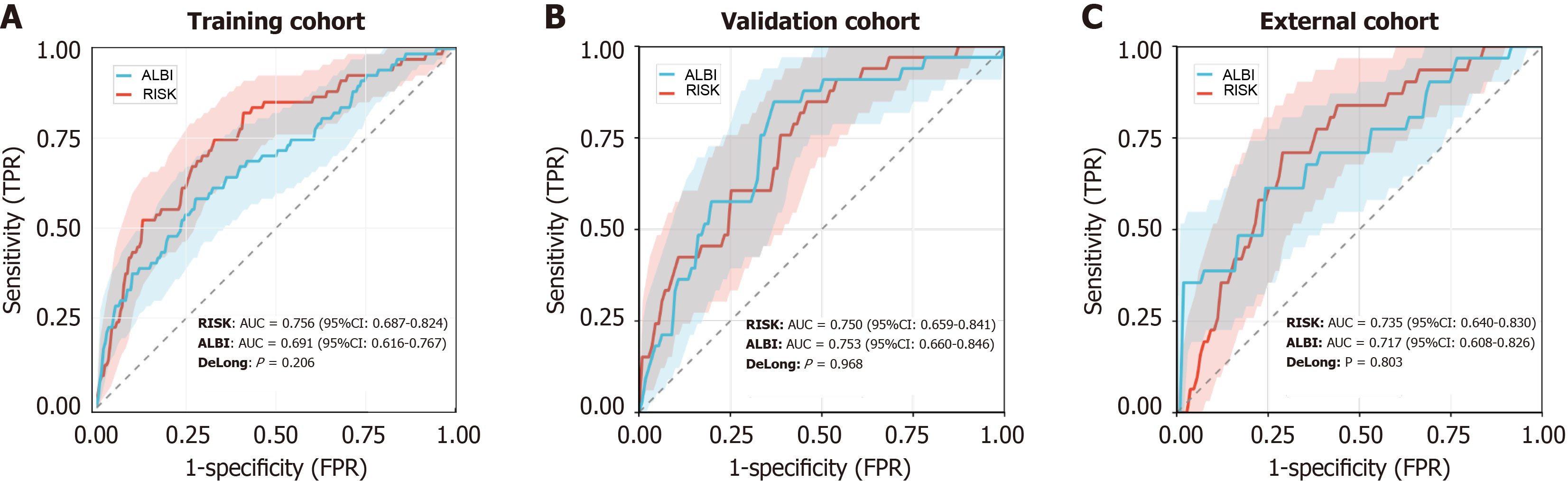
Figure 7 Comparison of the least absolute shrinkage and selection operator-based risk score vs albumin bilirubin in discriminating 1-year adverse outcomes across three cohorts.
A: Training cohort: Risk score (RISK) outperformed albumin bilirubin (ALBI); B: Validation cohort: RISK outperformed ALBI; C: External cohort: RISK outperformed ALBI. RISK: Risk score; ALBI: Albumin bilirubin; TPR: True positive rate; FPR: False positive rate; AUC: Area under the curve; CI: Confidence interval.
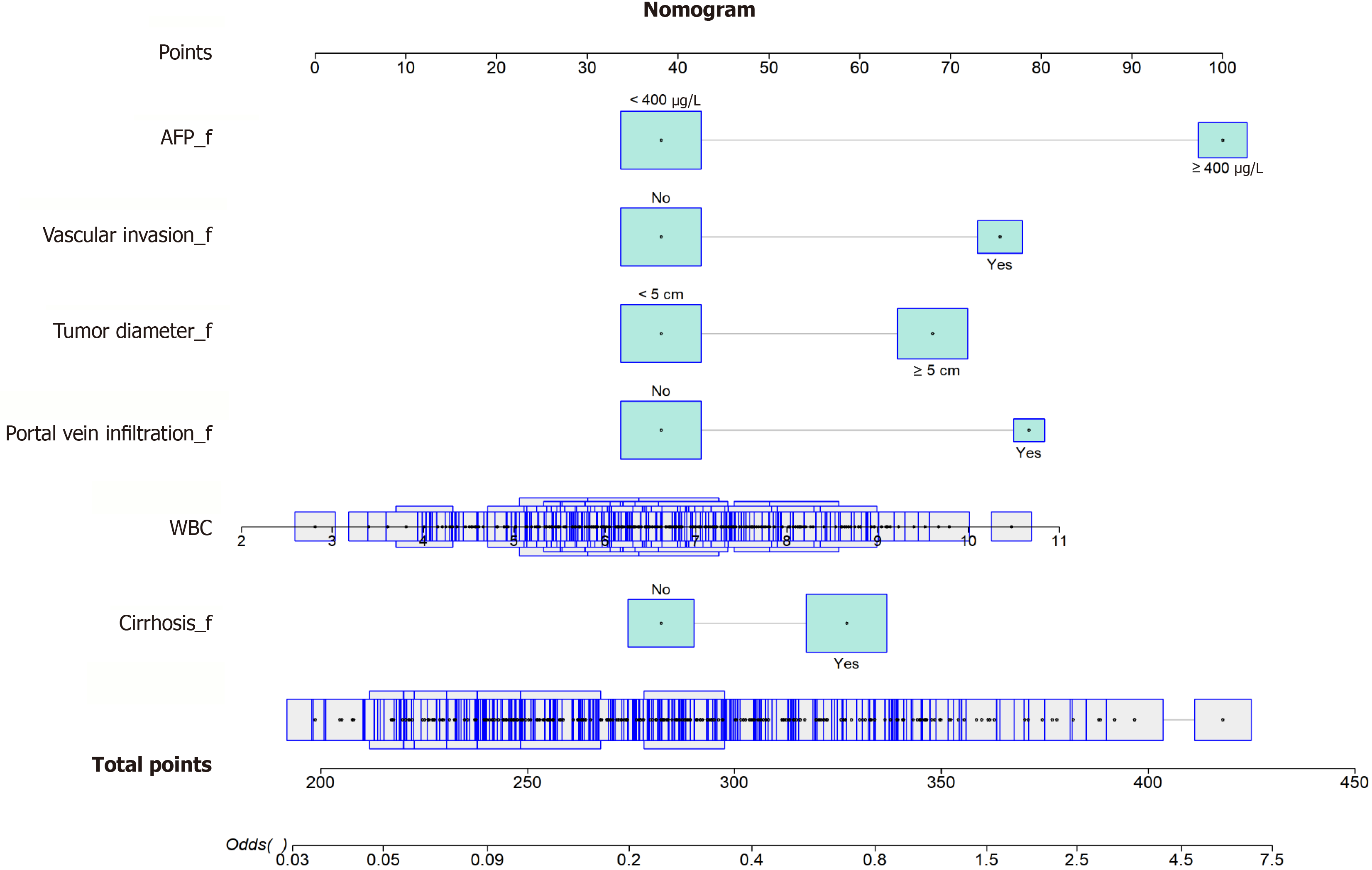
Figure 8 Construction of a nomogram model based on the variables screened by least absolute shrinkage and selection operator regression.
WBC: White blood cell; AFP: Alpha-fetoprotein.
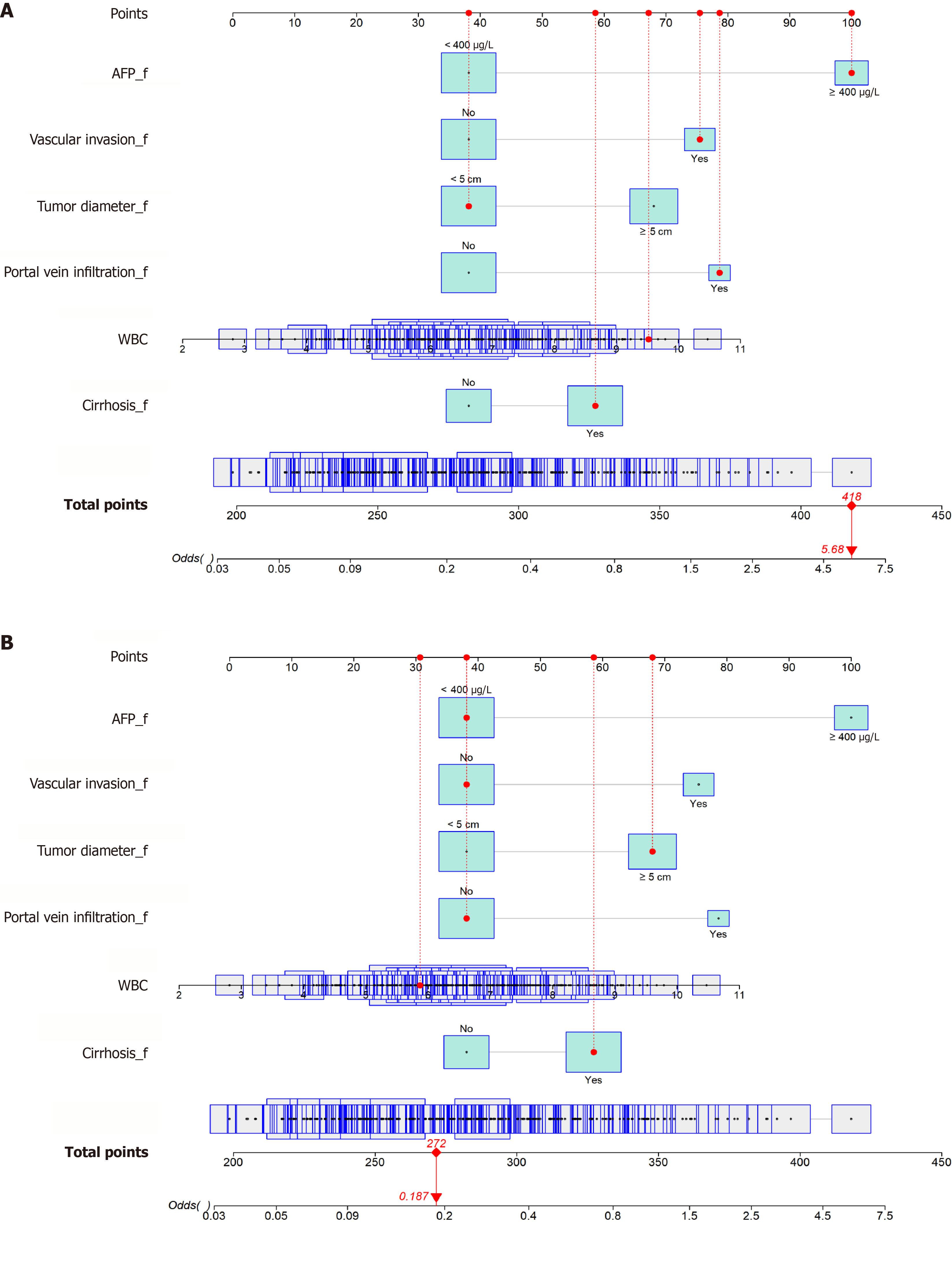
Figure 9 Calculation of nomogram scores for randomly selected patients with poor and good prognoses.
A: Nomogram score chart of patient 1, with a total score of 418 and a 100% probability of poor prognosis; B: Nomogram score chart of patient 2 with a total score of 268 and a poor prognosis of 32.5%. WBC: White blood cell; AFP: Alpha-fetoprotein.
- Citation: Feng W, Ye QW, Wang QL, Chen SY, Ma Y, Meng FL. Predictors of one-year adverse outcomes after laparoscopic resection for hepatocellular carcinoma: Development and validation of an early-warning model. World J Gastroenterol 2026; 32(6): 113195
- URL: https://www.wjgnet.com/1007-9327/full/v32/i6/113195.htm
- DOI: https://dx.doi.org/10.3748/wjg.v32.i6.113195