
















Copyright: ©Author(s) 2026.
World J Gastroenterol. Jul 14, 2026; 32(26): 119574
Published online Jul 14, 2026. doi: 10.3748/wjg.v32.i26.119574
Published online Jul 14, 2026. doi: 10.3748/wjg.v32.i26.119574
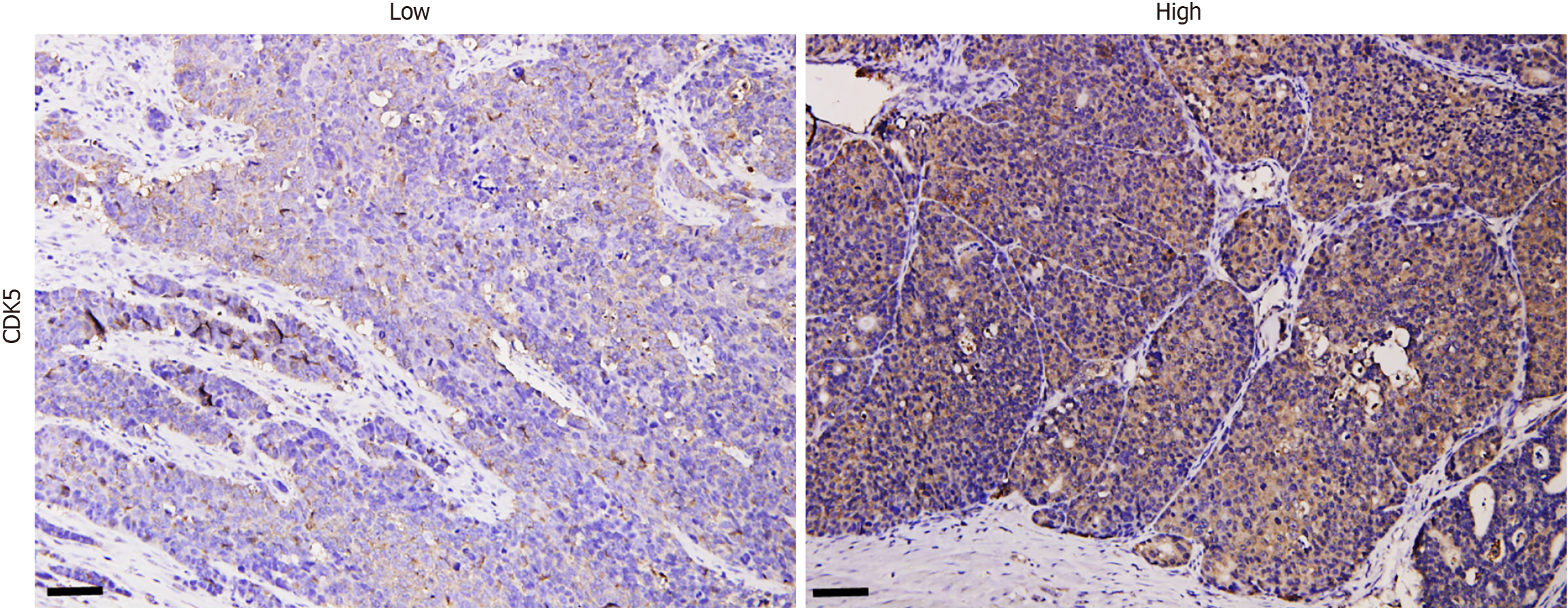
Figure 1 Immunohistochemical staining for cyclin-dependent kinase 5 expression in gastric neuroendocrine carcinoma.
CDK5: Cyclin-dependent kinase 5.
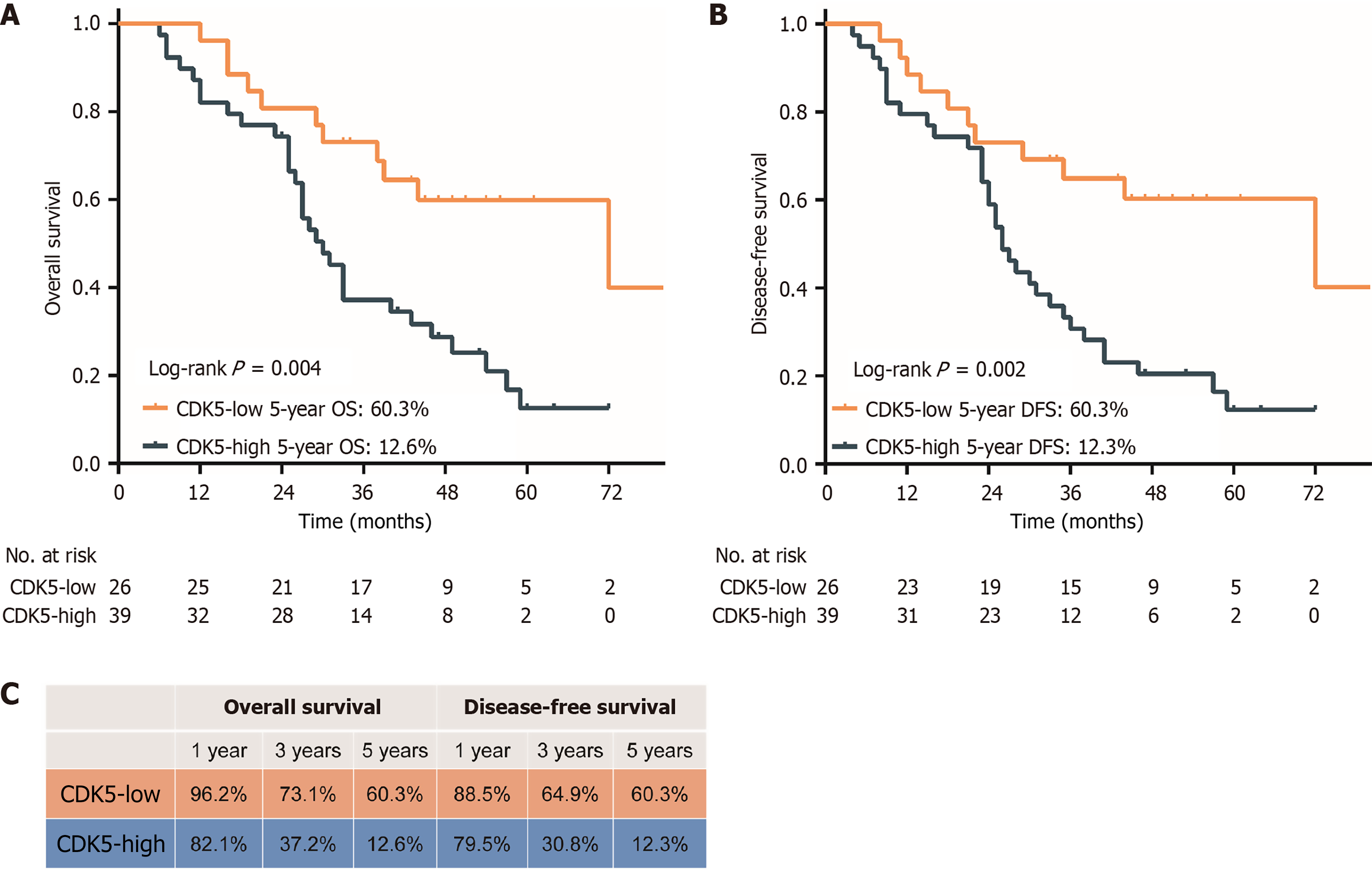
Figure 2 Overall survival and disease-free survival of different cyclin-dependent kinase 5 expression.
A: Kaplan-Meier curves for overall survival; B: Kaplan-Meier curves for disease-free survival; C: Tabular summary of overall survival and disease-free survival.
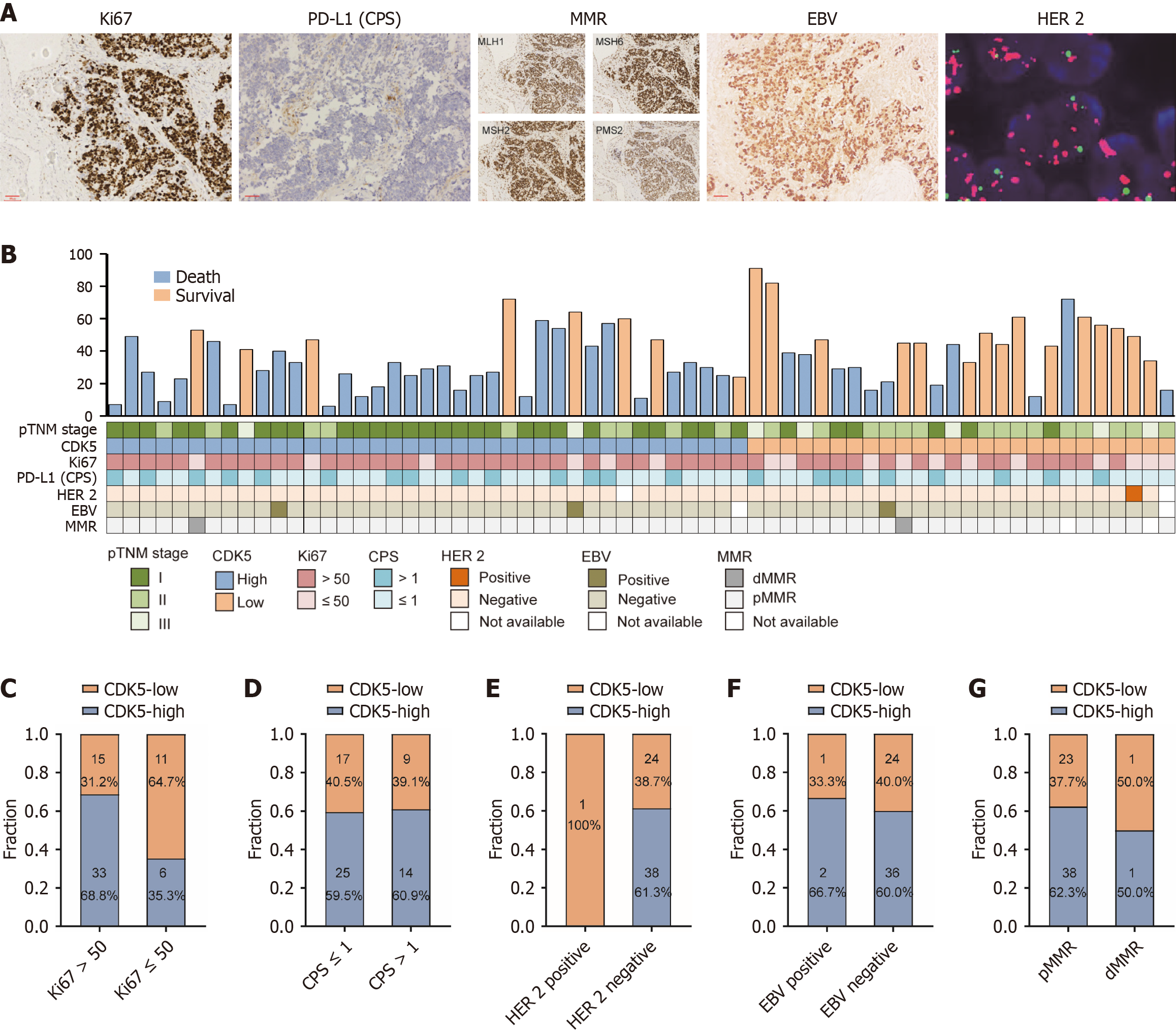
Figure 3 The relationship between cyclin-dependent kinase 5 expression and the markers Ki-67, programmed death ligand-1, human epidermal growth factor receptor 2, Epstein-Barr virus, and mismatch repair status.
A: Representative images; B: Oncoprint depicting survival status, pathological tumor-node-metastasis stage, and molecular marker profiles across individual cases; C-G: Bar graphs illustrating the distribution of cyclin-dependent kinase 5-low and high groups. PD-L1: Programmed death ligand-1; CPS: Combined positive score; HER2: Human epidermal growth factor receptor 2; EBV: Epstein-Barr virus; MMR: Mismatch repair; pTNM: Pathological tumor-node-metastasis; CDK5: Cyclin-dependent kinase 5.
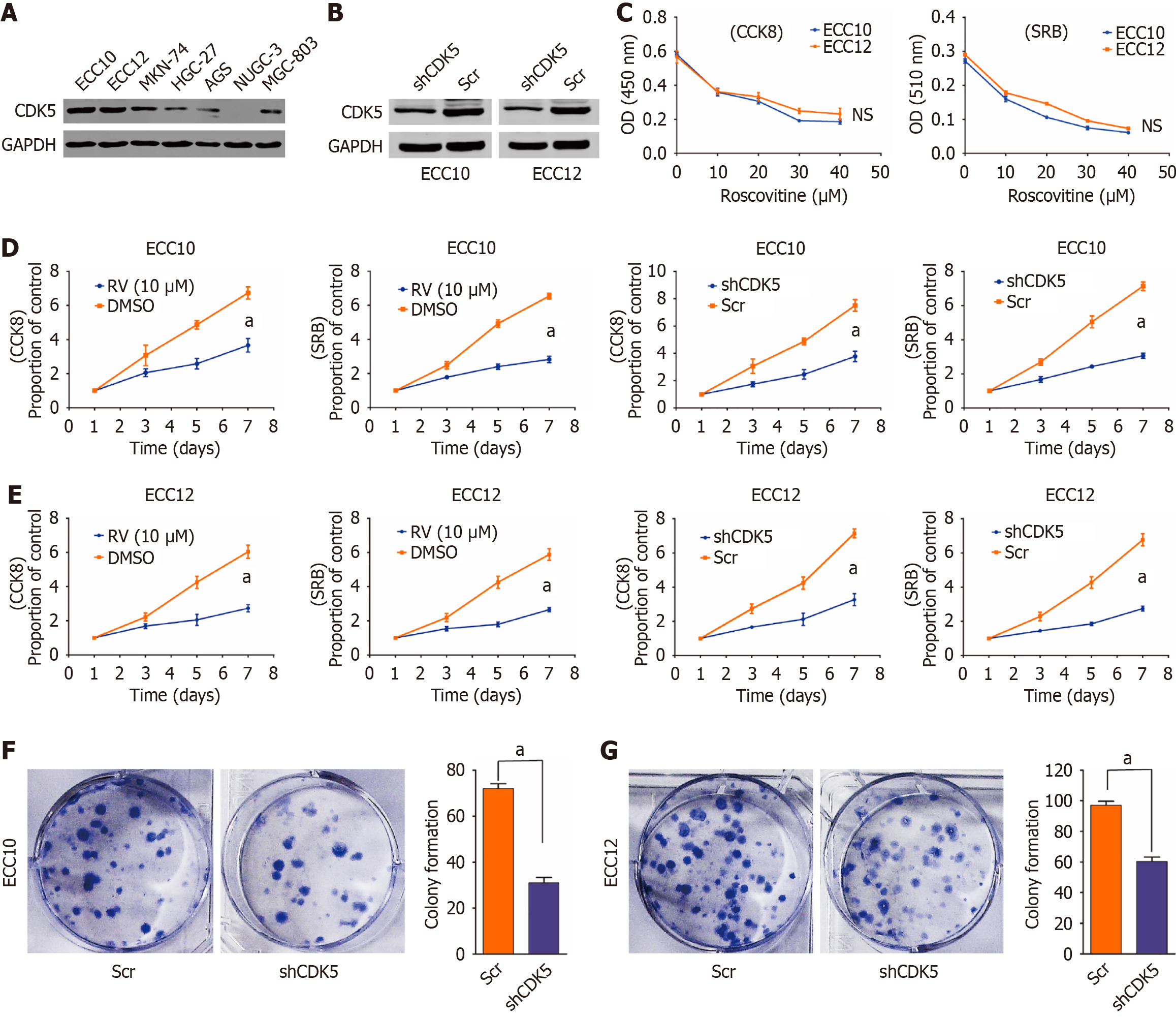
Figure 4 Downregulation of cyclin-dependent kinase 5 in gastric neuroendocrine carcinoma cells inhibits both cellular proliferation and colony formation.
A: The expression levels of cyclin-dependent kinase 5 (CDK5) were analyzed in gastric neuroendocrine carcinoma and gastric cancer cell lines; B: ECC10 and ECC12 cell lines with stable CDK5 knockdown, alongside control cell lines, were established; C-E: The proliferation rates of cells with shCDK5 knockdown or treated with the CDK5 inhibitor roscovitine, as well as control cells, were evaluated using cell counting kit-8 and sulforhodamine B assays; F and G: Colony formation assays were conducted to evaluate the colony-forming capabilities of shCDK5 knockdown and control cells. aP < 0.05. GAPDH: Glyceraldehyde-3-phosphate dehydrogenase; CCK8: Cell count kit-8; SRB: Sulforhodamine B; CDK5: Cyclin-dependent kinase 5; NS: Not significant.
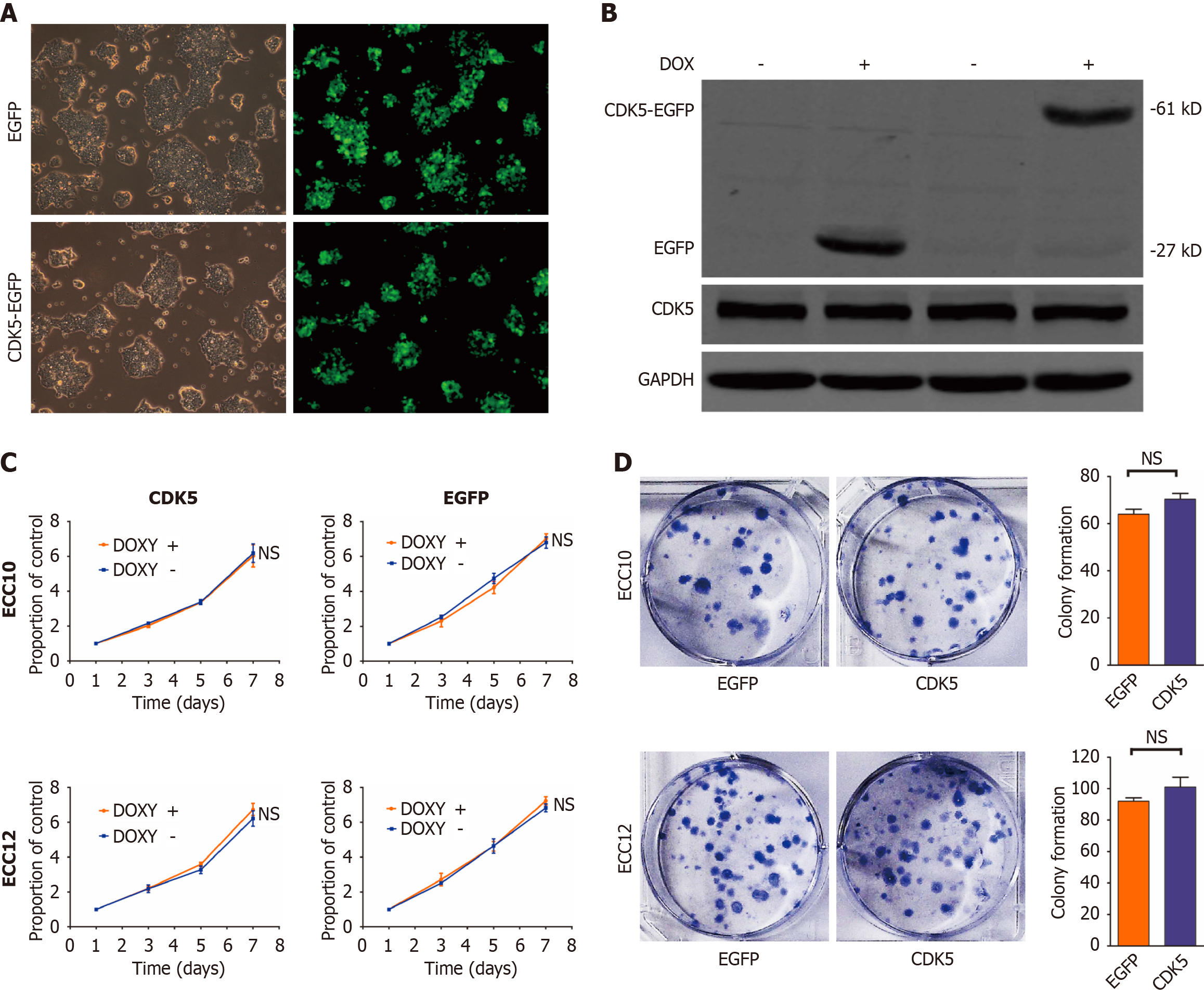
Figure 5 Overexpression of cyclin-dependent kinase 5 in gastric neuroendocrine carcinoma cells does not inhibit proliferation or colony formation.
A and B: ECC12 cell lines with stable cyclin-dependent kinase 5 (CDK5) overexpression and control cell lines were established; C: The proliferation rates of cells with CDK5 overexpression and control cells, were evaluated using CCK-8 assays; D: Colony formation assays were conducted to evaluate the colony-forming capabilities of CDK5 overexpression and control cells. CDK5: Cyclin-dependent kinase 5; GAPDH: Glyceraldehyde-3-phosphate dehydrogenase; NS: Not significant.
- Citation: Sun YQ, Su J, Ye KN, Chen QX, Kang EZ, Lv CB, Lian MQ, Zeng WM, Zhang YB, Cai LS. High cyclin-dependent kinase 5 expression promotes tumor progression in gastric neuroendocrine carcinoma. World J Gastroenterol 2026; 32(26): 119574
- URL: https://www.wjgnet.com/1007-9327/full/v32/i26/119574.htm
- DOI: https://dx.doi.org/10.3748/wjg.v32.i26.119574