
















Copyright: ©Author(s) 2026.
World J Gastroenterol. Apr 21, 2026; 32(15): 115533
Published online Apr 21, 2026. doi: 10.3748/wjg.v32.i15.115533
Published online Apr 21, 2026. doi: 10.3748/wjg.v32.i15.115533
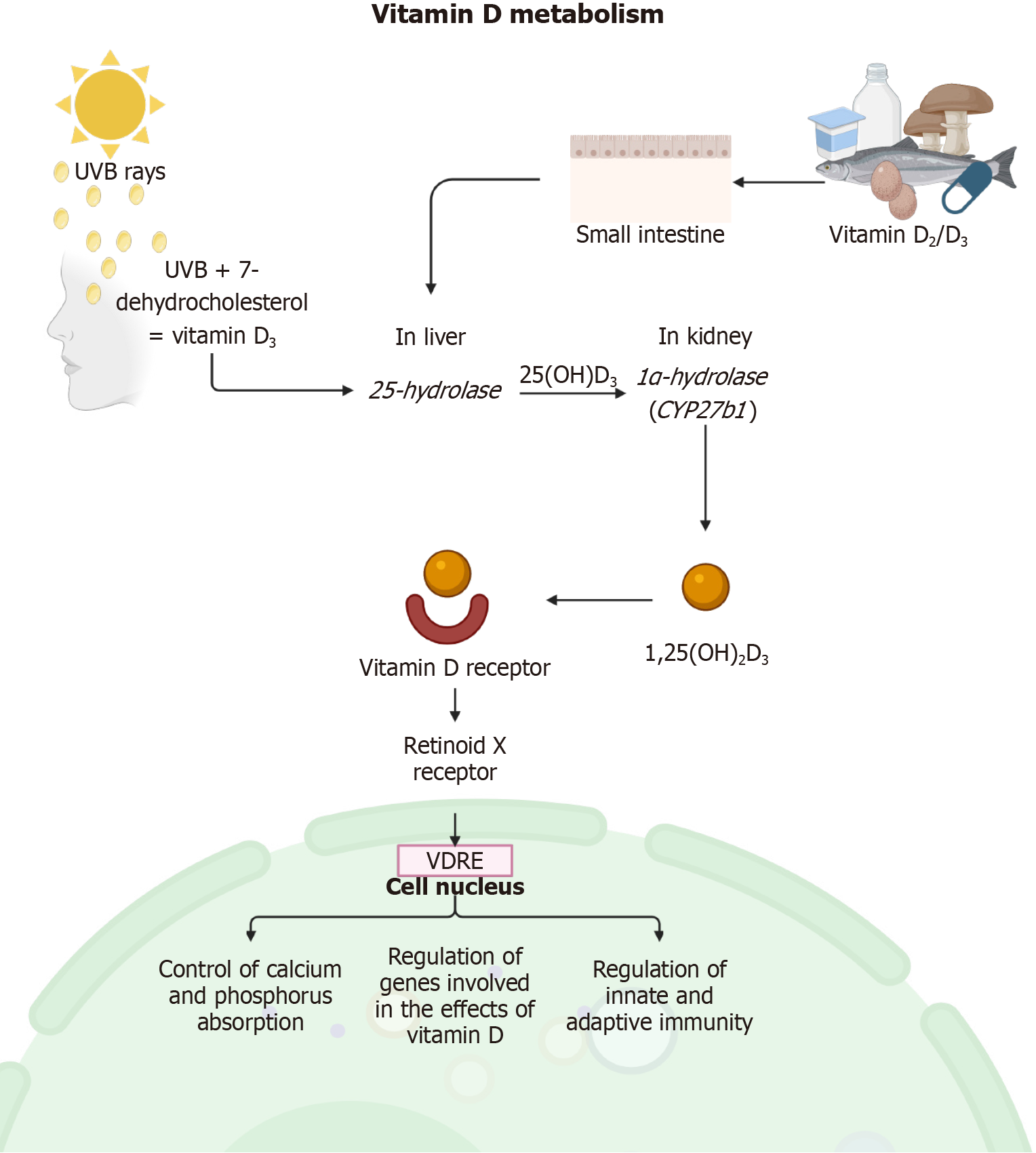
Figure 1 Vitamin D metabolism.
Endogenous vitamin D synthesis occurs in cutaneous keratinocytes under ultraviolet B rays exposure, which converts 7-dehydrocholesterol into previtamin D3. Dietary contribution is relatively limited, derived mainly from fatty fish, dairy products, eggs, and sun-exposed mushrooms, with the absorption of vitamin D2/D3 occurring in the jejunum and ileum. Following synthesis or ingestion, cholecalciferol undergoes hepatic hydroxylation, generating 25-hydroxyvitamin D, and subsequently in the kidneys, producing 1,25-dihydroxyvitamin D (or calcitriol), its biologically active form. Calcitriol binds to the vitamin D receptor, which heterodimerizes with the retinoid X receptor. This complex associates with the vitamin D response element and translocates into the cell nucleus, where it regulates the expression of multiple genes involved in calcium and phosphorus metabolism, as well as in the modulation of innate and adaptive immunity. This figure was created by the authors using BioRender (Supplementary material). UVB: Ultraviolet B rays; 25(OH)D: 25-hydroxyvitamin D; 1,25(OH)2D: 1,25-dihydroxyvitamin D; VDRE: Vitamin D response element.
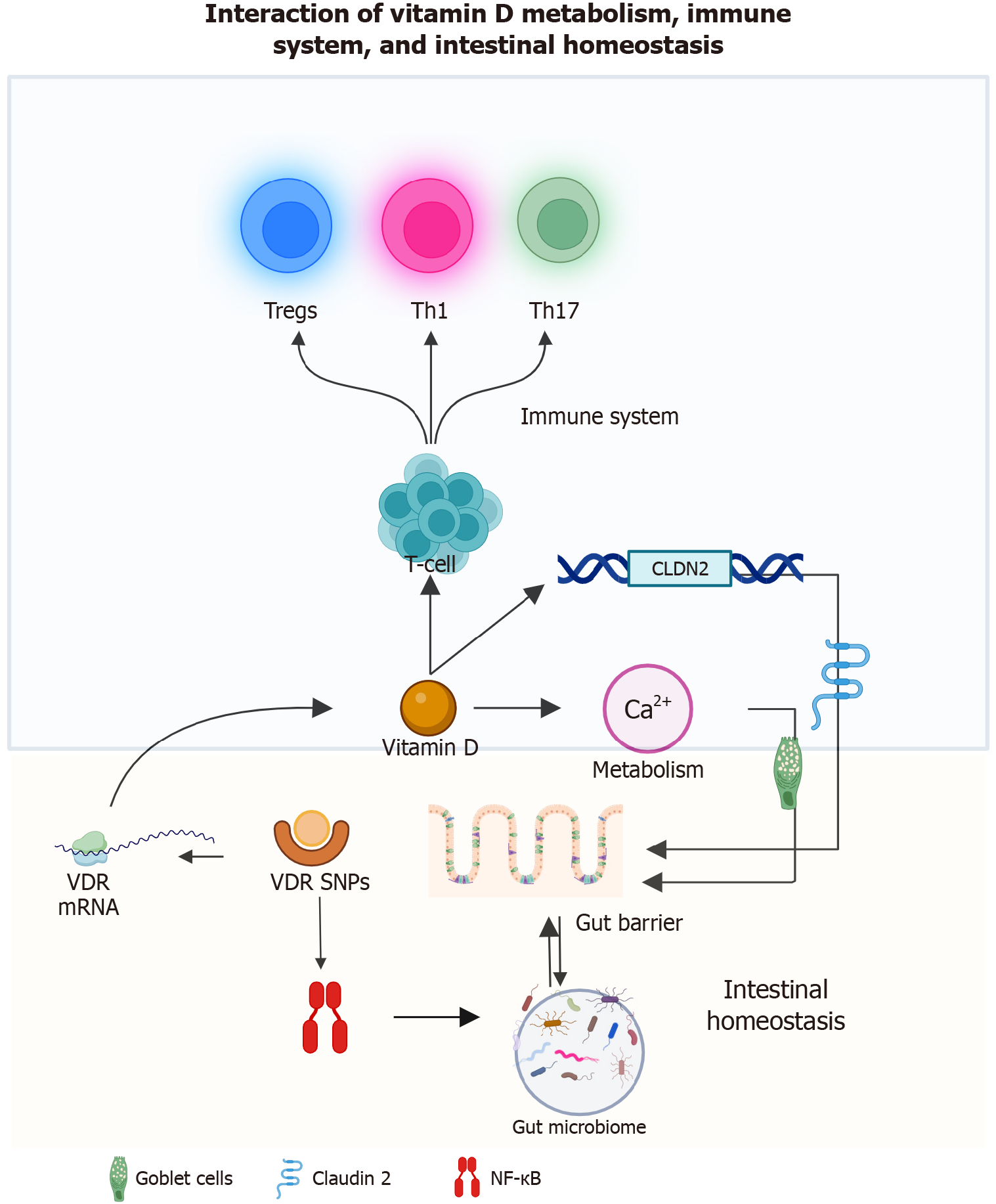
Figure 2 Schematic representation of the interplay between vitamin D metabolism, immune regulation, and intestinal homeostasis.
Vitamin D modulates T cell differentiation (regulatory T cell, T helper 1, and T helper 17), regulates calcium metabolism, and influences gut microbiota composition. Vitamin D receptor (VDR)-mediated signaling controls the expression of tight junction proteins, such as claudin-2, and stimulates mucus production by goblet cells, thereby promoting intestinal barrier integrity. Genetic polymorphisms in the VDR (SNPs) may disrupt these pathways, increasing intestinal permeability and favoring inflammatory responses. This figure was created by the authors using BioRender (Supplementary material). Tregs: Regulatory T cells; Th1: T helper 1; Th17: T helper 17; CLDN2: Claudin-2; VDR: Vitamin D receptor; SNPs: Single-nucleotide polymorphisms; NF-кB: Nuclear factor kappa B.
- Citation: Costa BG, Yoshihara RNY, Spiller AL, Castelhano NS, Santos A, Baima JP, Imbrizi M, De Freitas MB, Magro DO, Sassaki LY. Vitamin D, vitamin D receptor gene polymorphisms, and inflammatory bowel disease outcomes: From molecular mechanisms to clinical application. World J Gastroenterol 2026; 32(15): 115533
- URL: https://www.wjgnet.com/1007-9327/full/v32/i15/115533.htm
- DOI: https://dx.doi.org/10.3748/wjg.v32.i15.115533