
















©The Author(s) 2025.
World J Gastroenterol. Dec 28, 2025; 31(48): 115244
Published online Dec 28, 2025. doi: 10.3748/wjg.v31.i48.115244
Published online Dec 28, 2025. doi: 10.3748/wjg.v31.i48.115244
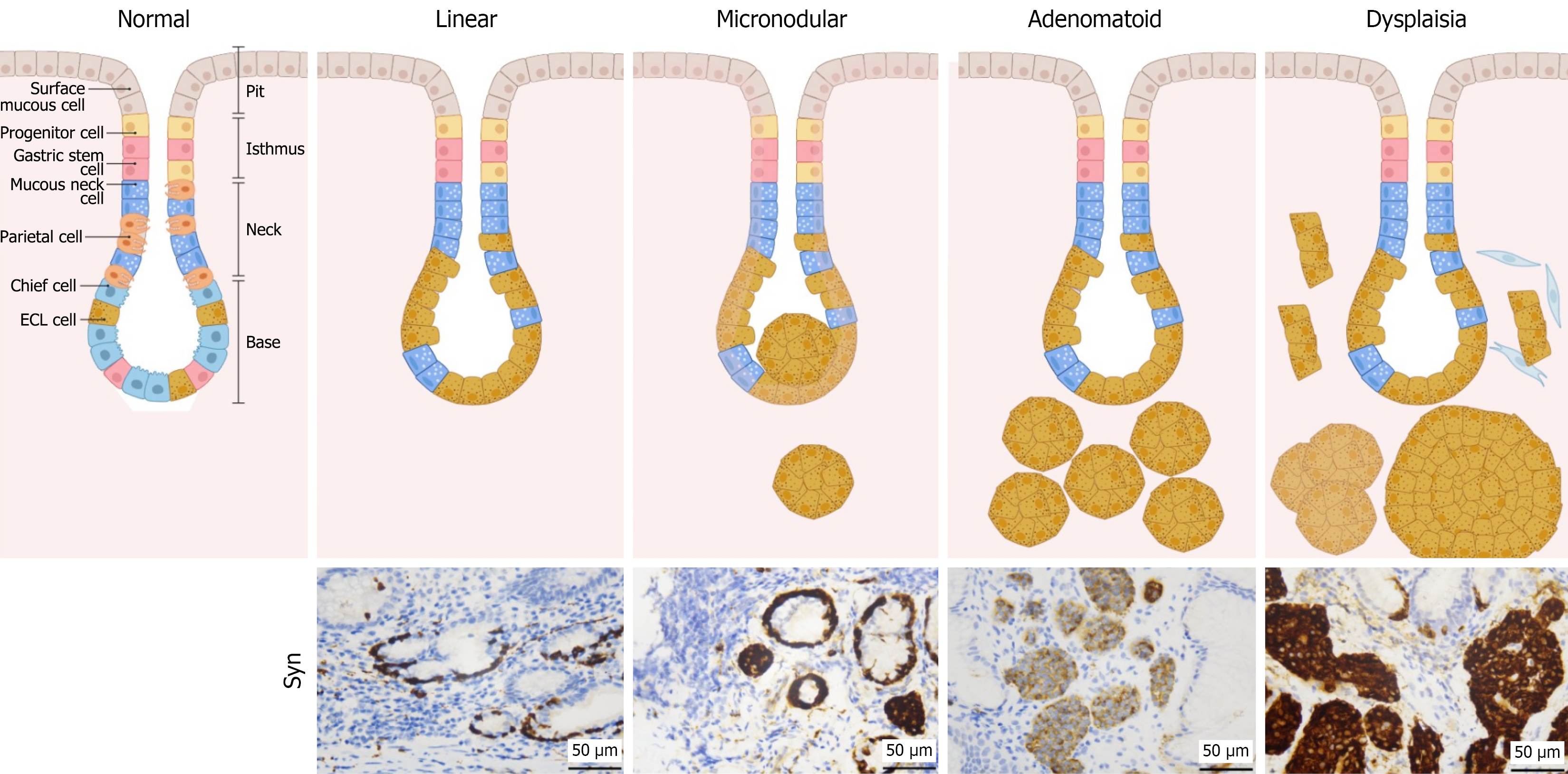
Figure 1 The histopathologic spectrum of enterochromaffin-like cell proliferation in autoimmune gastritis.
The figure illustrates the sequential, gastrin-driven progression from normal gastric mucosa to high-risk dysplastic precursor lesions using schematic representations (top row) and corresponding synaptophysin immunohistochemistry (bottom row). Beginning with the normal state of scattered, single enterochromaffin-like cells in the glandular base, the earliest proliferative change is linear hyperplasia, characterized by chains of five or more cells. This progresses to micronodular hyperplasia, where small, cohesive clusters (< 150 μm) form, which then advance to adenomatoid hyperplasia through the coalescence of multiple micronodules in the deep lamina propria. The sequence culminates in dysplasia, the immediate precursor to neoplasia, identified by enlarged, fused, and architecturally complex nodules with micro-infiltrative patterns that efface the normal glandular structure; this stage can be accompanied by the formation of new stroma (depicted in light blue). All images in the bottom row are stained for synaptophysin (brown). All scale bars represent 50 μm. Syn: Synaptophysin; ECL: Enterochromaffin-like.
- Citation: Wang CL, Zeng M, Luo Y. Unmasking the high-risk phenotype in autoimmune gastritis: A pathologist’s roadmap for the clinician. World J Gastroenterol 2025; 31(48): 115244
- URL: https://www.wjgnet.com/1007-9327/full/v31/i48/115244.htm
- DOI: https://dx.doi.org/10.3748/wjg.v31.i48.115244