
















©The Author(s) 2025.
World J Gastroenterol. Oct 28, 2025; 31(40): 110932
Published online Oct 28, 2025. doi: 10.3748/wjg.v31.i40.110932
Published online Oct 28, 2025. doi: 10.3748/wjg.v31.i40.110932
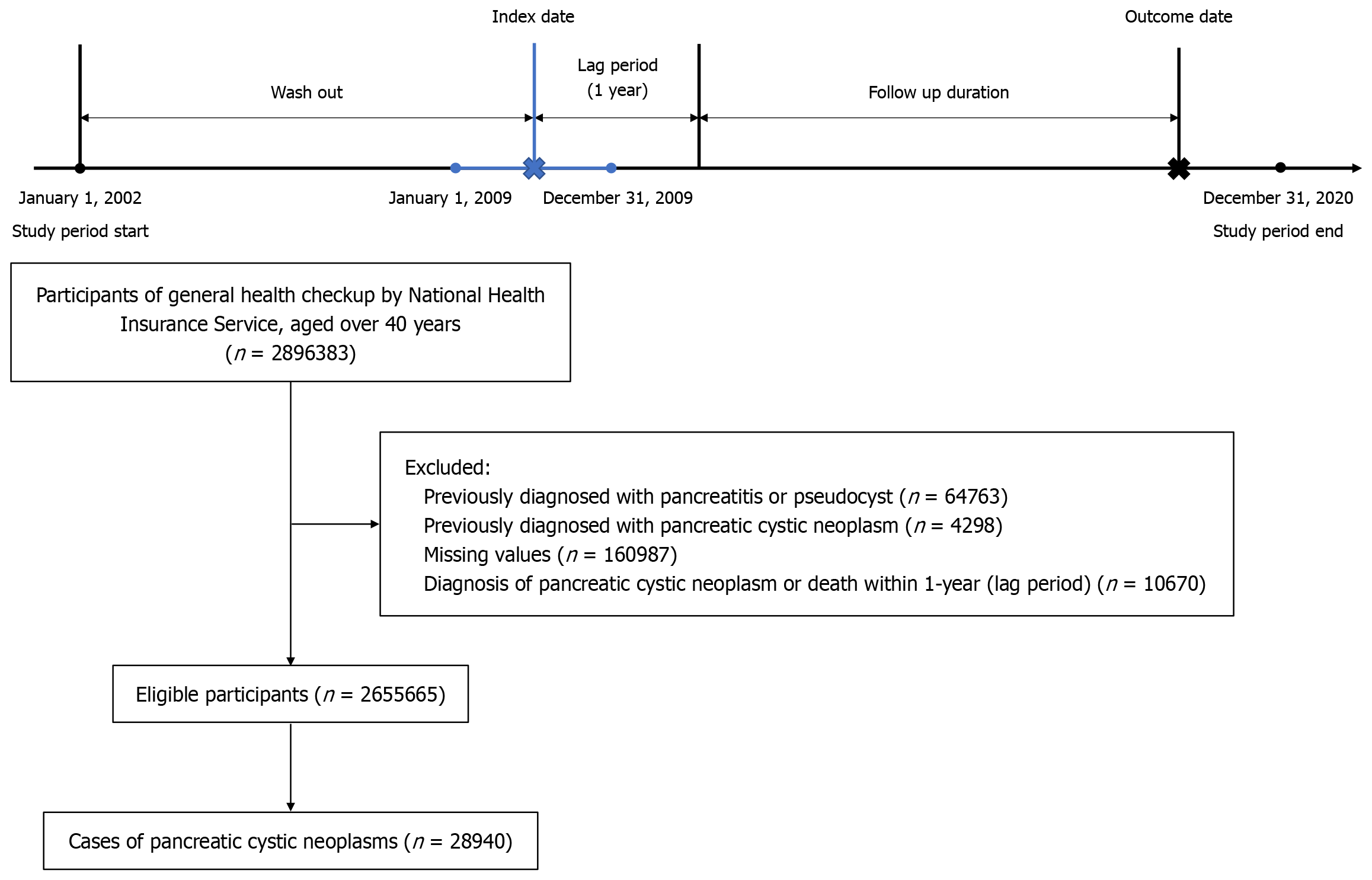
Figure 1 Study population.
Participants underwent general health checkups in 2009 (index period), and a one-year lag period was applied. The follow-up period was until December 31, 2020. Among the 2896383 participants aged 40 years or older, those with a history of pancreatitis or pseudocyst (n = 64763), or a previous diagnosis of pancreatic cystic neoplasm (n = 4298), those with missing data (n = 160987), or those who were diagnosed with pancreatic cystic neoplasm or died within the one-year lag period (n = 10670) were excluded. The final study population consisted of 2655665 individuals, of whom 28940 developed pancreatic cystic neoplasm during the follow-up period.
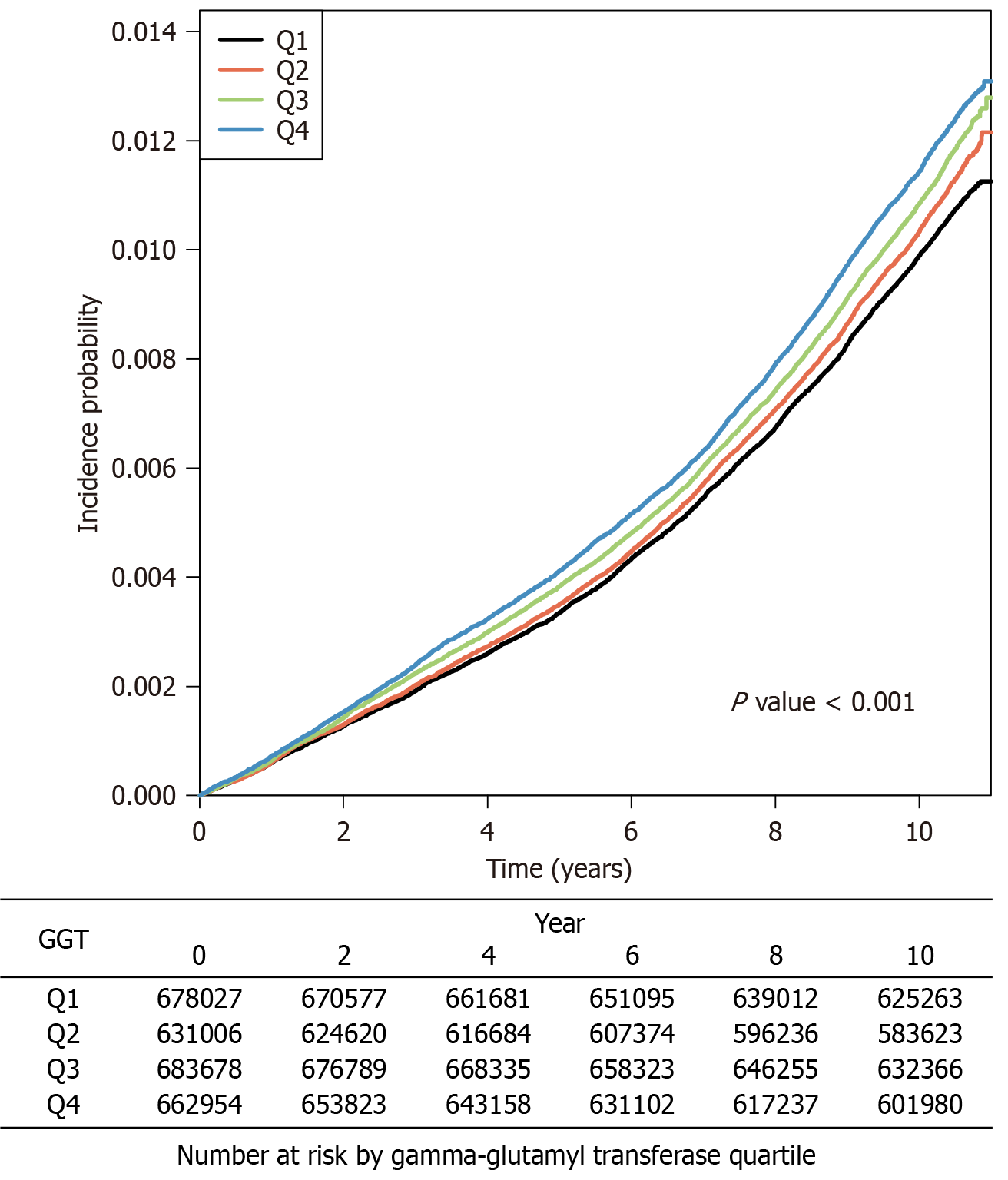
Figure 2 Incidence probability of pancreatic cystic neoplasm stratified by gamma-glutamyl transferase level.
The incidence rate of pancreatic cystic neoplasm was highest in the Q4 group and lowest in the Q1 group. This order remained consistent throughout the observation period (log-rank test P < 0.001).
- Citation: Lee MW, Park JM, Cho IR, Chung KH, Kim BS, Choi JH, Paik WH, Ryu JK, Han K, Lee SH. Serum gamma-glutamyl transferase level is associated with the risk of pancreatic cystic neoplasms: A nationwide retrospective cohort study. World J Gastroenterol 2025; 31(40): 110932
- URL: https://www.wjgnet.com/1007-9327/full/v31/i40/110932.htm
- DOI: https://dx.doi.org/10.3748/wjg.v31.i40.110932