
















Copyright: ©Author(s) 2026.
World J Clin Cases. Jul 6, 2026; 14(19): 120750
Published online Jul 6, 2026. doi: 10.12998/wjcc.120750
Published online Jul 6, 2026. doi: 10.12998/wjcc.120750
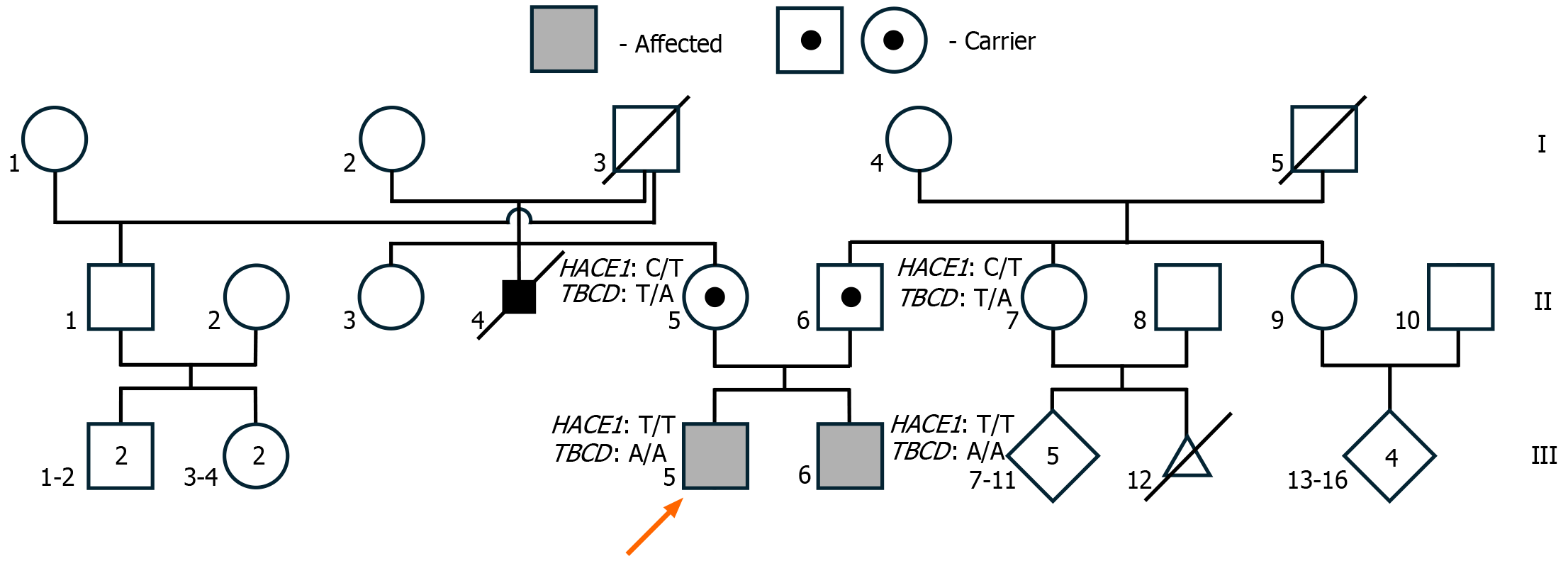
Figure 1 Pedigree of the family with HECT domain and ankyrin repeat containing E3 ubiquitin protein ligase 1 and tubulin-specific chaperone D variants.
Filled symbols indicate affected individuals homozygous for both variants. Symbols with a central dot denote clinically unaffected heterozygous carriers.
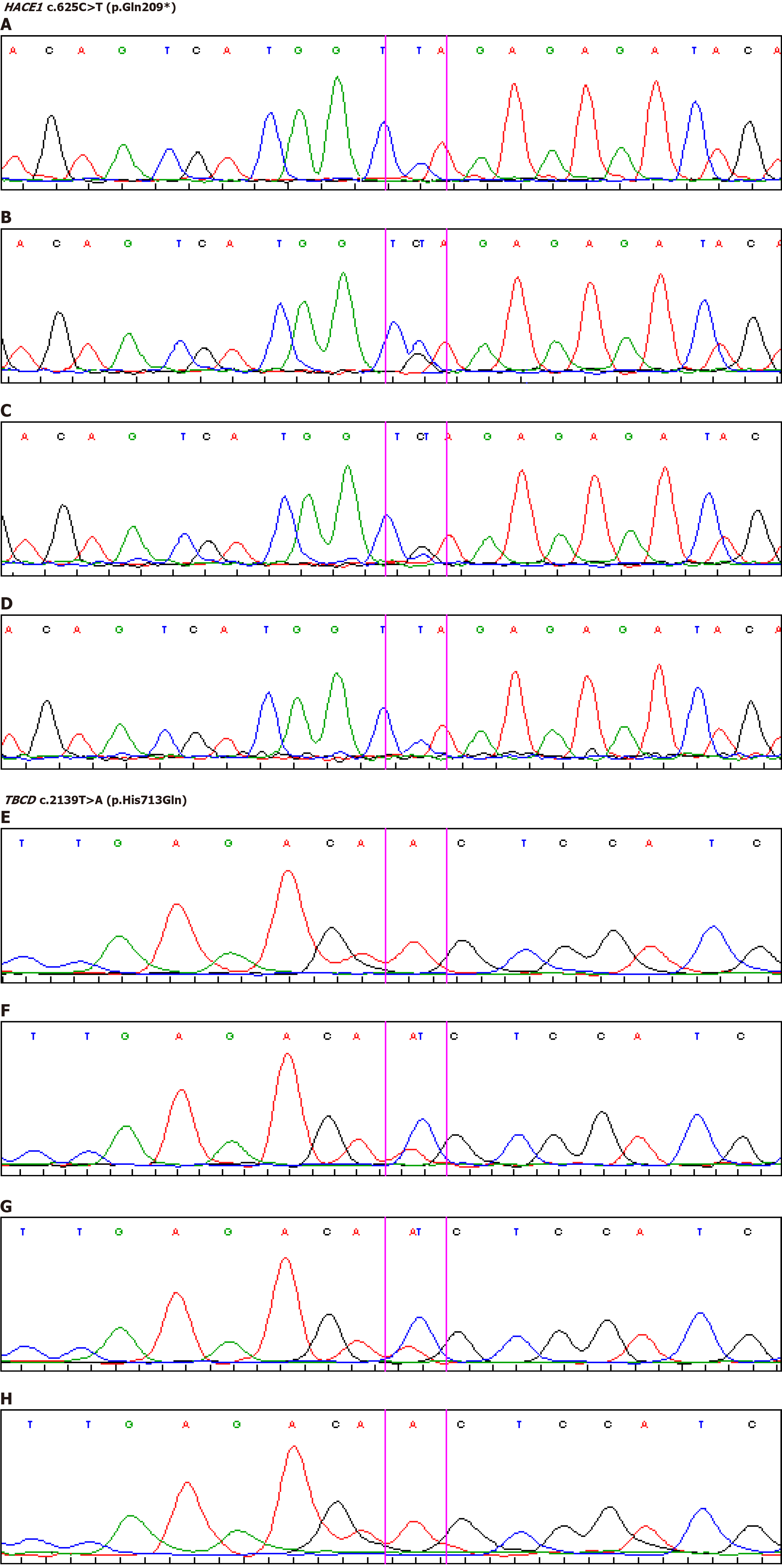
Figure 2 Sanger sequencing.
A-D: HACE1 c.625C>T (p.Gln209*) variant: Homozygous in both affected siblings (A and D) and heterozygous in both parents (B and C); E-H: TBCD c.2139T>A (p.His713Gln) variant: Homozygous in both affected siblings (E and H) and heterozygous in both parents (F and G).
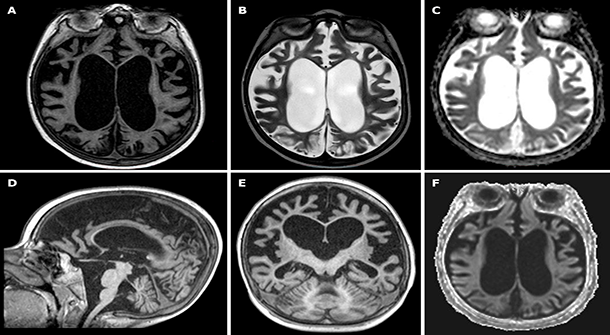
Figure 3 Brain magnetic resonance imaging of the older brother.
A: Axial T1-weighted image showing prominent cortical atrophy and compensatory enlargement of the lateral ventricles; B: Axial T2-weighted image demonstrating global volume loss and widened subarachnoid spaces; C: Axial apparent diffusion coefficient (ADC) map showing no evidence of low ADC value; D: Sagittal T1-weighted image revealing marked thinning (hypoplasia) of the corpus callosum and atrophy of the cerebellum; E: Coronal T1-weighted image highlighting the symmetrical widening of the Sylvian fissures and frontotemporal atrophy; F: Axial diffusion weighted sequence demonstrates absence of acute ischemic lesions. The findings collectively represent progressive cerebral and cerebellar atrophy in this child with spastic paraplegia and psychomotor retardation with or without seizures (SPPRS) phenotype.
- Citation: Korzun PR, Binnatova JO, Malysheva KS, Laptiev SA, Abuzova AS, Kipyatkova AO, Kuznetsova OA, Yefet EA, Malekov DA, Imyanitov EN, Suspitsin EN. Combined homozygous HACE1 and TBCD variants in two siblings with severe early-onset neurodevelopmental disorder: Two case reports. World J Clin Cases 2026; 14(19): 120750
- URL: https://www.wjgnet.com/2307-8960/full/v14/i19/120750.htm
- DOI: https://dx.doi.org/10.12998/wjcc.120750