
















Copyright: ©Author(s) 2026.
World J Nephrol. Mar 25, 2026; 15(1): 116148
Published online Mar 25, 2026. doi: 10.5527/wjn.v15.i1.116148
Published online Mar 25, 2026. doi: 10.5527/wjn.v15.i1.116148

Figure 1 Box plots showing the distribution of renal cortical stiffness across interstitial fibrosis and tubular atrophy grades.
A: Simple boxplot of average elasto in m/s by interstitial fibrosis and tubular atrophy (IF/TA) grades of fibrosis; B: Simple boxplot of average elasto in kPa by IF/TA grades of fibrosis.
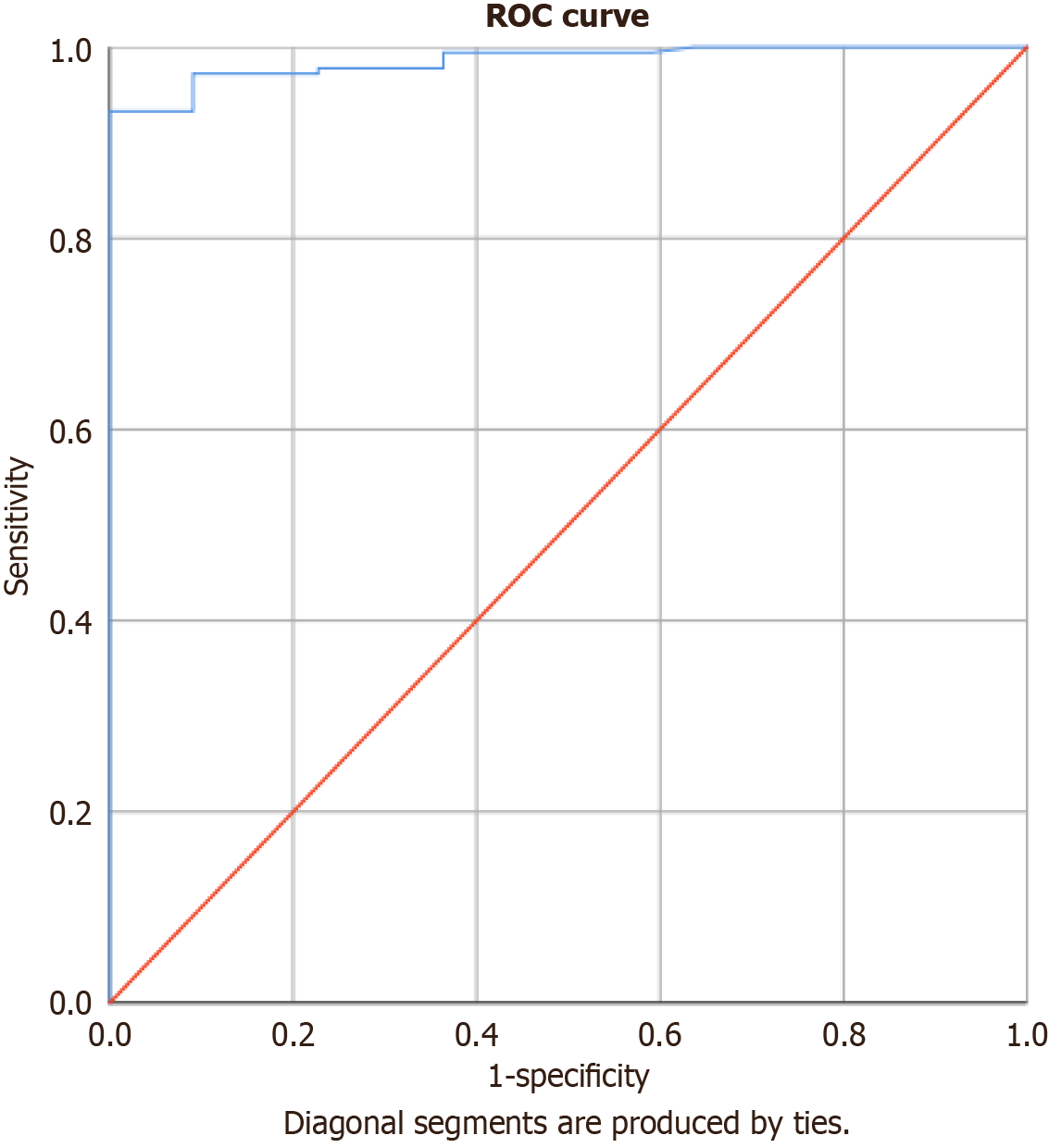
Figure 2 Receiver operating characteristic curve analysis of shear wave elastography for the detection of renal fibrosis.
ROC: Receiver operating characteristic.

Figure 3 Shear wave elastography and corresponding histopathology in two representative cases.
A-C: A case of membranoproliferative glomerulonephritis with no significant fibrosis [interstitial fibrosis and tubular atrophy (IF/TA) grade 0]. Grayscale ultrasound image of the kidney (A). Colour-coded shear wave elastography (SWE) map overlaid on the grayscale image shows a homogeneously soft cortex with a mean stiffness of 8.0 kPa (B). Histopathological section (periodic acid-schiff stain, 100 ×) confirms the absence of interstitial fibrosis (C); D-F: A case of diabetic nephropathy with marked fibrosis (IF/TA grade III). Grayscale ultrasound image (D). The SWE map displays a homogeneously hard cortex (red/orange) with a mean stiffness of 41.0 kPa (E). Histopathological section (masson trichrome stain, 100 ×) reveals severe blue-stained collagen deposition, confirming marked interstitial fibrosis (F).
- Citation: Prasad R, Verma R, Singh A, Behera MR, Yachha M, Kushwaha RS, Jain M, Agrawal V, Yadav P, Lal H. Renal elasticity assessment in patients of glomerulonephritis by shear-wave elastography and its correlation with histopathology and renal biomarkers. World J Nephrol 2026; 15(1): 116148
- URL: https://www.wjgnet.com/2220-6124/full/v15/i1/116148.htm
- DOI: https://dx.doi.org/10.5527/wjn.v15.i1.116148