
















Copyright: ©Author(s) 2026.
World J Virol. Mar 25, 2026; 15(1): 117643
Published online Mar 25, 2026. doi: 10.5501/wjv.v15.i1.117643
Published online Mar 25, 2026. doi: 10.5501/wjv.v15.i1.117643
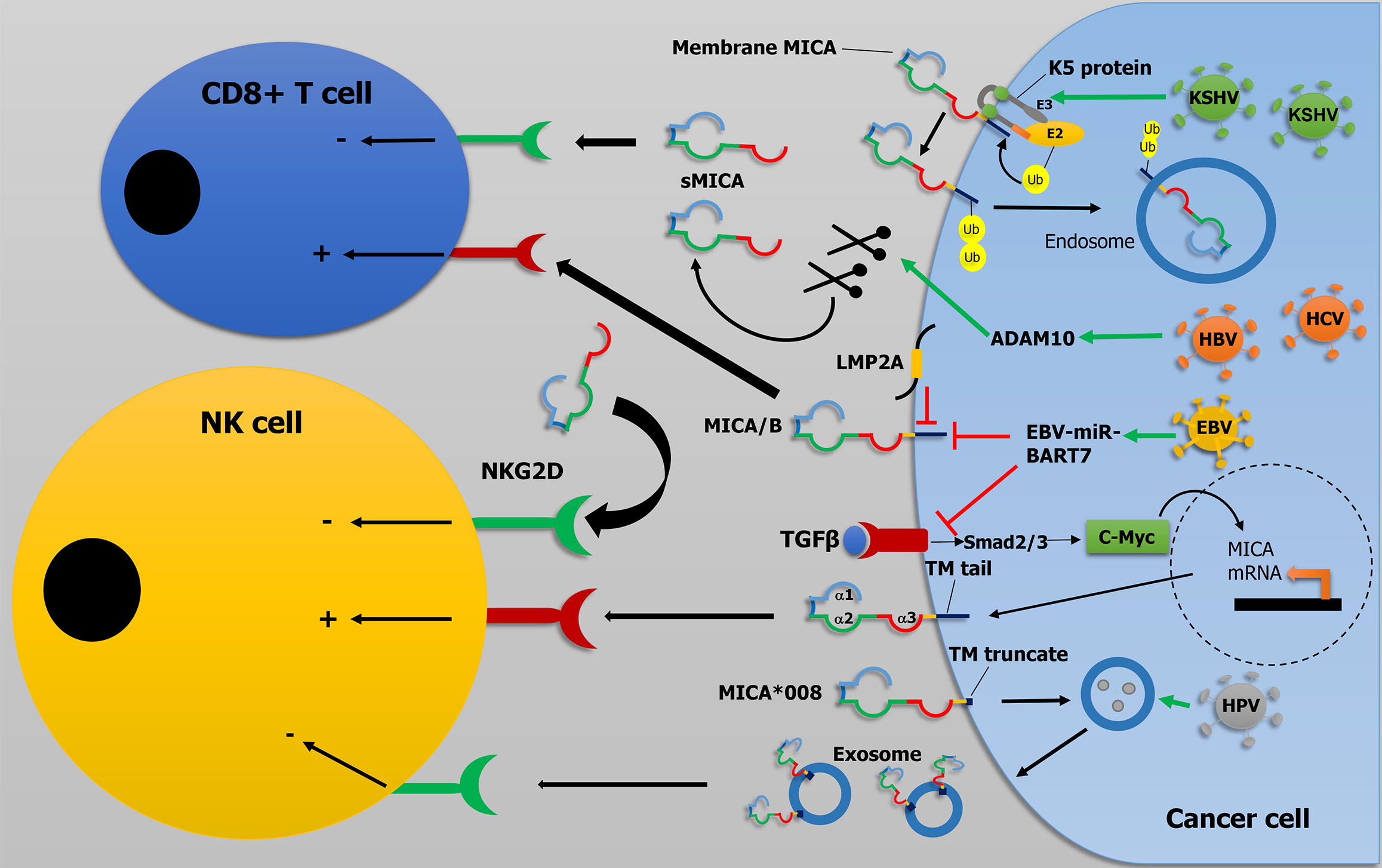
Figure 1 Schematic illustration of the evasion tactics used by oncogenic viruses to target the natural killer group 2 member D-major histocompatibility complex class I chain-related genes A/B axis and promote cancer progression.
The red natural killer group 2 member D indicates a stimulatory immune response, whereas the green natural killer group 2 member D indicates an inhibitory immune response. Virus antagonistic tactics are shown with red lines and arrows. ADAM10: A disintegrin and metalloproteinase 10; BART7: BamHI-A rightward transcript 7; C-Myc: Cellular myelocytomatosis oncogene; EBV: Epstein-Barr virus; HBV: Hepatitis B virus; HCV: Hepatitis C virus; HPV: Human papillomavirus; KSHV: Kaposi’s sarcoma-associated herpesvirus; LMP2A: Latent membrane protein 2A; MICA: Major histocompatibility complex class I chain-related genes A; NK cell: Natural killer cell; NKG2D: Natural killer group 2 member D; Smad2/3: Small mothers against decapentaplegic 2/3; sMICA: Soluble major histocompatibility complex class I chain-related genes A; TGFβ: Transforming growth factor beta; TM tail: Transmembrane tail.
- Citation: Bouayad A. Major histocompatibility complex class I chain-related A and B molecules and their potential role in virus-associated cancers. World J Virol 2026; 15(1): 117643
- URL: https://www.wjgnet.com/2220-3249/full/v15/i1/117643.htm
- DOI: https://dx.doi.org/10.5501/wjv.v15.i1.117643