
















Copyright: ©Author(s) 2026.
World J Psychiatry. Aug 19, 2026; 16(8): 118781
Published online Aug 19, 2026. doi: 10.5498/wjp.118781
Published online Aug 19, 2026. doi: 10.5498/wjp.118781
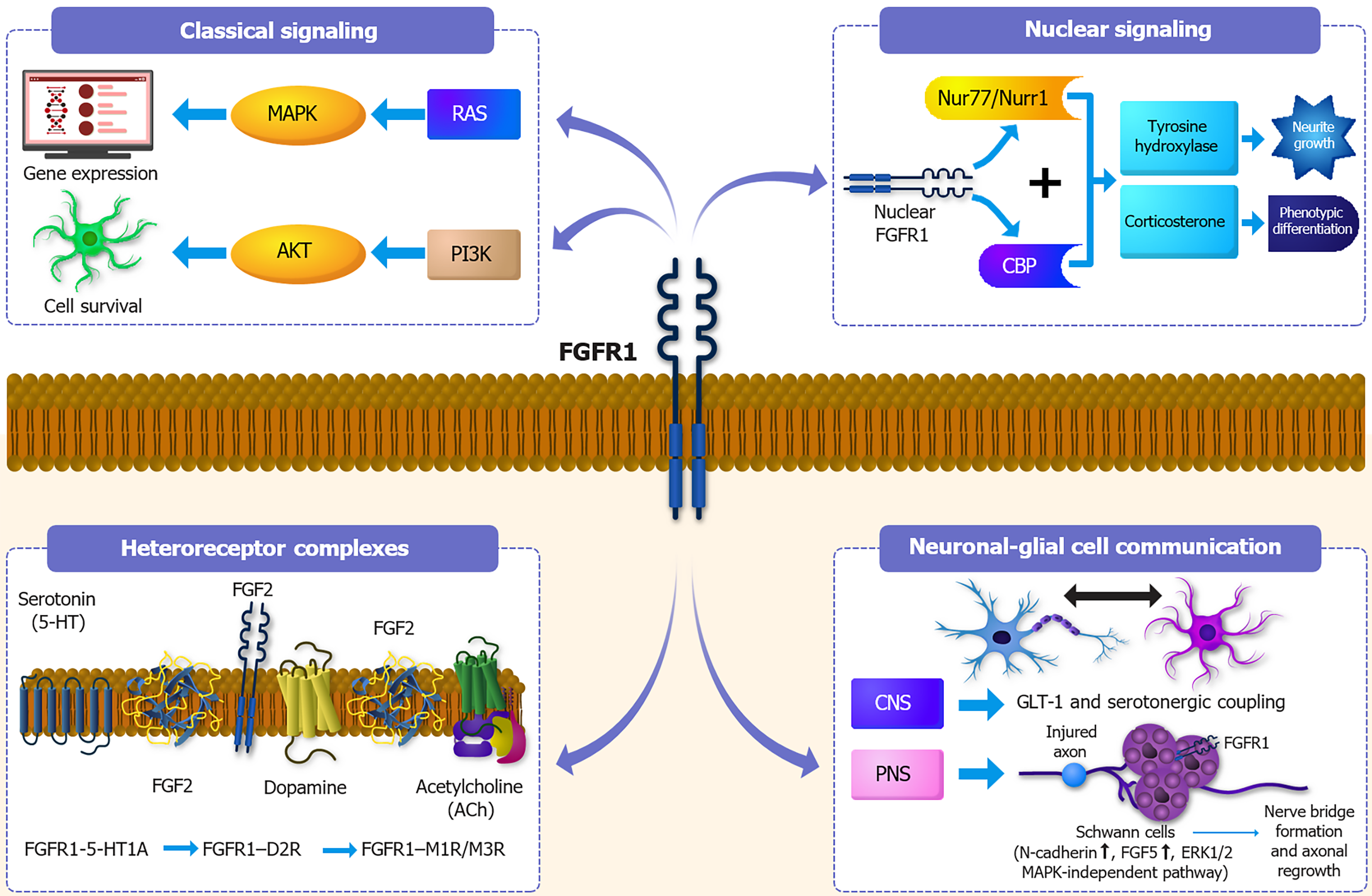
Figure 1 Fibroblast growth factor receptor 1 signaling mechanisms and their roles in neuropsychiatric disorders.
Canonical signaling pathways regulating cell survival, proliferation, and gene expression; nuclear signaling, involving fibroblast growth factor receptor 1 (FGFR1) translocation into the nucleus and interaction with transcription factors to promote expression of neurodifferentiation-related genes; formation of heteroreceptor complexes, such as FGFR1-5-hydroxytryptamine receptor 1A, FGFR1-D2 receptors, and FGFR1-M1R/M3R, enabling integration of growth-factor and neurotransmitter signals; and neuron-glia communication, covering central nervous system processes and peripheral nervous system events. Together, these mechanisms highlight the central role of FGFR1 in neurodevelopment, synaptic plasticity, and the pathophysiology of mental disorders such as depression and schizophrenia. AKT: Protein kinase B; CBP: CREB-binding protein; CNS: Central nervous system; D2R: D2 receptors; ERK1/2: Extracellular regulated kinase 1/2; FGF: Fibroblast growth factor; FGFR1: Fibroblast growth factor receptor 1; GLT-1: Glutamate transporter-1; MAPK: Mitogen-activated protein kinase; PI3K: Phosphatidylinositol 3-kinase; PNS: Peripheral nervous system; 5-HT: 5-hydroxytryptamine; 5-HT1A: 5-hydroxytryptamine receptor 1A.
- Citation: Fan F, Wang B, Chen ZL, Li WF, Han F. Fibroblast growth factor receptor 1: Bridge to understanding mental disorders. World J Psychiatry 2026; 16(8): 118781
- URL: https://www.wjgnet.com/2220-3206/full/v16/i8/118781.htm
- DOI: https://dx.doi.org/10.5498/wjp.118781