
















Copyright: ©Author(s) 2026.
World J Psychiatry. Jul 19, 2026; 16(7): 116727
Published online Jul 19, 2026. doi: 10.5498/wjp.116727
Published online Jul 19, 2026. doi: 10.5498/wjp.116727
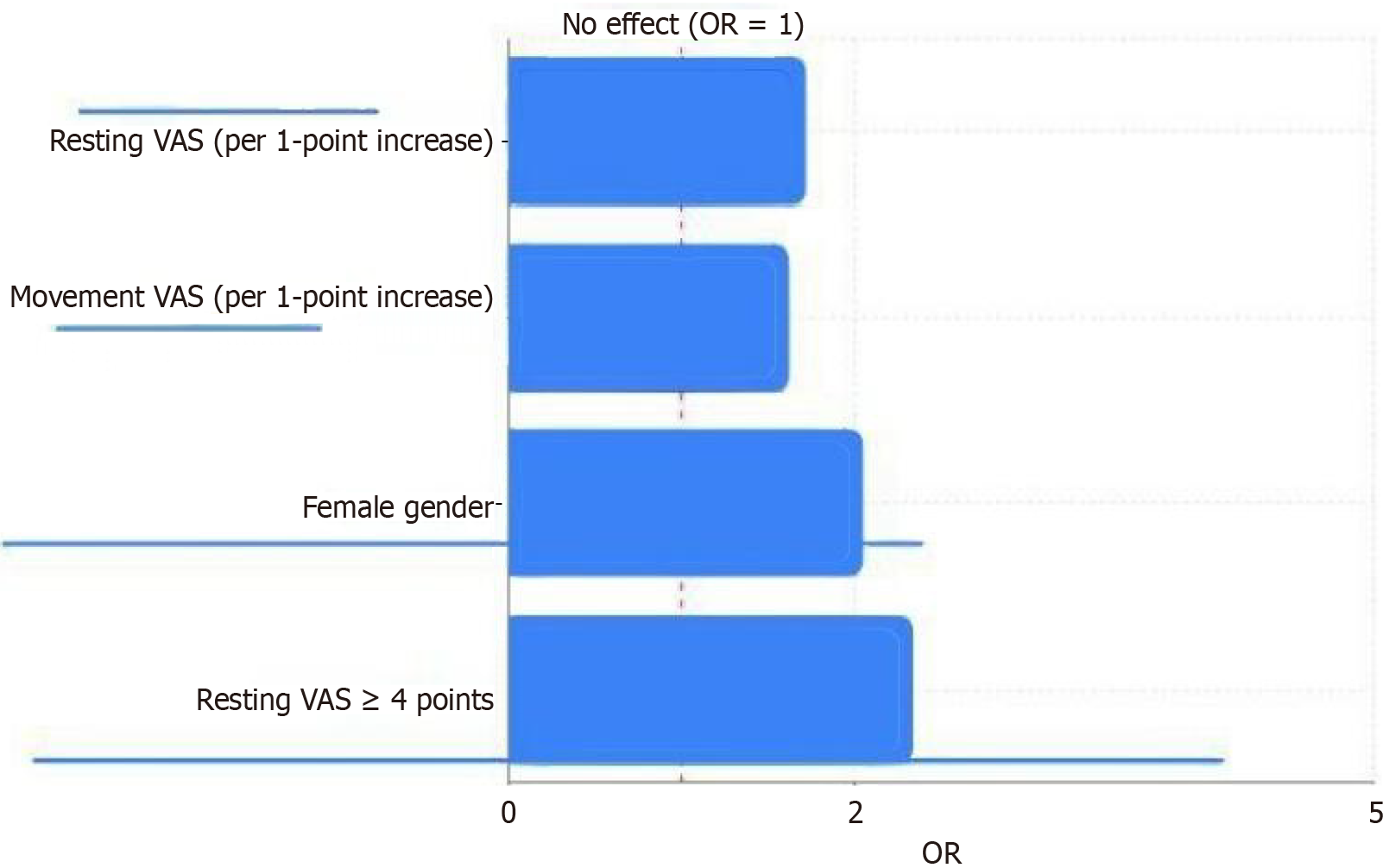
Figure 1 Forest plot of risk factors for postoperative anxiety (Self-Rating Anxiety Scale ≥ 50).
Logistic regression analysis showing odds ratios (ORs) and 95% confidence intervals (CIs) for independent risk factors associated with postoperative anxiety in thoracoscopic lung cancer surgery patients. Blue bars represent point estimates of OR values, with horizontal lines indicating 95%CIs. The red dashed vertical line marks OR = 1 (no effect). All confidence intervals exclude 1, indicating statistical significance (P < 0.05). After adjusting for confounding variables including age, gender, tumor stage, and operative time, resting Visual Analog Scale (VAS) ≥ 4 points demonstrated the highest risk (OR = 2.34, 95%CI: 1.25-4.38), followed by female gender (OR = 2.05, 95%CI: 1.17-3.59). Each 1-point increase in resting VAS and movement VAS scores increased anxiety risk by 72% and 62%, respectively. These findings highlight postoperative pain as an independent and modifiable risk factor for anxiety development. OR: Odds ratios; VAS: Visual Analog Scale.
- Citation: Liu X, Jing W, Sun XJ, Zhang L, Wang YM. Clinical mechanisms of continuous stellate ganglion block in improving postoperative anxiety and depression after thoracoscopic lung cancer surgery. World J Psychiatry 2026; 16(7): 116727
- URL: https://www.wjgnet.com/2220-3206/full/v16/i7/116727.htm
- DOI: https://dx.doi.org/10.5498/wjp.116727