
















Copyright: ©Author(s) 2026.
World J Psychiatry. Jun 19, 2026; 16(6): 119817
Published online Jun 19, 2026. doi: 10.5498/wjp.v16.i6.119817
Published online Jun 19, 2026. doi: 10.5498/wjp.v16.i6.119817
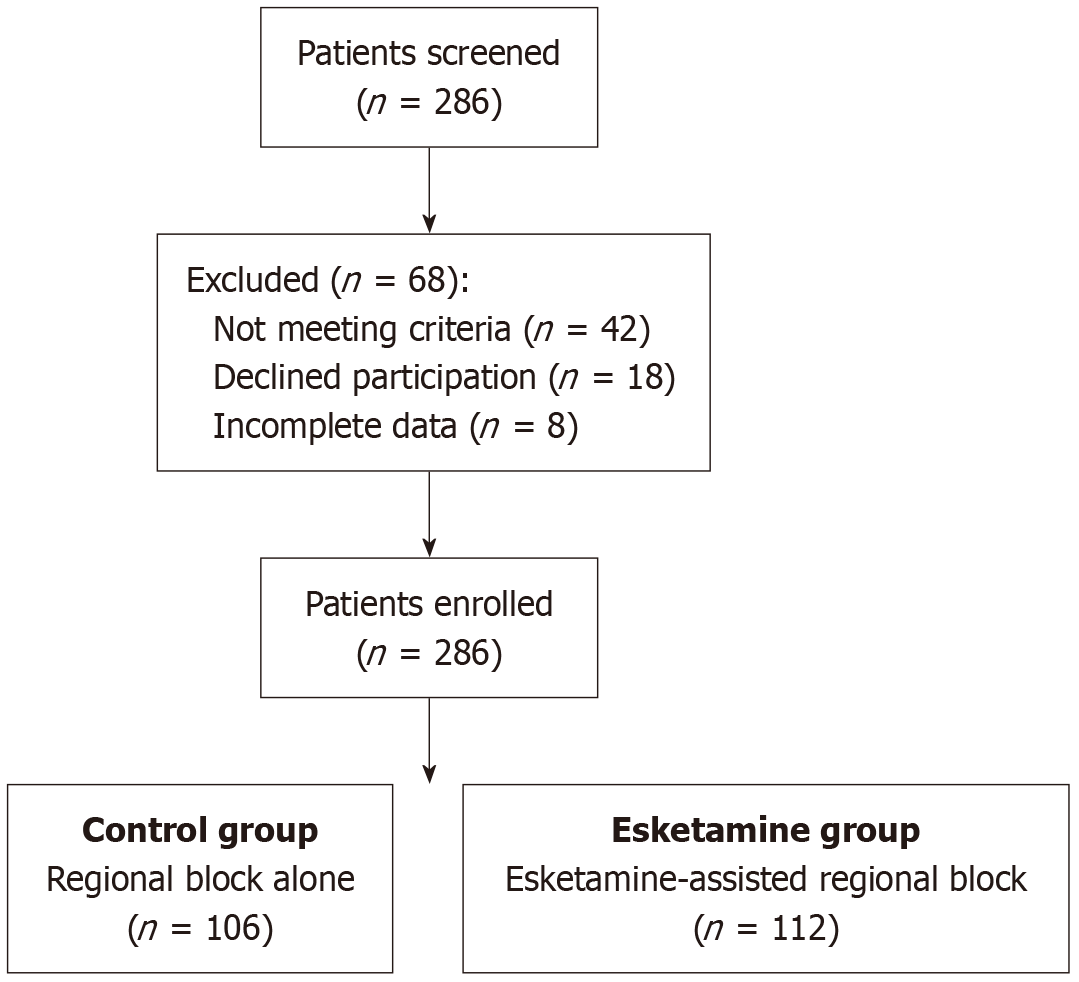
Figure 1 Patient selection flowchart.
Flowchart showing: 286 patients screened→ 68 excluded (42 not meeting criteria + 18 declined + 8 incomplete data) → 218 enrolled→ 106 in control group + 112 in esketamine group.
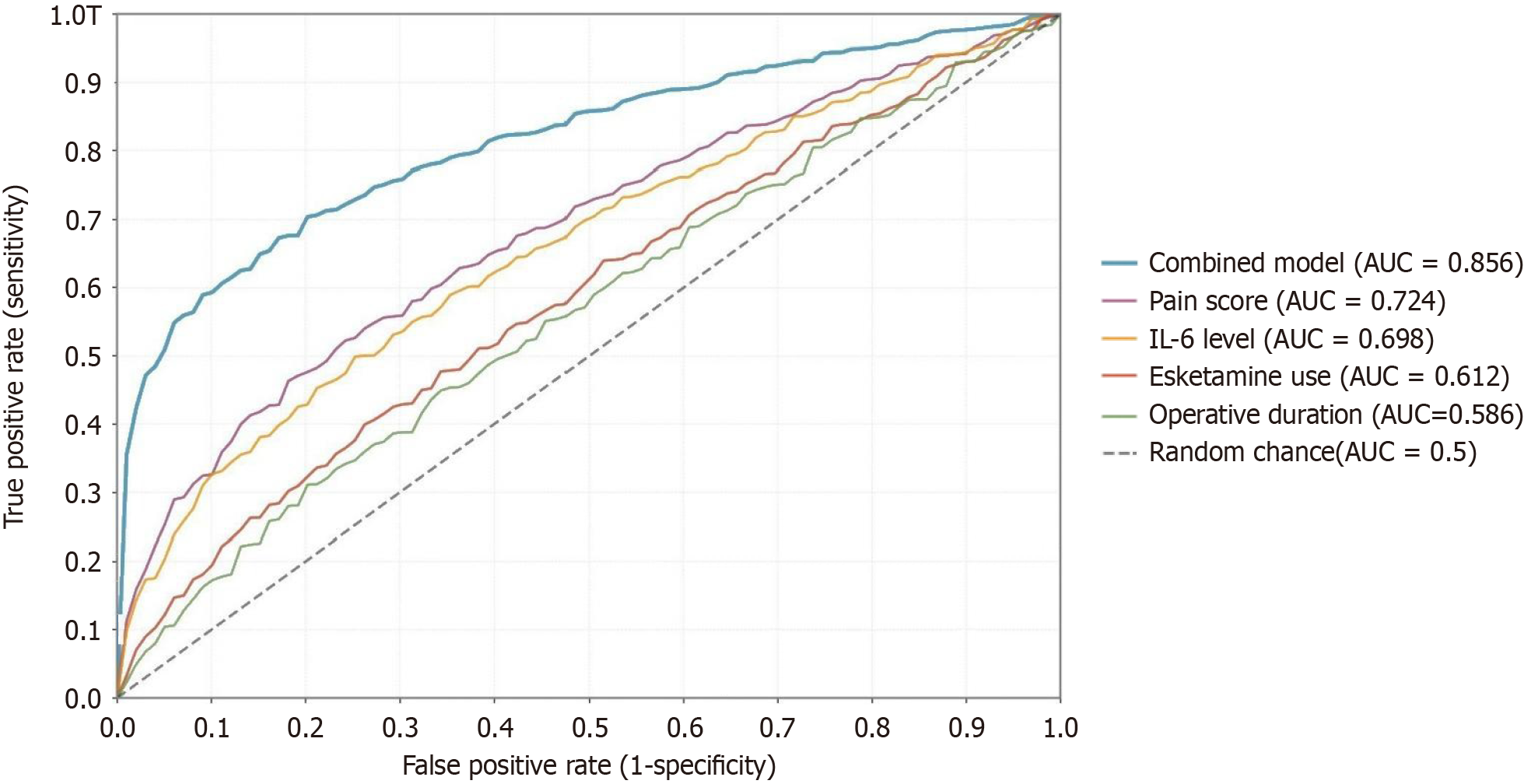
Figure 2 Receiver operating characteristic curves for predicting post-traumatic stress disorder.
Receiver operating characteristic (ROC) curve illustration: The figure shows multiple ROC curves comparing the predictive performance of individual factors (esketamine use, postoperative pain score, interleukin (IL)-6 level, operative duration) vs the combined prediction model. The combined model area under the curve (AUC = 0.856, 95%CI: 0.802-0.910) demonstrates superior discriminative ability compared to individual markers, with the curve positioned closer to the upper left corner of the plot. Individual AUCs: Esketamine use = 0.612; pain score = 0.724; IL-6 level = 0.698; operative duration = 0.586. The diagonal reference line represents random chance (AUC = 0.5). AUC: Area under the curve; IL: Interleukin.
- Citation: Chen YL, Feng TC, Zhang XM, Liu N, Yuan HM, Bian R, Yao J, Xing Z. Effect of esketamine-assisted regional block on post-traumatic stress disorder after radical lung cancer surgery: A retrospective clinical study. World J Psychiatry 2026; 16(6): 119817
- URL: https://www.wjgnet.com/2220-3206/full/v16/i6/119817.htm
- DOI: https://dx.doi.org/10.5498/wjp.v16.i6.119817