
















Copyright: ©Author(s) 2026.
World J Psychiatry. May 19, 2026; 16(5): 113866
Published online May 19, 2026. doi: 10.5498/wjp.v16.i5.113866
Published online May 19, 2026. doi: 10.5498/wjp.v16.i5.113866
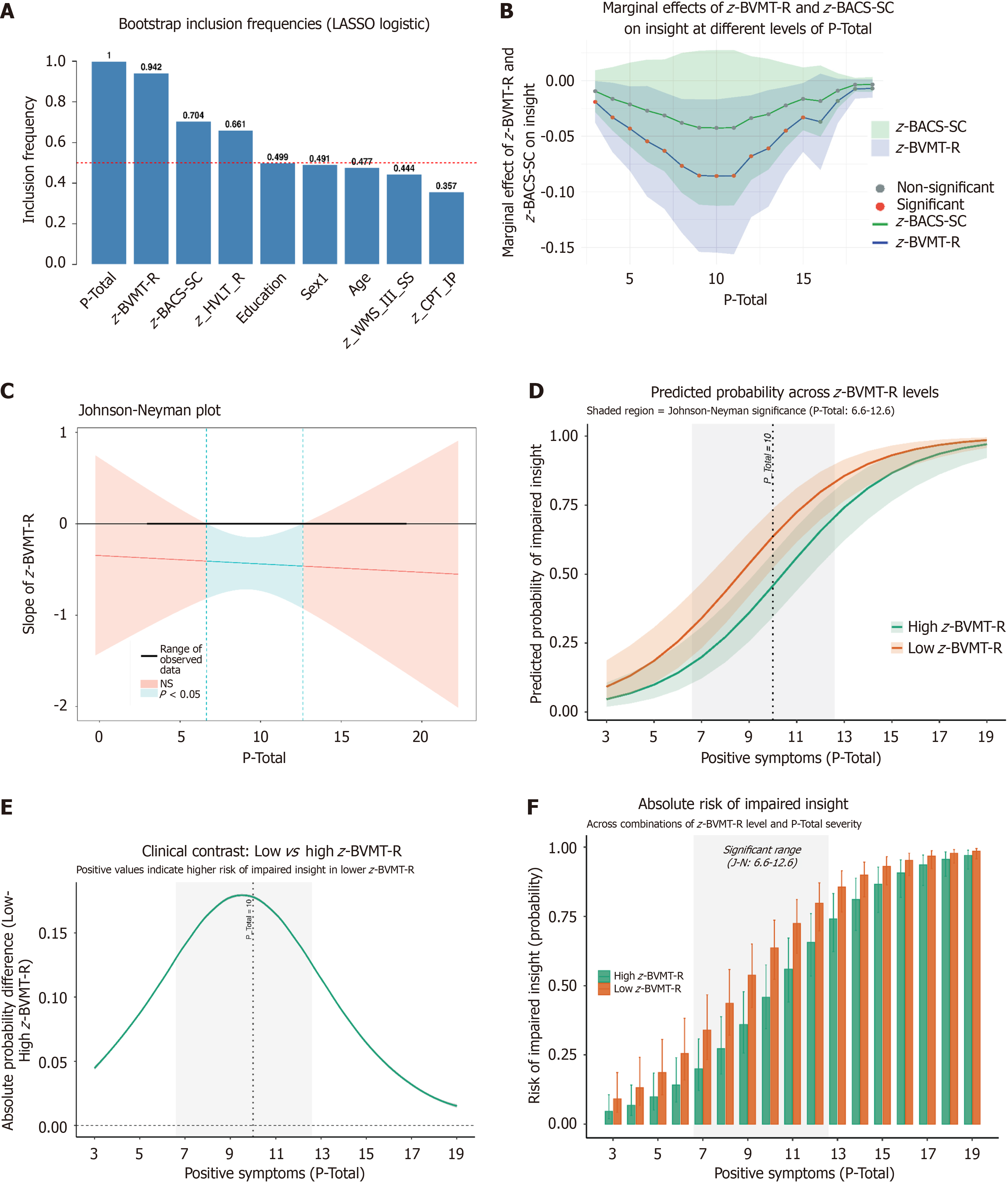
Figure 1 Logistic modeling of insight impairment: Variable selection, marginal effects, and risk estimates.
A: Least absolute shrinkage and selection operator (LASSO) logistic model shows bootstrap inclusion frequencies from the LASSO logistic regression, identifying z-score for the Brief Visuospatial Memory Test-Revised (BVMT-R) (z-BVMT-R) and z-score for the Brief Assessment of Cognition in Schizophrenia: Symbol Coding (BACS-SC) (z-BACS-SC) as the most consistently selected predictors of impaired insight; B: Marginal effects display marginal effects of z-BVMT-R and z-BACS-SC on impaired insight across levels of total score of positive symptoms on the Scale of Psychotic-Risk Syndromes (P-Total), with shaded bands representing 95% confidence intervals; C: Johnson-Neyman plot illustrating the P-Total ranges in which the effect of z-BVMT-R remains statistically significant; D: Shows predicted probabilities of impaired insight across P-Total, stratified by high vs low z-BVMT-R, with the grey region indicating the Johnson-Neyman significant range; E: Depicts the clinical contrast absolute probability differences of impaired insight between low and high z-BVMT-R across P-Total; F: Shows the absolute predicted probability of impaired insight across combinations of P-Total and z-BVMT-R groups. LASSO: Least absolute shrinkage and selection operator; z-BVMT-R: Z-score for the Brief Visuospatial Memory Test-Revised; z-BACS-SC: Z-score for the Brief Assessment of Cognition in Schizophrenia: Symbol Coding; z-HVLT-R: Z-score for the Hopkins Verbal Learning Test-Revised; z-WMS-III-SS: Z-score for the Wechsler Memory Scale-3rd Ed: Spatial Span; z-CPT-IP: Z-score for the Continuous Performance Test-Identical Pairs; P-Total: Total score of positive symptoms on the Scale of Psychotic-Risk Syndromes; NS: Not significant.
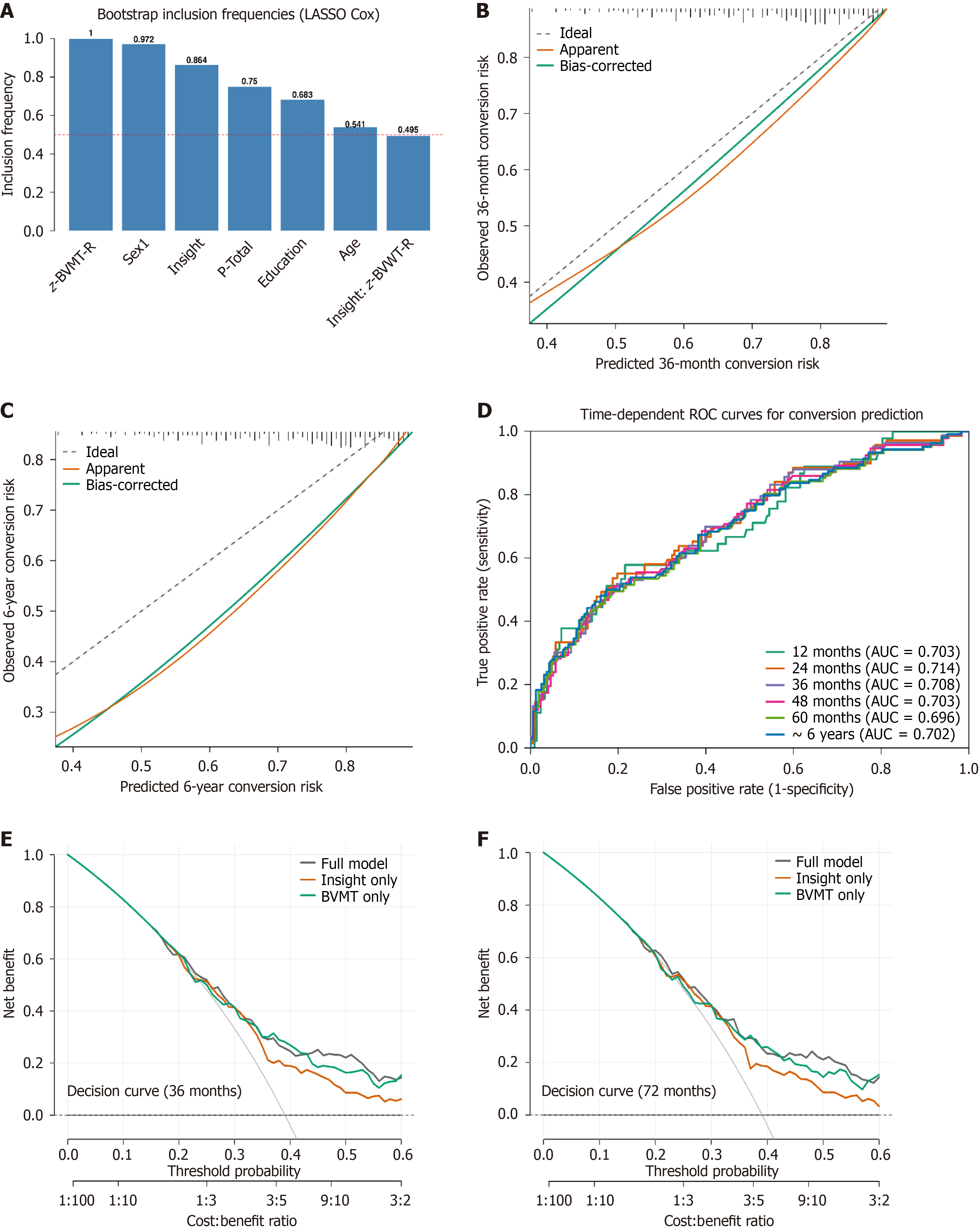
Figure 2 Performance of the Cox conversion prediction model: Variable selection, discrimination, calibration, and clinical utility.
A: Shows bootstrap inclusion frequencies from the least absolute shrinkage and selection operator Cox model; B: Presents time-dependent receiver operating characteristic curves across 12-72 months; C and D: Show calibration plots at 3 years and 6 years, respectively. The grey dashed line represents perfect calibration; the orange line shows the apparent calibration curve; the green line shows the bias-corrected curve from bootstrap resampling; E and F: Display decision curve analyses at 3 years and 6 years, respectively. The dashed horizontal line represents the “treat-none” strategy, and the light gray solid line represents the “treat-all” strategy. LASSO: Least absolute shrinkage and selection operator; z-BVMT-R: Z-score for the Brief Visuospatial Memory Test-Revised; ROC: Receiver operating characteristic; AUC: Area under the curve.
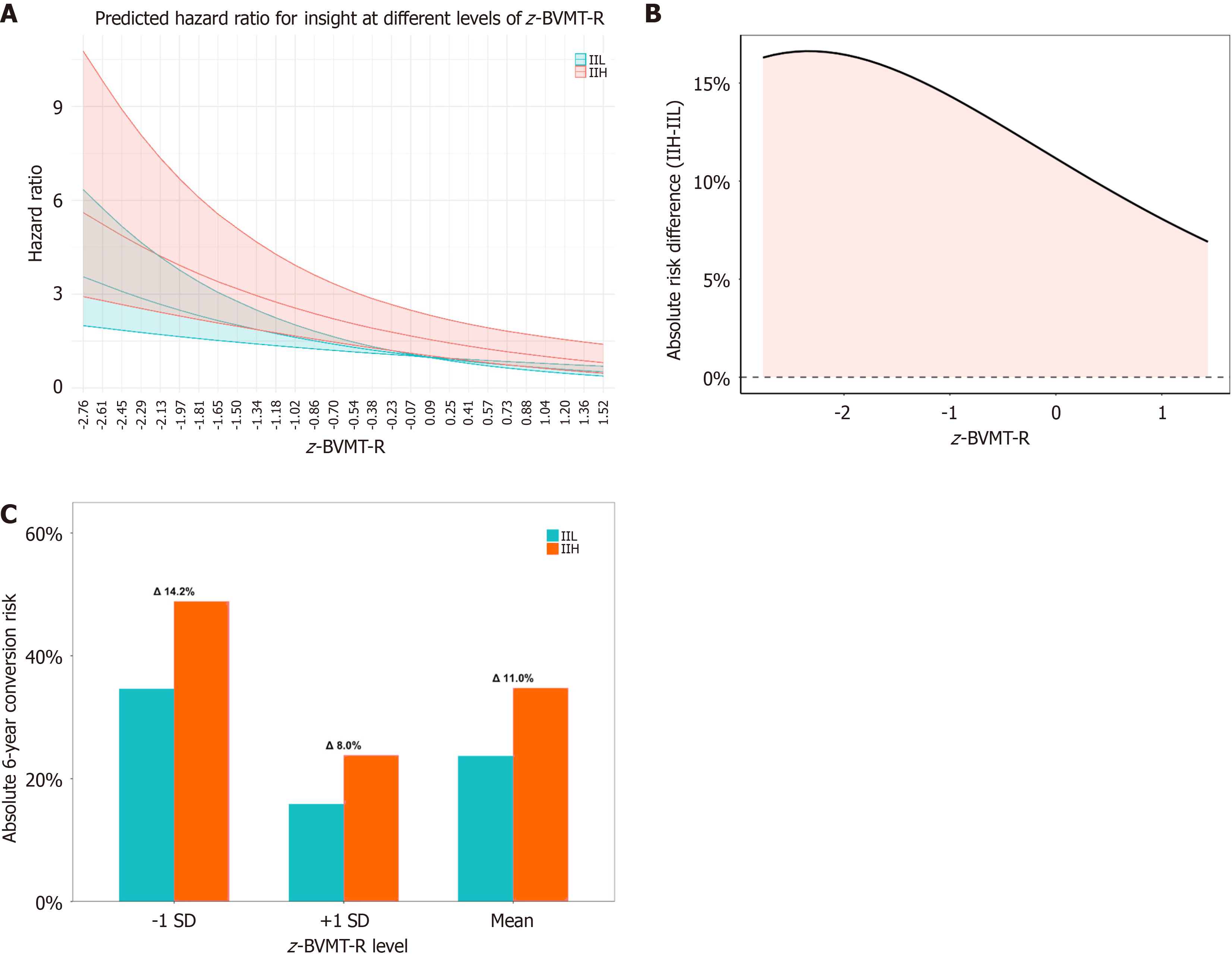
Figure 3 Predicted effects of visuospatial memory and impaired insight on conversion risk.
A: Shows predicted hazard ratios for impaired insight [high-impairment insight group (IIH) vs low-impairment insight group (IIL)] across the continuous range of z-score for the Brief Visuospatial Memory Test-Revised, based on the Cox model; B: Shows the continuous absolute 6-year conversion risk difference between IIH and IIL groups as visuospatial memory varies; C: Shows absolute 6-year risk differences between insight groups (IIL vs IIH) at representative visuospatial memory levels (-1 SD, +1 SD and mean). IIL: The 12th general psychopathology symptom item of the Positive and Negative Syndrome Scale, G12, scored as less than 3; IIH: G12 scored as 3 or higher. IIL: Low-impairment insight group; IIH: High-impairment insight group; z-BVMT-R: Z-score for the Brief Visuospatial Memory Test-Revised.
- Citation: Xu LH, Cui HR, Wei YY, Tang XC, Qian ZY, Zhang D, Zheng WS, Zhu TY, Hong XF, Zhu JJ, Hu YG, Liu X, Jiao X, Qing Y, Chen XC, Tang YY, Zhang TH, Wang JJ. Visuospatial memory modulates insight and its predictive value for 6-year psychosis risk in clinical high-risk individuals. World J Psychiatry 2026; 16(5): 113866
- URL: https://www.wjgnet.com/2220-3206/full/v16/i5/113866.htm
- DOI: https://dx.doi.org/10.5498/wjp.v16.i5.113866