
















Copyright: ©Author(s) 2026.
World J Psychiatry. Apr 19, 2026; 16(4): 117493
Published online Apr 19, 2026. doi: 10.5498/wjp.v16.i4.117493
Published online Apr 19, 2026. doi: 10.5498/wjp.v16.i4.117493
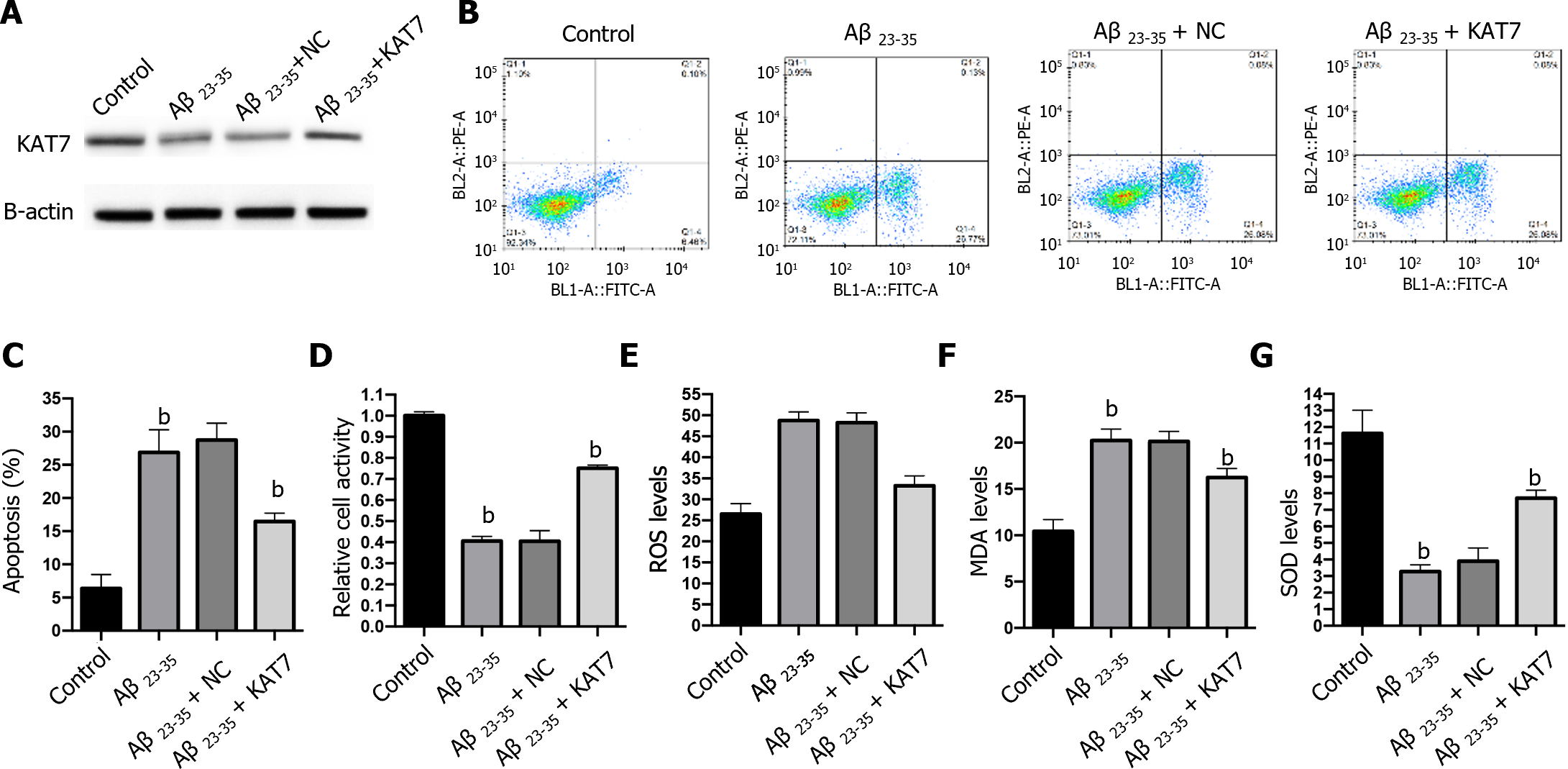
Figure 1 The original figure.
A: Western blotting assay to evaluate the expression of KAT7 in neurons; B: Apoptosis of neurons checked by flow cytometry; C: Histogram of apoptotic cells; D: Cell viability of neurons after stimulation of Aβ with or without KAT7 overexpression was measured by cell counting kit-8 assay; E-G: Evaluation of oxidative biomarkers reactive oxygen species (E), malondialdehyde (F), and SOD activity (G). bP < 0.01.
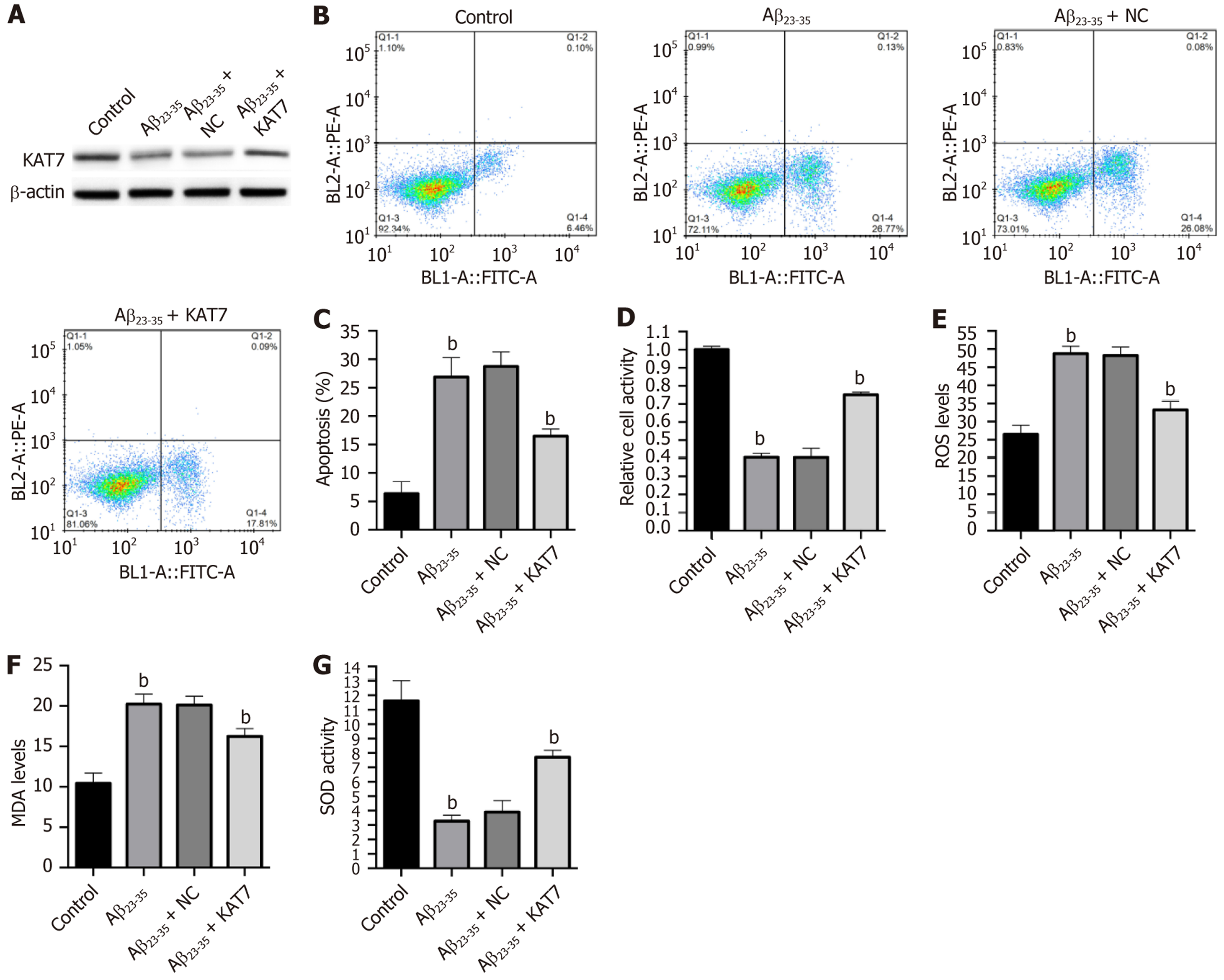
Figure 2 The corrected figure.
A: Western blotting assay to evaluate the expression of KAT7 in neurons; B: Apoptosis of neurons checked by flow cytometry; C: Histogram of apoptotic cells; D: Cell viability of neurons after stimulation of Aβ with or without KAT7 overexpression was measured by cell counting kit-8 assay; E-G: Evaluation of oxidative biomarkers reactive oxygen species (E), malondialdehyde (F), and SOD activity (G). bP < 0.01.
- Citation: Lu QS, Ma L, Jiang WJ, Wang XB, Lu M. Correction to: KAT7/HMGN1 signaling epigenetically induces tyrosine phosphorylation-regulated kinase 1A expression to ameliorate insulin resistance in Alzheimer’s disease. World J Psychiatry 2026; 16(4): 117493
- URL: https://www.wjgnet.com/2220-3206/full/v16/i4/117493.htm
- DOI: https://dx.doi.org/10.5498/wjp.v16.i4.117493