
















Copyright: ©Author(s) 2026.
World J Psychiatry. Apr 19, 2026; 16(4): 114462
Published online Apr 19, 2026. doi: 10.5498/wjp.v16.i4.114462
Published online Apr 19, 2026. doi: 10.5498/wjp.v16.i4.114462
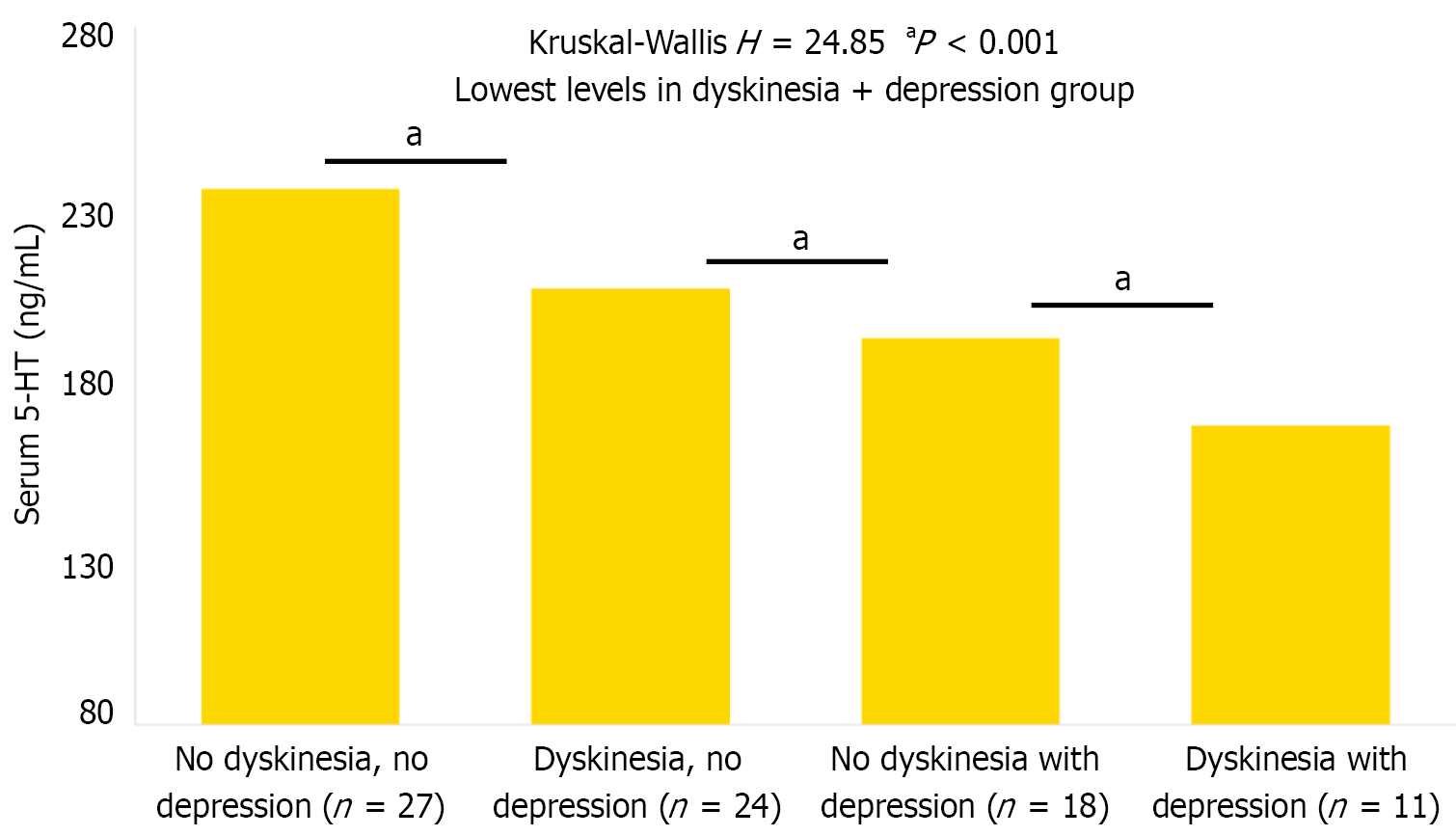
Figure 1 Combined effects of dyskinesia and depression on serum 5-hydroxytryptamine levels: Four-group analysis.
This figure demon
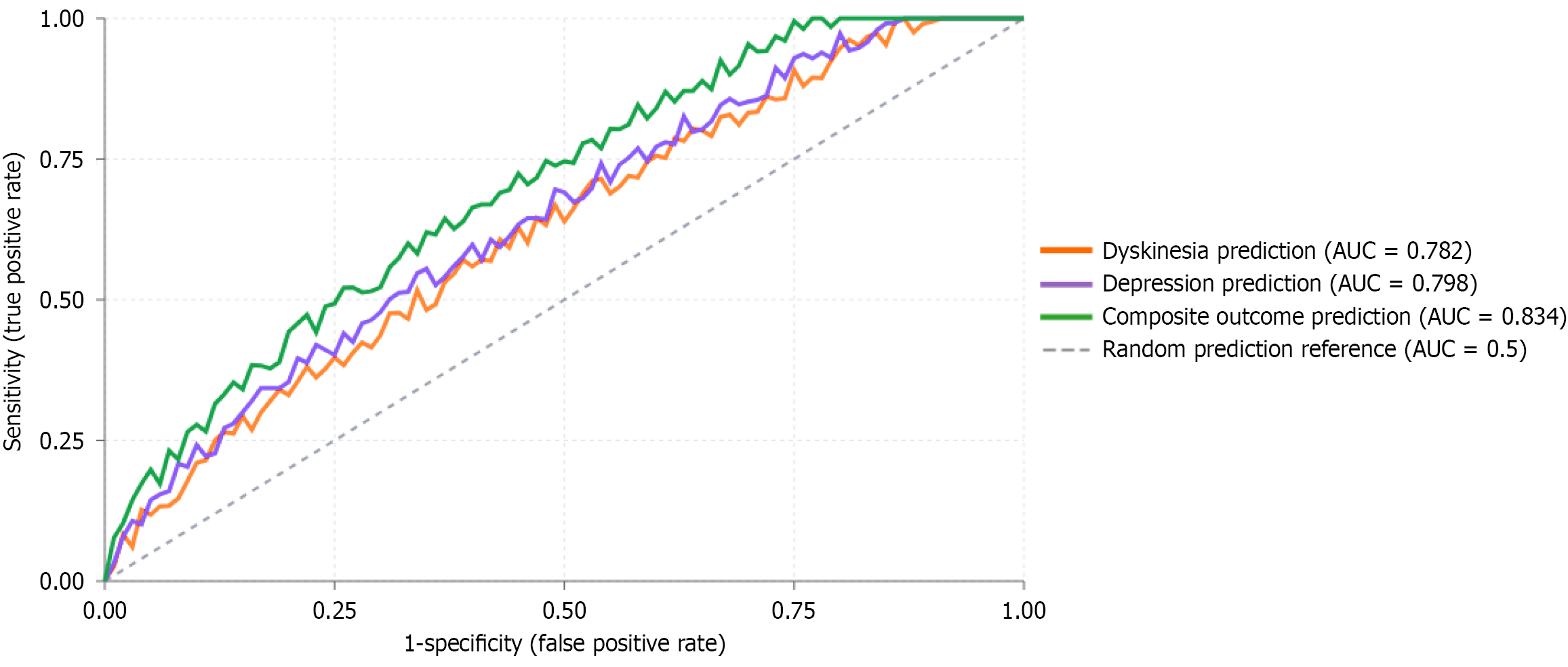
Figure 2 Receiver operating characteristic curves for predicting Parkinson’s disease complications using serum 5-hydroxytryptamine levels.
Receiver operating characteristic curves compare the diagnostic performance of serum 5-hydroxytryptamine levels for different Parkinson’s disease complications. The red curve represents dyskinesia prediction [area under the curve (AUC) = 0.782], the purple curve represents depression prediction (AUC = 0.798), and the green curve represents composite outcome prediction (AUC = 0.834). The gray dashed line indicates the random prediction reference line (AUC = 0.5). The composite outcome model shows the best diagnostic performance, suggesting that serum 5-hydroxytryptamine can serve as a comprehensive biomarker for both motor and non-motor complications in Parkinson’s disease. All AUC values are statistically significant (P < 0.001). AUC: Area under the curve.
- Citation: Chen YS, Yang SY, Lu KY, Li M, Liu T, Zhu SG, Lu HL, Hu K. Serum 5-hydroxytryptamine levels as biomarkers for motor dysfunction and depression in Parkinson’s disease patients. World J Psychiatry 2026; 16(4): 114462
- URL: https://www.wjgnet.com/2220-3206/full/v16/i4/114462.htm
- DOI: https://dx.doi.org/10.5498/wjp.v16.i4.114462