
















©Author(s) (or their employer(s)) 2026.
World J Psychiatry. Mar 19, 2026; 16(3): 114009
Published online Mar 19, 2026. doi: 10.5498/wjp.v16.i3.114009
Published online Mar 19, 2026. doi: 10.5498/wjp.v16.i3.114009
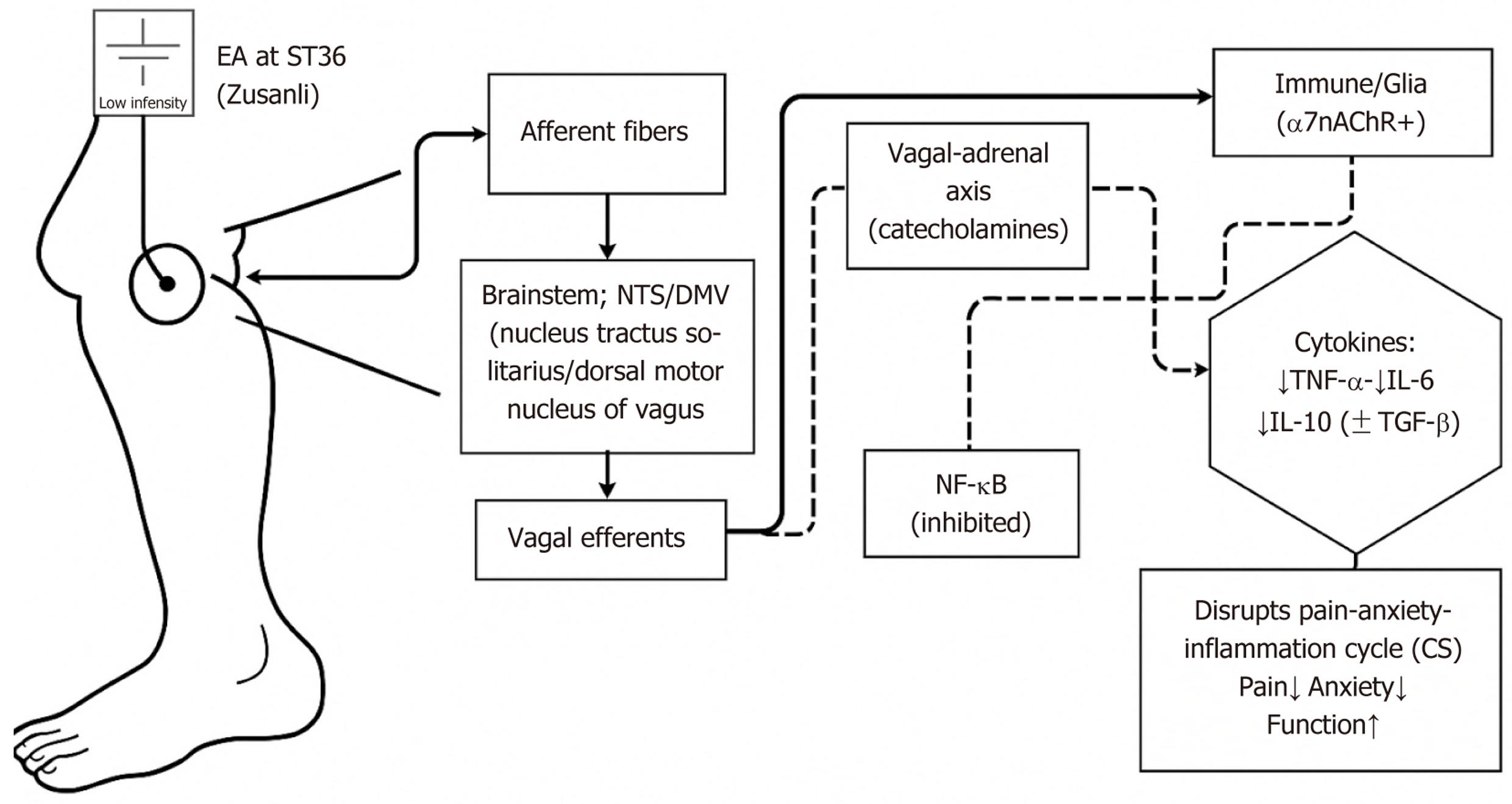
Figure 1 Proposed electroacupuncture-driven neuroimmune mechanism in cervical spondylosis with comorbid generalized anxiety disorder.
Low-intensity electroacupuncture at ST36 engages somatotopic, intensity-specific vagal circuits and α7 nicotinic acetylcholine receptors on immune/glial cells to inhibit nuclear factor kappa-B, decrease tumor necrosis factor-alpha/interleukin-6, and increase interleukin-10, while a parallel vagal-adrenal branch contributes to systemic cytokine suppression, jointly disrupting the pain-anxiety-inflammation cycle. α7nAChR: Α7 nicotinic acetylcholine receptors; EA: Electroacupuncture; NTS: Nucleus tractus solitarius; DMV: Dorsal motor nucleus of the vagus; NF-κB: Nuclear factor kappa-B; TNF: Tumor necrosis factor; IL: Interleukin; TGF: Transforming growth factor; CS: Cervical spondylosis; GAD: Generalized anxiety disorder.
- Citation: Karmakar R, Kandalkar A, Wang HC, Mukundan A. Redefining pain and mental health management in cervical spondylosis: Electroacupuncture as a neuroinflammatory modulator and multimodal therapeutic innovation. World J Psychiatry 2026; 16(3): 114009
- URL: https://www.wjgnet.com/2220-3206/full/v16/i3/114009.htm
- DOI: https://dx.doi.org/10.5498/wjp.v16.i3.114009