
















©The Author(s) 2026.
World J Psychiatry. Feb 19, 2026; 16(2): 112819
Published online Feb 19, 2026. doi: 10.5498/wjp.v16.i2.112819
Published online Feb 19, 2026. doi: 10.5498/wjp.v16.i2.112819
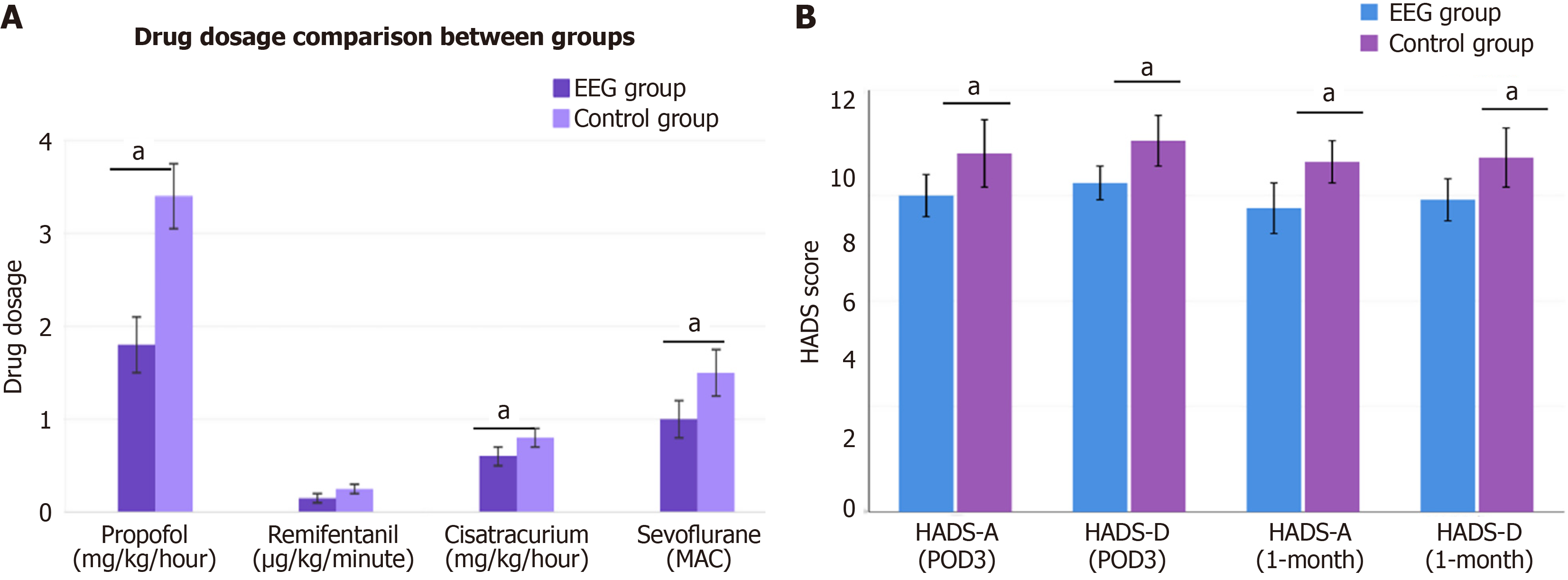
Figure 1 Effects of electroencephalogram-guided anesthesia.
A: Anesthetic drug-sparing effect of electroencephalogram (EEG)-guided anesthesia in elderly gastric cancer patients. The bar chart compares anesthetic drug dosages between EEG-guided anesthesia and conventional monitoring groups, showing consistently lower drug requirements in the EEG group across all four measured anesthetics (propofol, remifentanil, cisatracurium, and sevoflurane). Statistical analysis revealed significantly reduced dosage needs (P < 0.05) in the EEG-monitored patients for all anesthetic agents, demonstrating the drug-sparing effect of EEG-guided individualized anesthesia in elderly gastric cancer patients with preoperative sleep disorders, aP < 0.05; B: Effects of EEG-guided anesthesia on postoperative anxiety and depression scores in elderly gastric cancer patients with sleep disorders. The bar chart illustrates significantly lower postoperative anxiety and depression scores in the EEG-guided anesthesia group compared to the control group across all assessment timepoints, with consistent improvements in both Hospital Anxiety and Depression Scale (HADS)-A and HADS-D subscales. Statistical analysis reveals highly significant differences (P < 0.05) between groups at both postoperative day 3 and 1-month follow-up, demonstrating that EEG-guided individualized anesthesia provides sustained psychological benefits for elderly gastric cancer patients with preoperative sleep disorders, aP < 0.05. EEG: Electroencephalogram; HADS: Hospital Anxiety and Depression Scale; MAC: Minimum alveolar concentration; POD3: Postoperative day 3.
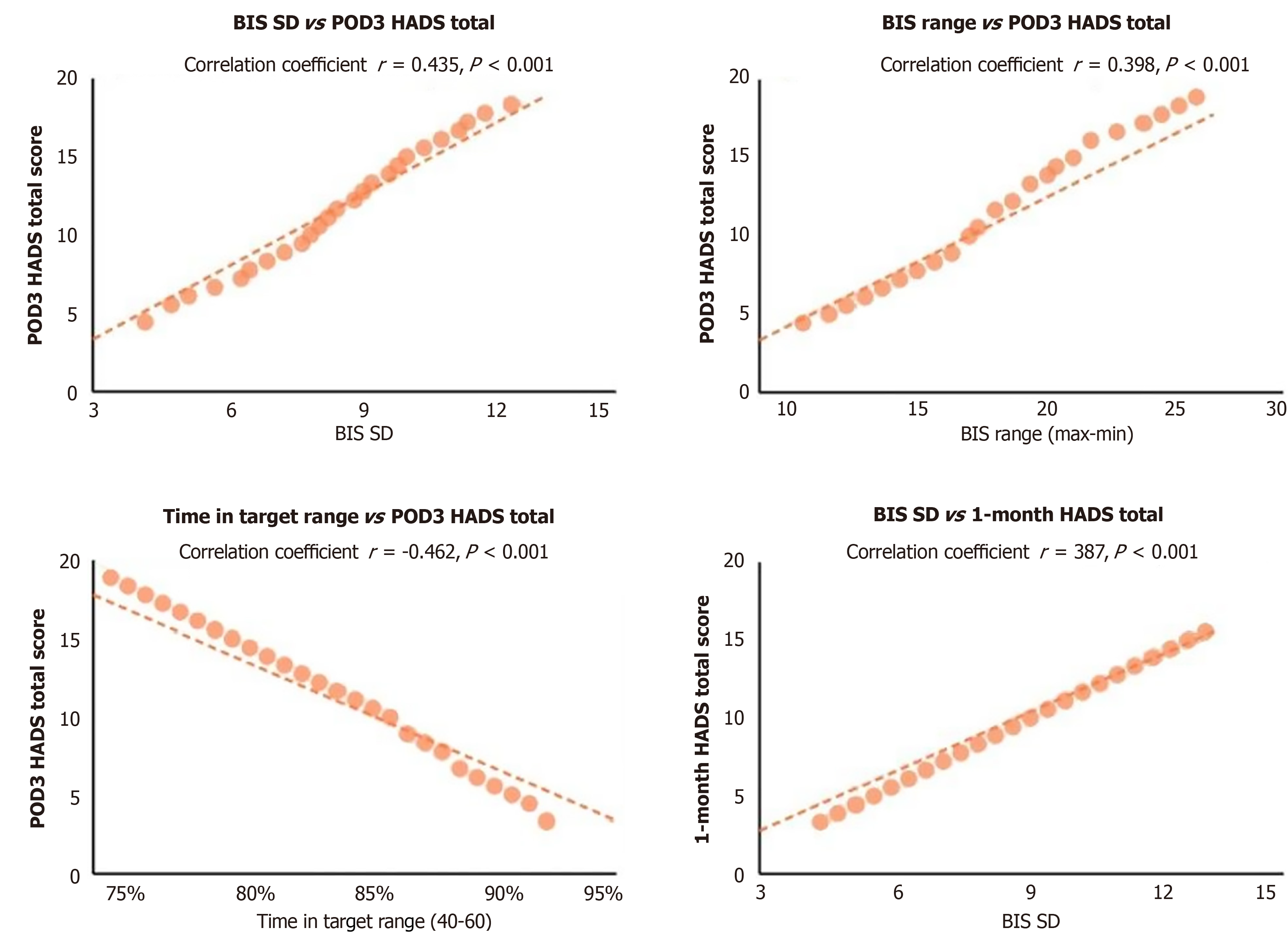
Figure 2 Correlations between intraoperative Bispectral Index stability metrics and postoperative anxiety and depression scores in elderly gastric cancer patients.
The scatter plots demonstrate significant correlations between Bispectral Index (BIS) stability parameters and postoperative psychiatric outcomes, with BIS variability measures (standard deviation and range) showing strong positive correlations with anxiety and depression scores, while time spent in the target range (40-60) demonstrates a strong negative correlation. These findings suggest that the stability of anesthesia depth during surgery, rather than absolute BIS values, is a critical factor influencing postoperative mental health outcomes in elderly gastric cancer patients with preoperative sleep disorders, with greater BIS stability associated with fewer psychiatric symptoms both at postoperative day 3 and at one month follow-up. BIS: Bispectral Index; HADS: Hospital Anxiety and Depression Scale; POD3: Postoperative day 3.
- Citation: Zhang XM, Yuan L, Chen YL, Shuai SC, Ye XM, Zhao JB. Electroencephalogram-guided anesthesia and postoperative anxiety and depression in elderly gastric cancer patients with sleep disorders. World J Psychiatry 2026; 16(2): 112819
- URL: https://www.wjgnet.com/2220-3206/full/v16/i2/112819.htm
- DOI: https://dx.doi.org/10.5498/wjp.v16.i2.112819