
















©The Author(s) 2026.
World J Psychiatry. Jan 19, 2026; 16(1): 113064
Published online Jan 19, 2026. doi: 10.5498/wjp.v16.i1.113064
Published online Jan 19, 2026. doi: 10.5498/wjp.v16.i1.113064

Figure 1 Brain regions showing differences among the healthy control, obesity, major depressive disorder, and comorbid major dep
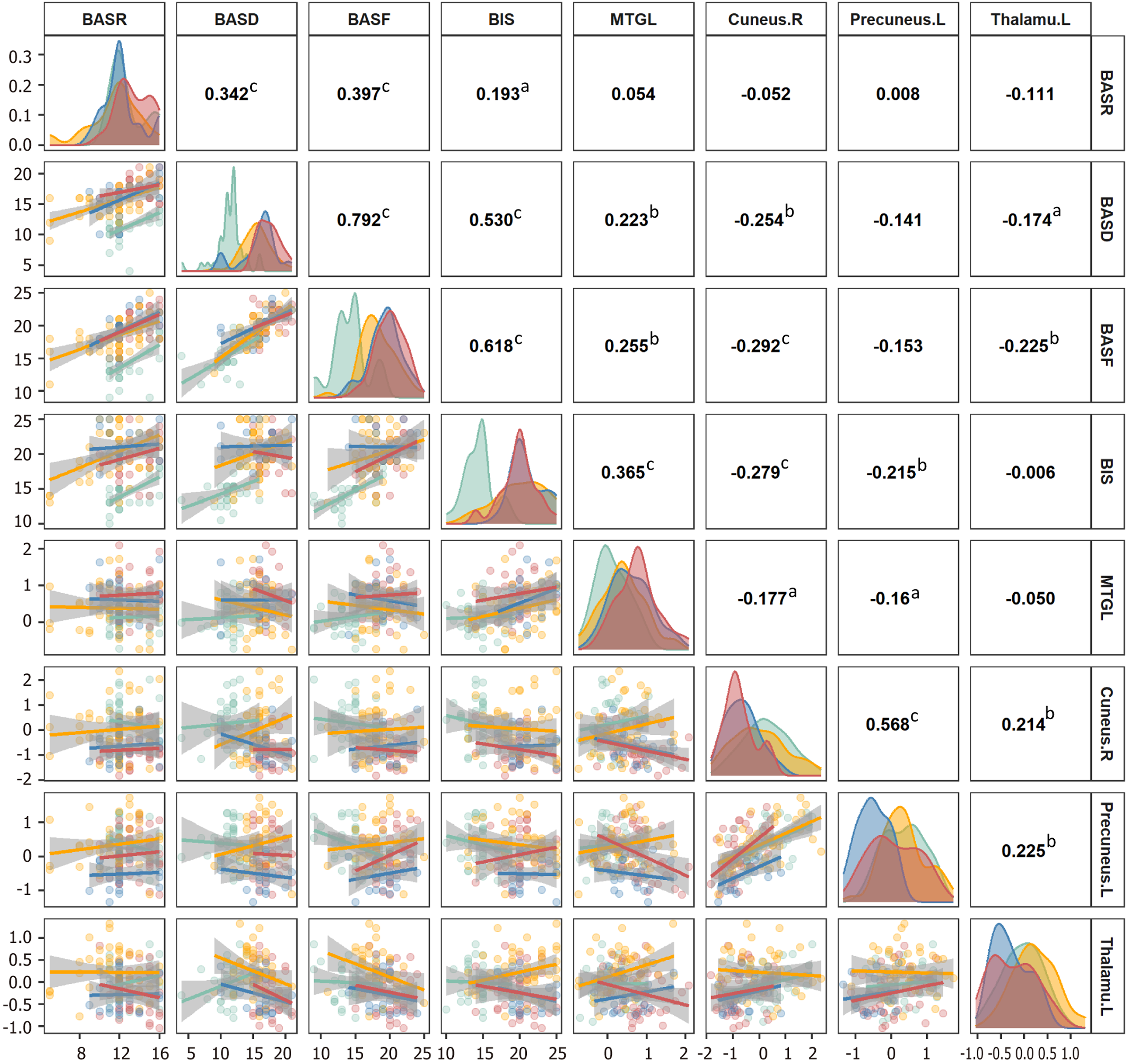
Figure 2 The Person correlation between regional homogeneity value of the differential brain areas and clinical features.
Green: Healthy control group; Orange color: Obesity group; Blue color: Major depressive disorder group; Red color: Major depressive disorder-obesity group. BASR: Behavioral activation system-reward responsiveness; BASD: Behavioral activation system-drive; BASF: Behavioral activation system-fun seeking; BIS: Behavioral inhibition/system; MTGL: Left middle temporal gyrus; Cuneus.R: Cuneus right; Precuneus.L: Precuneus left; Thalamu.L: Thalamus left. aP < 0.05, bP < 0.01, and cP < 0.001.
- Citation: Hou XF, Mei BH, Wang X, Zhao FT, He L, Chen QY, Zang C, Wang C, Tang YF, Li XX, Zhang HF, Wang N, Cao B. Abnormal regional spontaneous brain activity in major depressive disorder with obesity comorbidity: A resting-state functional magnetic resonance imaging study. World J Psychiatry 2026; 16(1): 113064
- URL: https://www.wjgnet.com/2220-3206/full/v16/i1/113064.htm
- DOI: https://dx.doi.org/10.5498/wjp.v16.i1.113064