
















©The Author(s) 2025.
World J Psychiatry. Dec 19, 2025; 15(12): 111972
Published online Dec 19, 2025. doi: 10.5498/wjp.v15.i12.111972
Published online Dec 19, 2025. doi: 10.5498/wjp.v15.i12.111972
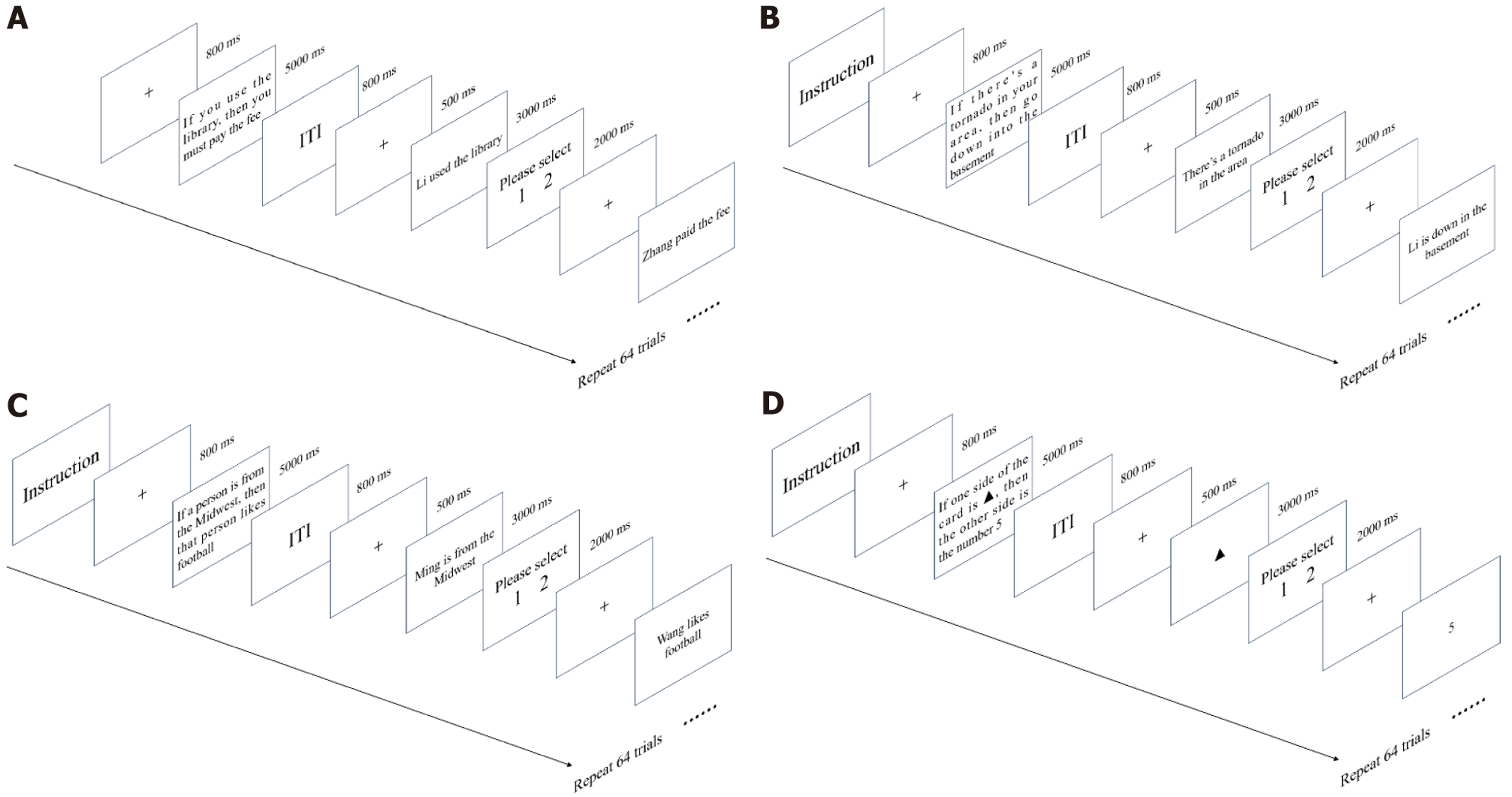
Figure 1 Schematic illustration of the Wason selection task.
A: Social contract Wason selection task; B: Precautionary Wason selection task; C: Descriptive Wason selection task; D: Abstract Wason selection task.
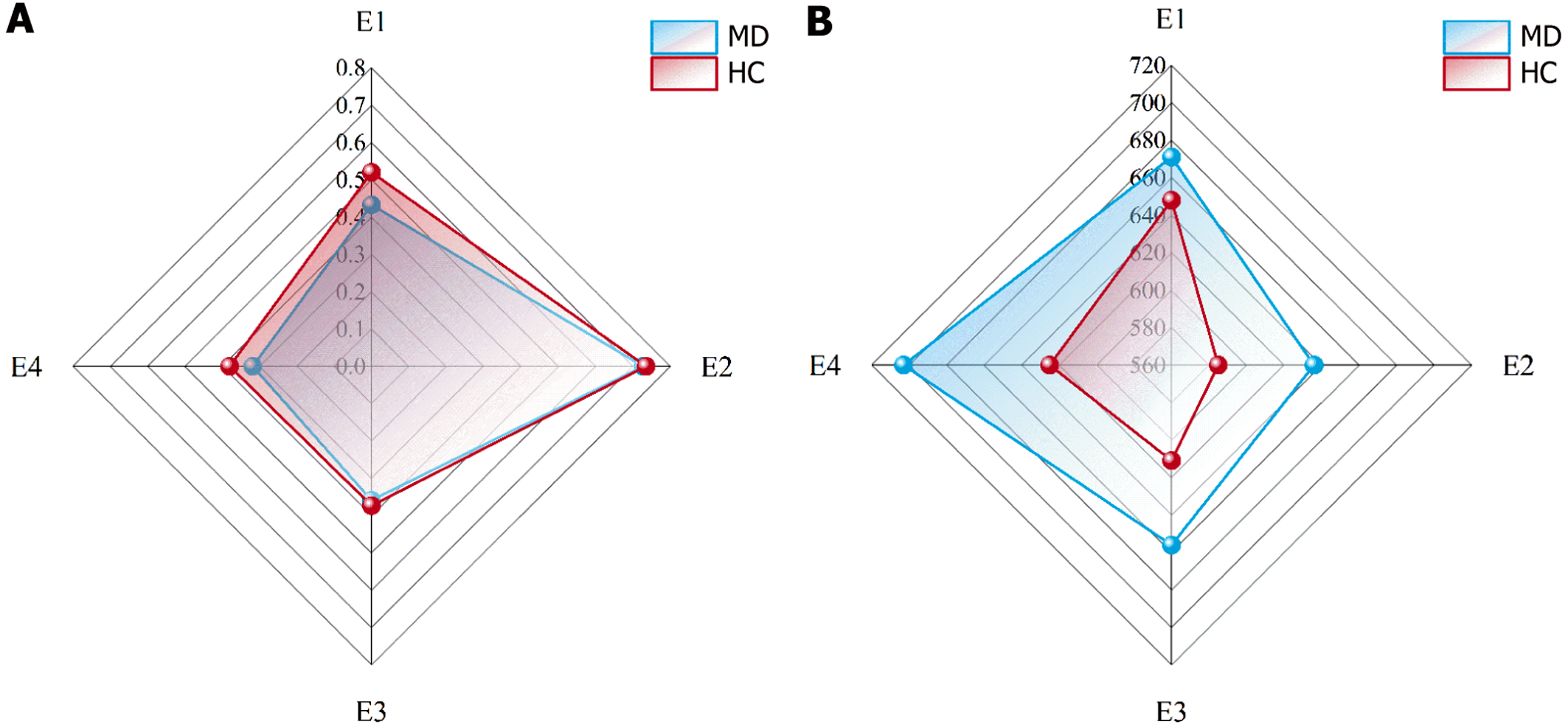
Figure 2 Analysis of behavioral data.
A: E1-E4 accuracy radar chart; B: E1-E4 reaction times radar chart. HC: Healthy control; MD: Major depression; E1: Social contract Wason selection task; E2: Precautionary Wason selection task; E3: Descriptive Wason selection task; E4: Abstract Wason selection task.
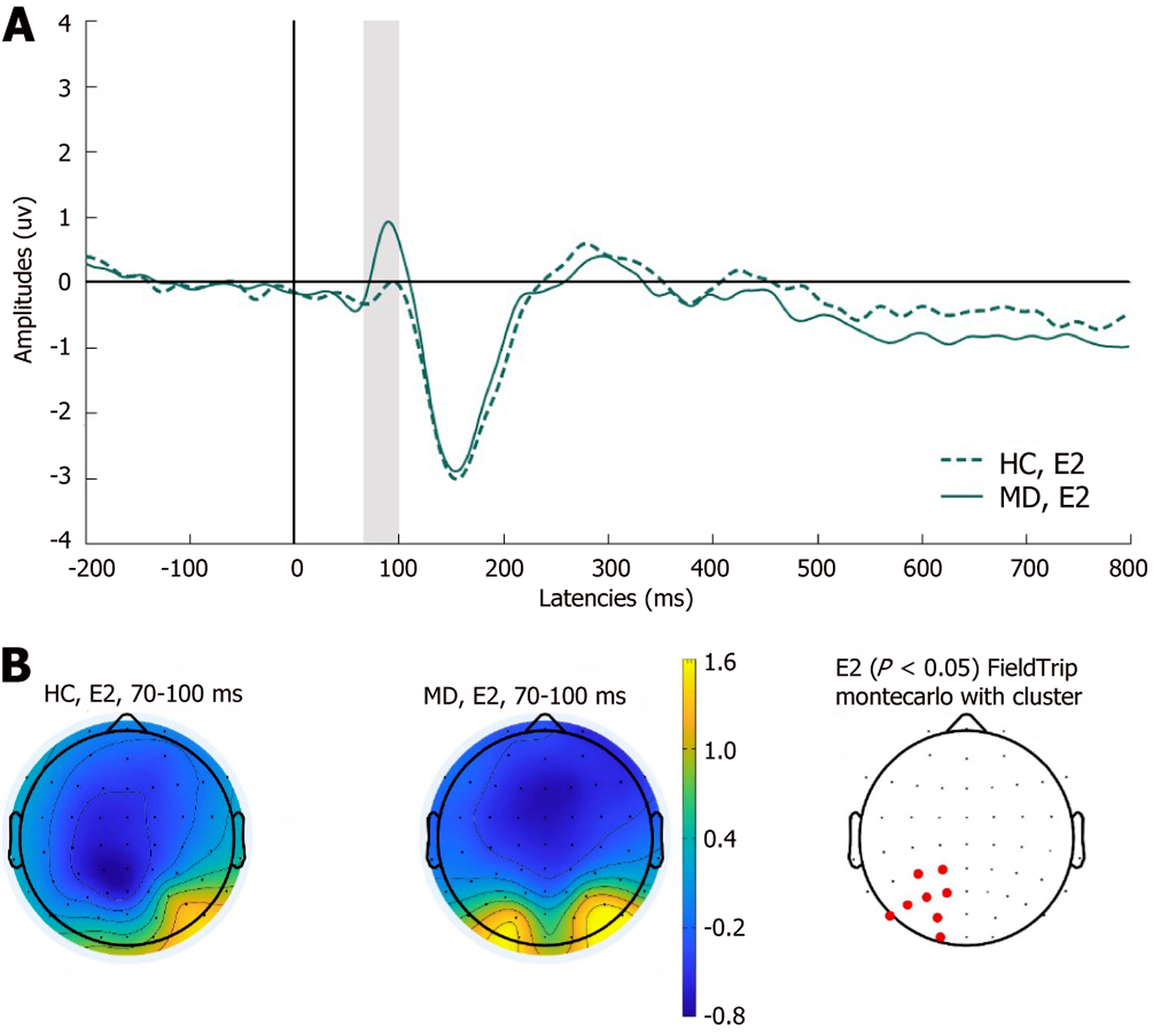
Figure 3 Grand averaged P100 and topographical distribution of both healthy control and major depression groups.
A: Grand averaged event-related potentials of experiment 2 in the healthy control (HC) group and major depression (MD) group; The time window corresponding to P100 is indicated by the gray shaded area; B: A topography map of the experiment 2 condition depicting the grand average amplitude of the difference wave within the 70-100 ms timeframe for the HC group and the MD group. HC: Healthy controls; MD: Major depression; E2: Precautionary Wason selection task.
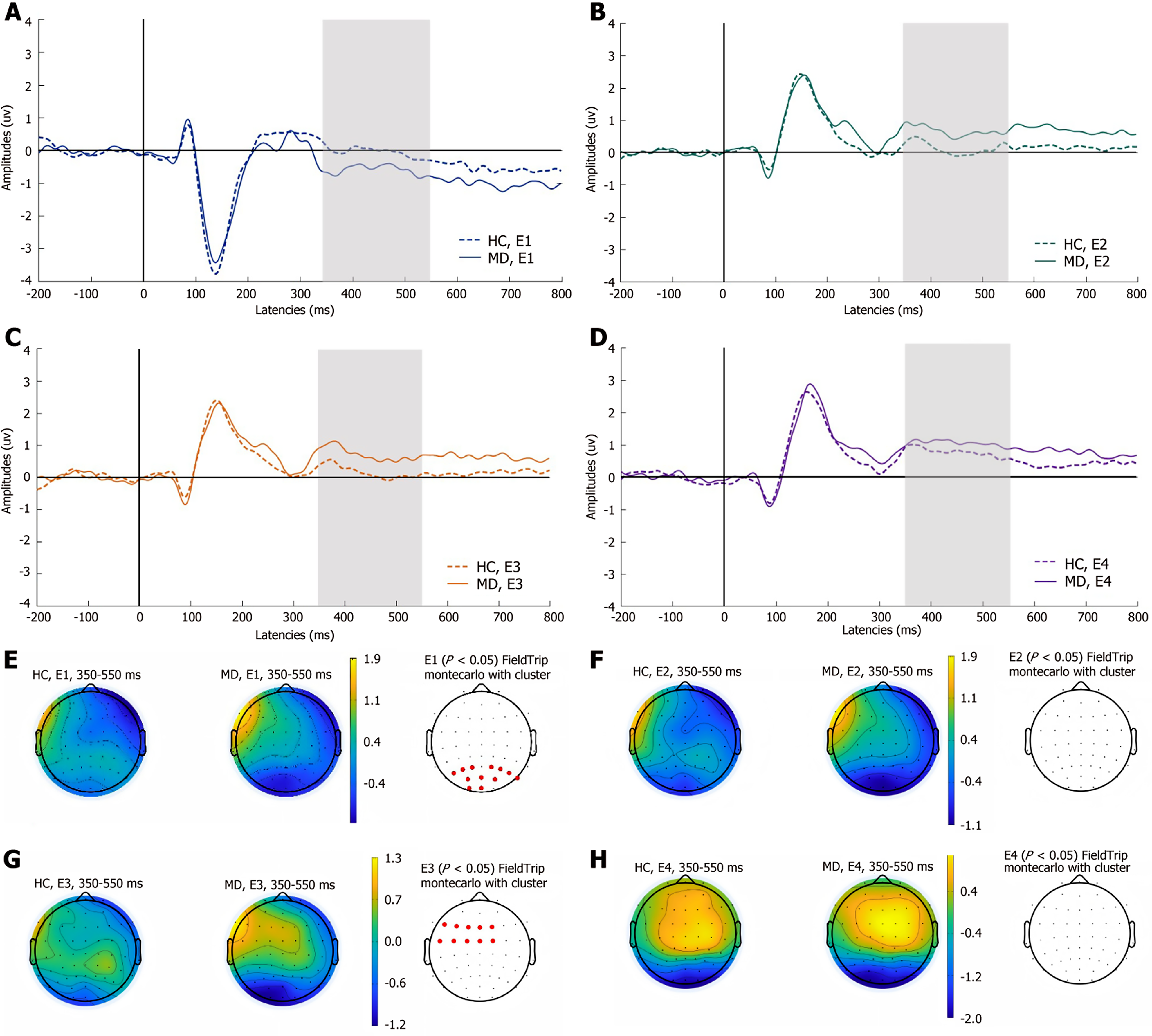
Figure 4 Grand averaged late positive potential (early phase) and topographical distribution of both healthy control and major depression groups.
A-D: Grand averaged event-related potentials of different experiments in the healthy control (HC) and major depression (MD) group; the time window corresponding to late positive potential (LPP) early phase is indicated by the gray shaded area; E-H: A topography map of different experiments depicting the mean amplitude of LPP early phase within the 350-550 ms time window for the HC and MD group. HC: Healthy controls; MD: Major depression; E1: Social contract Wason selection task; E2: Precautionary Wason selection task; E3: Descriptive Wason selection task; E4: Abstract Wason selection task.
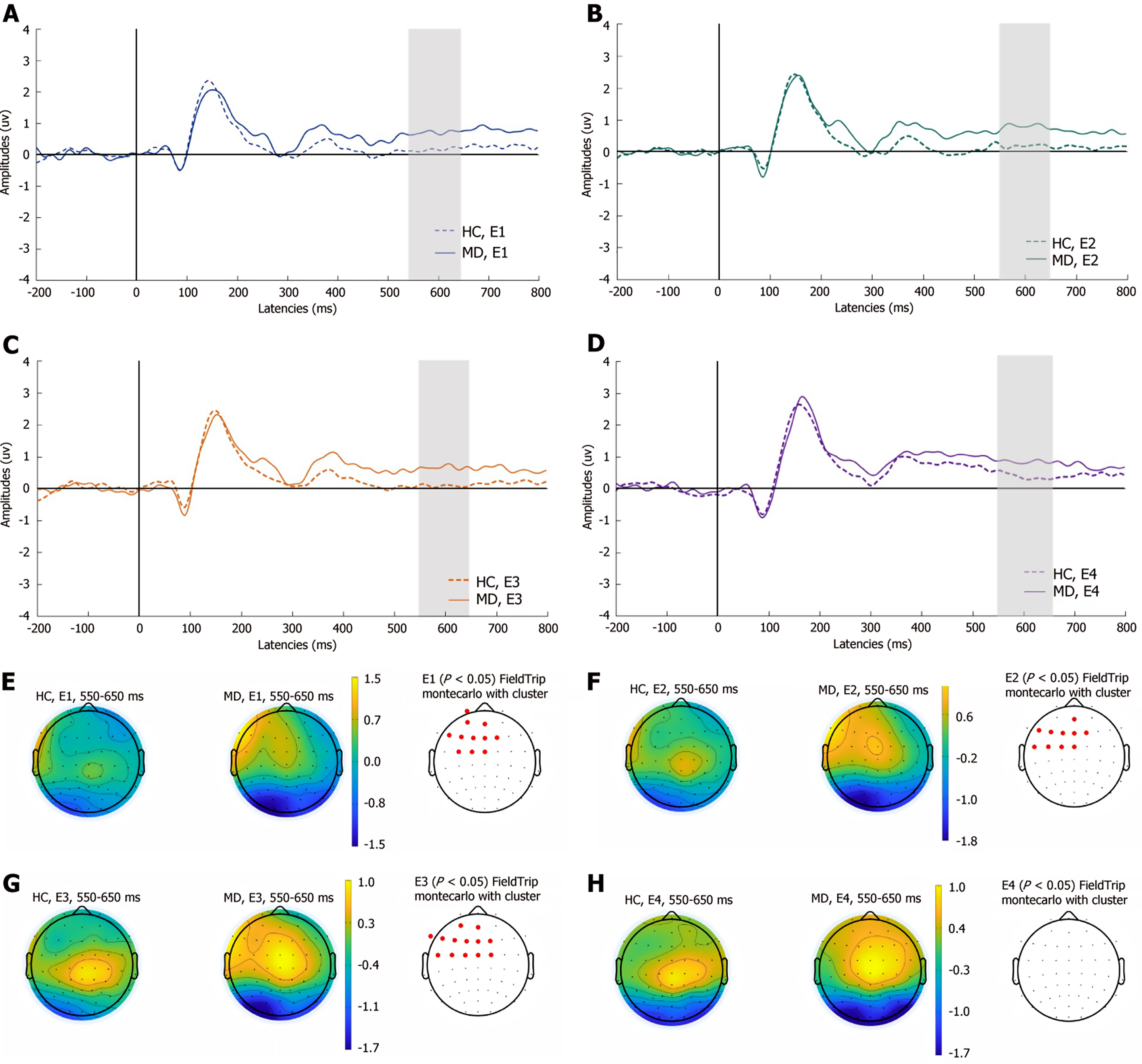
Figure 5 Grand averaged late positive potential (medium phase) and topographical distribution of both healthy control and major de
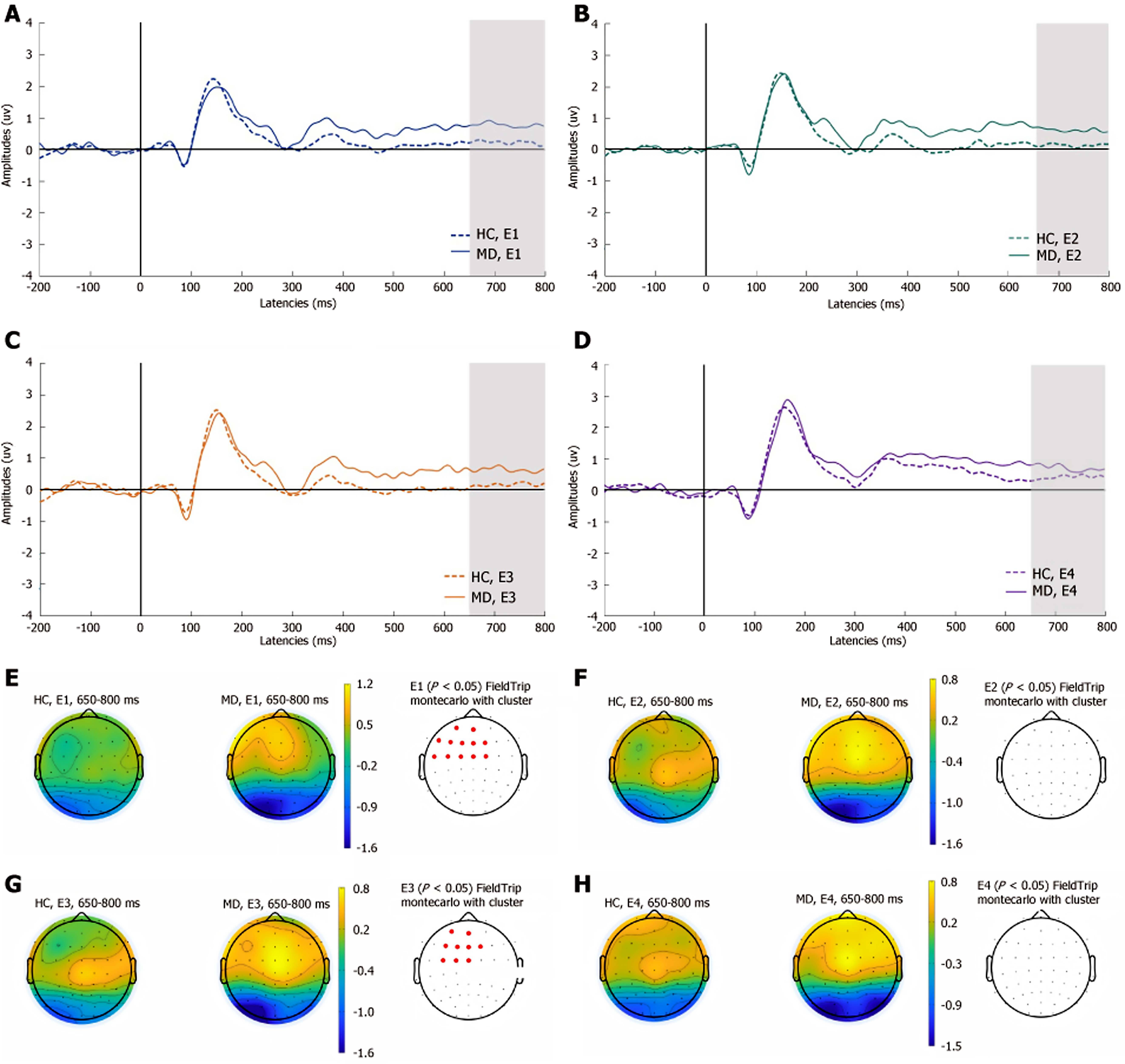
Figure 6 Grand averaged late positive potential (late phase) and topographical distribution of both healthy control and major depression groups.
A-D: Grand averaged event-related potentials of different experiments in the healthy control (HC) and major depression (MD) group; the time window corresponding to late positive potential (LPP) late phase is indicated by the gray shaded area; E-H: A topography map of different experiments depicting the mean amplitude of LPP late phase within the 650-800 ms time window for the HC and MD group. HC: Healthy controls; MD: Major depression; E1: Social contract Wason selection task; E2: Precautionary Wason selection task; E3: Descriptive Wason selection task; E4: Abstract Wason selection task.
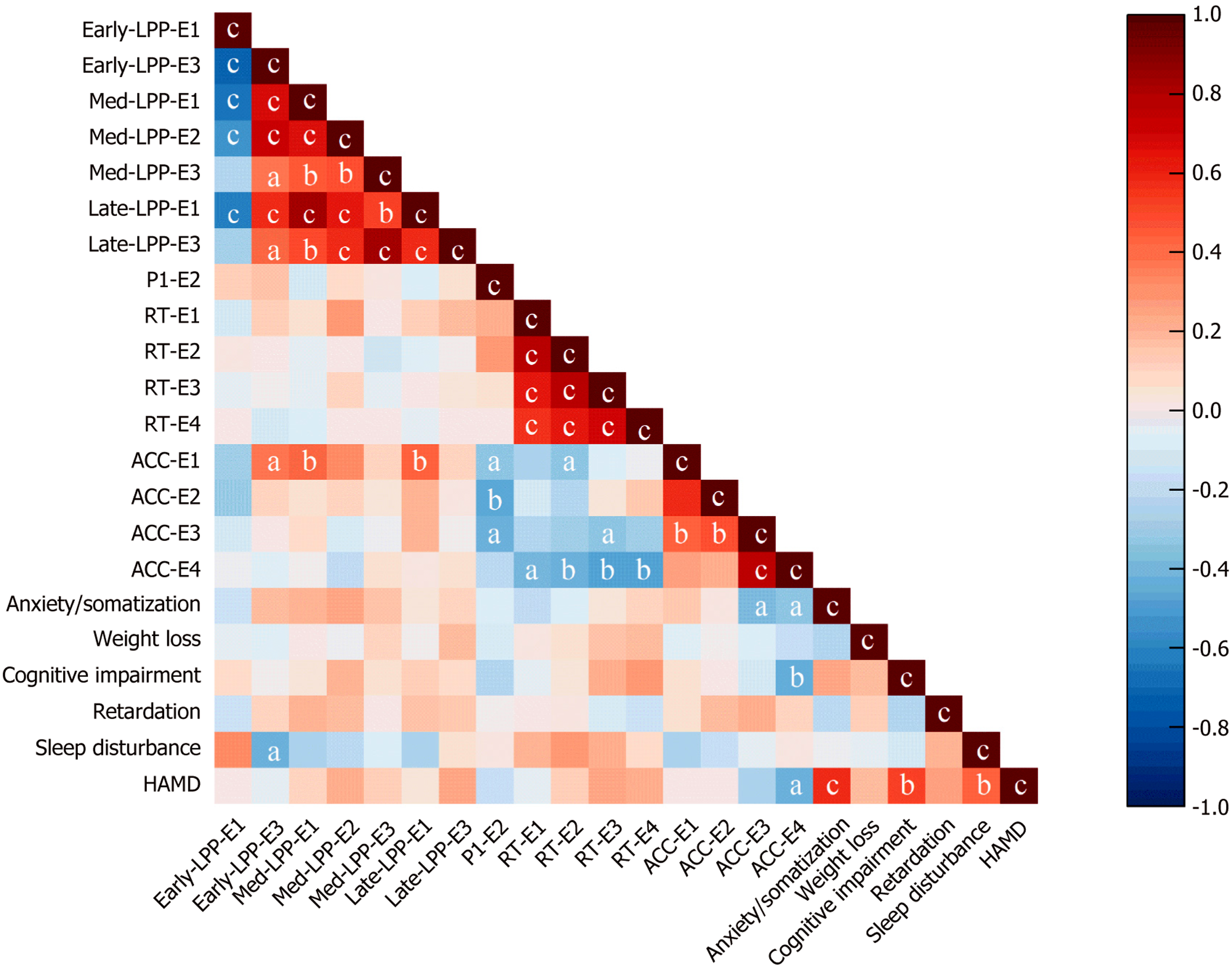
Figure 7 Heat map for correlations among variables in major depression group.
Positive correlations are indicated in red, while negative correlations are marked in blue. aP < 0.05; bP < 0.01, cP < 0.001. MD: Major depression; HAMD: Hamilton Depression Scale; Early-LPP-E1: Late positive potentials early phase of experiment 1; Early-LPP-E3: Late positive potentials early phase of experiment 3; Med-LPP-E1: Late positive potentials medium phase of experiment 1; Med-LPP-E2: Late positive potentials medium phase of experiment 2; Med-LPP-E3: Late positive potentials medium phase of experiment 3; Late-LPP-E1: Late positive potentials late phase of experiment 1; Late-LPP-E3: Late positive potentials late phase of experiment 3; P1-E2: The P100 of experiment 2.
- Citation: Li JX, Lu MC, Wu LA, Li W, Li Y, Li XP, Liu XH, Gao XZ, Zhou ZH, Zhou HL. Neural correlates of conditional reasoning dysfunction in major depression: An event-related potential study with the Wason selection task. World J Psychiatry 2025; 15(12): 111972
- URL: https://www.wjgnet.com/2220-3206/full/v15/i12/111972.htm
- DOI: https://dx.doi.org/10.5498/wjp.v15.i12.111972