
















©The Author(s) 2025.
World J Psychiatry. Dec 19, 2025; 15(12): 111513
Published online Dec 19, 2025. doi: 10.5498/wjp.v15.i12.111513
Published online Dec 19, 2025. doi: 10.5498/wjp.v15.i12.111513
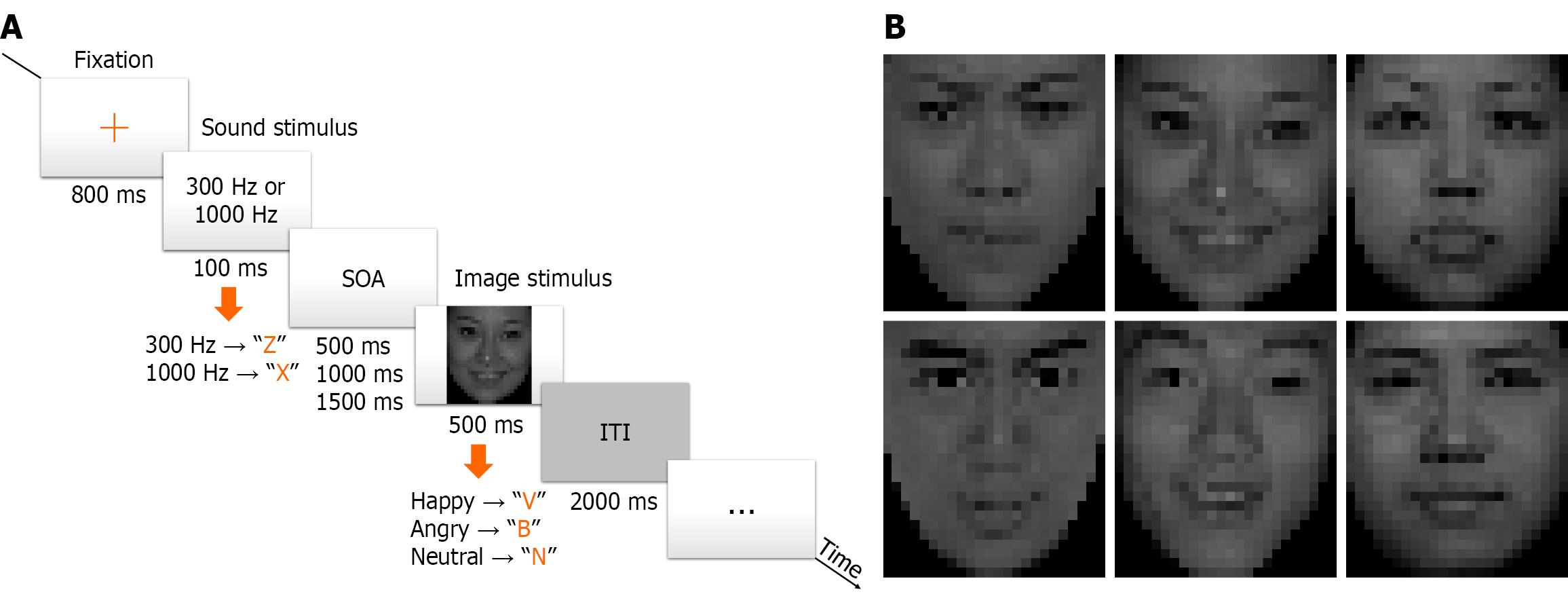
Figure 1 Schematic illustration of dual task.
A: Illustration of the dual task, there are six blocks in total, each containing 54 trials; B: The emotional facial stimuli employed in the dual task. Including pictures of angry, happy, and neutral emotions. ms: Milliseconds; Hz: Hertz; SOA: Stimulus onset asynchrony; ITI: Inter-trial interval. The permission for the photos is shown in the Supplementary material.
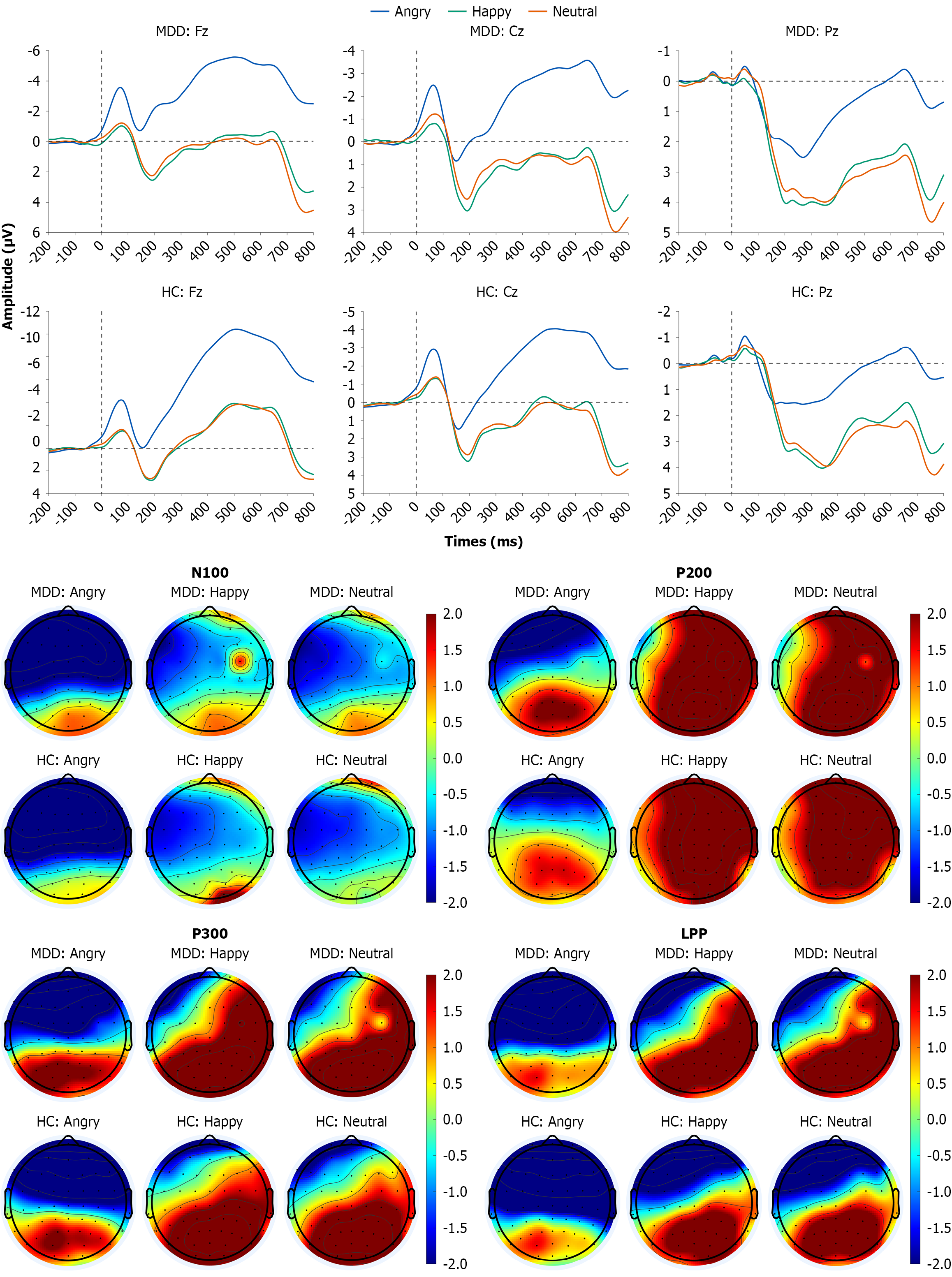
Figure 2 Grand averaged event-related potentials in frontal, central, and parietal locations and topographical distribution of grand averaged image-evoked N100, P200, P300 and late positive potential of both major depressive disorder and healthy controls groups.
The emotional picture-evoked N100 time window is 40-120 milliseconds (ms); the emotional picture-evoked P200 time window is 150-250 ms, the emotional picture-evoked P300 time window is 250-400 ms, the emotional picture-evoked late positive potential time window is 400-600 ms. MDD: Patients with major depressive disorder; HC: Healthy controls; LPP: Late positive potential.
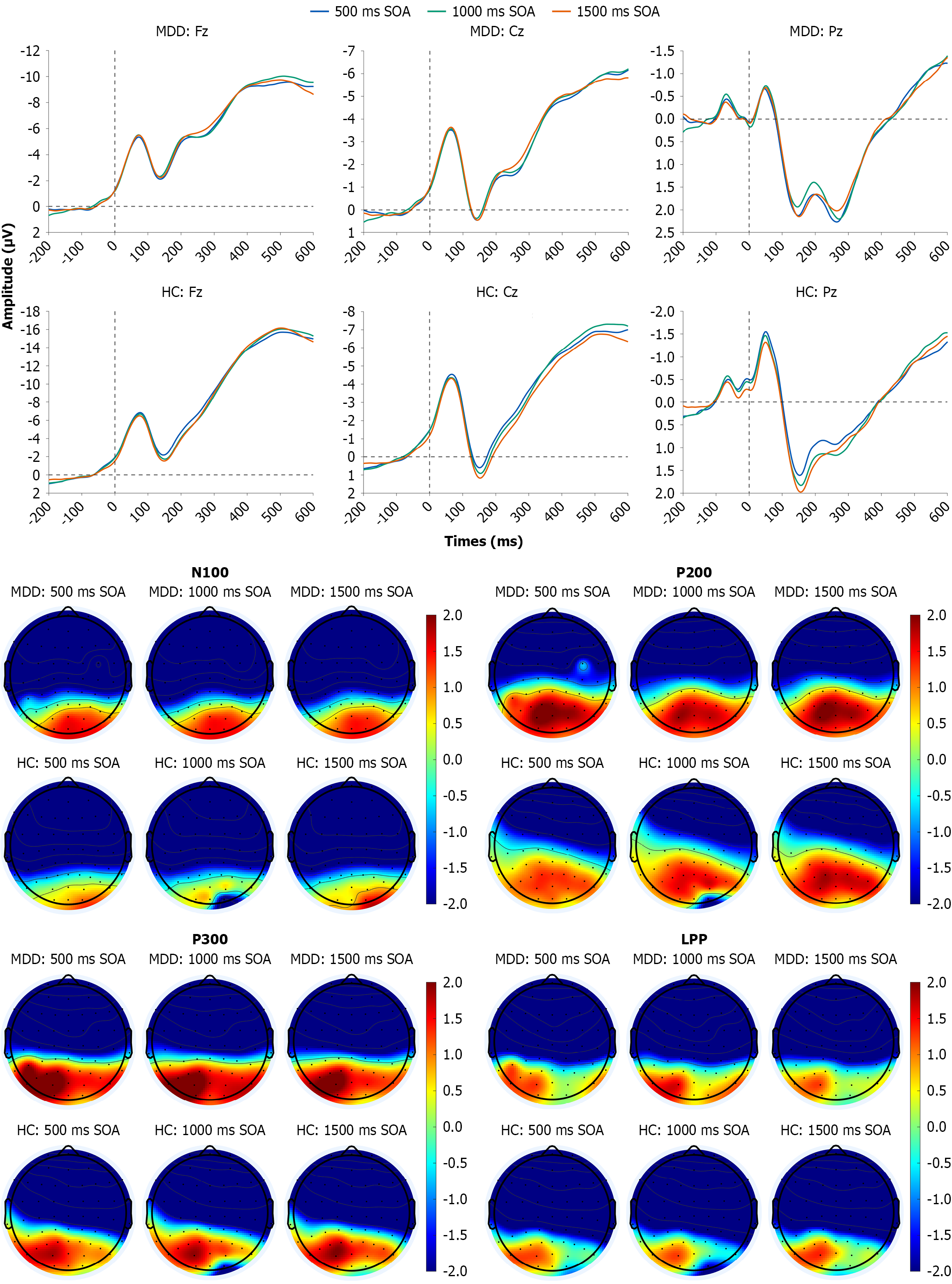
Figure 3 Grand averaged ERPs in frontal, central, and parietal locations and topographical distribution of grand averaged stimulus onset asynchrony-evoked N100, P200, P300 and late positive potential of both major depressive disorder and healthy controls groups.
The stimulus onset asynchrony (SOA)-evoked N100 time window is 40-120 milliseconds (ms); the SOA-evoked P200 time window is 150-250 ms, the SOA-evoked P300 time window is 250-400 ms, the SOA-evoked late positive potential time window is 400-600 ms. SOA: Stimulus onset asynchrony; MDD: Patients with major depressive disorder; HC: Healthy controls; LPP: Late positive potential.
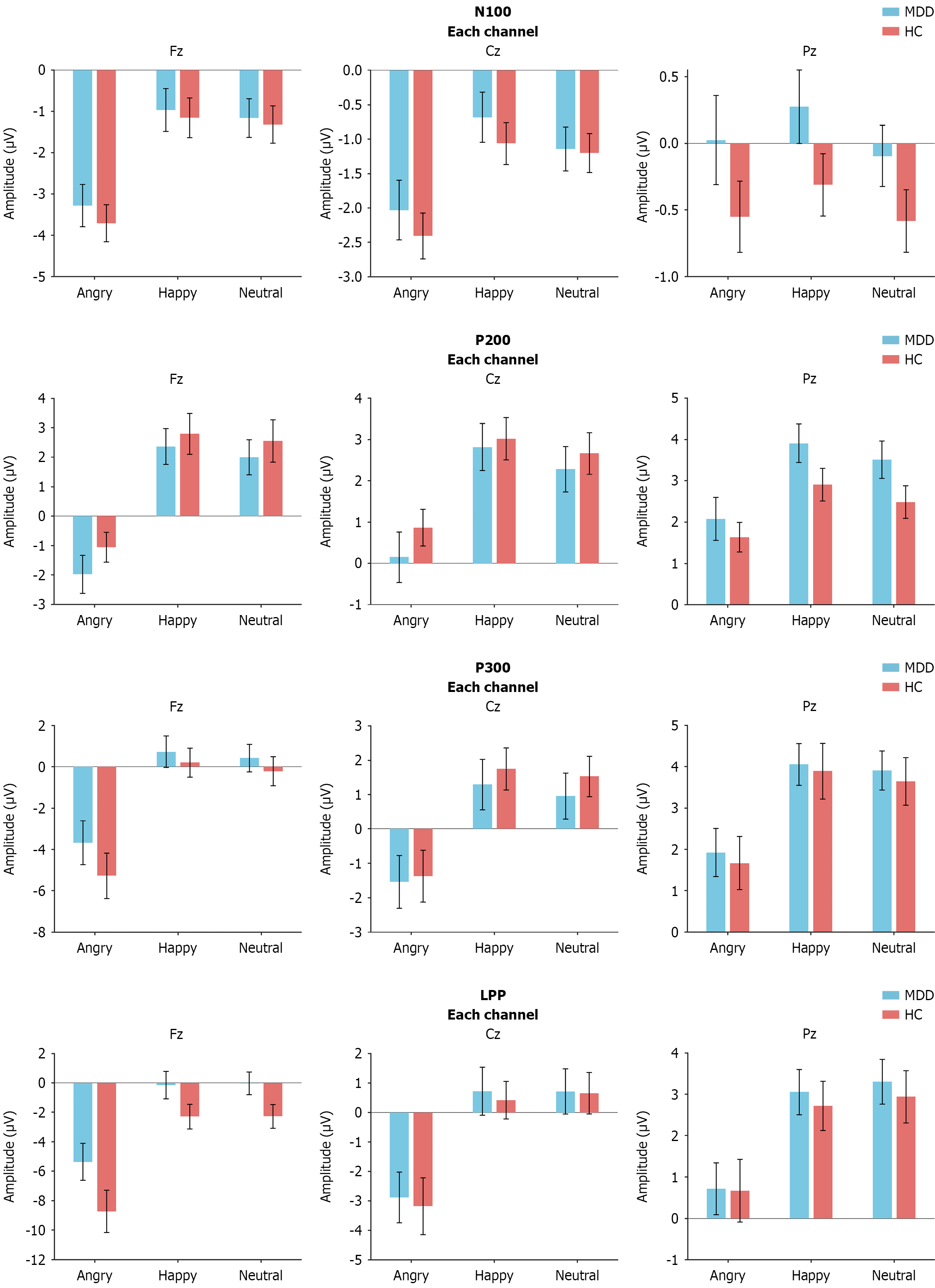
Figure 4 The mean amplitudes of N100, P200, P300 and late positive potential evoked by task 2.
Fz: Frontal; Cz: Central; Pz: Parietal; MDD: Patients with major depressive disorder; HC: Healthy controls; LPP: Late positive potential.
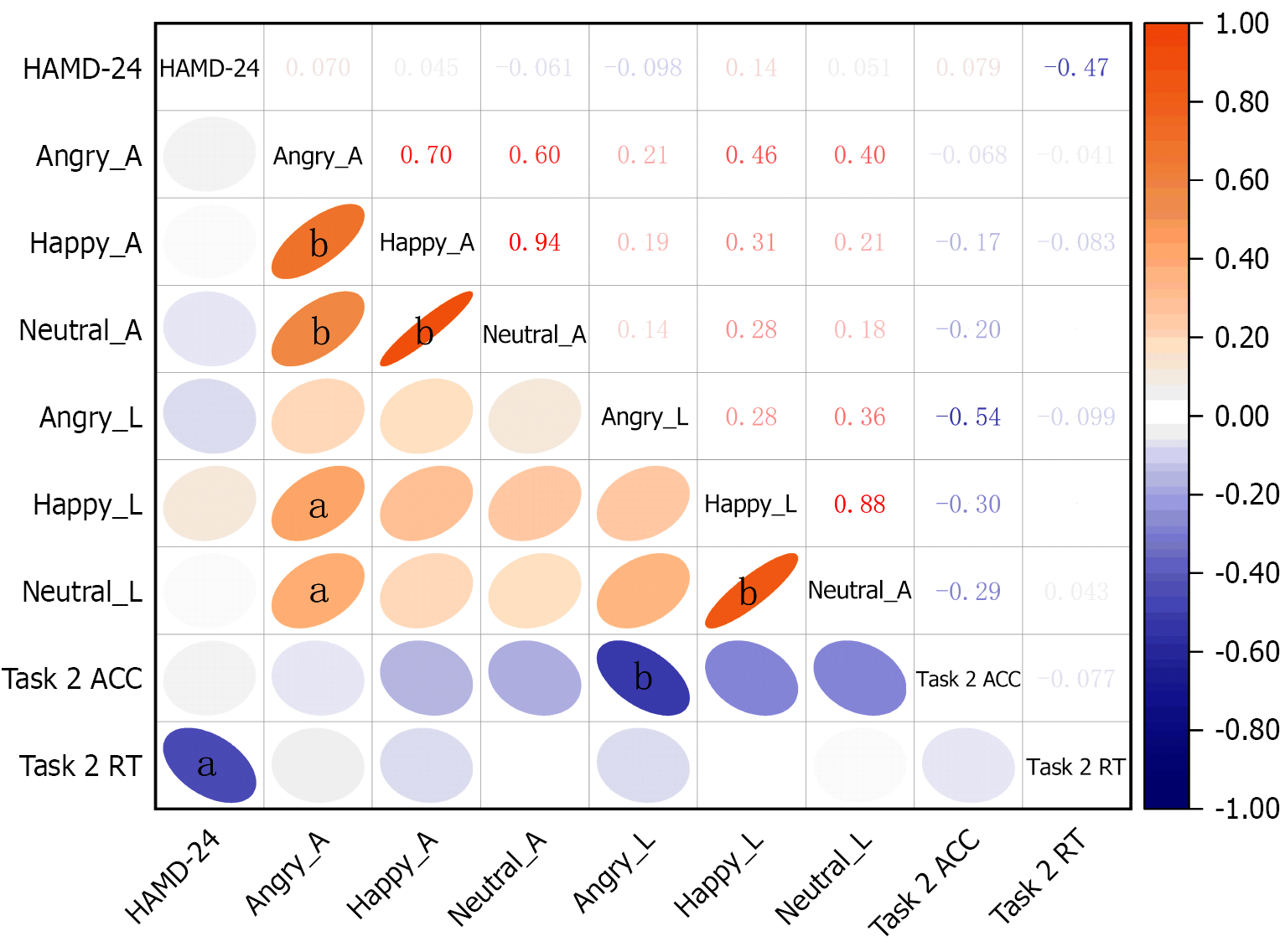
Figure 5 The correlation analysis of late positive potential mean amplitudes and latencies, reaction times, accuracy and Hamilton Depression Rating Scale (24-item edition) scores under different emotional faces in the major depressive disorder group.
aP < 0.05; bP < 0.01. HAMD-24: Hamilton Depression Rating Scale (24-item edition); A: Amplitude; L: Latency; ACC: Accuracy; RT: Reaction time.
- Citation: Wu YW, Wang XY, Sun YF, Wu LA, Li W, Li Y, Gao XZ, Liu XH, Zhou ZH, Zhou HL. Neural correlates of attentional switching dysfunction in major depressive disorder: Evidence from an event-related potential study with a dual-task paradigm. World J Psychiatry 2025; 15(12): 111513
- URL: https://www.wjgnet.com/2220-3206/full/v15/i12/111513.htm
- DOI: https://dx.doi.org/10.5498/wjp.v15.i12.111513