
















Copyright: ©Author(s) 2026.
World J Exp Med. Mar 20, 2026; 16(1): 116771
Published online Mar 20, 2026. doi: 10.5493/wjem.v16.i1.116771
Published online Mar 20, 2026. doi: 10.5493/wjem.v16.i1.116771
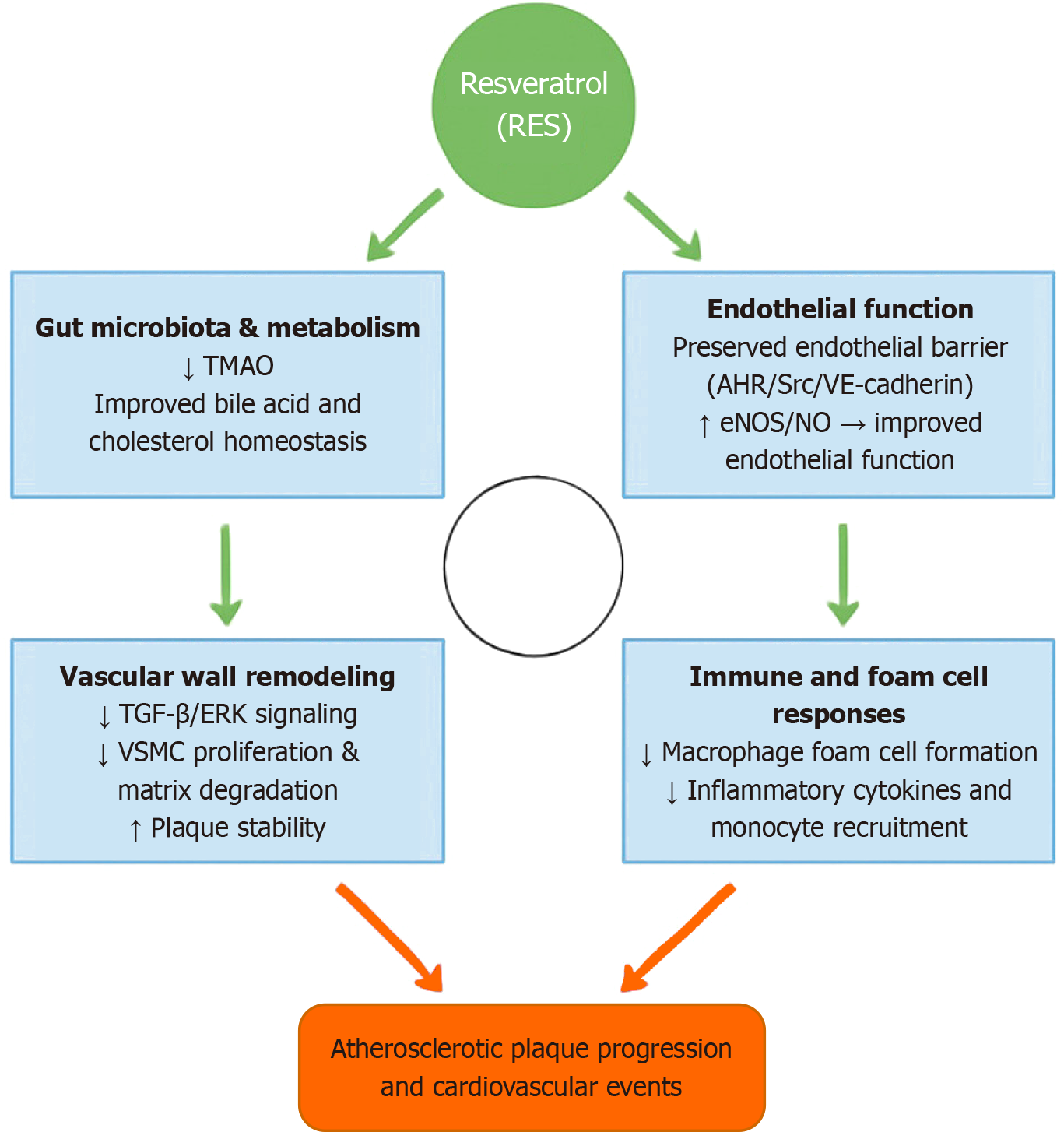
Figure 1 Simplified network of unconventional mechanisms by which resveratrol attenuates atherosclerosis.
Resveratrol (RES) acts as a multi-target modulator along four major mechanistic axes: (1) Gut microbiota and metabolism, where RES lowers trimethylamine N-oxide and improves bile acid-cholesterol homeostasis; (2) Endothelial function, where RES preserves aryl hydrocarbon receptor/sarcoma-dependent endothelial barrier integrity and enhances endothelial nitric oxide synthase-derived nitric oxide bioavailability; (3) Vascular wall remodeling, where RES inhibits transforming growth factor-β/extracellular regulated protein kinases-driven smooth muscle cell activation, matrix degradation, and plaque destabilization; and (4) Immune and foam cell responses, where RES reduces macrophage foam cell formation, inflammatory cytokine signaling, and monocyte recruitment. Together, these coordinated effects converge to limit atherosclerotic plaque progression and may ultimately reduce cardiovascular risk. RES: Resveratrol; TMAO: Trimethylamine-N-oxide; AHR/Src/VE: Aryl hydrocarbon rece
- Citation: Chaarani N, Mroweh R, Moghnieh R, Kheir Chahine M, Zaiter H, Abdulaal SY, Obeid N, Tlais M, Raheb J, Farhat H, Abdulaal R. Unconventional mechanisms of resveratrol in atherosclerosis prevention and management. World J Exp Med 2026; 16(1): 116771
- URL: https://www.wjgnet.com/2220-315x/full/v16/i1/116771.htm
- DOI: https://dx.doi.org/10.5493/wjem.v16.i1.116771