
















Copyright: ©Author(s) 2026.
World J Exp Med. Mar 20, 2026; 16(1): 113259
Published online Mar 20, 2026. doi: 10.5493/wjem.v16.i1.113259
Published online Mar 20, 2026. doi: 10.5493/wjem.v16.i1.113259
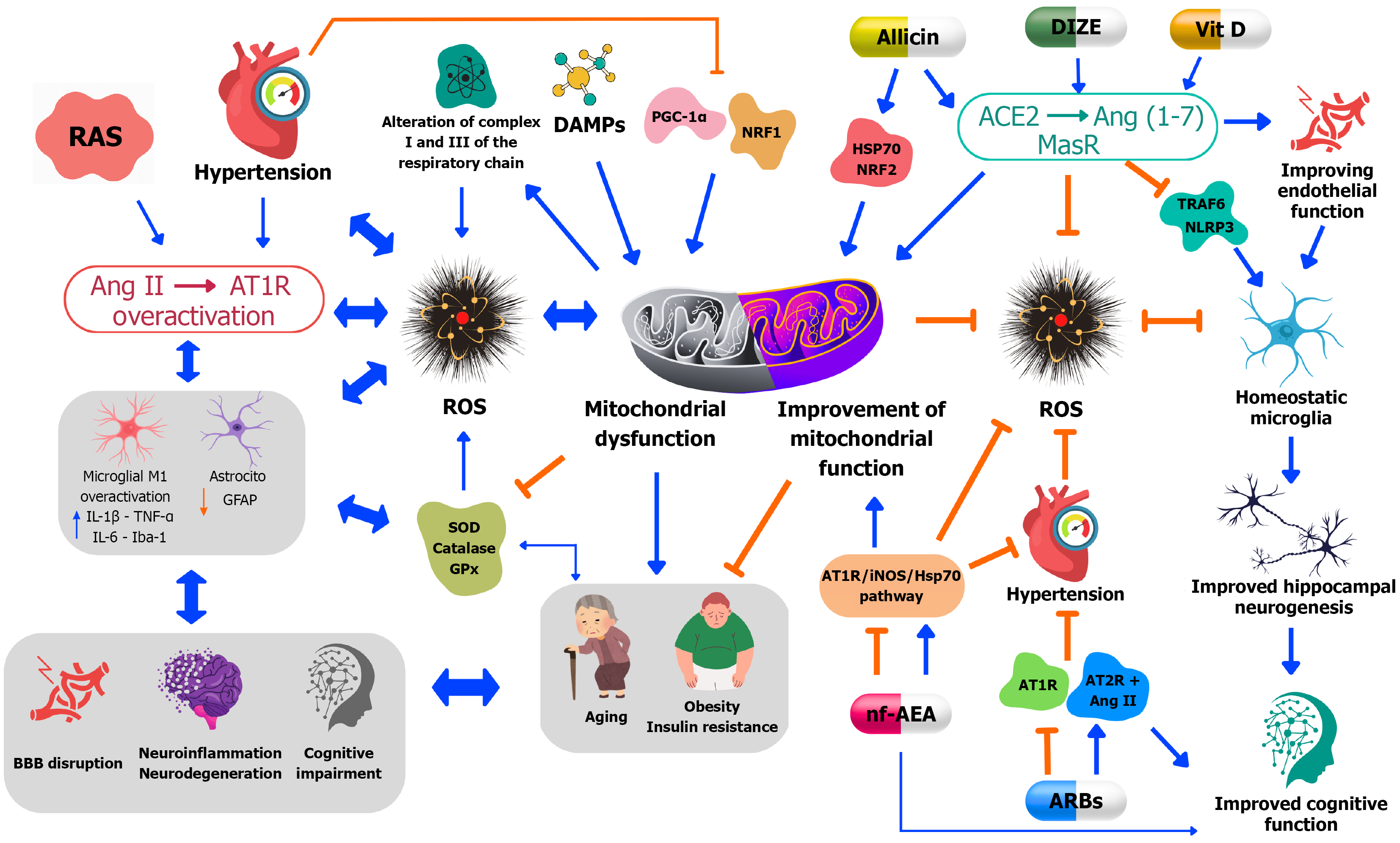
Figure 1 Schematic representation of the mechanisms by which the renin-angiotensin system in the brain integrates mitochondrial dysfunction, reactive oxygen species, and neuroinflammation under conditions of hypertension, obesity, insulin resistance, and aging.
Activation of the Ang II → AT1R pathway promotes overproduction of reactive oxygen species (ROS), alterations in mitochondrial complexes I and III, release of damage-associated molecular patterns (DAMPs), and pro-inflammatory glial activation [microglia M1 with ↑ interleukin (IL)-1β, tumor necrosis factor-α, IL-6, ionized calcium-binding adaptor molecule-1; reactive astrocytes glial fibrillary acidic protein], contributing to blood-brain barrier disruption, neurodegeneration, and cognitive impairment. DAMPs amplify inflammation through NLRP3 and other damage sensors, reinforcing the ROS-mitochondria-inflammation loop. Enzymatic antioxidant systems superoxide dismutase, catalase, and glutathione peroxidase attenuate ROS overload. Interventions such as allicin, diminazene aceturate, and vitamin D activate the protective ACE2 → Ang (1-7) → MasR axis, inducing HSP70, NRF1, NRF2, and peroxisome proliferator-activated receptor gamma coactivator 1-alpha, thereby improving mitochondrial bioenergetics, endothelial function, glial balance, and hippocampal neurogenesis. AT1R blockade by angiotensin receptor blockers reduces deleterious signaling and allows compensatory activation of AT2R, while nanoformulated anandamide modulates the AT1R/iNOS/HSP70 pathway, favoring mitochondrial recovery. Orange arrows indicate inhibition, whereas blue arrows indicate stimulation. RAS: Renin-angiotensin system; IROS: Reactive oxygen species; DAMPs: Damage-associated molecular patterns; GFAP: Glial fibrillary acidic protein; Iba-1: Ionized calcium-binding adaptor molecule-1; IL: Interleukin; TNF-α: Tumor necrosis factor-α; SOD: Superoxide dismutase; CAT: Catalase; GPx: Glutathione peroxidase; BBB: Blood-brain barrier; ARBs: Angiotensin receptor blockers; DIZE: Diminazene aceturate; Vit D: Vitamin D; nf-AEA: Nanoformulated anandamide.
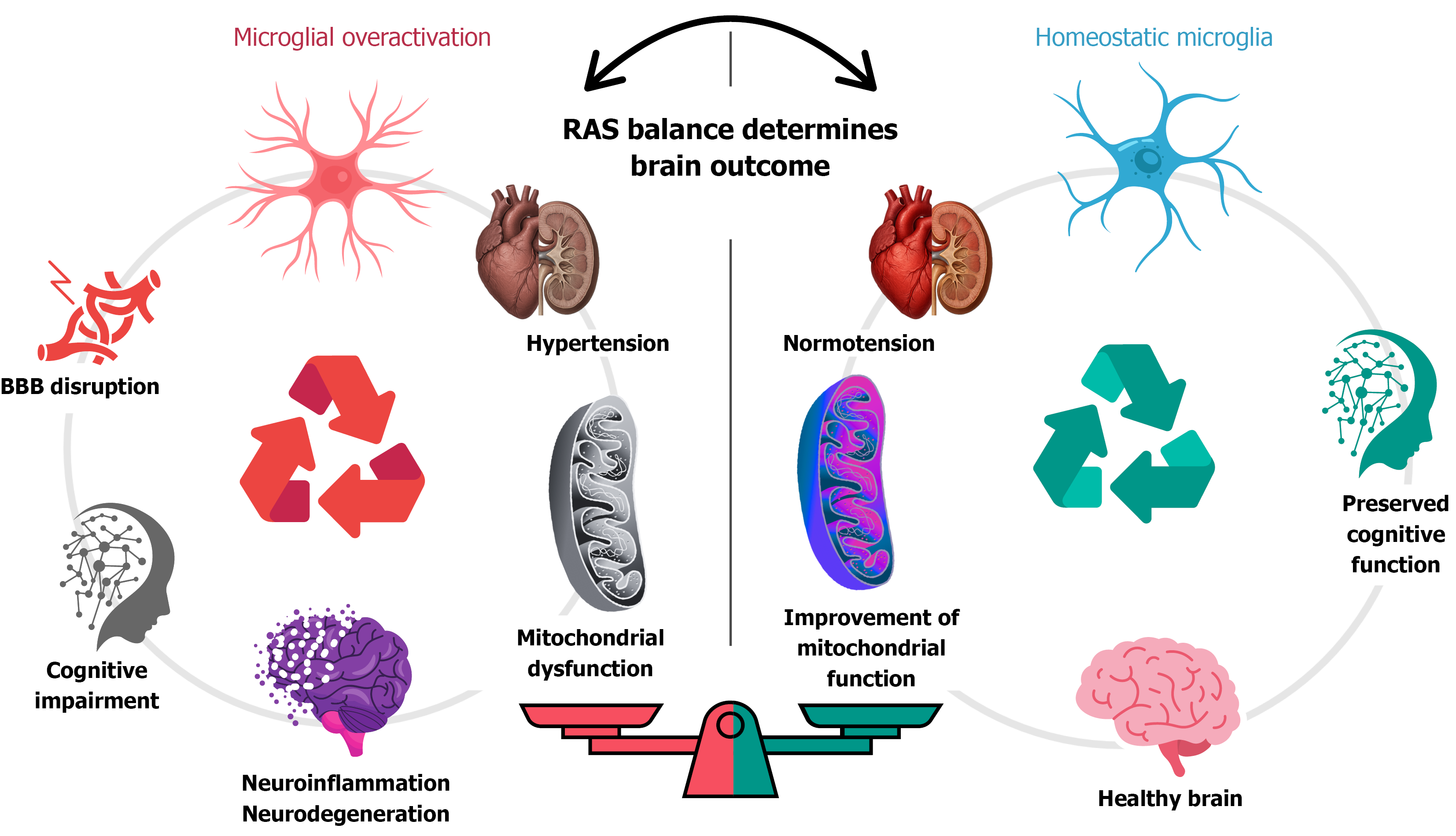
Figure 2 The renin-angiotensin system balance as an integrative axis between peripheral organs and brain health.
The functional state of the renin-angiotensin system (RAS), largely regulated by the heart and kidneys, directly influences blood pressure and determines brain trajectories toward either health or disease. RAS dysregulation promotes hypertension, mitochondrial dysfunction, and pathological microglial activation, contributing to blood-brain barrier disruption, neuroinflammation, and cognitive decline. In contrast, a balanced RAS helps maintain normal blood pressure, preserve mitochondrial function, and support a neuroprotective environment that safeguards cognitive function. RAS: Renin-angiotensin system; BBB: Blood-brain barrier.
- Citation: García Menéndez S, Inserra F, de Cavanagh EM, Ferder L, Manucha W. Renin-angiotensin system blockade attenuates brain mitochondrial dysfunction, oxidative stress, and neuroinflammation associated with hypertension, metabolic disorders, and aging. World J Exp Med 2026; 16(1): 113259
- URL: https://www.wjgnet.com/2220-315x/full/v16/i1/113259.htm
- DOI: https://dx.doi.org/10.5493/wjem.v16.i1.113259